Low-GI Anda Curry with Cauliflower Rice
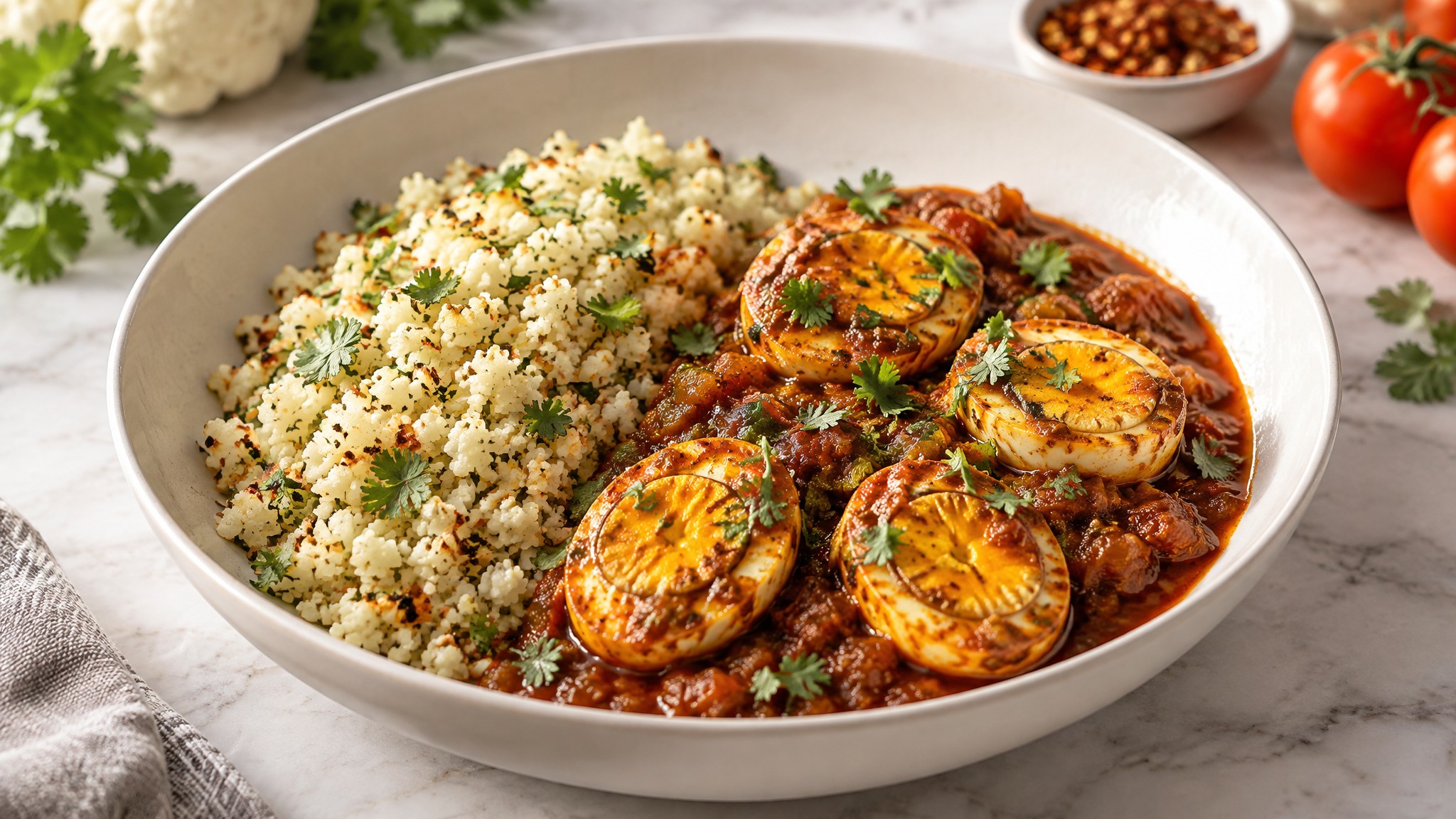
Dhaba-style anda curry: scored boiled eggs simmered in a rich onion-tomato masala, served over cauliflower rice for a steady-glucose curry night in 36 minutes.
This egg curry is modelled on the anda curry served at North Indian roadside dhabas. Hard-boiled eggs are scored so the sauce can get inside, then simmered in a thick masala. The masala starts with cumin seeds and onion cooked slowly until deep golden, followed by ginger, garlic, turmeric, coriander and chili. Tomatoes with no added sugar are cooked down until the oil separates at the edges, which is the classic sign that the masala is ready. A final pinch of garam masala adds warmth.
For blood sugar, the main change is the base. Curries like this are usually served with basmati rice or naan, and a full plate of either can push the meal into high-GI territory. Here, quick-fried cauliflower rice takes their place. It has very little digestible carbohydrate and plenty of fibre, and it still soaks up the sauce. The eggs supply protein and fat, which slow digestion. The onion, tomato and cauliflower add fibre and volume. That combination tends to give a gentler, steadier glucose response than a rice-heavy plate. Turmeric, cumin and ginger add flavour without adding sugar.
Portion guide: each serving is 2 eggs, about half of the masala and about 150 g of cauliflower rice. To help your blood sugar further, eat a few forkfuls of the cauliflower and masala before you start on the eggs. A side of cucumber raita made with plain unsweetened yogurt, or a simple kachumber salad of cucumber, tomato and red onion with lemon, adds more fibre, volume and some cooling contrast. Swapping the cauliflower rice for regular white rice or naan raises the glycemic load a lot. If you do want a grain, keep it to a small portion of about 50 g cooked basmati or brown rice per person, alongside the cauliflower rather than instead of it. A few spoonfuls of dal or half a besan roti also work well. A short walk after dinner can also help flatten the post-meal curve. The whole dish takes about 36 minutes and serves two, which makes it a good weeknight curry.
Blood Sugar Impact
Minimal impact: with a glycemic load of 3.5 and protein and fat from the eggs, this meal should keep blood sugar stable and energy steady for 3-4 hours.
Blood Sugar Tips
- ✓ Serve it with cauliflower rice as the title says, not white rice or naan, so the glycemic load stays low.
- ✓ Add a side of non-starchy vegetables or a small salad and eat it first for extra fiber.
- ✓ Take a 10-15 minute walk after eating to help your body use glucose.
🥗 Ingredients
- 4 pcs Egg
- 1 tbsp Vegetable oil
- 1 tsp Cumin seeds
- 1 pcs Onion
- 2 pcs Garlic
- 1 pcs Ginger
- 0.5 tsp Turmeric
- 1 tsp Ground coriander
- 0.5 tsp Chili powder
- 200 g Canned chopped tomatoes
- 0.75 tsp Salt
- 1 tsp Garam masala
- 400 g Cauliflower rice
- 10 g Coriander leaves
- 4 pcs Egg
- 1 tbsp Vegetable oil
- 1 tsp Cumin seeds
- 1 pcs Onion
- 2 pcs Garlic
- 1 pcs Ginger
- 0.5 tsp Turmeric
- 1 tsp Ground coriander
- 0.5 tsp Chili powder
- 7.1 oz Canned chopped tomatoes
- 0.75 tsp Salt
- 1 tsp Garam masala
- 14.1 oz Cauliflower rice
- 0.4 oz Coriander leaves
👨🍳 Instructions
- 1
Bring a pan of water to a rolling boil. Carefully lower in the 4 eggs and boil for 9 minutes. Move them to a bowl of cold water for 3 minutes to stop the cooking, then peel and set aside. While the eggs cook, finely chop 1 onion, grate 2 garlic cloves and a 2.5 cm (1 in) piece of ginger, and roughly chop a small handful of fresh coriander leaves.
- 2
Set a wide pan over medium heat and add 1 tbsp vegetable oil. Add 1 tsp cumin seeds and let them sizzle for about 1 minute until they turn a shade darker. Add the chopped onion and cook for about 8 minutes, stirring often, until it is deep golden. Taking time over this step gives the masala its depth.
- 3
Add the grated garlic and ginger along with 1/2 tsp turmeric, 1 tsp ground coriander and 1/2 tsp chili powder. Stir for about 1 minute until the raw smell is gone and the spices are fragrant. If the spices start to catch, add a splash of water.
- 4
Pour in 400 g canned chopped tomatoes (check the label for no added sugar) and add half of the 1 tsp salt. Simmer for about 6 minutes, pressing the tomatoes with the back of your spoon, until the masala is thick and glossy and oil starts to pool at the edges. If it gets too thick, loosen it with 2-3 tbsp water.
- 5
With a small knife, make 3-4 shallow lengthwise cuts in each egg so the sauce can get in. Nestle the eggs into the masala, sprinkle over 1/2 tsp garam masala and simmer for 3 minutes, spooning the sauce over the eggs. Take off the heat and cut the eggs in half.
- 6
While the eggs simmer, heat a separate dry pan over high heat. Add 300 g cauliflower rice (shop-bought, or cauliflower florets pulsed in a food processor until rice-sized) and the rest of the salt. Toss for about 5 minutes until tender and lightly browned in places but not mushy.
- 7
Divide the cauliflower rice between two plates (about 150 g each), spoon the egg curry over the top so each plate gets 2 eggs, and finish with the fresh coriander. Serve with cucumber raita or kachumber salad if you like. For a gentler glucose response, eat some of the cauliflower and masala before the eggs.
📊 Nutrition Per Serving
| Per Serving | Whole Dish | |
|---|---|---|
| Calories | 321 | 642 |
| Carbs | 25g | 49g |
| Sugars | 10g | 19g |
| Natural Sugars | 10g | 19g |
| Protein | 19g | 38g |
| Fat | 18g | 37g |
| Saturated Fat | 4g | 9g |
| Unsaturated Fat | 14g | 27g |
| Fiber | 8g | 15g |
| Soluble Fiber | 2g | 5g |
| Insoluble Fiber | 5g | 11g |
| Sodium | 1173mg | 2347mg |
Predicted Glucose Response
What if you...
Estimated model — individual responses vary. Not medical advice.
🔄 Lower GI Swaps
A full plate of white rice adds a lot of fast-digesting starch and pushes the glycemic load into the high range. Cauliflower rice keeps it very low, and a small portion of brown or basmati rice keeps it moderate.
Refined-flour breads are high-GI. Chickpea flour and lentils have more protein and fibre, so they raise blood sugar more slowly.
Some canned tomato products and restaurant masalas include sugar. Plain tomatoes keep the carbohydrate low and the glycemic load steady.
Onion is one of the main carb sources in the masala. Using a little less and making up the volume with bell pepper lowers the carbohydrate while keeping the texture.
Flavoured yogurts often contain added sugar. Plain yogurt adds protein and keeps the side dish low-GI.
🔬 The Science Behind This Recipe
This meal has an estimated GI of 14 and a glycemic load of about 3.5 per serving, which is very low. Most of the carbohydrate comes from the onion and tomatoes, and both are low-GI vegetables that also bring fibre. Replacing basmati rice (a typical portion has a glycemic load of 20 or more) with cauliflower rice removes the main source of fast-digesting starch. The eggs add about 12 g of protein and 10 g of fat per serving. Protein and fat slow how quickly the stomach empties, so any glucose that is absorbed arrives gradually. Fibre from the vegetables slows this further. Eating the vegetables and masala first, and walking for 10-15 minutes after the meal, can help soften the post-meal glucose curve even more. Note that serving this with a full plate of white rice or naan would multiply the glycemic load several times over.
Related recipes
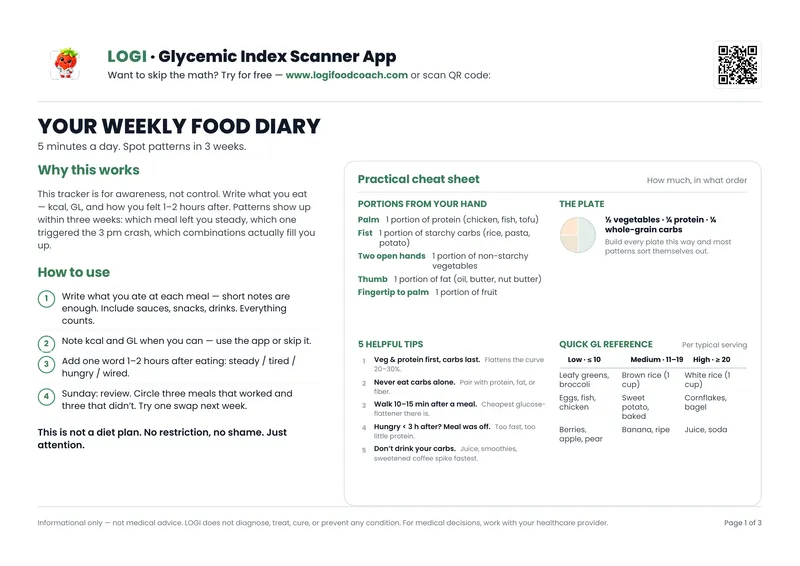
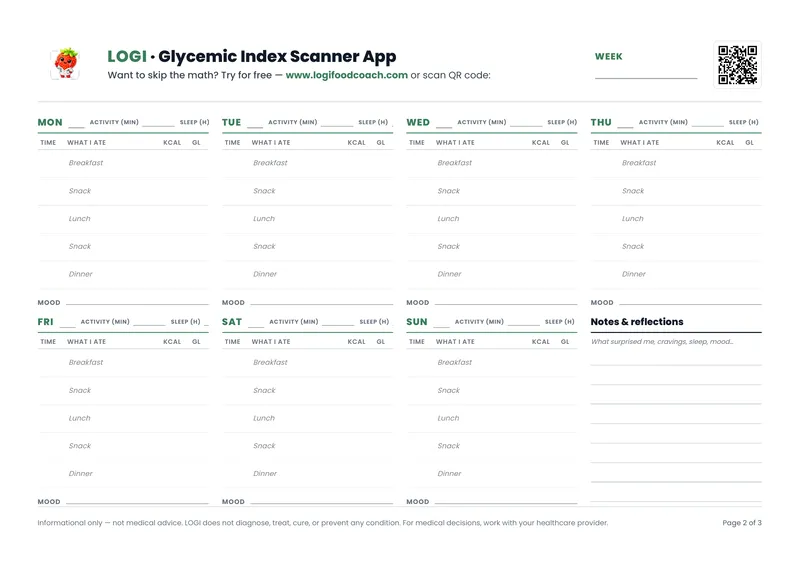
Free PDF — 3 pages
Your Weekly Food Journal
Track meals, glycemic load & mood. Spot patterns in 3 weeks.
No spam. Unsubscribe anytime.