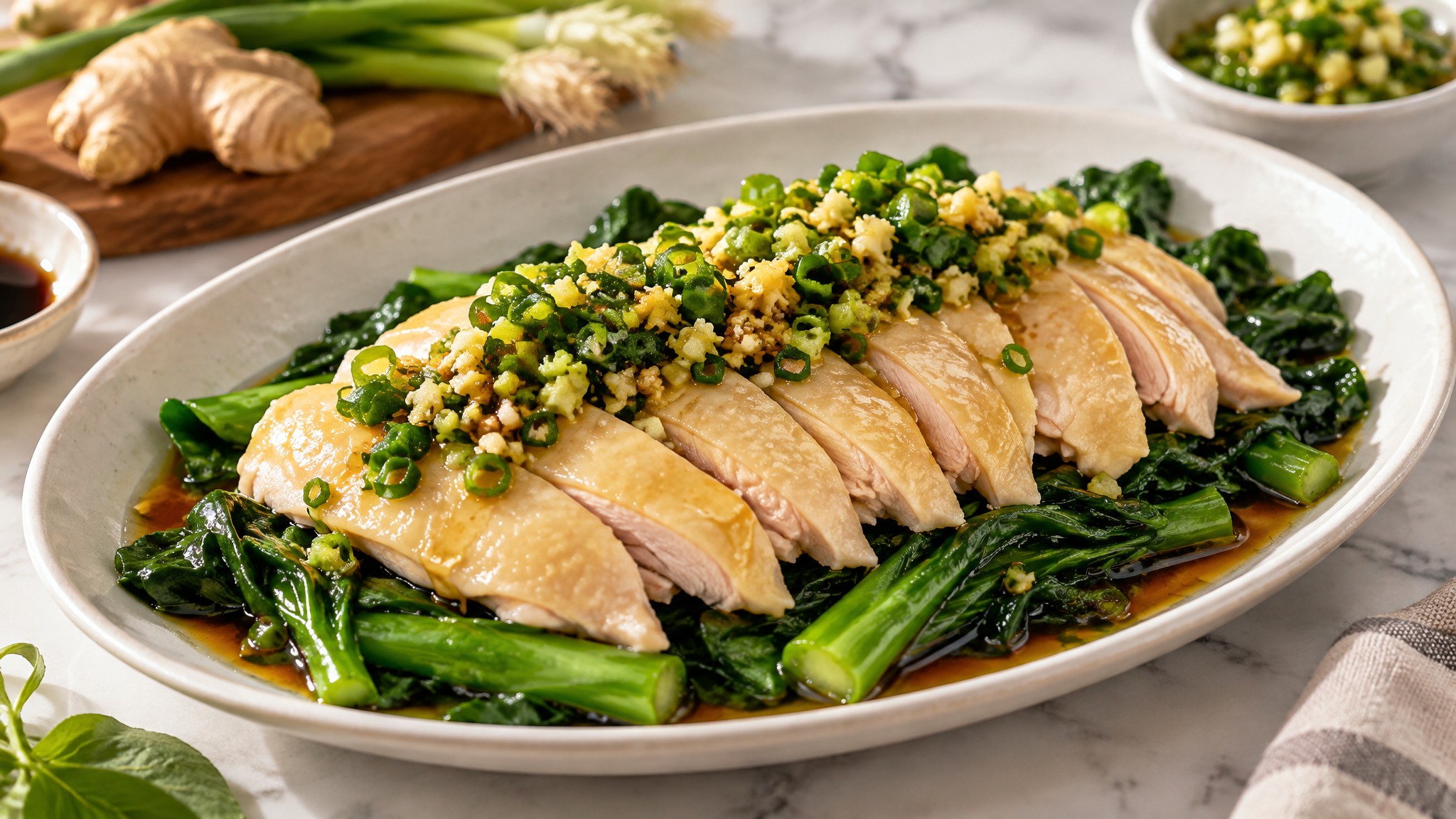
Cantonese-Inspired Poached Chicken with Ginger-Scallion Oil and Gai Lan
Silky poached chicken thighs with sizzling ginger-scallion oil over tender-crisp gai lan — the Cantonese classic, minus the rice, for a gentle post-meal glucose curve.
This dish is based on bai qie ji, the Cantonese white-cut chicken loved for its springy skin and very tender meat. Skin-on chicken thighs poach gently in a stock scented with ginger, scallion and Shaoxing wine. They then steep off the heat until just cooked and go straight into an ice bath. The cold water firms the skin and keeps the meat juicy. Hot peanut oil poured over raw grated ginger, scallions and salt makes the sauce. It sizzles hard and turns into a bright, fragrant ginger-scallion oil that takes only a minute to make.
The traditional plate comes with a bowl of white rice, which is a high-GI staple that can send blood sugar up quickly. This version uses gai lan (Chinese broccoli) instead, blanched in the same poaching liquid so it picks up the ginger flavour. The meal is built on protein, healthy fats and fibre-rich green vegetables. Almost all of its carbohydrate comes from the greens, so it has a naturally low glycemic load. The fat in the chicken skin and the ginger-scallion oil also slows digestion, which helps keep the glucose response gentle.
To help your blood sugar even more, eat a few bites of the gai lan before you start on the chicken. Fibre eaten first can blunt glucose spikes for the rest of the meal. If you want something extra on the side, choose a small portion of cauliflower rice, a quick cucumber salad or a clear bowl of the leftover poaching broth rather than white rice. Light soy sauce adds only a trace of carbohydrate, and the Shaoxing wine mostly cooks off in the stock. That makes this a good dinner for anyone managing blood sugar who doesn't want to give up flavour.
Blood Sugar Impact
Minimal impact. The meal is almost all protein, fat and non-starchy greens, so blood sugar should stay steady and you should have even energy for 3-4 hours.
Blood Sugar Tips
- ✓ Eat the gai lan first, then the chicken, so the fiber reaches your stomach before anything else.
- ✓ If you add rice, keep it to a small portion (about 1/2 cup), choose basmati or cooled-and-reheated rice, and eat it last.
- ✓ Take a 10-15 minute walk after eating, especially if you add rice or noodles.
🥗 Ingredients
- 1500 ml Water
- 50 g Ginger
- 6 pcs Scallion
- 1 tbsp Shaoxing rice wine
- 1.5 tsp Salt
- 4 pcs Chicken thigh
- 1000 ml Ice water
- 3 tbsp Peanut oil
- 300 g Gai lan
- 1 tbsp Light soy sauce
- 1 tsp Toasted sesame oil
- 6.3 cups Water
- 1.8 oz Ginger
- 6 pcs Scallion
- 1 tbsp Shaoxing rice wine
- 1.5 tsp Salt
- 4 pcs Chicken thigh
- 4.2 cups Ice water
- 3 tbsp Peanut oil
- 10.6 oz Gai lan
- 1 tbsp Light soy sauce
- 1 tsp Toasted sesame oil
👨🍳 Instructions
- 1
Make the poaching stock. Put the 1.5 L (about 6⅓ cups) of water, the ginger coins, the two crushed whole scallions, the Shaoxing wine and 1 tsp salt in a medium pot. Bring to a boil over high heat.
- 2
Gently lower the chicken thighs into the pot and let the liquid come back to a bare simmer, with only small bubbles breaking the surface. Simmer for 5 minutes, then cover the pot, turn off the heat and leave the chicken to steep for 15 minutes. It is done when the thickest part reads 74 °C (165 °F).
- 3
While the chicken steeps, make the ginger-scallion oil. Put the grated ginger, sliced scallions and ½ tsp salt in a heatproof bowl. Heat the peanut oil in a small pan to about 180 °C (355 °F), until it shimmers and just starts to smoke. Carefully pour it over the aromatics. It will sizzle hard. Stir once and set aside.
- 4
Move the chicken straight into the bowl of ice water and let it chill for 5 minutes so the skin turns springy and the meat stays silky. Lift it out and pat it dry with paper towels. Keep the poaching liquid in the pot.
- 5
Bring the poaching liquid back to a rolling boil. Add the gai lan and blanch for 2–3 minutes, until the stems are just tender-crisp and bright green. Drain well and arrange on a serving platter.
- 6
Slice the chicken across the grain into 1.5 cm (about ½ inch) strips and lay them over the gai lan.
- 7
Drizzle the soy sauce and sesame oil over the greens, then spoon the ginger-scallion oil over the chicken. Serve right away. For a gentler glucose response, eat a few bites of gai lan before the chicken.
📊 Nutrition Per Serving
| Per Serving | Whole Dish | |
|---|---|---|
| Calories | 732 | 1465 |
| Carbs | 13g | 26g |
| Sugars | 3g | 7g |
| Natural Sugars | 3g | 7g |
| Protein | 52g | 104g |
| Fat | 53g | 105g |
| Saturated Fat | 12g | 24g |
| Unsaturated Fat | 37g | 73g |
| Fiber | 5g | 9g |
| Soluble Fiber | 1g | 3g |
| Insoluble Fiber | 3g | 7g |
| Sodium | 2443mg | 4886mg |
Predicted Glucose Response
What if you...
Estimated model — individual responses vary. Not medical advice.
🔄 Lower GI Swaps
Shaoxing wine has some leftover sugar and carbs from fermenting rice. Dry sherry or dry white wine has less sugar and still adds depth to the poaching liquid. Rice vinegar adds almost no carbs, and its acetic acid may slightly blunt the blood sugar rise after a meal.
Regular soy sauce can contain wheat and sometimes added sugar or caramel coloring, which adds a small amount of fast-digesting carbs. Tamari is usually made with little or no wheat and has very few carbs. Low-sodium soy sauce keeps the carbs minimal and helps with heart health, which matters for people managing blood sugar. Coconut aminos has a little natural sugar, so keep portions small.
All of these oils have zero carbs, so the GL doesn't change. Avocado and olive oil are higher in monounsaturated fat and lower in omega-6 than refined peanut oil. That fat profile is linked to better insulin sensitivity, and the fat slows digestion, which flattens the blood sugar curve of the meal. Avocado oil also handles high heat well when you pour the hot oil over the ginger and scallions.
Gai lan is already a very low-GI vegetable. Adding more non-starchy greens like bok choy or choy sum, or switching to broccolini, raises the fiber and the volume of the meal without adding real carbs. More fiber slows how fast you absorb carbs from any side dish, like rice, which keeps blood sugar after the meal steadier.
Salt doesn't affect GI or GL. Cutting sodium supports blood pressure, which is a common concern for people with insulin resistance. White pepper keeps the flavor strong with less salt, so the dish stays satisfying and easy to pair with low-GL sides instead of starchy ones.
🔬 The Science Behind This Recipe
Why This Dish Is Easy on Blood Sugar
The dish is built on three things: tender poached chicken, crisp gai lan (Chinese broccoli) and a fragrant ginger-scallion oil. Carbohydrates are what raise blood sugar most directly, and this plate has very few. Chicken is almost pure protein, which your body digests slowly and steadily. Gai lan is a leafy green full of fiber. Fiber slows how fast food leaves your stomach, so any sugars are released gradually instead of all at once. The ginger-scallion oil adds healthy fat, which slows digestion further and helps you feel full for longer. The poaching liquid of water, ginger, scallions, Shaoxing wine and salt adds lots of flavor and almost no sugar. That's because only a splash of wine is used, and most of the alcohol cooks off.
The numbers back this up. The Glycemic Index (GI) tells you how quickly a food raises blood sugar, and this dish's estimated GI of 19 is very low. GI only tells part of the story, though, because it doesn't count how much carbohydrate you actually eat. Glycemic Load (GL) accounts for portion size too. At about 2.5 per serving, this recipe's GL is very low. Even foods with a higher GI can have a small effect in small amounts, and this plate has little carbohydrate to begin with.
Tips to make the most of it: Eat the gai lan first, then the chicken. Starting with vegetables and protein can soften the rise from any carbs that come later. If you serve it with rice, keep the portion modest and eat it last, ideally with some of the ginger-scallion oil, so the fat and protein slow it down. Finally, a 10–15 minute walk after eating helps your muscles use glucose from your bloodstream. It's a simple habit that adds to the benefits of a balanced meal like this one.
Related recipes
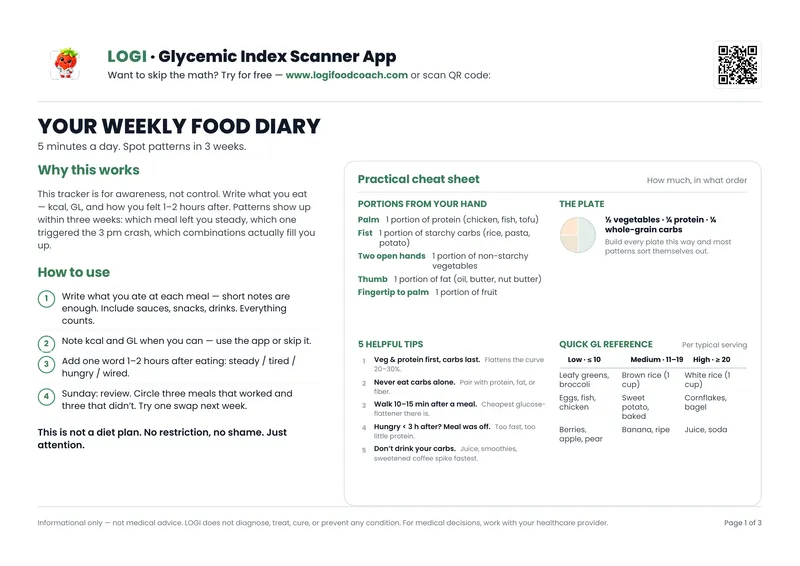
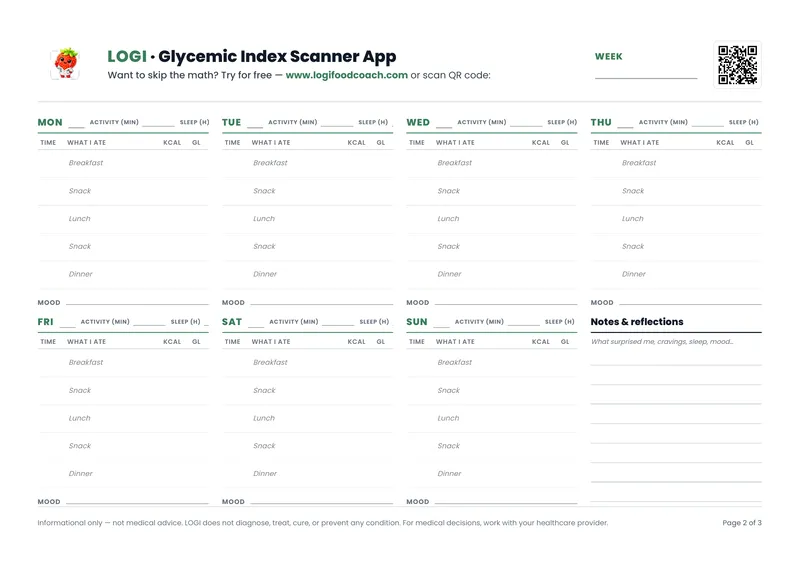
Free PDF — 3 pages
Your Weekly Food Journal
Track meals, glycemic load & mood. Spot patterns in 3 weeks.
No spam. Unsubscribe anytime.