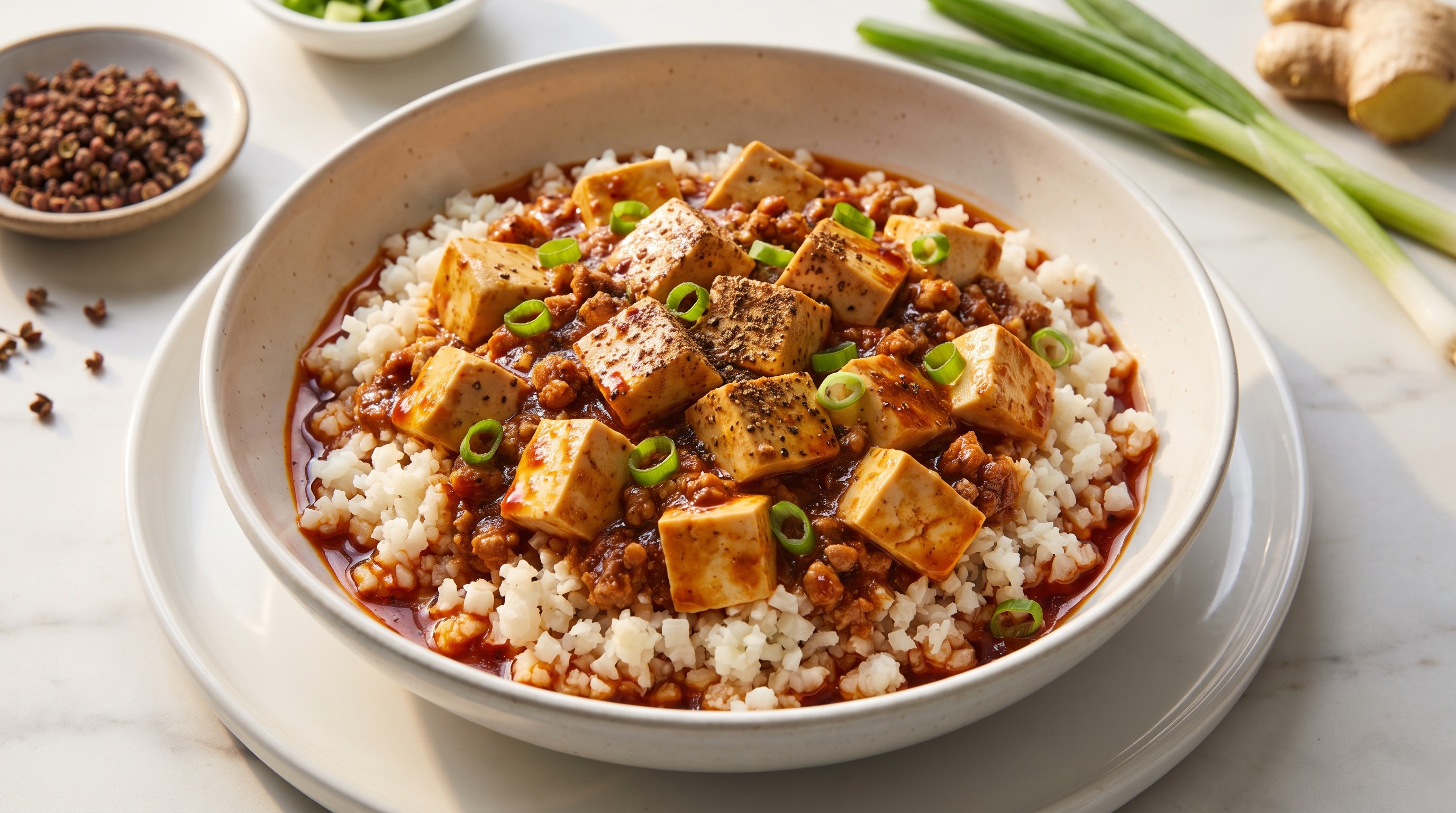
Lower-GI Mapo Tofu with Cauliflower Rice
Fiery Sichuan mapo tofu spooned over cauliflower rice — rich in plant protein, loaded with umami, and gentle on blood sugar with a smart low-GI swap.
This lower-GI take on Sichuan mapo doufu delivers every bit of the tongue-numbing, chili-laced satisfaction of the original — without the glucose spike that comes from a bowl of steamed white rice underneath. Cauliflower rice steps in as the base, bringing the glycemic index of the full plate down to a fraction of the classic version while adding fibre that further slows carbohydrate absorption.
Tofu is one of the most blood-sugar-friendly proteins you can eat: virtually zero carbohydrate, generous plant protein, and enough fat to moderate the glycemic response of the entire meal. Combined with ground pork for depth and the fermented complexity of doubanjiang, the sauce clings to each silky cube in a slick of chili oil that makes the dish feel indulgent rather than restrictive. Garlic, ginger, and Sichuan pepper contribute anti-inflammatory compounds alongside their heat.
For the best blood-sugar outcome, serve the cauliflower rice on the plate first and eat a few bites of the vegetable base before spooning the protein-rich sauce on top. This vegetable-first approach primes digestion and blunts any residual glucose response. The meal is naturally low in total carbohydrates — roughly 8 g net carbs per serving — making it suitable for anyone managing blood sugar through diet, whether you follow a low-GI framework, a moderate-carb plan, or simply want a lighter weeknight dinner that still packs serious flavour.
Blood Sugar Impact
Very low blood sugar impact expected. With a glycemic load of only 4.5 and an estimated GI of 29, the combination of protein-rich tofu and pork, healthy fats from sesame oil, and cauliflower rice in place of white rice will produce a minimal and gradual glucose rise, supporting stable energy for 3-4 hours.
Blood Sugar Tips
- ✓ Eat the protein (tofu and pork) and vegetables first before the cauliflower rice to further slow gastric emptying and blunt any residual glucose response.
- ✓ Add a splash of rice vinegar or black vinegar to the dish — acetic acid has been shown to reduce post-meal blood sugar spikes by up to 20-30%.
- ✓ Take a 10-15 minute walk after eating to enhance glucose uptake by muscles and keep blood sugar levels even flatter.
🥗 Ingredients
- 400 g Firm tofu
- 100 g Ground pork
- 1.5 tbsp Doubanjiang
- 3 pcs Garlic
- 1 pcs Fresh ginger
- 2 pcs Scallion
- 1 tbsp Soy sauce
- 1 tbsp Vegetable oil
- 1 tsp Toasted sesame oil
- 0.5 tsp Ground Sichuan pepper
- 200 g Cauliflower rice
- 14.1 oz Firm tofu
- 3.5 oz Ground pork
- 1.5 tbsp Doubanjiang
- 3 pcs Garlic
- 1 pcs Fresh ginger
- 2 pcs Scallion
- 1 tbsp Soy sauce
- 1 tbsp Vegetable oil
- 1 tsp Toasted sesame oil
- 0.5 tsp Ground Sichuan pepper
- 7.1 oz Cauliflower rice
👨🍳 Instructions
- 1
Drain the tofu block and slice it into roughly 2 cm cubes. Lay the cubes on a double layer of kitchen paper and press gently to draw out surface moisture — dry tofu browns better and won't spit when it hits the hot oil.
- 2
Place a wok or wide skillet over high heat and add the vegetable oil. Once the oil shimmers, scatter in the ground pork, breaking it apart with a spatula. Stir-fry for about 3 minutes until the pork is well browned and the edges turn crispy.
- 3
Turn the heat down to medium. Push the pork to one side and add the doubanjiang, minced garlic, minced ginger, and the white parts of the scallions. Stir everything together and fry for about 1 minute, until the oil takes on a deep red hue and the aromatics are fragrant.
- 4
Pour in 150 ml of water along with the soy sauce and stir to combine into a thin sauce. Carefully slide the tofu cubes into the wok. Let the mixture come to a gentle simmer and cook for 5 minutes, nudging the cubes occasionally with a spatula rather than stirring aggressively — this keeps them intact.
- 5
While the tofu simmers, warm the cauliflower rice in a separate dry skillet over medium heat for about 3 minutes, tossing occasionally, until tender but not mushy. Alternatively, microwave it covered for 2–3 minutes.
- 6
Once the sauce has reduced slightly and coats the tofu, remove the wok from the heat. Drizzle in the toasted sesame oil and sprinkle over the ground Sichuan pepper. Fold gently to distribute.
- 7
Divide the cauliflower rice between two bowls. Spoon the mapo tofu and its sauce generously over the top, then scatter the sliced green scallion tops over each bowl. Serve immediately.
📊 Nutrition Per Serving
| Per Serving | Whole Dish | |
|---|---|---|
| Calories | 431 | 863 |
| Carbs | 15g | 30g |
| Sugars | 4g | 8g |
| Added Sugars | 0g | 1g |
| Natural Sugars | 4g | 7g |
| Protein | 28g | 57g |
| Fat | 31g | 62g |
| Saturated Fat | 7g | 14g |
| Unsaturated Fat | 24g | 48g |
| Fiber | 4g | 8g |
| Soluble Fiber | 1g | 2g |
| Insoluble Fiber | 3g | 5g |
| Sodium | 932mg | 1864mg |
Predicted Glucose Response
What if you...
Estimated model — individual responses vary. Not medical advice.
🔄 Lower GI Swaps
Ceylon cinnamon has been shown to improve insulin sensitivity and help lower post-meal blood glucose spikes. Fenugreek seeds contain soluble fiber that slows carbohydrate digestion and absorption, reducing glycemic response. These blends replicate the numbing heat while adding active blood-sugar-lowering compounds.
Commercial chili pastes (such as doubanjiang or gochujang) often contain added sugar or wheat starch, which raise the glycemic load. Fresh chilies or sugar-free alternatives provide the same heat with virtually zero glycemic impact, and capsaicin may help improve glucose metabolism.
Generic vegetable oils (soybean, canola) are calorie-equivalent but lack the monounsaturated fats found in olive and avocado oil, which have been shown to slow gastric emptying and reduce post-meal blood glucose spikes. These oils help blunt the glycemic response of the overall meal.
Standard soy sauce can contain small amounts of added sugar or residual sugars from fermentation. Coconut aminos has roughly 40% less sugar per serving than regular soy sauce and a lower glycemic impact. Sugar-free tamari eliminates added sweeteners entirely while maintaining the umami profile.
Leaner proteins with less saturated fat support better long-term insulin sensitivity. Tempeh adds soluble fiber and plant protein, both of which slow glucose absorption and lower the overall glycemic load of the meal. The fermentation in tempeh may also benefit post-meal blood sugar regulation.
🔬 The Science Behind This Recipe
Why This Recipe Works for Blood Sugar
This Mapo Tofu is a brilliant example of how swapping just one ingredient can transform a meal's impact on your blood sugar. Traditional mapo tofu is served over white rice, which causes a rapid glucose spike. By replacing it with cauliflower rice, you dramatically cut the carbohydrate load while keeping the satisfying, saucy experience intact. Cauliflower rice contains roughly 5 grams of carbs per cup compared to about 45 grams in white rice — that's the single biggest reason this dish lands at a glycemic load of just 4.5, which is considered very low. Remember, glycemic load accounts for both the quality and quantity of carbs on your plate, so it gives you a much more realistic picture than GI alone.
The real magic here is the protein-and-fat combination working in your favor. Firm tofu delivers plant-based protein and healthy fats that slow gastric emptying — essentially, your stomach takes longer to process the meal, which means glucose trickles into your bloodstream gradually instead of flooding it all at once. Ground pork adds another layer of protein and fat, reinforcing that slow-release effect. When you eat protein and fat alongside any carbohydrates, they act like a natural brake on your blood sugar response.
Want to optimize even further? Try eating the tofu and pork first, saving the cauliflower rice for the last few bites — research suggests this "vegetables and protein first" approach can reduce post-meal glucose spikes by up to 30%. A short 10-15 minute walk after eating also helps your muscles absorb glucose more efficiently. With an estimated GI of 29 and plenty of protein in every bite, this dish keeps you full longer without the energy crash that follows high-carb meals.
Related recipes
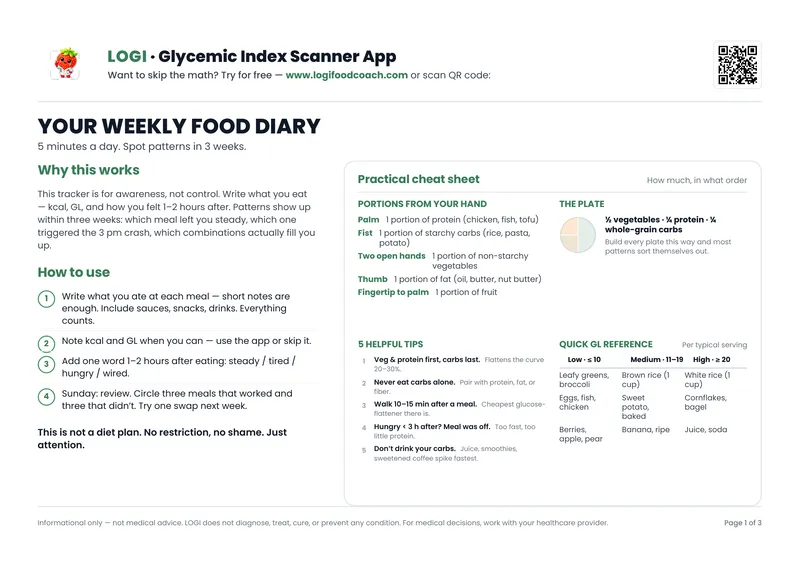
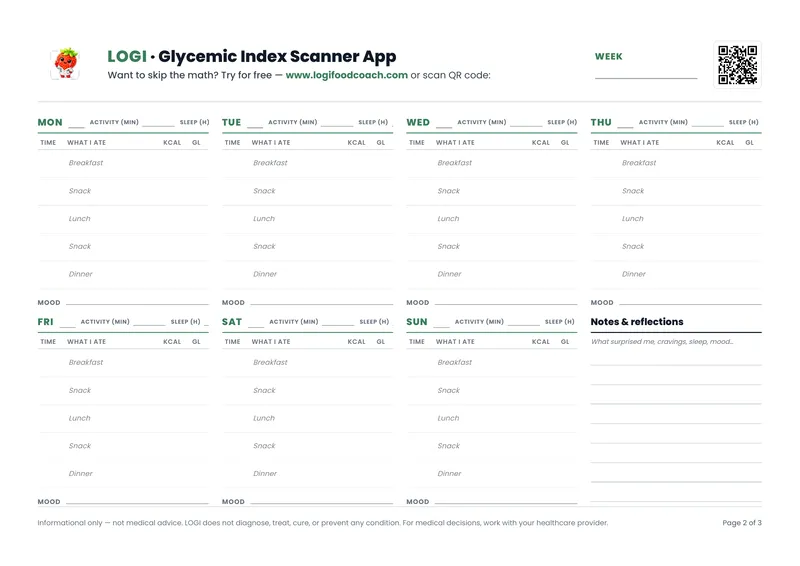
Free PDF — 3 pages
Your Weekly Food Journal
Track meals, glycemic load & mood. Spot patterns in 3 weeks.
No spam. Unsubscribe anytime.