Lower-GI Kung Pao Chicken over Wok-Fried Cauliflower
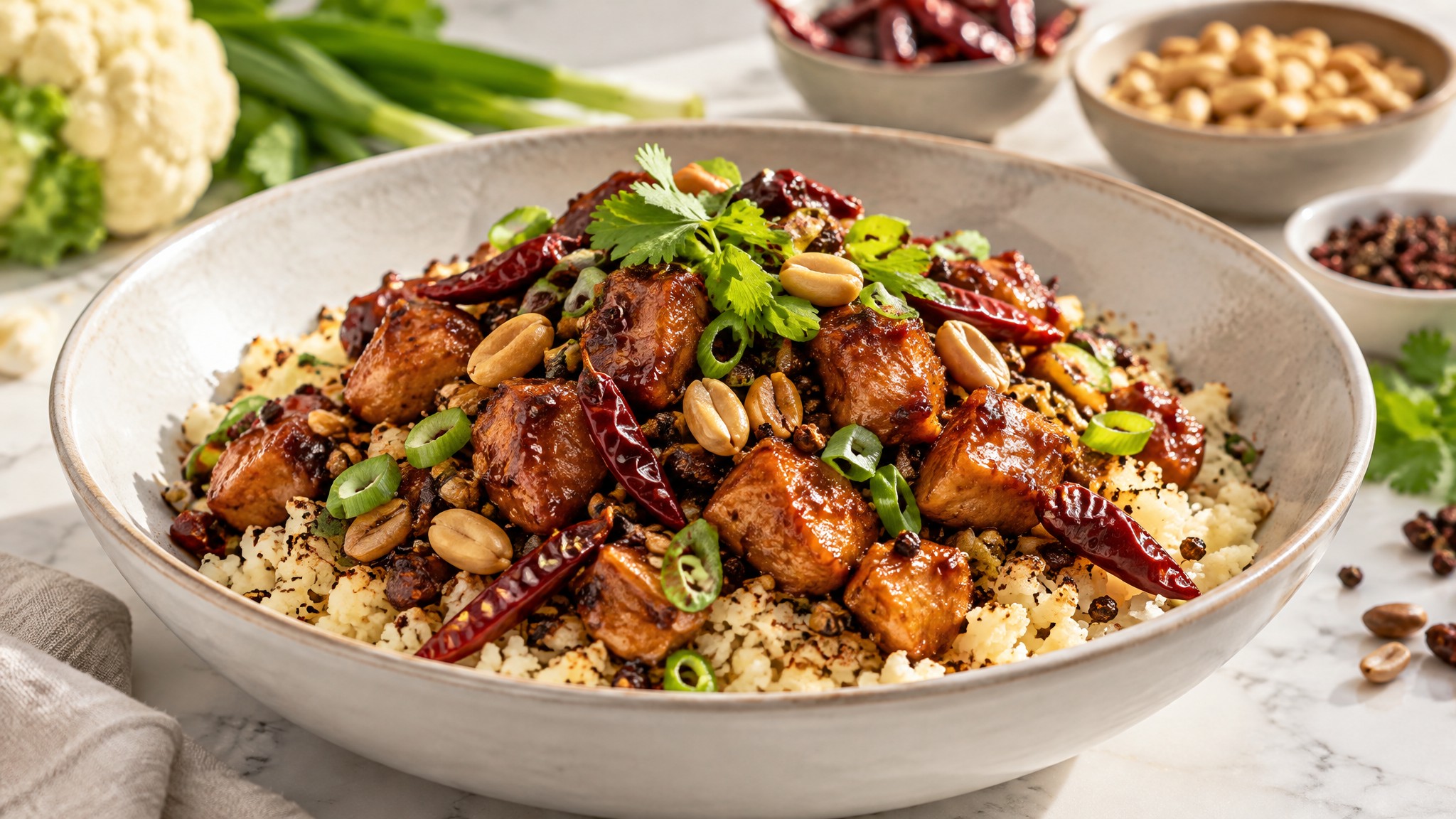
Sichuan-style kung pao chicken with blistered chillies, numbing pepper and peanuts in a tangy black-vinegar glaze, served over toasted cauliflower rice.
This recipe keeps what makes kung pao chicken a Sichuan classic. Tender cubes of chicken thigh are seared hard in a hot wok with dried red chillies that blister until deep red. Sichuan peppercorns add their citrusy, tingling heat, and roasted peanuts bring crunch. Everything is coated in a glossy sauce made with Chinese black vinegar, soy sauce, garlic, ginger and spring onion. The sauce is still sweet, sour, salty and hot, and it comes together in about half an hour.
Two changes make this version gentler on blood sugar. First, the sugar in the sauce is cut to 1 teaspoon for the whole recipe, which is just 1/2 teaspoon (about 2 g) per serving, and it is optional. The tangy black vinegar and the aromatics do most of the flavour work, so you barely miss it. Second, the usual bed of white rice is replaced with grated cauliflower, stir-fried until dry and lightly toasted. White rice is a high-GI starch that is digested quickly. Cauliflower is a non-starchy vegetable with very few available carbohydrates and plenty of fibre. That means the bowl gives you volume and something to soak up the sauce without the fast glucose load. The only other starch is 2 teaspoons of cornstarch, split between the marinade and the sauce, which comes to 1 teaspoon per serving.
The estimated GI of about 20 and glycemic load of about 5 per serving apply to this dish served over the cauliflower base only. If you serve it over white rice, as is traditional, the glycemic load goes up a lot.
Each of the two servings is about 175 g of chicken with a heaped cup (roughly 250 g) of cauliflower rice. The chicken thigh provides plenty of protein, and the peanuts and peanut oil add fat. Both help slow digestion and keep you full for longer. To get the most out of the meal, start with a few forkfuls of the cauliflower and spring onion greens before the chicken. Eating vegetables first is a simple habit that can help soften the rise in blood sugar after a meal. For a bigger plate, add a side of smashed cucumber salad or garlicky stir-fried greens instead of noodles or bread. Check the labels on your dried chillies and black vinegar, because some brands contain added sugar. This works well as a weeknight dinner for two, and the leftovers reheat well for lunch the next day.
Blood Sugar Impact
Minimal impact. The cauliflower base and protein-rich chicken thigh keep the glycemic load low, so glucose should rise only slightly and energy should stay steady for 3-4 hours. The small amounts of sugar and corn starch in the sauce may cause a mild, brief bump.
Blood Sugar Tips
- ✓ Eat the chicken and cauliflower before the sauce-coated bites, and keep the sugar and corn starch in the sauce to a minimum.
- ✓ Add extra non-starchy vegetables such as bell peppers, celery or bok choy, or a handful of peanuts, to add fiber and fat that slow glucose absorption.
- ✓ Take a 10-15 minute walk after the meal, and serve it with cauliflower rice instead of white rice to keep the glycemic load low.
🥗 Ingredients
- 350 g Chicken thigh
- 2 tbsp Soy sauce
- 2 tsp Cornstarch
- 500 g Cauliflower
- 0.25 tsp Salt
- 2 tbsp Peanut oil
- 3 tbsp Water
- 1 tbsp Chinese black vinegar
- 0.5 tsp Sugar
- 10 pcs Dried red chilli
- 1 tsp Sichuan peppercorns
- 3 pcs Garlic
- 10 pcs Ginger
- 4 pcs Spring onion
- 40 g Peanuts
- 12.3 oz Chicken thigh
- 2 tbsp Soy sauce
- 2 tsp Cornstarch
- 1.1 lb Cauliflower
- 0.25 tsp Salt
- 2 tbsp Peanut oil
- 3 tbsp Water
- 1 tbsp Chinese black vinegar
- 0.5 tsp Sugar
- 10 pcs Dried red chilli
- 1 tsp Sichuan peppercorns
- 3 pcs Garlic
- 10 pcs Ginger
- 4 pcs Spring onion
- 1.4 oz Peanuts
👨🍳 Instructions
- 1
Cut 350 g boneless, skinless chicken thighs into 2 cm (3/4 in) cubes. In a bowl, toss them with 1 tbsp soy sauce and 1 tsp cornstarch until evenly coated, then set aside for 10 minutes while you prepare everything else.
- 2
Prepare the aromatics. Snip 8–10 dried red chillies in half and shake out most of the seeds. Measure out 1 tsp Sichuan peppercorns. Thinly slice 3 garlic cloves and a 2 cm (3/4 in) piece of ginger. Slice 3 spring onions, keeping the white parts and green parts separate. Measure out 40 g roasted unsalted peanuts.
- 3
Make the cauliflower rice. Break 500 g cauliflower into florets. Pulse them in a food processor in short bursts until they look like coarse grains of rice, or grate them on the large holes of a box grater. Stop before they turn to mush.
- 4
Heat 1 tbsp peanut oil in a wok over high heat. Add the cauliflower and 1/4 tsp salt and stir-fry for about 5 minutes, until the moisture has cooked off and the grains are lightly toasted and just tender. Divide between two bowls and wipe the wok clean.
- 5
In a small bowl, whisk together 3 tbsp water, 1 tbsp Chinese black vinegar, 1 tsp sugar (optional, or a sugar-free swap), the remaining 1 tbsp soy sauce and the remaining 1 tsp cornstarch until smooth. Keep it next to the stove.
- 6
Put the wok back over medium heat with the remaining 1 tbsp peanut oil. Add the dried chillies and Sichuan peppercorns and fry for 30–60 seconds, stirring, until the chillies darken to a deep red and smell fragrant. Watch closely, because they turn bitter if they go black.
- 7
Turn the heat to high and add the chicken in a single layer. Let it sear undisturbed for 2 minutes to brown, then stir-fry for about 3 minutes more, until cooked through with no pink in the centre.
- 8
Add the garlic, ginger and spring onion whites and stir for 30 seconds until fragrant. Stir the sauce again, pour it into the wok and toss for about 1 minute until it thickens and coats the chicken in a glossy glaze. Fold in the peanuts and spring onion greens, then spoon over the cauliflower. For a gentler blood sugar response, eat a few bites of the cauliflower first.
📊 Nutrition Per Serving
| Per Serving | Whole Dish | |
|---|---|---|
| Calories | 752 | 1505 |
| Carbs | 26g | 53g |
| Sugars | 9g | 17g |
| Added Sugars | 1g | 2g |
| Natural Sugars | 8g | 15g |
| Protein | 53g | 106g |
| Fat | 50g | 100g |
| Saturated Fat | 11g | 22g |
| Unsaturated Fat | 35g | 70g |
| Fiber | 9g | 18g |
| Soluble Fiber | 3g | 5g |
| Insoluble Fiber | 6g | 12g |
| Sodium | 1452mg | 2904mg |
Predicted Glucose Response
What if you...
Estimated model — individual responses vary. Not medical advice.
🔄 Lower GI Swaps
The recipe uses only about 2 g of sugar per serving, but leaving it out or using a sweetener that doesn't raise blood glucose lowers the glycemic load a little more while keeping the sweet-sour balance.
Xanthan gum and glucomannan thicken the sauce with almost no available carbohydrate, so they actually reduce the glycemic load. Arrowroot is mainly useful if you need a different texture or want to avoid corn.
White rice is high-GI and would raise the glycemic load a lot. The estimated GI of about 20 and GL of about 5 assume a non-starchy vegetable base.
Both give the sauce the sourness it needs without added sugar. If you use black vinegar, check the label, because some brands are sweetened. Choose unseasoned rice vinegar, since seasoned versions contain sugar.
Some packaged or seasoned dried chillies and chilli mixes contain sugar. Check the label and choose ones whose only ingredient is chillies.
🔬 The Science Behind This Recipe
Most of the glycemic load in a classic kung pao chicken comes from the white rice underneath it, plus a sweet sauce that can contain a tablespoon or more of sugar. This version takes out the rice entirely. Cauliflower has only about 3 g of available carbohydrate per 100 g, so a 250 g portion adds very little glucose and brings fibre and volume with it. The sauce uses 1 tsp sugar for the whole recipe (about 2 g per serving, and optional), and the cornstarch is limited to 1 tsp per serving. Together with the small amount of carbohydrate in the peanuts, that gives an estimated GI of about 20 and a glycemic load of about 5 per serving. These figures only apply when the dish is served over cauliflower rice. Over a cup of cooked white rice, the glycemic load would rise to well over 30. Protein from about 175 g of chicken thigh per serving, plus fat from the peanuts and peanut oil, slows how quickly the stomach empties. That spreads out how fast any carbohydrate reaches the bloodstream. The acetic acid in black vinegar may also help soften the post-meal glucose rise. Eating the vegetables first adds fibre to the stomach before the rest of the meal arrives, which is another simple way to keep the response gentle.
Related recipes
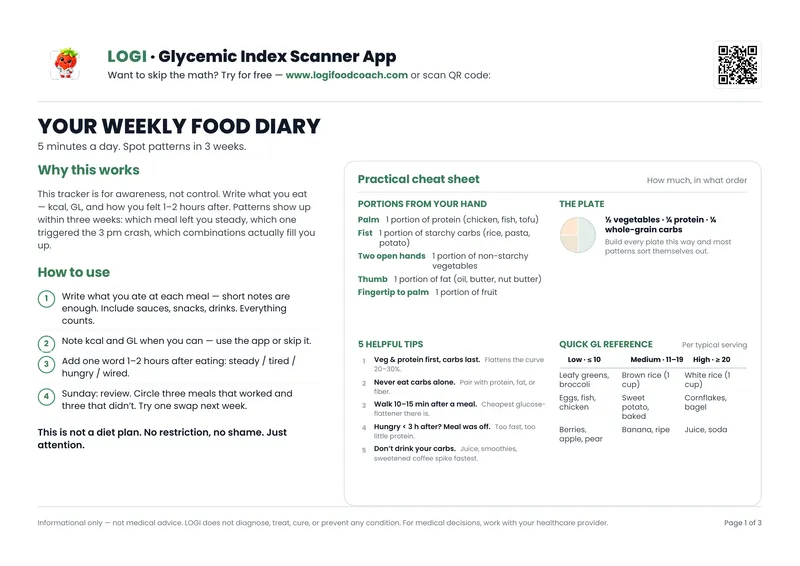
Free PDF — 3 pages
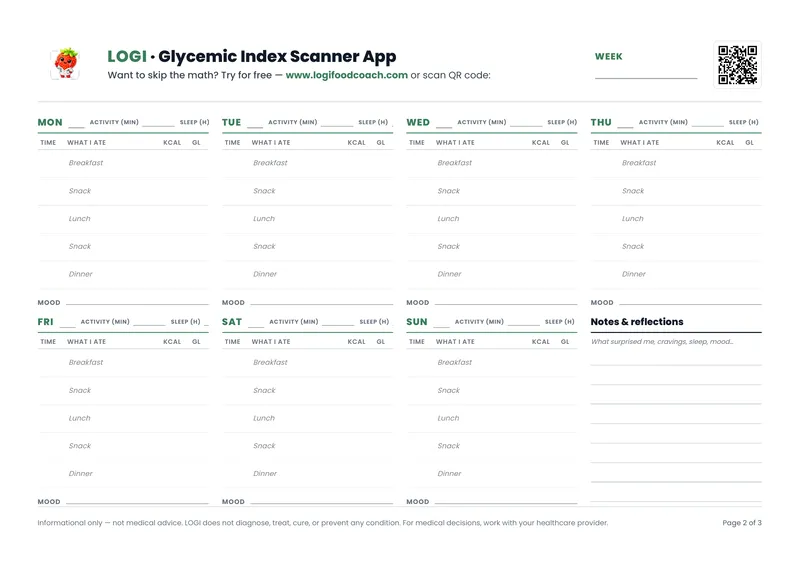
Your Weekly Food Journal
Track meals, glycemic load & mood. Spot patterns in 3 weeks.
No spam. Unsubscribe anytime.