Chicken Maafe with Cabbage and Okra (No Rice)
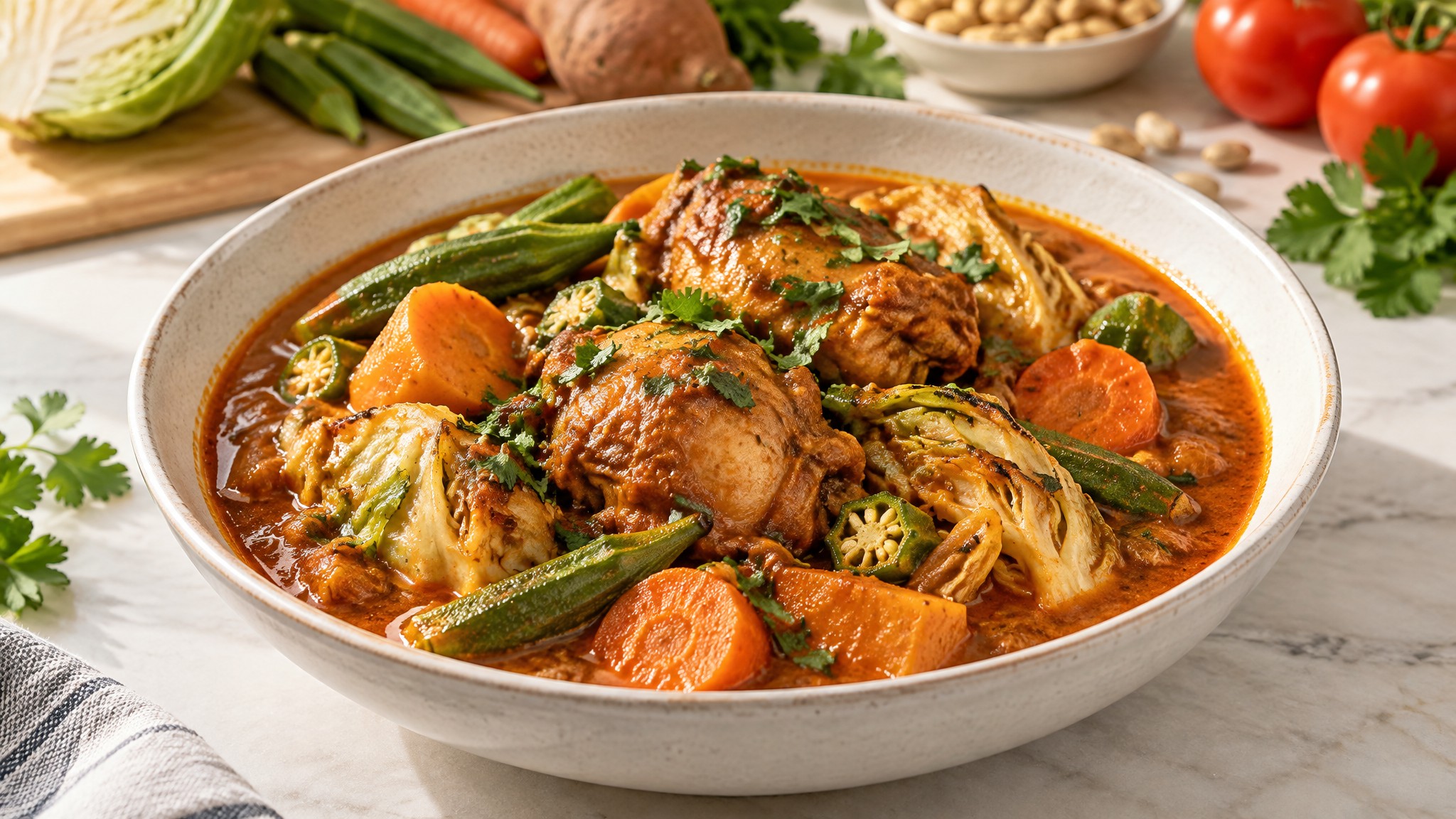
Senegalese chicken maafe in a silky peanut-tomato sauce, loaded with cabbage, okra and carrot instead of white rice for a hearty, blood-sugar-friendly bowl.
Maafe is one of West Africa's great comfort dishes. Pieces of meat simmer slowly in a sauce of ground peanuts and tomato until it turns thick, savory and deep brick-red. In Senegal it usually comes over a generous mound of white rice. This version keeps everything that makes maafe special: browned chicken thighs, onion and garlic softened in peanut oil, tomato paste fried until it caramelizes, and natural peanut butter whisked smooth with water. The change is the rice, which is left out entirely. Wedges of green cabbage, whole okra pods and carrot coins fill the bowl instead, so every spoonful still soaks up plenty of sauce.
White rice is a high-glycemic starch, and it is often the part of the plate that drives the biggest glucose rise. Dropping it and letting non-starchy vegetables carry the meal lowers the carbohydrate load considerably. A single small sweet potato stays in to thicken the sauce and add gentle sweetness. Shared between two bowls, it adds body without turning the dish starch-heavy. Peanuts are naturally low on the glycemic scale. Their fat and protein, together with the chicken and the fiber from the cabbage and okra, slow digestion so glucose enters the bloodstream more gradually. Okra also releases a soluble, mucilaginous fiber that helps thicken the stew.
For the steadiest response, start with a few bites of cabbage and okra before reaching for the sweet potato, and eat the chicken alongside them. Use peanut butter made only from peanuts, because sweetened brands quietly add sugar. If you want something on the side, a crisp cucumber-tomato salad or a small portion of cooked lentils suits the stew far better than bread or rice. A short walk after eating can also help your body use the glucose from the meal. Maafe reheats beautifully, and the sauce gets even richer the next day.
Blood Sugar Impact
Low to moderate impact: the sweet potato and carrot are the main carbohydrate sources, and the fat in the peanut sauce and the protein in the chicken thighs slow how fast they are absorbed, so expect a gentle rise and steady energy for about 3-4 hours. The title mentions cabbage and okra, but the ingredient list leaves them out; adding them would bring in more fiber and lower the impact further.
Blood Sugar Tips
- ✓ Eat the chicken and the non-starchy vegetables like cabbage and okra first, and leave the sweet potato chunks for last to soften the glucose rise.
- ✓ Use natural peanut butter with no added sugar, and keep the sweet potato to a modest portion of about 1/2 cup per serving.
- ✓ Take a 10-15 minute walk after the meal to help your muscles absorb glucose from the sweet potato and carrots.
🥗 Ingredients
- 400 g Chicken thigh
- 0.75 tsp Salt
- 1 tbsp Peanut oil
- 1 pcs Onion
- 3 pcs Garlic
- 3 tbsp Tomato paste
- 4 tbsp Peanut butter
- 450 ml Water
- 1 pcs Carrot
- 1 pcs Sweet potato
- 200 g Green cabbage
- 11 pcs Okra
- 14.1 oz Chicken thigh
- 0.75 tsp Salt
- 1 tbsp Peanut oil
- 1 pcs Onion
- 3 pcs Garlic
- 3 tbsp Tomato paste
- 4 tbsp Peanut butter
- 1.9 cups Water
- 1 pcs Carrot
- 1 pcs Sweet potato
- 7.1 oz Green cabbage
- 11 pcs Okra
👨🍳 Instructions
- 1
Pat the chicken pieces dry with paper towels and sprinkle with half the salt. Heat the peanut oil in a heavy-bottomed pot over medium-high heat. Add the chicken in one layer and sear for about 6 minutes, turning once, until golden on both sides. Move it to a plate. It will finish cooking in the sauce.
- 2
Turn the heat down to medium. Add the onion and garlic to the same pot and cook for about 5 minutes, stirring and scraping up the browned bits from the chicken, until the onion is soft and translucent.
- 3
Add the tomato paste and fry it for about 3 minutes, stirring often, until it turns a deep brick-red and starts to catch on the bottom of the pot. This builds the savory base of the sauce without any added sugar.
- 4
In a small bowl, whisk the peanut butter with 150 ml (5 fl oz) of hot water until smooth and pourable. Stir it into the pot along with the remaining 300 ml (10 fl oz) of water. Return the chicken and any juices from the plate.
- 5
Bring the sauce to a gentle simmer, cover, and cook on low for 15 minutes so the chicken becomes tender and the peanut sauce starts to thicken.
- 6
Stir in the carrot coins and sweet potato chunks, cover again, and simmer for 8 minutes. Lay the cabbage wedges and whole okra on top. Simmer uncovered for 10 more minutes, gently stirring the bottom every few minutes so nothing sticks, until the vegetables are tender and the sauce coats the back of a spoon.
- 7
Taste the sauce and season with the remaining salt. Serve hot in deep bowls, giving each one a cabbage wedge, plenty of okra and a generous ladle of sauce. For gentler blood sugar, eat a few bites of the vegetables and chicken before the sweet potato.
📊 Nutrition Per Serving
| Per Serving | Whole Dish | |
|---|---|---|
| Calories | 876 | 1751 |
| Carbs | 45g | 89g |
| Sugars | 17g | 33g |
| Added Sugars | 1g | 3g |
| Natural Sugars | 15g | 30g |
| Protein | 60g | 120g |
| Fat | 53g | 106g |
| Saturated Fat | 13g | 25g |
| Unsaturated Fat | 36g | 72g |
| Fiber | 11g | 22g |
| Soluble Fiber | 3g | 7g |
| Insoluble Fiber | 8g | 16g |
| Sodium | 1276mg | 2552mg |
Predicted Glucose Response
What if you...
Estimated model — individual responses vary. Not medical advice.
🔄 Lower GI Swaps
Sweet potato is the main source of glycemic load in this stew. Its GI is about 60-70 when boiled, and it adds roughly 20 g of carbs per 100 g. Butternut squash keeps the sweetness and orange color with about half the available carbs per serving. Turnip and cauliflower add very little to glycemic load (under 5 g net carbs per 100 g) and still soak up the peanut sauce. Any of these could noticeably lower the dish's GL.
Carrots are moderate in GI, and when stewed for a long time they release their starch and sugar more easily. Green beans, celery and zucchini are very low in GI and available carbs. They add fiber and bulk without adding much to glycemic load.
Many commercial peanut butters contain added sugar or dextrose, which raises the glycemic load. Peanut butter made only from peanuts, or freshly ground roasted peanuts, keeps the rich sauce with almost no sugar. The fat, protein and fiber in peanuts also slow the absorption of the other carbs in the meal.
Some tomato pastes and blends contain added sugar, and concentrated paste is denser in natural sugars. A version with no added sugar, or crushed fresh tomatoes, gives the same savory tomato base with fewer available carbs per serving.
Onions caramelize as they cook down, which concentrates their natural sugars. Leek gives a similar aromatic flavor with a little less sugar. Using less onion and more cabbage keeps the flavor and lowers the dish's overall glycemic load a little.
🔬 The Science Behind This Recipe
Swapping out the rice is the biggest reason this Chicken Maafe works so well for steady blood sugar. Traditional maafe is usually served over a big pile of white rice, which is the part of the meal that turns into glucose fastest. Here the rich peanut sauce goes over cabbage and okra instead, so most of the meal's carbohydrates come from vegetables full of fiber. Okra has a special kind of soluble fiber that turns slightly gel-like as it cooks. This slows how quickly food leaves your stomach, so sugars enter your bloodstream gradually instead of all at once. Cabbage adds bulk and more fiber while providing very little starch.
The other ingredients add to that effect. Chicken thigh brings protein and some natural fat, and the peanut oil and peanut sauce add more healthy fats. Protein and fat both slow digestion, which is why pairing carbohydrates with them tends to soften glucose spikes. Even the onion and garlic help, because they add lots of flavor while contributing very little to your blood sugar.
The numbers tell the same story. A GI of 23 is very low, so the carbohydrates in this dish are released slowly. Glycemic Load (GL) goes a step further by also counting how much carbohydrate a serving contains, because the amount you eat matters as much as how fast it's absorbed. At 10.3 per serving, this dish sits at the low end of the moderate range, which is a comfortable, balanced level for a full main course. To get even more from it, eat some cabbage and okra before the rest of your plate, and take a gentle 10–15 minute walk after eating. Working muscles use glucose from your blood, which helps keep your energy steady through the afternoon.
Related recipes
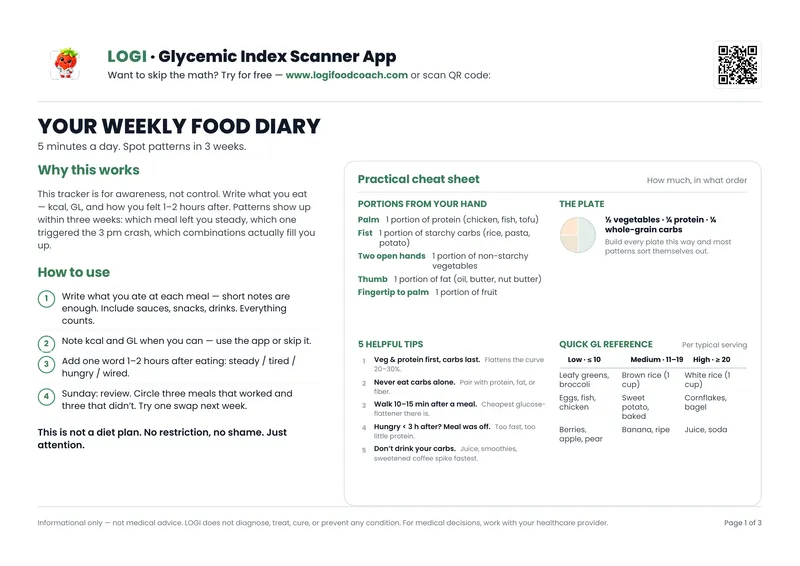
Free PDF — 3 pages
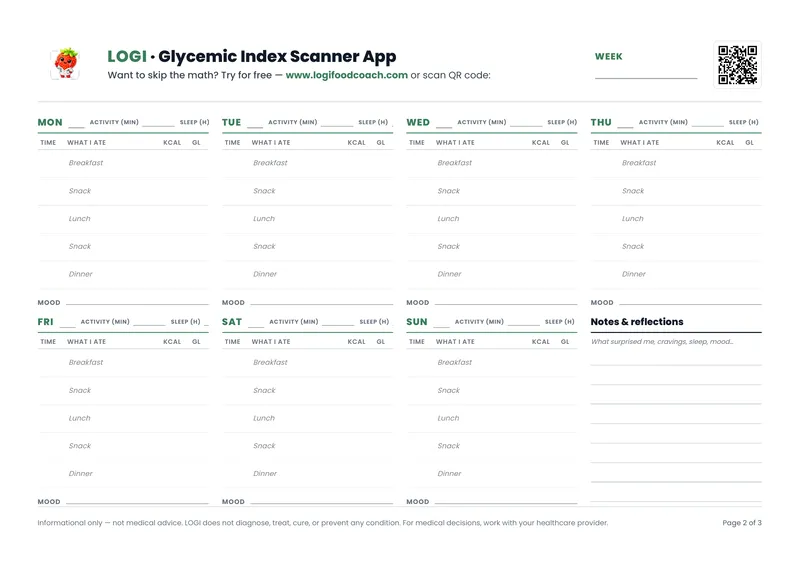
Your Weekly Food Journal
Track meals, glycemic load & mood. Spot patterns in 3 weeks.
No spam. Unsubscribe anytime.