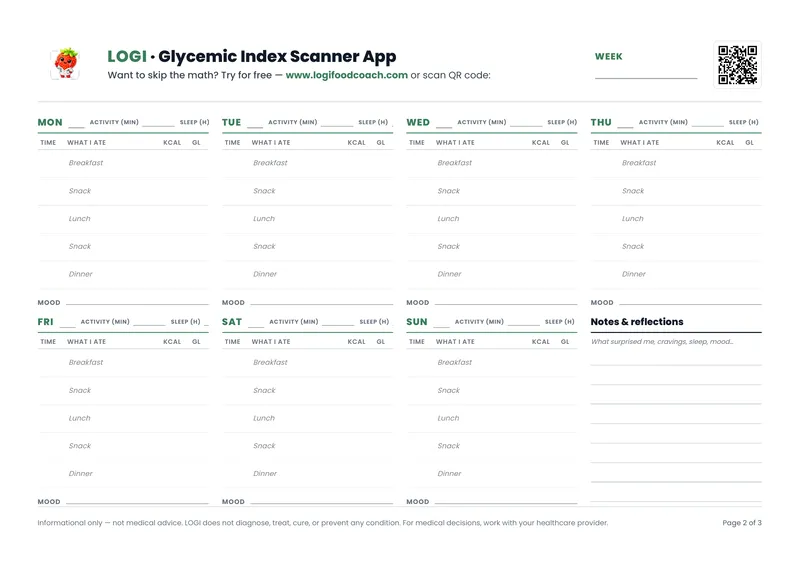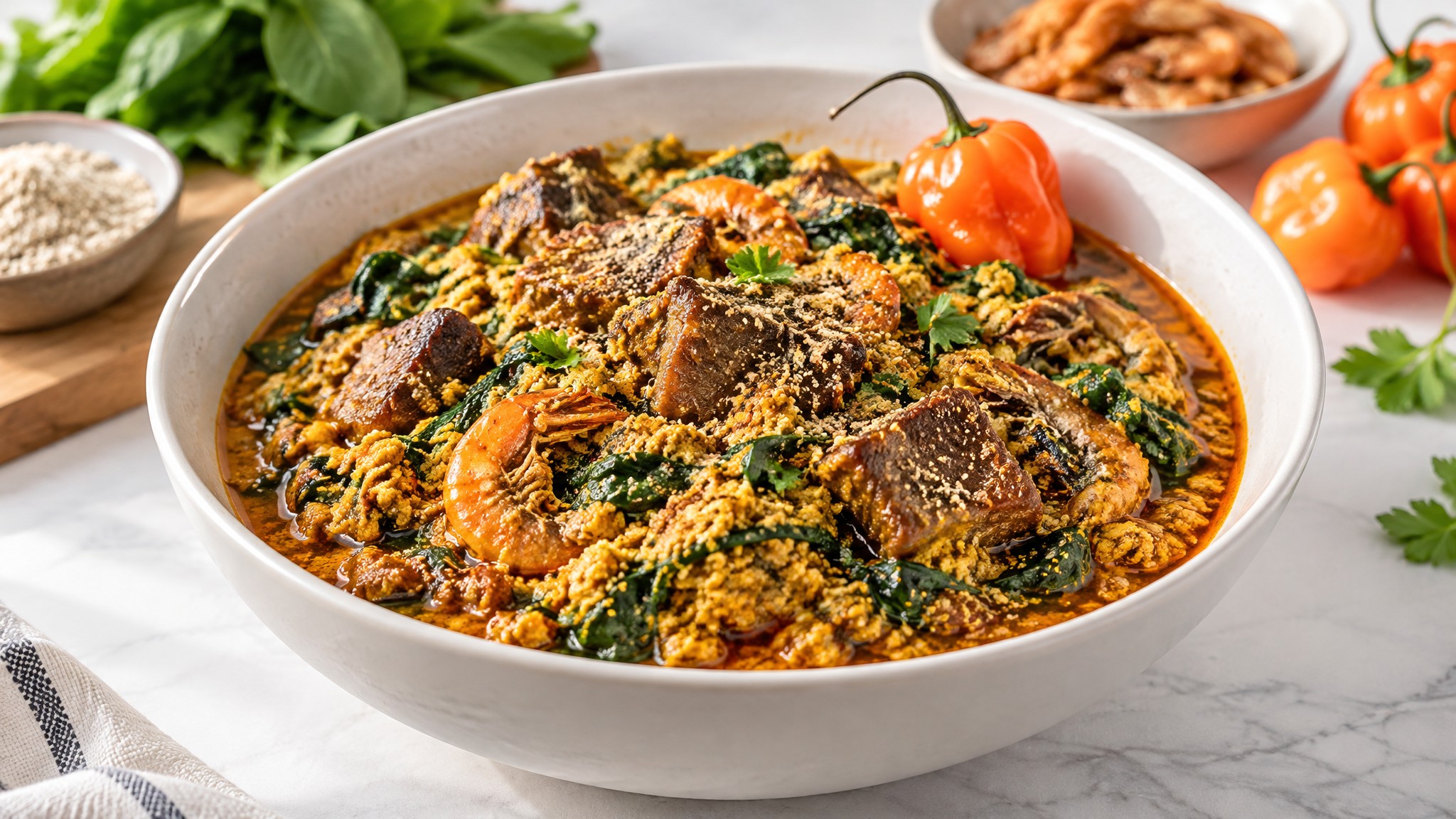
Egusi Soup Bowl with Seared Beef, Dried Shrimp and Spinach, No Fufu
Nutty Nigerian egusi stew with seared sirloin, dried shrimp and spinach, served without fufu as a high-protein, blood sugar friendly bowl.
This bowl is based on Nigerian egusi soup, one of West Africa's best-known dishes. Ground melon seeds cook in a purée of onion, red bell pepper, garlic and scotch bonnet fried in red palm oil. As they cook, the seeds set into soft, nutty curds that thicken the stew. Ground dried shrimp adds a deep savoury flavour. Seared cubes of beef sirloin and a big handful of spinach make it a full meal. Egusi is usually eaten with fufu, eba or pounded yam. Here the starchy swallow is left out, and the stew is served in deep bowls and eaten on its own.
Leaving out the swallow is what makes this a low-glycemic meal. Fufu, eba and pounded yam are dense, fast-digesting starches with a GI often above 70. A typical portion can add 60 to 90 g of carbohydrate and a high glycemic load, which would turn this low-impact stew into a meal that can push glucose up sharply. If you do pair it with a traditional swallow, the numbers on this page no longer apply. Without it, the meal is built on seeds, greens and meat, and each serving has roughly 18 g of total carbohydrate (about 12 g net). Egusi seeds supply healthy fats, plant protein and fibre. Sirloin and dried shrimp add more protein. Spinach adds fibre, magnesium and bulk for very few carbohydrates. Protein, fat and fibre together slow digestion, so energy comes in steadily instead of as a quick spike and drop. Onion and bell pepper are the main sources of natural sugar, and both are low GI.
If you would like something on the side, choose a low-GI option instead of fufu: a small bowl of cauliflower 'fufu', a konjac (glucomannan) swallow, or a measured portion of about 50 g cooked oat or whole-grain swallow. To keep sodium in check, use unsalted or low-sodium stock and taste before adding salt, because dried shrimp is already salty. This matters for anyone managing blood pressure alongside blood sugar. Red palm oil gives the stew its colour and flavour but is high in saturated fat. This recipe uses a moderate amount, about 3/4 tablespoon per serving, and you can replace half of it with a high-oleic sunflower or olive oil. Eat a few spoonfuls of the spinach-rich broth first so the fibre reaches your stomach before anything else, and a short walk after eating can help steady glucose levels even more. The stew keeps well in the fridge for two to three days, and many people find it tastes even better the next day.
Blood Sugar Impact
Minimal impact. With no fufu, the carbs come only from the vegetables and the egusi seeds, and the beef protein and the fat from the seeds and palm oil slow digestion, so energy should stay steady for 4-5 hours.
Blood Sugar Tips
- ✓ Eat it on its own without fufu, garri or rice. If you want something starchy, add a small portion of cauliflower mash or a few slices of boiled plantain, and eat them after the soup.
- ✓ Check the label on store-bought beef broth and dried shrimp powder, since some contain added sugar, MSG or bouillon fillers. Plain or homemade versions are best.
- ✓ Take a 10-15 minute walk after eating, and keep the palm oil moderate so the meal stays balanced and easy to digest.
🥗 Ingredients
- 300 g Beef sirloin
- 0.5 tsp Salt
- 1.5 tbsp Red palm oil
- 1 pcs Onion
- 1 pcs Red bell pepper
- 1 pcs Scotch bonnet pepper
- 400 ml Beef stock
- 100 g Ground egusi
- 1 tbsp Dried shrimp
- 200 g Spinach
- 10.6 oz Beef sirloin
- 0.5 tsp Salt
- 1.5 tbsp Red palm oil
- 1 pcs Onion
- 1 pcs Red bell pepper
- 1 pcs Scotch bonnet pepper
- 1.7 cups Beef stock
- 3.5 oz Ground egusi
- 1 tbsp Dried shrimp
- 7.1 oz Spinach
👨🍳 Instructions
- 1
Cut 300 g (about 10.5 oz) of beef sirloin into 2.5 cm (1 inch) cubes. Dry them well with paper towels and season with 1/4 tsp of the salt. Set a heavy pot over high heat and warm 3/4 tbsp of the red palm oil (half the total). Add the beef in a single layer and sear for about 4 minutes, turning, until browned all over. Move it to a plate with its juices. It will finish cooking later in the stew.
- 2
While the pot rests, roughly chop 1 medium onion, 1 red bell pepper (seeds removed), 1 scotch bonnet pepper (seeded for less heat) and 2 garlic cloves. Put them in a blender with 50 ml (about 1.7 fl oz) of the unsalted beef stock. Pulse to a coarse purée, keeping a little texture.
- 3
Turn the heat down to medium. Add the remaining 3/4 tbsp of palm oil to the pot (or use part high-oleic sunflower or olive oil), then pour in the pepper purée. Fry for about 8 minutes, stirring often, until the purée has thickened and you can see the oil separating at the edges.
- 4
In a small bowl, mix 100 g (about 3.5 oz) of ground egusi with 80 ml (about 2.7 fl oz) of stock to make a thick paste. Drop small spoonfuls of the paste over the pepper base and do not stir. Cook for 5 minutes, until the spoonfuls firm up into soft curds.
- 5
Pour in the remaining 270 ml (about 9 fl oz) of stock and stir in 2 tbsp (about 15 g) of ground dried shrimp. Stir gently, breaking the egusi curds into small clumps. Cover and simmer on low heat for 12 minutes, stirring now and then so nothing sticks to the bottom.
- 6
Return the seared beef and its juices to the pot and fold in 200 g (about 7 oz) of roughly chopped spinach. Simmer uncovered for about 3 minutes, until the spinach has wilted and the beef is just cooked through and still tender.
- 7
Taste before adding any more salt, since the dried shrimp and stock already add sodium, and use only as much of the remaining 1/4 tsp as you need. Ladle into deep bowls and serve on its own, without fufu, eba or pounded yam. For a gentler glucose response, eat some of the spinach and broth first, then enjoy the beef and egusi. If you want a side, add a small portion of cauliflower 'fufu' or konjac swallow.
📊 Nutrition Per Serving
| Per Serving | Whole Dish | |
|---|---|---|
| Calories | 465 | 931 |
| Carbs | 14g | 28g |
| Sugars | 6g | 12g |
| Natural Sugars | 6g | 12g |
| Protein | 50g | 100g |
| Fat | 23g | 46g |
| Saturated Fat | 9g | 18g |
| Unsaturated Fat | 13g | 27g |
| Fiber | 5g | 10g |
| Soluble Fiber | 1g | 3g |
| Insoluble Fiber | 3g | 7g |
| Sodium | 1566mg | 3132mg |
Predicted Glucose Response
What if you...
Estimated model — individual responses vary. Not medical advice.
🔄 Lower GI Swaps
Traditional swallows are high-GI starches (often 70+) that add a large glycemic load. These options give a familiar side with far fewer fast-digesting carbs, or a much smaller, slower-digesting portion.
Salt, stock and dried shrimp together can push sodium high. Lower-sodium stock supports healthy blood pressure, which is especially important for people managing diabetes.
Red palm oil is high in saturated fat. Replacing part of it with an oil rich in monounsaturated fat supports cardiometabolic health and keeps the stew's colour and flavour.
Both are lean, zero-carb proteins that keep the glycemic load just as low, with less saturated fat than red meat.
Optional, for a milder stew. Changing the heat level has no effect on the glycemic load.
🔬 The Science Behind This Recipe
The estimated GI of this stew is about 12 and the glycemic load is about 2 per serving. For a very low-carb dish like this, GI is not a very useful number. GI is measured using a portion that contains 50 g of available carbohydrate, and one serving of this stew has only about 18 g of total carbohydrate (about 12 g net carbs after fibre). Glycemic load is more useful here because it accounts for how much carbohydrate you actually eat (GL = GI × net carbs ÷ 100). Most of the carbohydrate comes from the onion and bell pepper, with smaller amounts from the egusi seeds and spinach. Protein from the sirloin and shrimp, fat from the egusi and oil, and fibre from the seeds and spinach slow down how fast the stomach empties, which flattens the glucose curve. The low number depends on eating the stew without a starchy swallow. One portion of fufu, eba or pounded yam (GI often 70+) can add 60 to 90 g of fast-digesting carbohydrate and raise the meal's glycemic load to 40 or more.
Related recipes
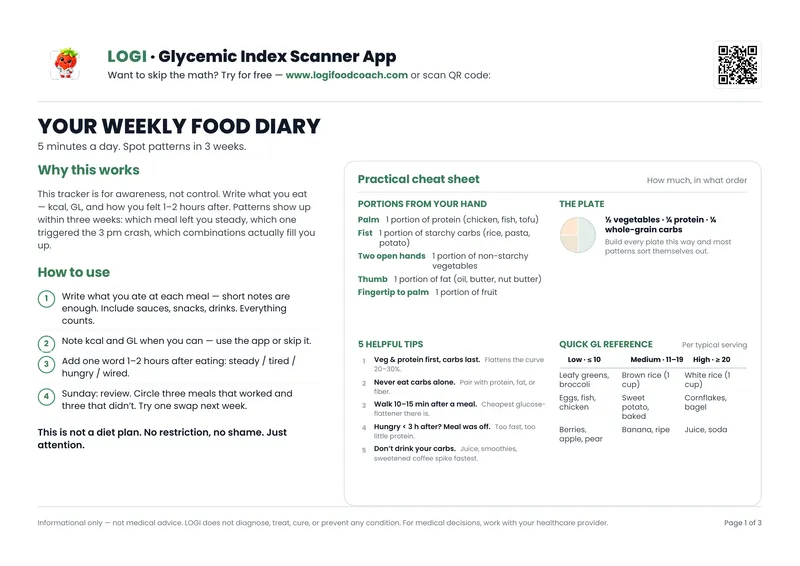
Free PDF — 3 pages
Your Weekly Food Journal
Track meals, glycemic load & mood. Spot patterns in 3 weeks.
No spam. Unsubscribe anytime.