Low-GI Doro Wat with Braised Collard Greens
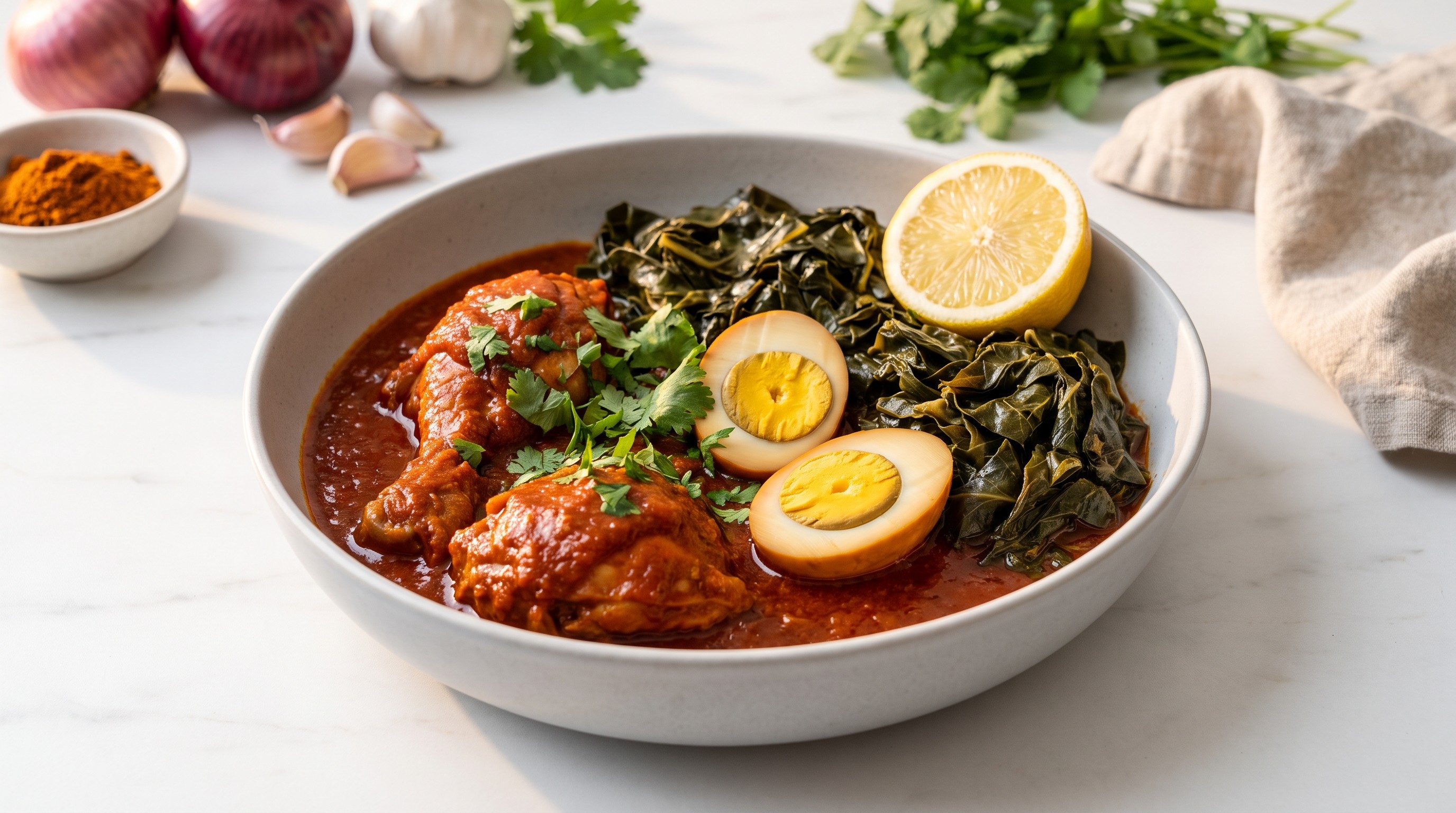
Ethiopian chicken stew simmered in berbere-spiced onion paste with hard-boiled eggs and garlicky collard greens — a protein-rich, naturally low-GI comfort bowl.
Doro wat is the crown jewel of Ethiopian cooking — a deeply spiced chicken stew built on a foundation of slow-cooked onions that melt into a rich, mahogany-coloured sauce. Berbere spice lends its signature warmth of chilli, fenugreek, and cardamom, while hard-boiled eggs nestled into the braise soak up every layer of flavour. This version is a blood-sugar-friendly powerhouse with virtually no high-glycemic ingredients on the plate.
The secret to steady glucose here is the complete absence of refined starches. Traditional doro wat is served atop injera, a spongy flatbread made from teff flour that, while lower GI than wheat bread, still delivers a meaningful carbohydrate load. Swapping it for garlicky braised collard greens adds fibre and micronutrients without the glucose spike. The combination of protein from chicken thighs and eggs, healthy fats from olive oil, and soluble fibre from the onion-and-greens base creates a meal that digests slowly, keeping blood sugar remarkably flat for hours after eating.
For the best glycemic outcome, start your meal with a few bites of the collard greens before digging into the stew — eating vegetables first has been shown to blunt the post-meal glucose rise. Pair with a small side of cooled lentils or a handful of roasted chickpeas if you want extra satiety, as both are low-GI legumes that complement the Ethiopian flavour profile beautifully. This dish also reheats exceptionally well, making it ideal for meal prep.
Blood Sugar Impact
Very low blood sugar impact expected. With a glycemic load of 5.0 and an estimated GI of 19, this protein-rich stew with fibrous greens should provide stable energy for 3-4 hours with minimal glucose elevation.
Blood Sugar Tips
- ✓ Eat the collard greens first before the chicken and egg to create a fiber buffer that slows glucose absorption.
- ✓ Enjoy the meal at a relaxed pace — slower eating gives your body more time to regulate insulin response.
- ✓ Follow the meal with a 10-15 minute walk to further blunt any modest postprandial glucose rise.
🥗 Ingredients
- 350 g Chicken thigh
- 2 pcs Egg
- 300 g Yellow onion
- 2 tbsp Tomato paste
- 1.5 tbsp Berbere spice
- 3 pcs Garlic
- 1 tsp Ginger
- 2 tbsp Olive oil
- 200 g Collard greens
- 15 ml Lemon juice
- 1 tsp Salt
- 12.3 oz Chicken thigh
- 2 pcs Egg
- 10.6 oz Yellow onion
- 2 tbsp Tomato paste
- 1.5 tbsp Berbere spice
- 3 pcs Garlic
- 1 tsp Ginger
- 2 tbsp Olive oil
- 7.1 oz Collard greens
- 1 tbsp Lemon juice
- 1 tsp Salt
👨🍳 Instructions
- 1
Bring a small pot of water to a boil, carefully lower in the eggs, and cook for exactly 10 minutes. Transfer them to a bowl of cold water to stop the cooking, then peel and set aside.
- 2
While the eggs cook, warm 1 tablespoon of olive oil in a heavy-bottomed pot or Dutch oven over medium heat. Add the diced onions with half the salt and cook, stirring every couple of minutes, until they collapse and turn a deep golden-brown — about 15 minutes. Resist the urge to rush this step; the caramelised onions form the flavour backbone of the stew.
- 3
Stir the berbere spice, tomato paste, minced garlic, and grated ginger into the onions. Cook for about 2 minutes, stirring constantly, until the paste deepens in colour and the spices become very fragrant.
- 4
Nestle the chicken thighs into the spiced onion paste and pour in 200 ml of water. Bring the liquid to a gentle simmer, then partially cover the pot and cook for 20 minutes until the chicken is tender and pulls apart easily and the sauce has reduced to a thick, glossy consistency.
- 5
Score the peeled hard-boiled eggs with shallow crosshatch cuts on all sides — this allows the berbere-stained sauce to seep into the whites. Tuck the eggs into the stew and simmer uncovered for a final 5 minutes.
- 6
While the eggs warm through in the stew, heat the remaining tablespoon of olive oil in a wide pan over medium-high heat. Add the collard greens and remaining salt, then toss frequently until the greens are wilted and just tender but still vibrant green, about 3 minutes.
- 7
Divide the braised collard greens between two wide, shallow bowls — eat a few bites of greens first, as consuming fibre before protein and fat helps blunt any glucose rise. Spoon the doro wat alongside, halve the stained eggs, and arrange them on top.
- 8
Squeeze the fresh lemon juice over both the stew and the greens just before serving. The acidity brightens every element and may further support a slower glycemic response. Serve immediately.
📊 Nutrition Per Serving
| Per Serving | Whole Dish | |
|---|---|---|
| Calories | 632 | 1263 |
| Carbs | 27g | 54g |
| Sugars | 10g | 20g |
| Natural Sugars | 10g | 20g |
| Protein | 51g | 103g |
| Fat | 36g | 72g |
| Saturated Fat | 8g | 17g |
| Unsaturated Fat | 28g | 56g |
| Fiber | 9g | 17g |
| Soluble Fiber | 3g | 5g |
| Insoluble Fiber | 6g | 12g |
| Sodium | 1118mg | 2236mg |
Predicted Glucose Response
What if you...
Estimated model — individual responses vary. Not medical advice.
🔄 Lower GI Swaps
Tomato paste is a concentrated source of natural sugars (GI ~35) with higher glycemic load per tablespoon. Fresh tomatoes (GI ~15) deliver the same umami and acidity at a fraction of the sugar concentration, keeping the overall GL even lower.
Onions contain moderate carbohydrates (~7-8 g per 100 g) that caramelize into fast-absorbing sugars during the long Doro Wat braise. Spring onion greens and leek greens have significantly fewer carbohydrates per serving (~2-3 g per 100 g), reducing the glycemic load while still providing allium flavor.
While all olive oil slows gastric emptying and blunts glucose spikes, high-polyphenol extra-virgin olive oil has been shown to further improve postprandial blood glucose response. Avocado oil offers a similar high-monounsaturated-fat profile with a higher smoke point suited to the initial sautéing step.
Black garlic contains higher levels of S-allyl cysteine than raw garlic, a compound associated with improved insulin sensitivity and lower fasting blood glucose. Its mellow, sweet-savory flavor also complements the berbere spice without adding sugar.
🔬 The Science Behind This Recipe
Here's the science explainer section:
---
Why This Dish Loves Your Blood Sugar
This Doro Wat is a naturally blood-sugar-friendly meal, and the reason starts with what's *not* on the plate: refined carbohydrates. With a glycemic load of just 5.0 per serving and an estimated GI of 19, this dish lands firmly in the "low" category for both measures. But what does that actually mean? Glycemic load accounts for both the *type* and *amount* of carbohydrates in a serving — so even if a food has a moderate GI, a small portion keeps the overall impact on your blood sugar minimal. In this recipe, the carbohydrates come primarily from onions and tomato paste, both of which are rich in fiber and naturally low in sugar.
The real stars here are the protein-rich chicken thighs and eggs. Protein slows the rate at which your stomach empties, meaning glucose enters your bloodstream gradually rather than in a sudden rush. Fat from the chicken thighs works the same way — it acts like a gentle brake on digestion. When you combine protein, healthy fats, and fiber-rich vegetables like braised collard greens, you create what nutritionists call a "blunted glucose response." Your body gets steady, sustained energy instead of the spike-and-crash cycle that leaves you reaching for snacks an hour later.
Want to maximize the benefits? Try eating your collard greens first before digging into the rest of the dish — research suggests that eating vegetables and protein before any carbohydrates can further flatten your glucose curve. A short 10–15 minute walk after your meal also helps your muscles absorb glucose more efficiently. With a dish this rich in protein and fiber and this low in glycemic load, you're already starting from a great place.
---
Word count: 258
Related recipes

Free PDF — 3 pages
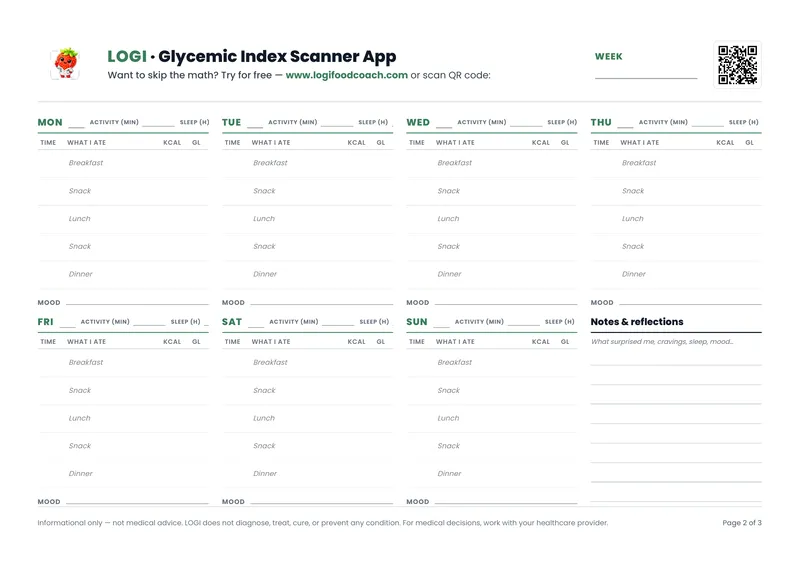
Your Weekly Food Journal
Track meals, glycemic load & mood. Spot patterns in 3 weeks.
No spam. Unsubscribe anytime.