Low-GI Slavinken with Braised Red Cabbage
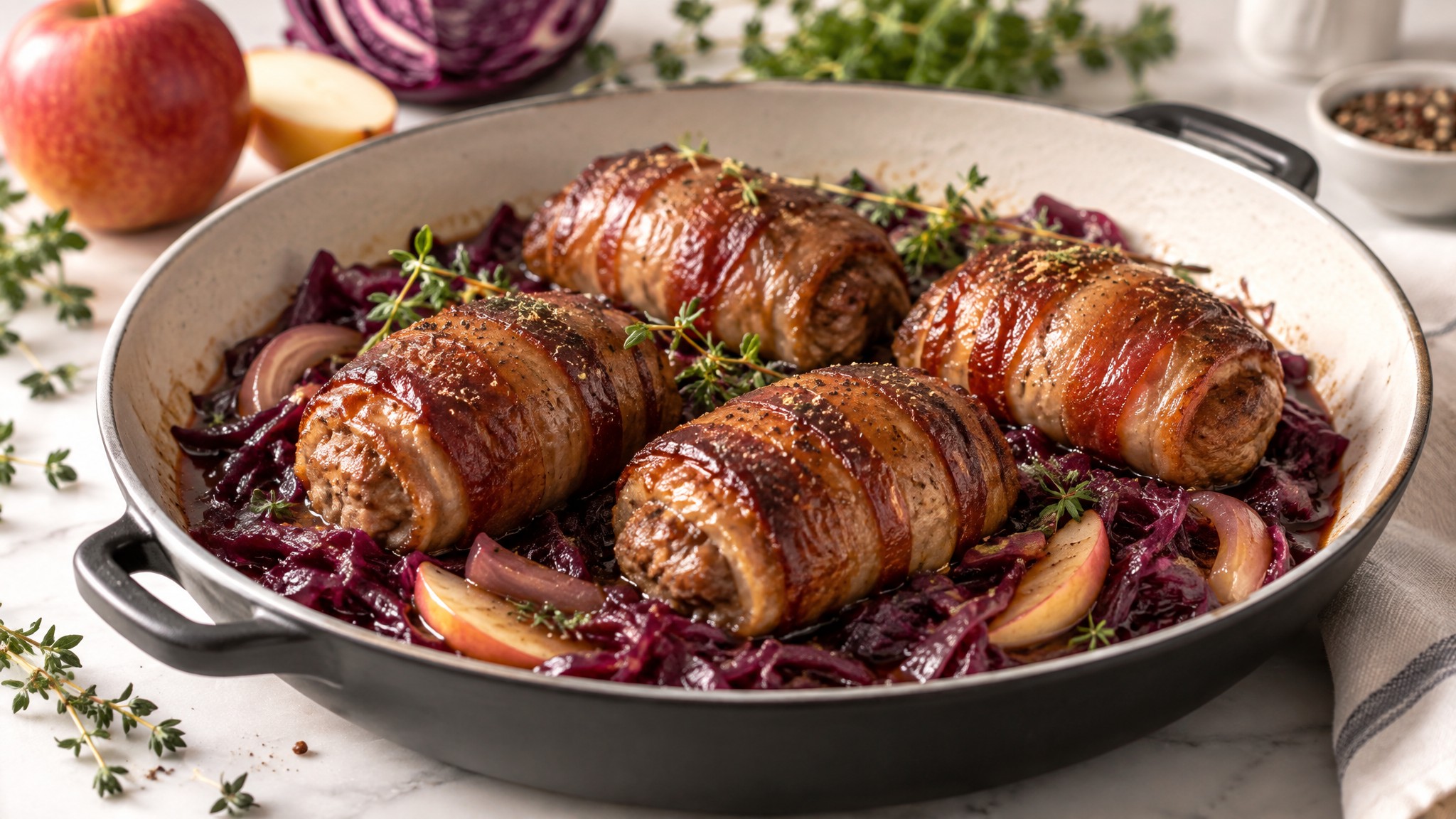
Dutch slavinken wrapped in crisp bacon and braised on sweet-sour red cabbage in one pan, with no breadcrumbs or potatoes for a plate that's gentle on blood sugar.
Slavinken are a Dutch butcher-shop favourite: seasoned minced pork shaped into short rolls and wrapped in streaky bacon. This version is inspired by the classic. It leaves out the usual breadcrumb binder and uses only egg to hold the pork together. Instead of a pile of boiled potatoes, the rolls are served on sweet-sour braised red cabbage. Nutmeg and black pepper season the meat in the traditional way. A pinch of cloves and a splash of apple cider vinegar give the cabbage the warm, tangy taste you know from Dutch home cooking.
The swap matters for blood sugar. Boiled potatoes usually sit in the high glycemic range, and breadcrumbs add refined starch. Red cabbage is low in digestible carbohydrate and high in fibre, which helps slow how fast glucose gets into the bloodstream. The only sweetness comes from one small tart apple, grated with the skin on so its fibre stays in. Spread over two servings and eaten with protein and fat, it adds flavour without much glycemic load. The vinegar helps too: acidic foods eaten with a meal may help soften the rise in blood sugar afterwards.
Everything cooks in one wide pan. The bacon-wrapped rolls start in a cold pan so the fat renders slowly and the bacon turns properly crisp. The onion then softens in that fat, and the cabbage braises underneath the rolls, picking up their juices as they finish cooking. For the gentlest glucose response, eat a few forkfuls of cabbage before you start on the meat, and take your time. If you want something extra, add a green salad or steamed green beans, not bread or potatoes. It's a filling winter dinner for two, ready in under an hour, and it suits anyone keeping an eye on their blood sugar.
Blood Sugar Impact
Minimal impact: the meal is mostly protein and fat from pork, egg and bacon, with fibre-rich red cabbage, so the small amount of sugar from the apple and onion should cause only a gentle rise. Expect steady energy for 3-4 hours.
Blood Sugar Tips
- ✓ Eat a few bites of the braised red cabbage first so its fibre and vinegar can slow how fast the apple's sugars are absorbed.
- ✓ Serve it with a green salad or steamed green beans instead of potatoes or dumplings to keep the glycemic load low.
- ✓ Take a 10-15 minute walk after the meal to help your muscles use up glucose and keep blood sugar steady.
🥗 Ingredients
- 400 g Red cabbage
- 1 pcs Onion
- 1 pcs Apple
- 250 g Minced pork
- 1 pcs Egg
- 0.25 tsp Ground nutmeg
- 0.5 tsp Black pepper
- 0.75 tsp Salt
- 8 pcs Streaky bacon
- 2 tbsp Apple cider vinegar
- 1 g Ground cloves
- 100 ml Water
- 14.1 oz Red cabbage
- 1 pcs Onion
- 1 pcs Apple
- 8.8 oz Minced pork
- 1 pcs Egg
- 0.25 tsp Ground nutmeg
- 0.5 tsp Black pepper
- 0.75 tsp Salt
- 8 pcs Streaky bacon
- 2 tbsp Apple cider vinegar
- 0.0 oz Ground cloves
- 7 tbsp Water
👨🍳 Instructions
- 1
Prepare the vegetables first. Shred the cored red cabbage finely, slice the onion into thin half-moons, and coarsely grate the apple with the skin on. Set them aside separately (about 10 minutes).
- 2
Put the minced pork, egg, nutmeg, black pepper and 2 g of the salt in a bowl. Knead with your hands until the mixture feels tacky and holds together. Divide it into 4 equal pieces and roll each into a log about 10 cm (4 in) long. Wrap each log tightly in 2 overlapping bacon slices, ending with the seam underneath (about 5 minutes).
- 3
Put the rolls seam-side down in a cold, wide, deep pan (about 28 cm / 11 in) without any oil. Set it over medium heat. As the pan heats, the bacon fat melts out slowly. Turn the rolls now and then until the bacon is golden and crisp all over, about 8 minutes. Move the rolls to a plate and keep the fat in the pan.
- 4
Add the sliced onion to the bacon fat and cook, stirring often, until soft and translucent, about 3 minutes.
- 5
Add the shredded cabbage, grated apple, apple cider vinegar, cloves, the rest of the salt (2 g) and the water. Toss over the heat until the cabbage starts to wilt and turns bright purple, about 2 minutes.
- 6
Put the browned rolls back on top of the cabbage and pour in any juices from the plate. Cover, turn the heat to low and braise for about 20 minutes, until the cabbage is tender and a thermometer in the centre of a roll reads 71 °C (160 °F).
- 7
Grind over some extra black pepper and serve two rolls per person on a bed of cabbage. For a gentler blood sugar response, eat some of the cabbage first, then the meat, and add a green salad instead of bread or potatoes if you want more on the plate.
📊 Nutrition Per Serving
| Per Serving | Whole Dish | |
|---|---|---|
| Calories | 795 | 1589 |
| Carbs | 28g | 56g |
| Sugars | 15g | 31g |
| Natural Sugars | 15g | 31g |
| Protein | 57g | 113g |
| Fat | 51g | 102g |
| Saturated Fat | 17g | 35g |
| Unsaturated Fat | 32g | 65g |
| Fiber | 6g | 13g |
| Soluble Fiber | 2g | 4g |
| Insoluble Fiber | 5g | 9g |
| Sodium | 1801mg | 3603mg |
Predicted Glucose Response
What if you...
Estimated model — individual responses vary. Not medical advice.
🔄 Lower GI Swaps
The apple is the main source of sugar in the braised cabbage. Using less of it, or a tart green apple with the skin on, cuts the fructose and sugar while keeping more fiber. Cranberries give the same sweet-sour taste with far fewer available carbs, which lowers the glycemic load of the cabbage side.
Onions release sugars and turn sweeter when they're braised for a long time. A smaller amount of shallot, leek greens or celery keeps the savory flavor and adds less carbohydrate per serving, so the dish stays very low-GL.
Slavinken are often bound with breadcrumbs or soaked bread. Grated cauliflower or ground flaxseed keeps the meat moist and holds it together with almost no starch, which keeps the meal's glucose response flat. Flaxseed also adds soluble fiber that slows digestion.
Braising the cabbage in broth adds a little protein and gelatin and gives a deeper savory taste, so you need less apple or sweetener to balance the flavor. That keeps the glycemic load of the side low.
Acetic acid in vinegar can slow how fast the stomach empties and soften the blood sugar rise after a meal. Adding a bit more vinegar also makes up for the lost sweetness when you cut back the apple.
🔬 The Science Behind This Recipe
Slavinken are a classic Dutch comfort food, and this version is gentle on blood sugar. Most of the plate is protein and non-starchy vegetables, with very little fast-digesting starch. The ground pork and egg in the meat rolls provide protein and fat, and neither turns into much sugar. They also slow down how quickly your stomach empties, so any carbohydrates in the meal reach your bloodstream gradually instead of all at once. Using egg to bind the meat, rather than the usual breadcrumbs, removes one of the few refined carbs found in traditional recipes.
The braised red cabbage does a lot of the work. Cabbage is rich in fiber, which forms a soft, gel-like barrier in your gut and slows down how fast sugars are absorbed. The apple and onion add natural sweetness, but the apple brings its own fiber, and both are spread across the whole pot. Each serving ends up with only a small amount of fruit sugar, cushioned by fiber, protein and fat. Red cabbage also gets its deep color from plant compounds called anthocyanins, which researchers are studying for their possible role in metabolic health.
That is why the Glycemic Load matters more than the Glycemic Index alone. GI tells you how fast a carbohydrate raises blood sugar, and GL also considers how much of it you actually eat. With an estimated GI of 14 and a GL of just 4.0 per serving, this dish sits firmly in the low range on both. To get even more out of it, eat a few bites of cabbage before the meat, and if you add potatoes or bread, save them for last. Pairing any extra carbs with the protein on your plate helps too. Finally, a 10–15 minute walk after dinner helps your muscles use up glucose naturally.
Related recipes
Free PDF — 3 pages
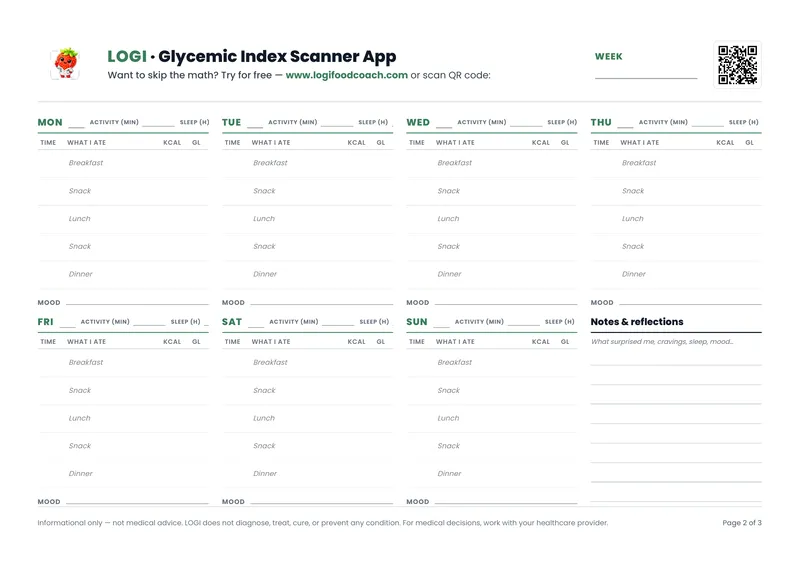
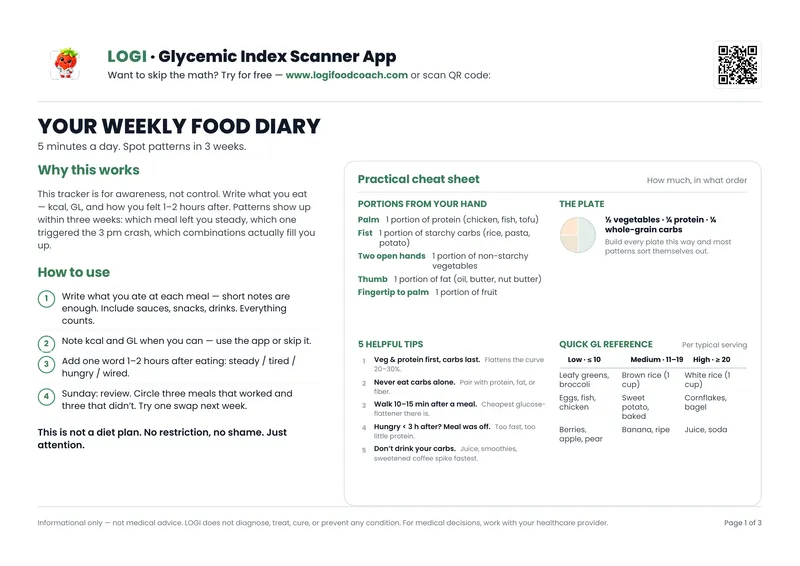
Your Weekly Food Journal
Track meals, glycemic load & mood. Spot patterns in 3 weeks.
No spam. Unsubscribe anytime.