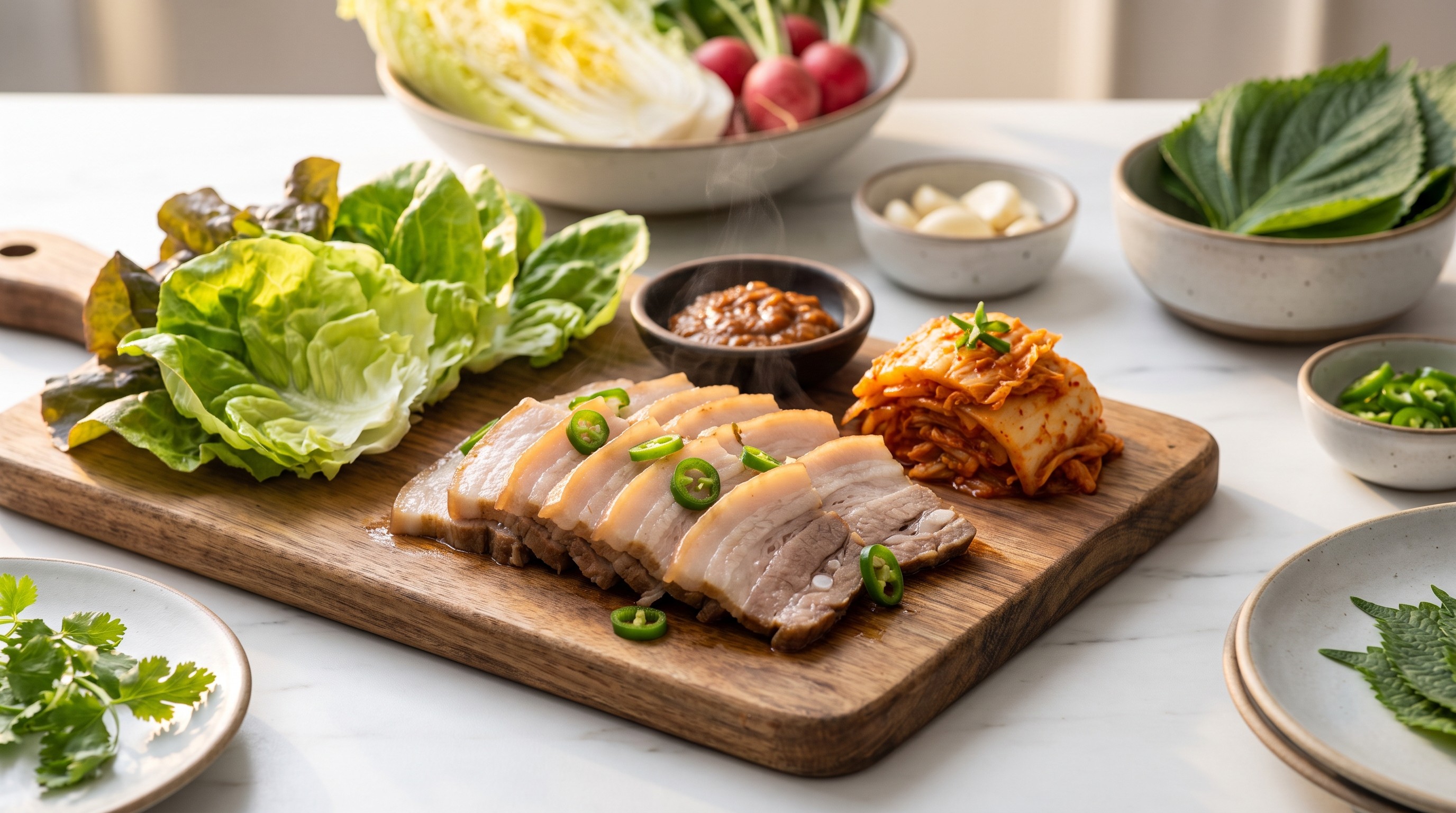
Bossam — Korean Simmered Pork Belly Lettuce Wraps
Tender pork belly poached in a doenjang broth, sliced thin and wrapped in crisp butter lettuce with ssamjang and tangy kimchi — naturally low-glycemic Korean comfort.
Bossam is one of Korea's great communal dishes and, remarkably, one of the most blood-sugar-friendly meals you can serve without changing a single ingredient. A slab of pork belly simmers gently in water perfumed with doenjang, garlic, ginger, and black peppercorns until it turns silky and yielding. Sliced across the grain and piled onto a platter, it arrives at the table alongside cool butter lettuce cups, fiery ssamjang, and lacto-fermented kimchi — everything you need to build the perfect bite, no rice bowl required.
From a glycemic perspective this recipe is exceptional. The meal is almost entirely protein and fat from the pork belly, which produce virtually no glucose response. Butter lettuce serves as the carbohydrate vehicle in place of steamed white rice, slashing the glycemic load of the meal dramatically while adding fibre, water content, and a satisfying crunch. Doenjang and kimchi are both fermented foods — research links regular fermented-food consumption with improved insulin sensitivity and a healthier gut microbiome, both of which support steadier blood sugar over time. Even the ssamjang, though it contains a touch of sweetness, delivers its flavour in such small quantities per wrap that the impact is negligible.
For the best glucose outcome, eat your lettuce and kimchi first to lay down a fibre buffer, then add the pork slices. Pair the meal with a cup of unsweetened barley tea (boricha), a traditional Korean accompaniment that is itself calorie-free and has been associated with modest blood-sugar-lowering effects. This bossam feeds two generously and comes together in about an hour with only ten minutes of active preparation — ideal for a weeknight dinner that feels celebratory.
Blood Sugar Impact
Very low blood sugar impact expected. With a glycemic load of 4.4 and an estimated GI of 28, this protein-and-fat-rich meal with virtually no refined carbohydrates should produce a minimal, slow glucose rise and stable energy for 3-4 hours.
Blood Sugar Tips
- ✓ Wrap generous amounts of pork in the lettuce leaves — the fiber from the lettuce and the protein/fat from the pork belly work together to keep glucose steady.
- ✓ Enjoy the kimchi and fermented condiments (doenjang, ssamjang) liberally, as fermented foods can improve postprandial glucose response.
- ✓ If serving with rice on the side, keep the portion small (under ½ cup cooked) and eat the pork and lettuce wraps first before any starchy sides.
🥗 Ingredients
- 2 tbsp Doenjang
- 4 pcs Garlic clove
- 1 pcs Ginger
- 1 tsp Black peppercorn
- 400 g Pork belly
- 1 pcs Butter lettuce
- 1 pcs Green chilli
- 2 tbsp Ssamjang
- 100 g Napa cabbage kimchi
- 2 tbsp Doenjang
- 4 pcs Garlic clove
- 1 pcs Ginger
- 1 tsp Black peppercorn
- 14.1 oz Pork belly
- 1 pcs Butter lettuce
- 1 pcs Green chilli
- 2 tbsp Ssamjang
- 3.5 oz Napa cabbage kimchi
👨🍳 Instructions
- 1
Pour 1 litre of cold water into a deep, heavy-bottomed pot. Add the doenjang, crushed garlic cloves, sliced ginger, and black peppercorns. Stir briefly to dissolve the paste, then set over high heat and bring to a rolling boil — this should take around 5 minutes.
- 2
Carefully lower the pork belly into the boiling broth in a single piece. Once the liquid returns to a simmer, reduce the heat to its lowest setting so only the occasional bubble breaks the surface. Cover the pot tightly and let the pork cook undisturbed for 40 minutes.
- 3
While the pork poaches, prepare the accompaniments. Gently separate the butter lettuce leaves, rinse them under cold water, and pat dry with a clean towel. Arrange the cups on a serving platter, concave side up, so they are ready to fill.
- 4
Thinly slice the green chilli on the diagonal. Spoon the ssamjang and kimchi into individual small dishes and place them alongside the lettuce — this table-side spread is the heart of the bossam experience.
- 5
Test the pork for doneness by pressing a chopstick or skewer through its thickest section — it should glide through with almost no resistance. If it still feels firm, re-cover and simmer for another 5 to 10 minutes.
- 6
Lift the pork belly from the broth using tongs or a slotted spoon and transfer it to a cutting board. Allow it to rest for a full 5 minutes — this firms up the meat just enough to slice cleanly while keeping the interior juicy.
- 7
Using a sharp knife, slice the rested pork across the grain into pieces roughly 5 mm thick. Fan the slices out on the serving platter next to the lettuce leaves.
- 8
Serve immediately family-style. To build each wrap, lay a slice or two of pork inside a lettuce cup, add a small dab of ssamjang, top with kimchi and a few rings of chilli, then fold and eat in one or two bites. For steadier blood sugar, nibble on the lettuce and kimchi first to create a fibre buffer before the richer pork.
📊 Nutrition Per Serving
| Per Serving | Whole Dish | |
|---|---|---|
| Calories | 1137 | 2273 |
| Carbs | 16g | 32g |
| Sugars | 3g | 6g |
| Added Sugars | 0g | 0g |
| Natural Sugars | 3g | 6g |
| Protein | 25g | 49g |
| Fat | 108g | 217g |
| Saturated Fat | 38g | 77g |
| Unsaturated Fat | 66g | 132g |
| Fiber | 4g | 7g |
| Soluble Fiber | 1g | 2g |
| Insoluble Fiber | 3g | 5g |
| Sodium | 1390mg | 2780mg |
Predicted Glucose Response
What if you...
Estimated model — individual responses vary. Not medical advice.
🔄 Lower GI Swaps
Commercial ssamjang typically contains added sugar and rice-based gochujang, both of which raise its glycemic index. A homemade version without sugar or a simpler doenjang-sesame blend delivers the same umami depth with virtually zero glycemic load.
Many commercial kimchi brands add sugar or corn syrup to speed fermentation, which increases glycemic load. Traditionally fermented or explicitly sugar-free kimchi provides the same probiotic tang with a lower blood-sugar impact.
Some commercial doenjang contains added wheat starch or rice flour as fillers, which raise the glycemic index. Pure soybean-fermented doenjang or hatcho miso (made entirely from soybeans with no grain) has a negligible glycemic load while preserving deep fermented flavour.
🔬 The Science Behind This Recipe
Here's the science explainer section:
---
Why This Recipe Works for Blood Sugar
This Bossam is a naturally blood sugar-friendly meal, and it starts with what's *not* on the plate: refined carbohydrates. With a glycemic load of just 4.4 per serving and an estimated GI of 28, this dish lands firmly in the low-glycemic category. But what makes those numbers so impressive is how the key ingredients work together. Pork belly is rich in both protein and fat — two macronutrients that significantly slow the rate at which glucose enters your bloodstream. When you eat protein and fat alongside any carbohydrates (even the small amount found in the doenjang paste and accompaniments), they act like a speed bump, giving your body more time to process glucose gradually rather than in a sudden rush.
Doenjang, the fermented soybean paste that gives Bossam its savory depth, brings its own metabolic advantages. Fermented foods contain beneficial compounds produced during the fermentation process that research suggests may support more stable blood sugar responses. The paste also contributes plant-based protein and fiber, adding another layer of glucose-slowing power. Meanwhile, the lettuce wraps replace what would traditionally be a rice-heavy meal with a crisp, virtually carb-free vehicle — dramatically reducing the overall glycemic load.
To get even more from this meal, try a few simple strategies: eat any vegetable side dishes (kimchi, pickled radish) before diving into the pork, since fiber-first eating has been shown to flatten glucose curves. The garlic and ginger in the simmering liquid aren't just flavor builders — both have been studied for their potential to support healthy metabolic responses. And a short 10-15 minute walk after eating? That's one of the simplest, most effective ways to help your muscles use up circulating glucose. Remember, glycemic load accounts for *how much* carbohydrate you're actually eating, not just the type — and with Bossam, that amount is refreshingly low.
Related recipes
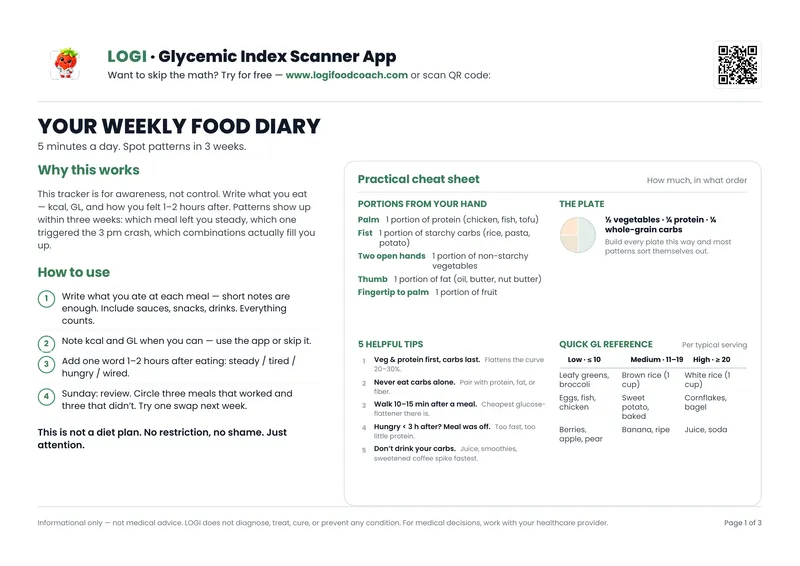
Free PDF — 3 pages
Your Weekly Food Journal
Track meals, glycemic load & mood. Spot patterns in 3 weeks.
No spam. Unsubscribe anytime.