Insalata di Mare
Tender squid, prawns, and mussels poached and dressed warm in lemon and olive oil — a naturally low-glycemic Italian seafood salad rich in protein and healthy fats.
Insalata di mare is one of those rare dishes that is inherently blood-sugar friendly without a single compromise. Three types of seafood — squid, prawns, and mussels — deliver a generous hit of lean protein while keeping carbohydrates virtually at zero. The warm dressing technique is the real secret: tossing the just-poached shellfish with extra-virgin olive oil and fresh lemon juice while they are still hot lets the protein fibres absorb the fat and acid, which deepens flavour and simultaneously creates the kind of fat-plus-protein pairing that slows gastric emptying and flattens any post-meal glucose curve.
The supporting cast of celery, cherry tomatoes, and red onion adds crunch, colour, and a modest dose of soluble fibre without introducing any starchy filler. Many trattoria versions bulk the salad out with boiled potatoes or short pasta — both high-GI additions that can spike blood sugar rapidly. This version skips them entirely, letting the seafood and vegetables shine on their own. The result is a satisfying plate that sits comfortably under 5 g of net carbohydrate per serving.
For the best glycemic outcome, serve the salad as a starter before any carbohydrate course — eating protein and fat first has been shown to reduce the glucose spike from foods that follow. It pairs beautifully with a small portion of sourdough bread or a side of cannellini beans for those who want extra substance without a sharp rise in blood sugar.
Blood Sugar Impact
Very minimal blood sugar impact expected. This seafood salad is extremely low in carbohydrates with a glycemic load of just 2.0 and an estimated GI of 12, meaning it will produce virtually no glucose spike and provide stable energy for 3-4 hours.
Blood Sugar Tips
- ✓ Enjoy the vegetables (celery, tomatoes, onion) at the start of the meal to prime your digestive system with fiber before the protein.
- ✓ Use the generous olive oil and lemon dressing liberally — the healthy fats further slow any minimal glucose absorption from the vegetables.
- ✓ Pair with a small portion of whole-grain bread or legumes if you need sustained energy, as the meal alone is very low in carbohydrates and may leave you reaching for snacks later.
🥗 Ingredients
- 250 g Squid
- 200 g Prawn
- 150 g Mussel
- 2 pcs Celery
- 150 g Cherry tomato
- 0.5 pcs Red onion
- 2 pcs Garlic
- 40 ml Lemon juice
- 2 tbsp Extra-virgin olive oil
- 15 g Flat-leaf parsley
- 0.5 tsp Sea salt
- 0.25 tsp Black pepper
- 8.8 oz Squid
- 7.1 oz Prawn
- 5.3 oz Mussel
- 2 pcs Celery
- 5.3 oz Cherry tomato
- 0.5 pcs Red onion
- 2 pcs Garlic
- 3 tbsp Lemon juice
- 2 tbsp Extra-virgin olive oil
- 0.5 oz Flat-leaf parsley
- 0.5 tsp Sea salt
- 0.25 tsp Black pepper
👨🍳 Instructions
- 1
Fill a wide, heavy-bottomed pot with water and season it generously with salt until it tastes distinctly of the sea. Set it over high heat and bring to a vigorous rolling boil.
- 2
While the water heats, prepare the squid: cut the tubes crosswise into 1 cm rings and leave the tentacles whole. Halve the cherry tomatoes, thinly slice the celery into crescents, shave the red onion into translucent half-moons, and mince the garlic.
- 3
Once the water is at a full boil, lower the squid rings and tentacles into the pot. Poach gently for about 90 seconds — just until the flesh turns white and opaque. Immediately lift out with a slotted spoon and transfer to a large mixing bowl.
- 4
Bring the water back to a boil and add the prawns. Cook for roughly 2 minutes until they curl and turn uniformly pink. Scoop them out and add to the bowl with the squid. Next, drop in the mussels for 1 minute until heated through, then drain and add them to the bowl as well.
- 5
While the seafood is still warm, pour over the olive oil and lemon juice, then add the minced garlic, salt, and pepper. Toss everything together thoroughly — the residual heat opens the pores of the protein, allowing the dressing to be absorbed deeply rather than just coating the surface.
- 6
Add the sliced celery, halved cherry tomatoes, red onion, and roughly two-thirds of the chopped parsley. Fold gently with a spatula or your hands, taking care not to break apart the seafood.
- 7
Let the salad rest at room temperature for 15 minutes so the flavours meld and the seafood finishes absorbing the dressing. Avoid refrigerating at this stage — cold dulls the olive oil and tightens the seafood.
- 8
Give the salad one final gentle toss, taste and adjust the salt and lemon if needed, then transfer to a serving platter. Scatter the reserved parsley over the top and serve with extra lemon wedges on the side.
📊 Nutrition Per Serving
| Per Serving | Whole Dish | |
|---|---|---|
| Calories | 442 | 885 |
| Carbs | 16g | 32g |
| Sugars | 4g | 8g |
| Natural Sugars | 4g | 8g |
| Protein | 54g | 108g |
| Fat | 18g | 36g |
| Saturated Fat | 3g | 6g |
| Unsaturated Fat | 15g | 29g |
| Fiber | 2g | 5g |
| Soluble Fiber | 1g | 1g |
| Insoluble Fiber | 2g | 3g |
| Sodium | 1029mg | 2059mg |
Predicted Glucose Response
What if you...
Estimated model — individual responses vary. Not medical advice.
🔄 Lower GI Swaps
Cherry tomatoes have a GI of around 15 and contain natural sugars. Cucumber (GI ~15, near-zero GL) and artichoke hearts (GI ~15, high in fiber that slows glucose absorption) further minimize carbohydrate load, while capers add briny flavor with virtually no glycemic impact.
Red onion contains more natural sugars than other alliums. Chives and the green parts of spring onions deliver similar flavor with a fraction of the carbohydrates and negligible glycemic impact. Shallots, used in smaller quantities, also contribute less sugar per serving.
While lemon juice is already low-GI, vinegar (acetic acid) has been shown in studies to reduce post-meal blood glucose spikes by up to 20-30% by slowing gastric emptying and improving insulin sensitivity. Swapping some or all of the lemon juice for vinegar adds a proven glucose-moderating effect to an already low-GL dish.
🔬 The Science Behind This Recipe
🔬 The Science Behind This Recipe
Insalata di Mare is a dream dish for steady blood sugar — and the reason comes down to what's *not* on the plate as much as what is. Squid, prawns, and mussels are virtually pure protein and healthy fats, with almost no carbohydrates at all. When you eat protein, your body doesn't convert it into glucose the way it does with bread or pasta, so there's very little for your blood sugar to spike *from*. The healthy fats in seafood — especially the omega-3s found in mussels — also slow digestion, which means any glucose that does enter your bloodstream arrives gradually rather than in a rush.
The supporting cast matters too. Celery is extremely low in carbohydrates and adds a good dose of fiber, which acts like a gentle brake on digestion. Cherry tomatoes contribute natural sweetness but carry it bundled with fiber and water, so their sugars absorb slowly. Together, these vegetables create volume and satisfaction without meaningfully raising blood sugar. This is why the glycemic load sits at just 2.0 per serving — well below the threshold of 10 that's generally considered "low." Think of glycemic load as the real-world measure: it accounts for both *how fast* a food raises blood sugar (the GI) and *how much* carbohydrate you're actually eating. A GL of 2.0 means this dish barely registers.
To get the most from this meal, try starting with the vegetables before diving into the seafood — eating fiber-rich foods first can blunt the glucose response from anything that follows. If you're serving this alongside bread or potatoes, pairing each bite of carbs with a forkful of protein-rich seafood helps flatten the curve. And a short 10–15 minute walk after eating? That's one of the simplest, most effective ways to help your muscles use up circulating glucose. With a dish this naturally balanced, though, your blood sugar is already in good hands.
Related recipes
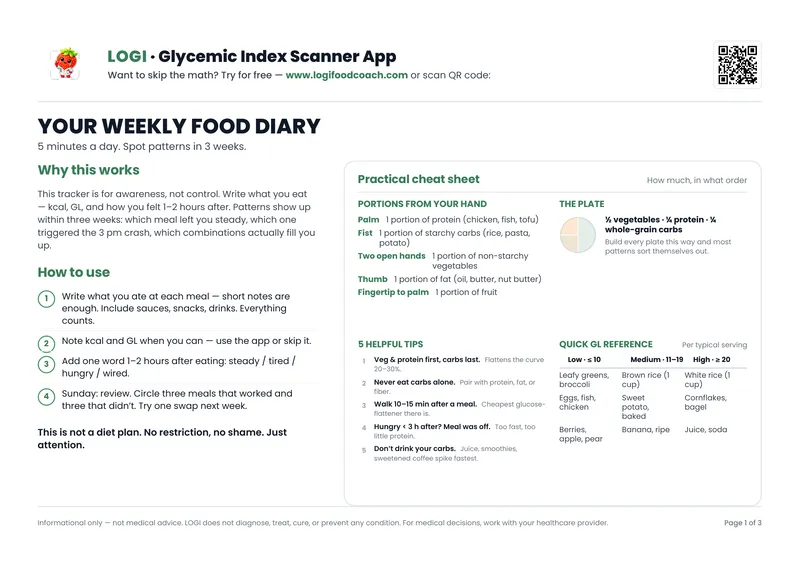
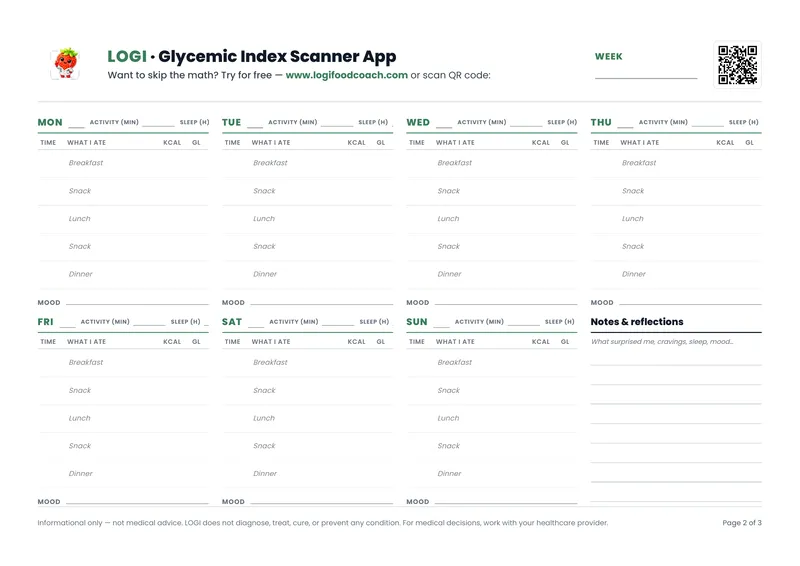
Free PDF — 3 pages
Your Weekly Food Journal
Track meals, glycemic load & mood. Spot patterns in 3 weeks.
No spam. Unsubscribe anytime.