Pollo alla Diavola
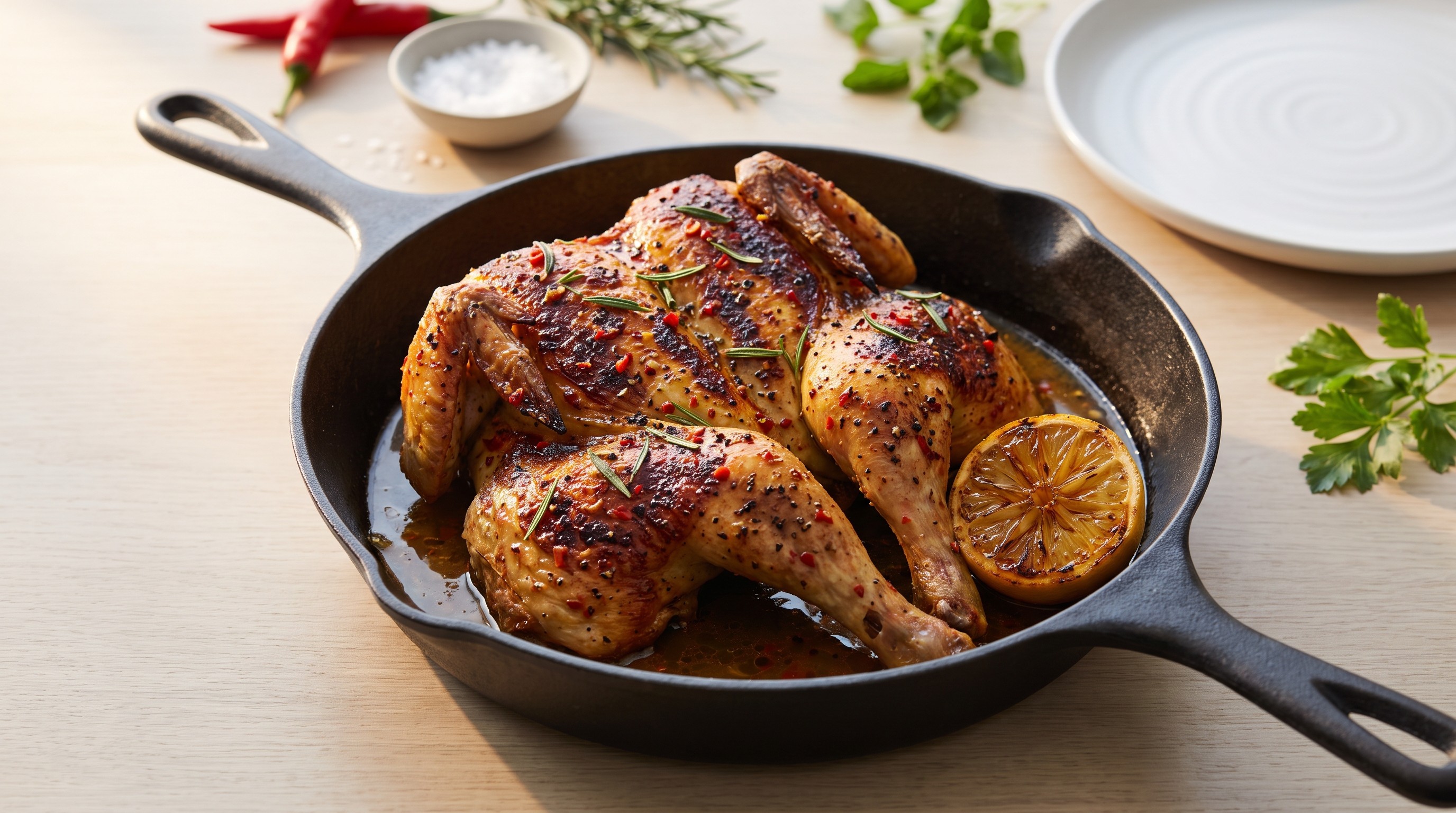
Spatchcocked chicken pressed crispy under a weight, rubbed with chilli, garlic, and lemon — a naturally low-glycemic Italian classic with zero hidden sugars.
Pollo alla diavola — devil's chicken — is proof that the most satisfying meals are often the simplest. A whole bird is spatchcocked, coated in a fiery paste of fresh chilli, garlic, and lemon zest, then seared skin-side down under a heavy weight until the skin turns shattering-crisp. A quick finish in a hot oven brings the thigh meat to a juicy, safe temperature without drying out the breast. The result is deeply flavoured, gorgeously bronzed, and ready in under 45 minutes.
From a blood-sugar perspective, this dish is a dream. Every ingredient sits at the very bottom of the glycemic index: chicken provides slow-digesting protein and satiating fat, olive oil delivers heart-healthy monounsaturated fatty acids that further slow gastric emptying, and the garlic and chilli contain bioactive compounds (allicin and capsaicin) that research links to improved insulin sensitivity. There is not a grain of flour, sugar, or starch anywhere in the recipe, so the overall glycemic load of the plate is essentially zero.
To build a balanced low-glycemic meal, serve the chicken over a bed of bitter greens dressed with the pan juices, or alongside roasted non-starchy vegetables such as zucchini, bell peppers, or broccolini. Eating the vegetables first — before cutting into the chicken — can blunt any glucose response from side dishes you add later. A small portion of cooled and reheated basmati rice or al-dente whole-grain pasta (both lower GI thanks to retrograde starch) pairs beautifully if you want a carbohydrate component. This is weeknight cooking at its finest: minimal prep, maximum flavour, and a glycemic profile your body will thank you for.
Blood Sugar Impact
Very minimal blood sugar impact. This is a high-protein, virtually zero-carb meal with a glycemic load of just 1.5 and an estimated GI of 20, so blood sugar should remain stable with sustained energy for 3-4 hours.
Blood Sugar Tips
- ✓ Pair with a side of non-starchy vegetables like a leafy green salad or roasted zucchini to add fiber and further slow any minor glucose absorption.
- ✓ Save any starchy sides (bread, potatoes, rice) for after you've eaten the chicken and vegetables to blunt the carbohydrate spike.
- ✓ Take a 10-15 minute walk after the meal to enhance glucose uptake by your muscles and keep blood sugar even flatter.
🥗 Ingredients
- 900 g Whole chicken
- 3 pcs Garlic
- 1 pcs Red chilli
- 2 tbsp Extra-virgin olive oil
- 1 pcs Lemon
- 1 tsp Red pepper flakes
- 1 tsp Black pepper
- 1 tsp Salt
- 2 pcs Rosemary
- 2.0 lb Whole chicken
- 3 pcs Garlic
- 1 pcs Red chilli
- 2 tbsp Extra-virgin olive oil
- 1 pcs Lemon
- 1 tsp Red pepper flakes
- 1 tsp Black pepper
- 1 tsp Salt
- 2 pcs Rosemary
👨🍳 Instructions
- 1
Spatchcock the chicken: lay it breast-side down and use sturdy kitchen shears to cut along each side of the backbone, removing it entirely. Turn the bird over, splay it open, and push down firmly on the breastbone with the palm of your hand until it cracks flat.
- 2
Prepare the devil's rub by combining the minced garlic, finely chopped fresh chilli, olive oil, lemon zest, red pepper flakes, and cracked black pepper in a small bowl. Stir into a loose paste.
- 3
Spread the paste generously over both sides of the chicken, carefully sliding some beneath the breast skin with your fingers for maximum flavour penetration. Season evenly with salt on both sides.
- 4
Allow the seasoned chicken to rest at room temperature for 10 minutes. Meanwhile, preheat your oven to 220 °C (430 °F) with a rack in the centre position.
- 5
Set a large oven-safe skillet over high heat until wisps of smoke appear. Lay the chicken skin-side down in the pan and immediately press it flat with a second heavy skillet weighted down with cans or a cast-iron press. Sear undisturbed for 8 minutes until the skin is deeply golden and audibly crackling.
- 6
Lift off the weight, flip the chicken skin-side up, and slide the skillet directly into the preheated oven. Roast for 18–20 minutes until an instant-read thermometer inserted into the thickest part of the thigh registers 74 °C (165 °F).
- 7
Transfer the chicken to a cutting board and let it rest for 5 minutes — this redistributes the juices and keeps the meat succulent. Squeeze the fresh lemon juice over the bird and strip the rosemary leaves from their sprigs, scattering them across the crispy skin.
- 8
Halve the chicken lengthwise through the breastbone and serve immediately. For optimal blood-sugar balance, plate alongside non-starchy vegetables such as grilled zucchini or a simple bitter-green salad dressed with the pan juices.
📊 Nutrition Per Serving
| Per Serving | Whole Dish | |
|---|---|---|
| Calories | 1116 | 2233 |
| Carbs | 8g | 15g |
| Sugars | 2g | 3g |
| Natural Sugars | 2g | 3g |
| Protein | 82g | 164g |
| Fat | 81g | 163g |
| Saturated Fat | 21g | 43g |
| Unsaturated Fat | 60g | 120g |
| Fiber | 2g | 4g |
| Soluble Fiber | 1g | 1g |
| Insoluble Fiber | 1g | 3g |
| Sodium | 1481mg | 2963mg |
Predicted Glucose Response
What if you...
Estimated model — individual responses vary. Not medical advice.
🔄 Lower GI Swaps
Cold-pressed extra virgin olive oil is richer in polyphenols (especially oleocanthal and oleuropein) that have been shown to improve insulin sensitivity and reduce post-meal glucose spikes compared to refined olive oil. Avocado oil similarly provides monounsaturated fats that slow glucose absorption.
Adding vinegar (acetic acid) to the marinade has been clinically shown to lower the glycemic response of an entire meal by up to 30%, slowing gastric emptying and improving post-meal insulin sensitivity. The lemon already contributes acid, but vinegar amplifies the effect.
Replacing part of the salt with cinnamon (even ¼ tsp) adds a spice shown to improve insulin sensitivity and lower fasting blood glucose. Reducing sodium intake also supports better metabolic function, as high sodium is associated with increased insulin resistance.
Fresh chili peppers deliver more bioavailable capsaicin than dried flakes. Studies show capsaicin improves insulin sensitivity and helps regulate post-meal blood sugar levels. Fresh peppers also contain fiber that further blunts glucose absorption.
🔬 The Science Behind This Recipe
Here's the science explainer section:
---
Why This Recipe Works for Blood Sugar
Pollo alla Diavola is one of the most naturally blood sugar-friendly meals you can make, and it comes down to what's *not* on the plate as much as what is. With a glycemic load of just 1.5 per serving and an estimated GI of 20, this dish barely registers on the glucose scale. That's because the star ingredient — whole chicken — is pure protein and fat, neither of which triggers the rapid blood sugar rise that carbohydrate-heavy foods do. Protein actually slows digestion and signals your body to release glucagon alongside insulin, keeping your blood sugar on a steady, even keel rather than spiking and crashing. Think of it as giving your metabolism a smooth highway instead of a roller coaster.
Olive oil plays an equally important role here. The monounsaturated fats in olive oil slow gastric emptying — the rate at which food leaves your stomach — which means any carbohydrates you eat alongside this dish get absorbed more gradually. This is why pairing a protein-and-fat-rich main like this with a side of roasted vegetables or even a small portion of whole grains works so well: the fat and protein act as a buffer, blunting the glucose response of the entire meal. Garlic and red chili also contribute: research suggests that both contain compounds that may support insulin sensitivity, helping your cells use glucose more efficiently.
Here's a practical tip to maximize the benefit: if you're serving this with sides, eat the chicken and vegetables first, saving any starchy sides for last. This simple "food order" strategy has been shown in studies to reduce post-meal glucose spikes by up to 30–40%. A short 10–15 minute walk after eating works even better, as your muscles pull glucose directly from the bloodstream for energy. Remember, glycemic load accounts for both the *type* and *amount* of carbohydrate in a serving — and with a GL this low, Pollo alla Diavola is a meal you can enjoy knowing your blood sugar will thank you for it.
Related recipes
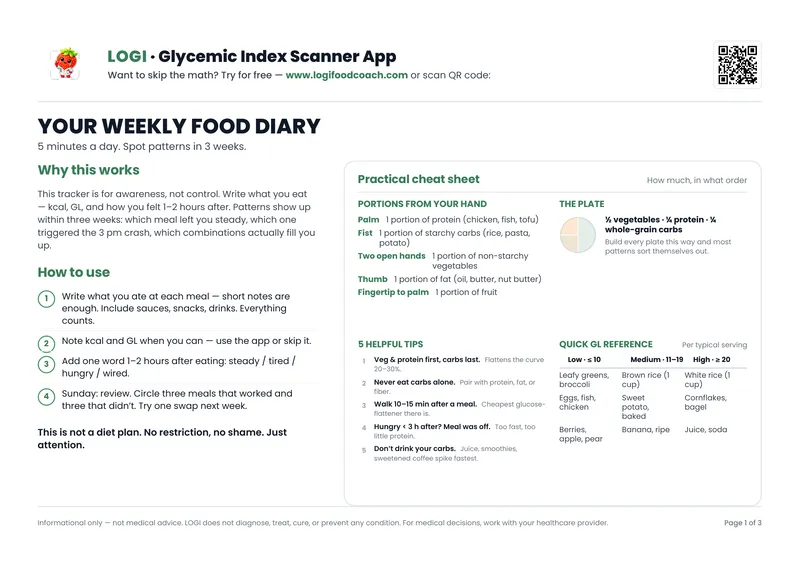
Free PDF — 3 pages
Your Weekly Food Journal
Track meals, glycemic load & mood. Spot patterns in 3 weeks.
No spam. Unsubscribe anytime.