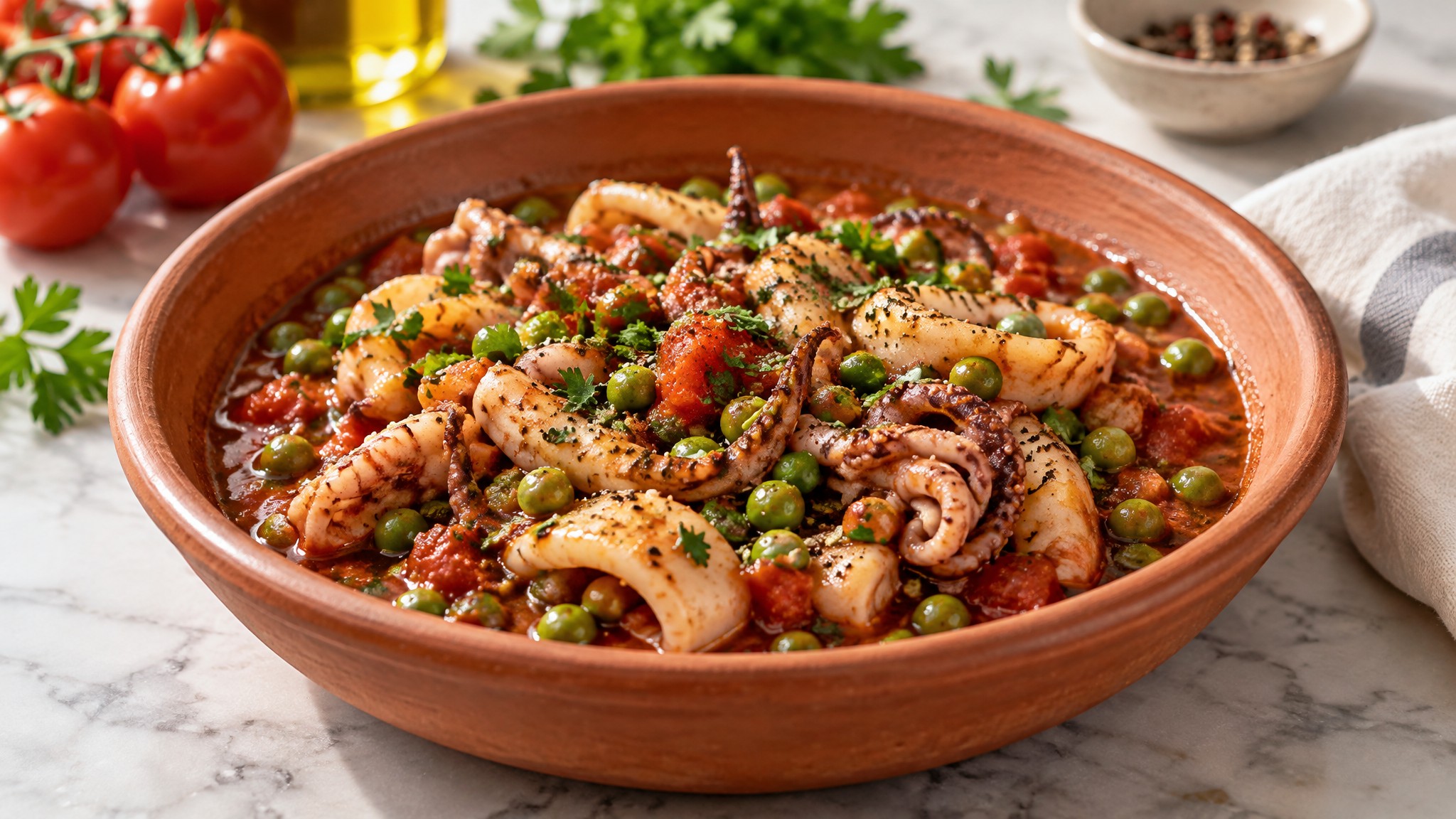
Seppie con Piselli Without the Polenta: Cuttlefish Braised with Peas and Tomato
Venetian cuttlefish braised in white wine and tomato, finished with a double helping of sweet peas — a protein-rich, polenta-free bowl that keeps blood sugar steady.
Seppie con piselli is a spring classic from the Venetian lagoon. Cuttlefish is cooked slowly in white wine and tomato until it turns silky and tender, then green peas go in at the end so they stay sweet. In Venice it usually comes on a mound of soft white polenta or with crusty bread for the sauce. Both are fast-digesting starches that can push glucose up quickly. This version drops them and doubles the peas, so the bowl is still filling but centred on lean protein and pulse fibre.
Every main ingredient here is kind to blood sugar. Cuttlefish is almost pure protein with very little fat and next to no carbohydrate, so it slows digestion and helps you feel full. Green peas have a low glycemic index of around 45 to 50. Their mix of fibre, protein and slowly digested starch releases glucose gradually rather than all at once. Tomatoes are naturally low GI, and the olive oil adds healthy monounsaturated fat that slows stomach emptying even more. Most of the alcohol in the wine cooks off, leaving acidity and depth with almost no sugar.
For the steadiest glucose response, start the meal with a simple green salad or some steamed greens dressed with olive oil and lemon, then eat the braise. If you want something to mop up the sauce, a small slice of dense sourdough rye or a spoonful of cooked whole lentils works well. Neither causes the spike you'd get from polenta. A gentle 10 to 15 minute walk after eating helps your muscles use the glucose from the peas. The dish also reheats beautifully, and the flavour improves the next day, so it suits make-ahead lunches.
Blood Sugar Impact
Low-to-moderate impact: the lean cuttlefish protein and olive oil slow digestion, so the carbs from the peas, tomato and onion should cause a gentle, gradual rise. Expect steady energy for about 3-4 hours without a sharp spike.
Blood Sugar Tips
- ✓ Serve it with a side salad or sautéed greens dressed in olive oil instead of bread or polenta, and eat the vegetables first to slow how fast the carbs are absorbed.
- ✓ Keep the peas to the recipe's amount. They are the main carb source, so piling on extra spoonfuls of the pea-heavy sauce raises the glycemic load.
- ✓ Take a 10-15 minute walk after eating to help your muscles use up glucose from the meal.
🥗 Ingredients
- 2 tbsp Extra-virgin olive oil
- 1 pcs Onion
- 2 pcs Garlic
- 500 g Cuttlefish
- 100 ml Dry white wine
- 250 g Crushed tomatoes
- 100 ml Water
- 0.75 tsp Fine sea salt
- 250 g Frozen peas
- 0.25 tsp Black pepper
- 2 tbsp Flat-leaf parsley
- 2 tbsp Extra-virgin olive oil
- 1 pcs Onion
- 2 pcs Garlic
- 1.1 lb Cuttlefish
- 7 tbsp Dry white wine
- 8.8 oz Crushed tomatoes
- 7 tbsp Water
- 0.75 tsp Fine sea salt
- 8.8 oz Frozen peas
- 0.25 tsp Black pepper
- 2 tbsp Flat-leaf parsley
👨🍳 Instructions
- 1
Slice the cuttlefish bodies into strips about 1 cm (½ inch) wide and cut each cluster of tentacles in half. Blot all the pieces thoroughly with paper towel. The drier they are, the better they sear instead of stewing.
- 2
Warm the olive oil over medium heat in a wide pan that has a lid. Add the onion and cook gently for about 6 minutes, stirring now and then, until soft and translucent but not browned. Add the sliced garlic and stir for 1 minute until fragrant.
- 3
Turn the heat up to high and add the cuttlefish. Stir constantly for about 3 minutes, until the pieces turn opaque and white all over.
- 4
Pour in the white wine and let it bubble hard for about 2 minutes, scraping up any bits stuck to the pan, until the sharp smell of alcohol has faded.
- 5
Add the crushed tomatoes, water and salt and stir well. Bring to a simmer, cover, then turn the heat to low. Braise gently for about 30 minutes, until a knife slides easily into a strip of cuttlefish. Add a splash of water if the sauce gets too thick.
- 6
Take off the lid and stir in the frozen peas straight from the bag. Simmer uncovered for about 8 minutes, until the peas are tender and the sauce has reduced enough to coat the back of a spoon.
- 7
Season with plenty of freshly ground black pepper, taste and adjust the salt, then stir in the chopped parsley. Serve in warm bowls. For a gentler glucose response, eat a green salad or some greens first.
📊 Nutrition Per Serving
| Per Serving | Whole Dish | |
|---|---|---|
| Calories | 531 | 1063 |
| Carbs | 38g | 76g |
| Sugars | 16g | 32g |
| Natural Sugars | 16g | 32g |
| Protein | 50g | 99g |
| Fat | 17g | 33g |
| Saturated Fat | 3g | 5g |
| Unsaturated Fat | 13g | 27g |
| Fiber | 10g | 21g |
| Soluble Fiber | 3g | 6g |
| Insoluble Fiber | 7g | 14g |
| Sodium | 1754mg | 3508mg |
Predicted Glucose Response
What if you...
Estimated model — individual responses vary. Not medical advice.
🔄 Lower GI Swaps
Green peas cause most of this dish's glycemic load because they carry a fair amount of starch. Edamame has much less starch and far more protein and fat, so it barely raises blood sugar. Green beans and sugar snap peas keep the green color and sweet bite with only a fraction of the carbs. Fava beans give a similar texture with more fiber per serving, which slows how fast glucose is absorbed. Any of these should cut the dish's GL a lot.
Onion cooked down slowly releases concentrated natural sugars into the sauce. Fennel and celery have fewer carbs and more fiber, and they still give the aromatic base typical of Venetian cooking. Leek gives a mild onion flavor, and you can use a little less of it. Each of these slightly lowers the dish's total sugar and glycemic load.
Wine adds leftover sugars, and alcohol can make blood sugar harder to keep steady. Fish stock with lemon brings back the acidity and savory depth with almost no carbs. If you keep the wine, a bone-dry bottle in a smaller amount keeps added sugar to a minimum.
Some canned crushed tomatoes have added sugar or are cooked down until their natural sugars become concentrated. Choosing no-sugar-added canned tomatoes or fresh plum tomatoes keeps the sauce low-glycemic and fiber-rich, so the braise doesn't add hidden sugar.
🔬 The Science Behind This Recipe
Classic Venetian seppie con piselli is usually served over polenta, a soft cornmeal that the body turns into sugar quickly. Leaving the polenta out removes the biggest source of fast carbs. What's left is a dish built on cuttlefish, which is almost pure lean protein with very few carbs. Protein slows how fast your stomach empties, so the carbs you eat with it reach your bloodstream more gradually. Olive oil does the same thing, because fat makes digestion take longer. Softening the onion and garlic in olive oil also means some of that fat ends up in every bite.
Most of the carbs in this dish come from the sweet green peas. Peas are a low-GI food because they're full of fiber and plant protein, which wrap around their natural starch and help it release slowly. But GI only tells you how fast a food raises blood sugar. Glycemic Load also counts how much of that food you actually eat, which matters just as much. With an estimated GI of 38 and a Glycemic Load of 14.6 per serving, this dish carries a moderate carb load. It's filling, its carbs digest slowly, and the protein and fat around them help keep them in check. Tomato adds flavor and a little fiber for very few carbs, and most of the white wine's alcohol cooks off in the braise, leaving its flavor behind.
You can help your body handle this meal even better with a few habits. Start with a green salad or some vegetables, then eat the cuttlefish, and save the peas for last. Eating fiber and protein before carbs can soften the rise in blood sugar after a meal. If you want something to soak up the sauce, have one small slice of whole-grain bread near the end of the meal instead of a pile of polenta. Afterwards, try a 10–15 minute walk. Working muscles use glucose for fuel, which helps keep levels steady after you eat.
Related recipes
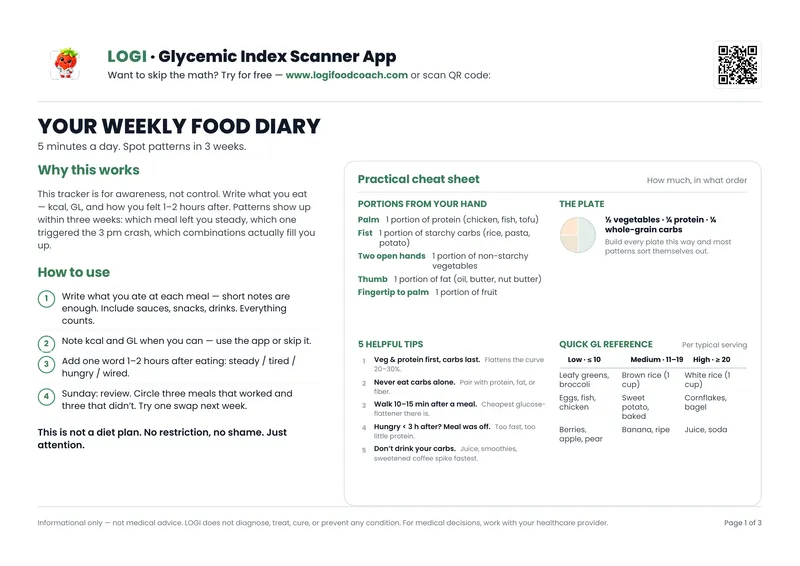
Free PDF — 3 pages
Your Weekly Food Journal
Track meals, glycemic load & mood. Spot patterns in 3 weeks.
No spam. Unsubscribe anytime.