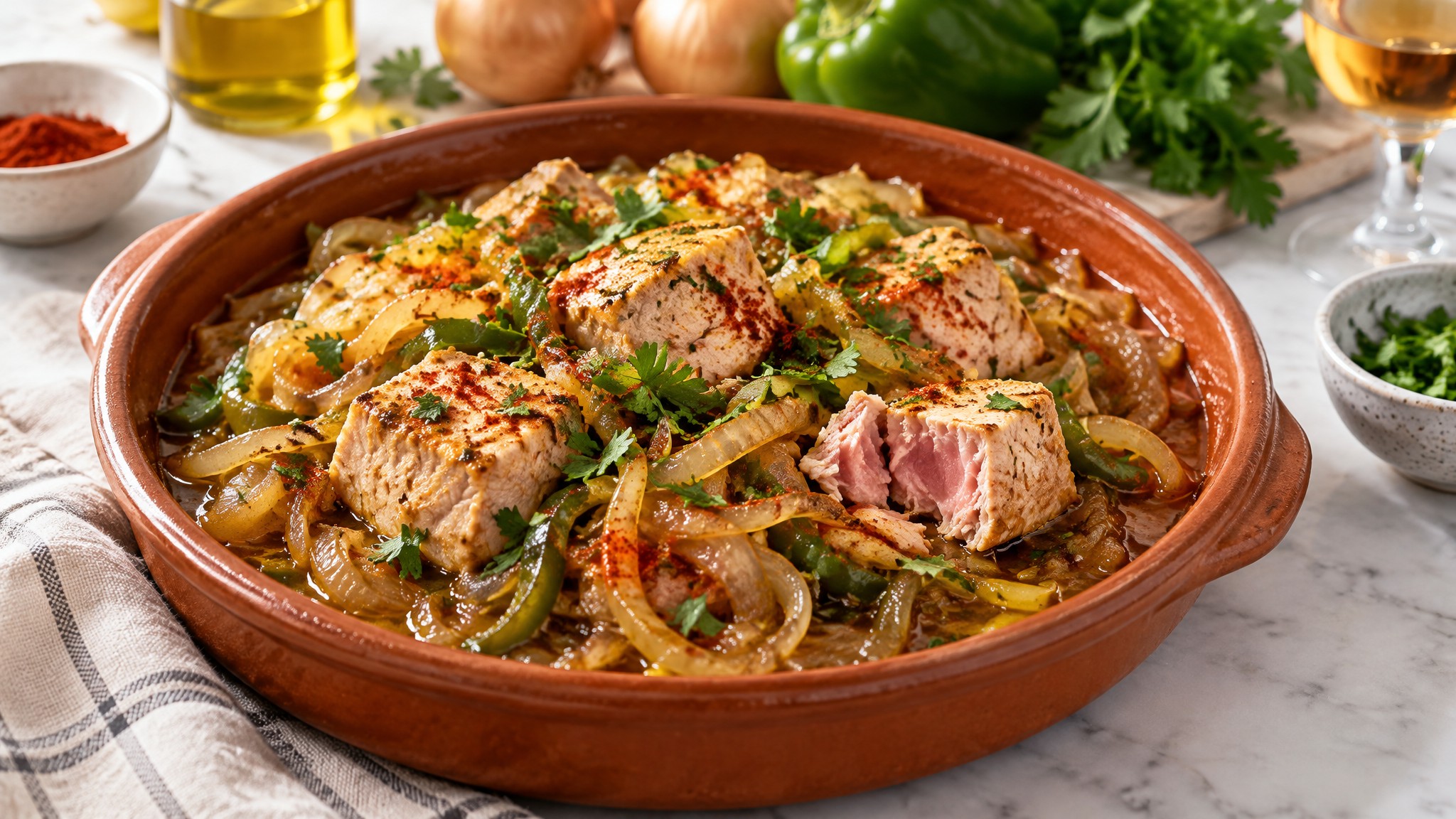
Low-GI Atún Encebollado (Tuna Braised in Sherry-Vinegar Onions)
Fresh tuna braised in slow-cooked onions with fino sherry and a sharp splash of sherry vinegar. A Cádiz classic made with fish, olive oil and vegetables, with no fried potatoes or bread.
Atún encebollado comes from Cádiz, on the Andalusian coast, where the tuna season brings fresh loin to every kitchen. The method is simple and generous. A large pile of onions cooks slowly in olive oil until it turns soft, golden and naturally sweet. Then chunks of tuna go in and braise gently in that onion base. Fino sherry adds a dry, nutty depth, and a splash of sherry vinegar at the end cuts through the sweetness so the dish tastes bright, not heavy.
In Cádiz this dish usually comes with fried potatoes and plenty of bread for the sauce. Both are starchy foods that can raise blood sugar quickly, and fried potatoes alone would push the meal into a high glycemic load. This version is not meant to be served that way. A green bell pepper cooks down with the onions instead, adding volume, fiber and a gentle vegetal note. The onions are the main source of carbohydrate here: about 150 g of raw onion per serving, which works out to roughly 11 g of available carbs. Add the pepper and garlic and the total is about 15 g per serving. Onions have a low GI, so the glycemic load stays at about 4 per serving, even though they taste sweeter once they cook down. The tuna gives you lean protein, the olive oil gives you fat, and the onions and pepper give you fiber. All three slow digestion. Fino is a dry sherry with very little residual sugar, and most of its alcohol cooks off as it reduces. The vinegar may also help a little: some studies suggest that acetic acid with a meal can soften the glucose rise after it.
For the steadiest response, start with a large green salad (about 80 g of leaves per person) dressed with olive oil and a little more sherry vinegar, then move on to the tuna. Good low-GI sides include roasted vegetables such as zucchini, eggplant or green beans (about 150 g per person) or 3 to 4 tablespoons of cooked white beans or chickpeas (about 60 g) to soak up the sauce. If you really want potatoes, choose about 80 g of boiled waxy potatoes per person that have been cooled and then reheated. Cooling forms resistant starch, which lowers their glycemic impact. A small slice of dense whole-grain or sourdough rye (about 30 g) is a better choice than white bread. Keep the tuna rosy in the centre and take it off the heat while it is still slightly pink, because it keeps cooking in the hot onions. Overcooked tuna dries out quickly, and the gentle braise here keeps it tender and juicy.
Blood Sugar Impact
Minimal impact: the tuna and olive oil add protein and fat, and the only carbs come from the onions and peppers. Expect a small, slow rise and steady energy for 3-4 hours.
Blood Sugar Tips
- ✓ Serve it with a green salad or roasted non-starchy vegetables instead of white bread or fries. If you want a starch, choose a small portion of chickpeas, lentils or cooled boiled potatoes.
- ✓ Eat the tuna and vegetables before any bread or starchy side, and keep the dry sherry to the amount the recipe calls for.
- ✓ Take a 10-15 minute walk after the meal, especially if you eat it with starchy sides.
🥗 Ingredients
- 300 g Tuna loin
- 0.75 tsp Sea salt
- 3 tbsp Extra-virgin olive oil
- 2 pcs Onion
- 1 pcs Green bell pepper
- 3 pcs Garlic
- 1 pcs Bay leaf
- 1 tsp Sweet paprika
- 60 ml Fino sherry
- 1 tbsp Sherry vinegar
- 0.25 tsp Black pepper
- 10 g Flat-leaf parsley
- 10.6 oz Tuna loin
- 0.75 tsp Sea salt
- 3 tbsp Extra-virgin olive oil
- 2 pcs Onion
- 1 pcs Green bell pepper
- 3 pcs Garlic
- 1 pcs Bay leaf
- 1 tsp Sweet paprika
- 4 tbsp Fino sherry
- 1 tbsp Sherry vinegar
- 0.25 tsp Black pepper
- 0.4 oz Flat-leaf parsley
👨🍳 Instructions
- 1
Cut 300 g of tuna loin into chunks of about 4 cm. Dry them well with paper towels so they braise cleanly instead of leaching liquid. Sprinkle with half of the sea salt (about 3/8 tsp) and leave them at room temperature while you make the onion base.
- 2
Thinly slice 2 medium onions (about 300 g in total, roughly 150 g per serving). Cut 1 green bell pepper into thin strips and thinly slice 3 garlic cloves. Warm 3 tbsp of extra-virgin olive oil over medium-low heat in a wide pan with a lid. Add the onions, green pepper, garlic, 1 bay leaf and the rest of the salt, and toss to coat everything in the oil.
- 3
Cover and let the vegetables cook slowly for about 25 minutes, stirring every 5 minutes. They should become very soft, silky and golden without taking on any dark color. Lower the heat if they start to catch.
- 4
Take off the lid and stir in 1 tsp of sweet paprika for about 30 seconds, just until fragrant. Pour in 80 ml of fino sherry and let it bubble for about 3 minutes, until the liquid has reduced by roughly half and most of the alcohol has cooked off. (For a fully alcohol-free version, use 80 ml of low-sodium fish or vegetable stock instead.)
- 5
Stir in 1.5 tbsp of sherry vinegar and 1/4 tsp of freshly ground black pepper. Tuck the tuna chunks down into the onions, cover, and cook over low heat for 4 to 5 minutes, turning the pieces once. Take the pan off the heat while the tuna is opaque outside but still slightly pink in the centre. It will keep cooking in the hot onions.
- 6
Turn off the heat and let the pan rest, still covered, for 2 minutes so the tuna finishes gently in the residual heat and stays tender.
- 7
Lift out the bay leaf, scatter 2 tbsp of chopped fresh parsley over the top and bring the pan to the table. Do not serve it with the traditional fried potatoes or white bread. Eat a green salad first, then serve the tuna with a low-GI side such as roasted vegetables, about 60 g of cooked white beans per person, or a small portion (about 80 g) of cooled and reheated boiled waxy potatoes.
📊 Nutrition Per Serving
| Per Serving | Whole Dish | |
|---|---|---|
| Calories | 539 | 1077 |
| Carbs | 31g | 62g |
| Sugars | 13g | 25g |
| Natural Sugars | 13g | 25g |
| Protein | 48g | 96g |
| Fat | 22g | 43g |
| Saturated Fat | 3g | 6g |
| Unsaturated Fat | 18g | 36g |
| Fiber | 6g | 13g |
| Soluble Fiber | 2g | 4g |
| Insoluble Fiber | 4g | 9g |
| Sodium | 949mg | 1899mg |
Predicted Glucose Response
What if you...
Estimated model — individual responses vary. Not medical advice.
🔄 Lower GI Swaps
Stock removes any leftover alcohol and the small risk of low blood sugar that comes with it. Dry white wine gives a similar acidity with very little sugar.
Both give the same acetic-acid brightness, which may help soften the glucose rise after a meal, and neither adds sugar.
Fried potatoes are high-GI and would push the meal into a high glycemic load. Non-starchy vegetables add fiber with very few carbs, and cooled potatoes form resistant starch that lowers their glycemic impact.
Legumes and dense rye digest slowly thanks to their fiber and structure, so they soak up the sauce without the quick blood-sugar spike of white bread.
🔬 The Science Behind This Recipe
Almost all the carbohydrate in this dish comes from the onions, about 150 g raw per serving, plus a little from the green pepper and garlic. That adds up to about 15 g of available carbs per serving. Onions have a low glycemic index. Slow cooking makes them taste sweeter by breaking down their natural sugars and concentrating flavor, but it does not add sugar. The glycemic load stays at about 4 per serving, which is a deliberately conservative estimate. The tuna provides about 35 g of protein per serving and the olive oil provides fat. Both slow how fast the stomach empties, and the fiber from the vegetables slows how fast glucose is absorbed. Acetic acid from sherry vinegar may modestly reduce the glucose rise after a meal by slowing starch digestion and improving how muscles take up glucose. Fino sherry is very dry and contains almost no sugar. Most of its alcohol evaporates during the 3-minute reduction, although a small amount may remain. Alcohol can make low blood sugar more likely in people who take insulin or sulfonylureas. If that applies to you, use the stock swap. Leaving out fried potatoes and white bread matters most: those sides could raise the glycemic load of the meal more than fivefold.
Related recipes
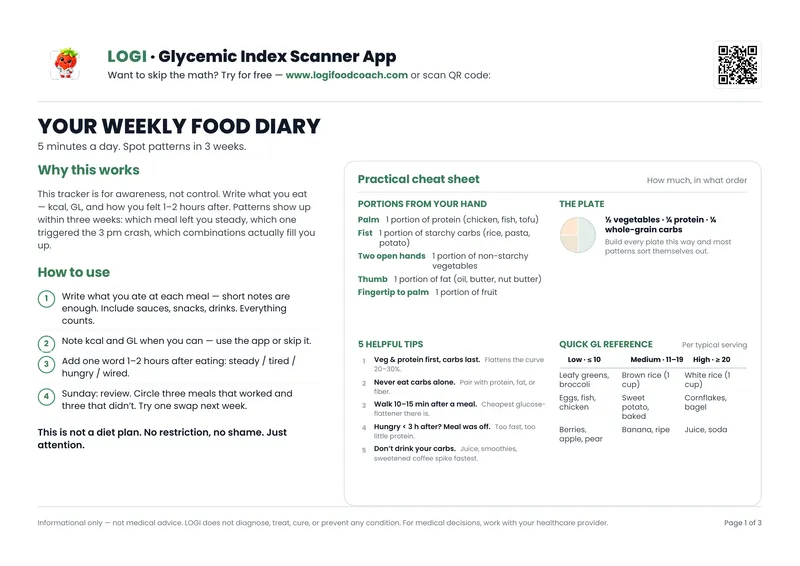
Free PDF — 3 pages
Your Weekly Food Journal
Track meals, glycemic load & mood. Spot patterns in 3 weeks.
No spam. Unsubscribe anytime.