Crumble aux fruits à noyau d'été à faible index glycémique avec garniture avoine-amande
Un dessert respectueux de la glycémie qui met en valeur les fruits à noyau frais sous une garniture croquante aux céréales complètes. La douceur naturelle rencontre des ingrédients riches en fibres pour un plaisir équilibré.
Ce crumble aux fruits à noyau soigneusement élaboré transforme les trésors de l'été en un dessert qui ne fera pas grimper votre glycémie. En combinant des cerises, pêches, nectarines et abricots riches en fibres avec une garniture d'avoine et d'amandes aux céréales complètes, nous avons créé une gourmandise qui offre une douceur naturelle tout en maintenant un contrôle glycémique. Les fibres solubles de l'avoine ralentissent l'absorption du glucose, tandis que les bonnes graisses des amandes et de l'huile de noix modèrent davantage la réponse glycémique.
Contrairement aux crumbles aux fruits traditionnels chargés de sucre raffiné, cette recette utilise un minimum de sucre turbinado et s'appuie sur la douceur naturelle des fruits d'été mûrs. Les fruits à noyau ont un index glycémique modéré (35-45), et leur teneur en fibres aide à prévenir les pics de glycémie. L'ajout de cannelle rehausse non seulement la saveur mais peut également améliorer la sensibilité à l'insuline. La farine de blé complète apporte des fibres et des nutriments supplémentaires par rapport aux alternatives raffinées.
IMPORTANT : Bien que cette recette utilise du sucre turbinado comme édulcorant par défaut, celui-ci a un index glycémique élevé (68-70). Pour une gestion optimale de la glycémie, remplacez-le par de l'allulose, de l'érythritol, de l'édulcorant au fruit du moine ou du sirop de yacon. La charge glycémique modérée de 16,3 par portion signifie que ce dessert doit être dégusté après un repas riche en protéines, ce qui ralentit encore l'absorption des glucides. La combinaison de fibres, de bonnes graisses et de céréales complètes fait de ce crumble une option satisfaisante qui vous rassasie plus longtemps. Servez tiède avec une cuillerée de yaourt grec pour ajouter des protéines, ou dégustez à température ambiante comme une collation réfléchie de l'après-midi qui nourrit sans compromettre votre santé métabolique. Limitez les portions à une seule et évitez de consommer à jeun pour un meilleur contrôle de la glycémie.
Impact sur la glycémie
Ce dessert provoquera une augmentation modérée et progressive de la glycémie en raison de sa charge glycémique moyenne et de son IG faible à moyen. Les fibres de la farine de blé complète, de l'avoine et des amandes aident à ralentir l'absorption du sucre, fournissant une énergie plus stable sur 2 à 3 heures par rapport aux crumbles aux fruits traditionnels.
Conseils glycémie
- ✓ Mangez ceci comme dessert après le repas plutôt qu'à jeun pour minimiser les pics de glycémie, car les protéines et les graisses de votre repas principal ralentiront davantage l'absorption du glucose
- ✓ Gardez des portions modestes (tenez-vous en à une portion) et accompagnez d'une petite poignée de noix ou d'une cuillerée de yaourt grec pour ajouter des protéines et des graisses saines
- ✓ Faites une marche de 10 à 15 minutes après avoir mangé pour aider vos muscles à utiliser le glucose et réduire le pic global de glycémie
🥗 Ingrédients
- 4 cup mélange de fruits à noyau d'été (nectarines, pêches, abricots), pelés, dénoyautés et tranchés
- 1 tbsp farine de blé complète
- 1 tbsp sucre turbinado ou cassonade
- 0.5 cup flocons d'avoine à l'ancienne
- 0.25 cup amandes effilées
- 3 tbsp farine de blé complète
- 2 tbsp sucre turbinado ou cassonade
- 0.25 tsp cannelle moulue
- 0.125 tsp muscade moulue
- 0.125 tsp sel
- 1 tbsp miel foncé
- 4 cup mélange de fruits à noyau d'été (nectarines, pêches, abricots), pelés, dénoyautés et tranchés
- 1 tbsp farine de blé complète
- 1 tbsp sucre turbinado ou cassonade
- 0.5 cup flocons d'avoine à l'ancienne
- 0.25 cup amandes effilées
- 3 tbsp farine de blé complète
- 2 tbsp sucre turbinado ou cassonade
- 0.25 tsp cannelle moulue
- 0.125 tsp muscade moulue
- 0.125 tsp sel
- 1 tbsp miel foncé
👨🍳 Instructions
- 1
Placez la grille de votre four au centre et préchauffez à 180°C (350°F). Préparez un plat de cuisson carré de 23 cm en le vaporisant légèrement d'huile en spray ou en le badigeonnant d'une fine couche d'huile pour éviter que ça colle.
- 2
Dans un grand saladier, mélangez les cerises coupées en deux avec les fruits à noyau tranchés (pêches, nectarines et abricots). Saupoudrez 1 cuillère à soupe de farine de blé complète et 1 cuillère à soupe de sucre turbinado (ou votre édulcorant à IG faible choisi comme l'allulose, l'érythritol ou le fruit du moine) sur les fruits, puis mélangez délicatement avec une spatule jusqu'à ce que les fruits soient uniformément enrobés. Ce léger enrobage aide à absorber l'excès de jus pendant la cuisson. Pour un contrôle optimal de la glycémie, utilisez de l'allulose, de l'érythritol ou de l'édulcorant au fruit du moine au lieu du sucre turbinado.
- 3
Préparez la garniture du crumble en mélangeant au fouet les flocons d'avoine, les amandes effilées, 3 cuillères à soupe de farine de blé complète, 2 cuillères à soupe de sucre turbinado (ou édulcorant à IG faible comme l'allulose, l'érythritol ou le fruit du moine), 1 cuillère à café de cannelle moulue, 1/4 de cuillère à café de muscade moulue et 1/4 de cuillère à café de sel dans un saladier moyen séparé. Mélangez bien pour que les épices soient uniformément réparties dans les ingrédients secs.
- 4
Versez en filet 2 cuillères à soupe d'huile de noix et 1 cuillère à soupe de miel foncé (ou sirop de yacon ou sirop sans sucre pour un meilleur contrôle glycémique) sur le mélange d'avoine. À l'aide d'une fourchette ou du bout des doigts, incorporez les ingrédients humides au mélange sec jusqu'à ce que tout soit bien combiné et que la garniture ait une texture friable et cohésive. Le mélange devrait tenir légèrement lorsqu'on le presse mais garder un aspect friable.
- 5
Transférez le mélange de fruits préparé dans votre plat de cuisson, en l'étalant uniformément sur le fond. Répartissez la garniture avoine-amande uniformément sur la couche de fruits, en assurant une couverture complète pour une finition dorée et croquante. Appuyez très légèrement pour aider la garniture à adhérer.
- 6
Placez le plat dans le four préchauffé et faites cuire pendant 45 à 55 minutes, jusqu'à ce que les fruits bouillonnent vigoureusement sur les bords et que la garniture soit devenue dorée. L'arôme de cannelle et de fruits caramélisés remplira votre cuisine. Si la garniture dore trop rapidement, couvrez légèrement avec du papier d'aluminium pendant les 10-15 dernières minutes de cuisson.
- 7
Sortez du four et laissez refroidir au moins 10 minutes avant de servir. Ce dessert est délicieux servi tiède ou à température ambiante. Pour un meilleur contrôle de la glycémie, accompagnez d'une cuillerée de yaourt grec nature (ajoute des protéines pour ralentir encore l'absorption du glucose) ou dégustez après un repas riche en protéines. Chaque portion représente environ 1 tasse, offrant une charge glycémique modérée de 16,3. Conservez les restes couverts au réfrigérateur jusqu'à 3 jours et réchauffez doucement avant de servir.
📊 Nutrition par portion
| Par portion | Plat entier | |
|---|---|---|
| Calories | 229 | 1376 |
| Glucides | 38g | 230g |
| Sucres | 24g | 145g |
| Sucres ajoutés | 6g | 36g |
| Sucres naturels | 18g | 109g |
| Protéines | 4g | 26g |
| Lipides | 8g | 47g |
| Graisses saturées | 1g | 5g |
| Graisses insaturées | 7g | 42g |
| Fibres | 5g | 28g |
| Fibres solubles | 1g | 6g |
| Fibres insolubles | 2g | 13g |
| Sodium | 43mg | 256mg |
Réponse glycémique prédite
Et si vous...
Modèle estimé — les réponses individuelles varient. Pas un avis médical.
🔄 Alternatives à faible IG
Le sucre turbinado a un index glycémique élevé (68-70) et augmentera significativement la glycémie. Le remplacer par des édulcorants à index glycémique nul ou faible réduit la charge glycémique globale de 16,3 à environ 12-14 par portion, rendant ce dessert beaucoup plus respectueux de la glycémie. Ces alternatives apportent de la douceur sans le pic de glucose, vous permettant de profiter d'un dessert tout en maintenant un meilleur contrôle métabolique.
Bien que le miel foncé contienne des antioxydants bénéfiques, il a toujours un index glycémique de 55-58 et contribue à la charge glycémique globale. Le sirop de yacon apporte de la douceur avec un impact minimal sur la glycémie et ajoute des fibres prébiotiques qui nourrissent les bonnes bactéries intestinales. Les sirops sans sucre éliminent complètement l'impact sur le glucose, tandis que l'huile de noix supplémentaire supprime la douceur mais ajoute des bonnes graisses qui stabilisent la glycémie.
Bien que les flocons d'avoine soient déjà un bon choix avec un IG modéré, l'avoine coupée a un index glycémique plus faible en raison d'une transformation moindre et d'une structure du grain plus intacte. La farine d'amande réduit considérablement l'impact glycémique tout en ajoutant des protéines et des bonnes graisses qui stabilisent davantage la glycémie. Une approche combinée offre la texture familière du crumble tout en abaissant la charge glycémique globale.
La farine de blé complète, bien que meilleure que la farine blanche, a toujours un index glycémique modéré (environ 55-60). Les farines d'amande et de coco ont un impact minimal sur la glycémie tout en apportant des protéines, des bonnes graisses et des fibres supplémentaires. Ces farines d'oléagineux créent un effet liant similaire dans la garniture tout en réduisant considérablement la charge glycémique du dessert. La farine de coco est particulièrement riche en fibres et nécessite moins de volume en raison de son pouvoir absorbant.
🔬 La science derrière cette recette
Ce crumble aux fruits à noyau atteint un équilibre glycémique grâce à des combinaisons d'ingrédients stratégiques. Les fruits à noyau comme les cerises, pêches, nectarines et abricots ont un index glycémique modéré (35-55), ce qui signifie qu'ils augmentent la glycémie plus lentement que les fruits à IG élevé comme la pastèque ou l'ananas. Leur teneur naturelle en fibres, surtout lorsque la peau est conservée, ralentit encore l'absorption du glucose. La garniture avoine-amande aux céréales complètes ajoute des fibres solubles significatives (bêta-glucane de l'avoine) qui forment une substance gélatineuse dans votre tube digestif, ralentissant physiquement le mouvement des aliments et la libération du glucose dans votre circulation sanguine. Les amandes apportent des graisses monoinsaturées saines et des fibres supplémentaires, qui modèrent toutes deux la réponse glycémique. La cannelle contient des composés bioactifs qui peuvent améliorer la sensibilité à l'insuline en imitant les effets de l'insuline et en augmentant l'absorption du glucose par les cellules. La charge glycémique de 16,3 par portion se situe dans la fourchette modérée (10-20 est considéré comme modéré), ce qui signifie que ce dessert provoquera une augmentation progressive et soutenue de la glycémie plutôt qu'un pic brutal. C'est nettement mieux que les crumbles aux fruits traditionnels avec du sucre raffiné et de la farine blanche, qui peuvent avoir des charges glycémiques dépassant 25-30. Pour une gestion optimale de la glycémie, le sucre turbinado devrait être remplacé par des édulcorants à index glycémique nul comme l'allulose, l'érythritol ou le fruit du moine, ce qui réduirait la charge glycémique à environ 12-14. Consommez toujours ce dessert après un repas équilibré contenant des protéines et des bonnes graisses, jamais à jeun, pour minimiser davantage l'impact sur la glycémie. La combinaison de fibres, de bonnes graisses et de glucides à IG modéré fait de ce dessert une option métaboliquement favorable lorsqu'il est consommé de manière réfléchie et en portions appropriées.
Recettes similaires
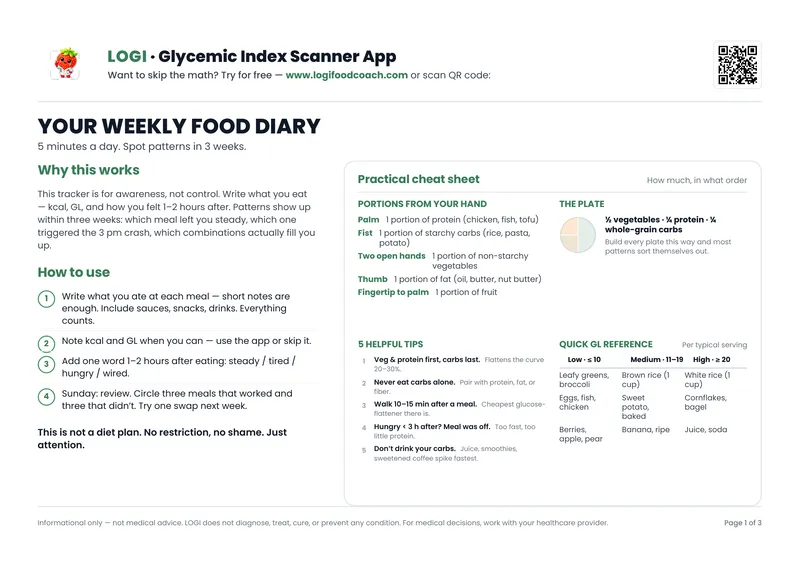
PDF gratuit — 3 pages
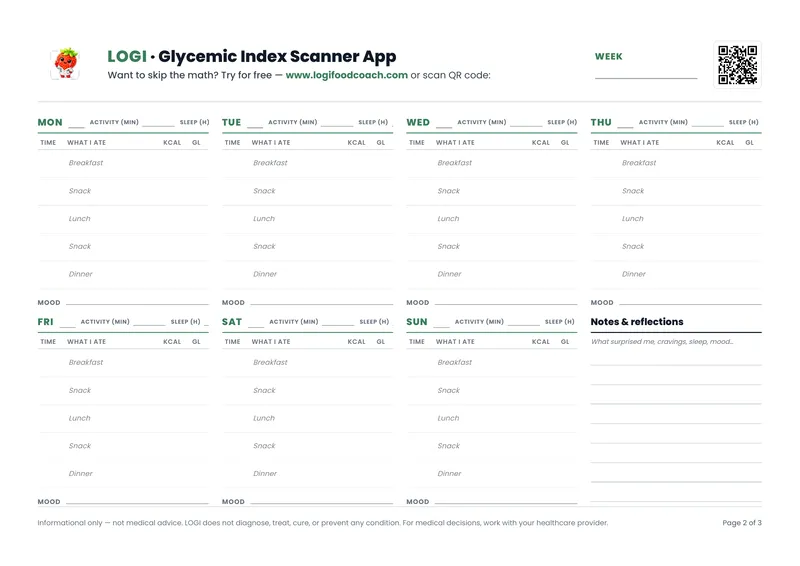
Ton journal alimentaire
Note tes repas, charge glycémique et humeur. Repère les tendances en 3 semaines.
Pas de spam. Désinscription à tout moment.