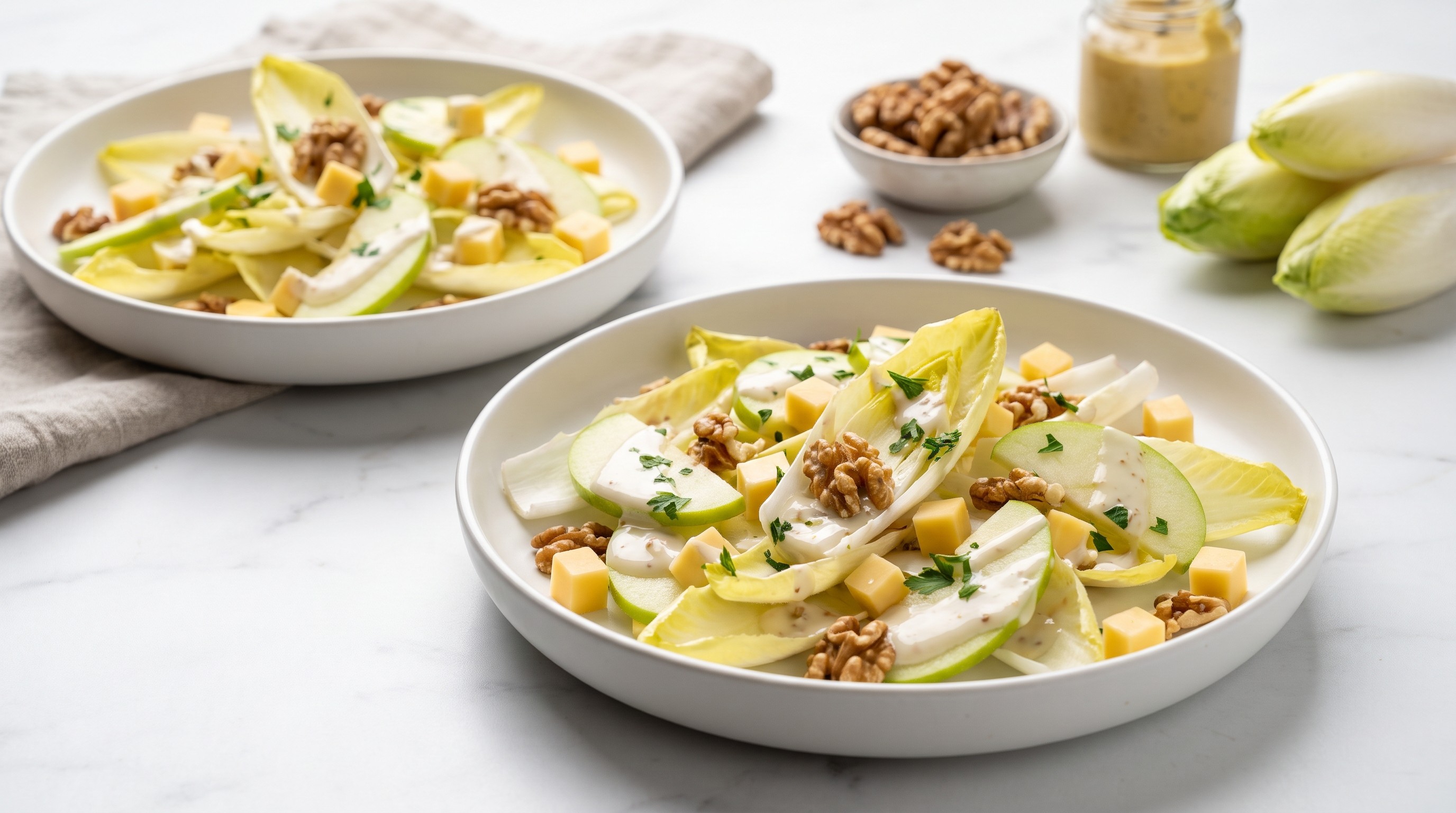
Witlof Salad with Apple, Walnut and Yogurt-Mustard Dressing
Crisp Belgian endive meets tart Granny Smith apple and crunchy walnuts in a tangy yogurt-mustard dressing — a naturally low-GI salad packed with inulin fiber.
This classic Dutch witlofsalade is a blood-sugar-friendly masterpiece hiding in plain sight. Belgian endive (witlof) is one of the lowest-glycemic vegetables available, containing virtually no starch while delivering generous amounts of inulin — a prebiotic fiber that feeds beneficial gut bacteria and has been shown to improve insulin sensitivity over time. Paired with Granny Smith apple, one of the lowest-GI fruits you can choose, this salad delivers sweetness without the glucose spike.
The creamy yogurt-mustard dressing does double duty for glycemic control. Full-fat Greek yogurt contributes protein and fat that slow gastric emptying, while apple cider vinegar has well-documented effects on post-meal blood sugar — studies suggest it can reduce the glycemic response of a meal by up to 30 percent. A drizzle of extra-virgin olive oil adds monounsaturated fats that further buffer glucose absorption. Together, these dressing ingredients create a powerful glycemic brake.
Walnuts and aged Gouda round out the plate with a winning combination of healthy fats, protein and satisfying crunch. Walnuts are among the lowest-GI nuts, rich in omega-3 fatty acids and polyphenols linked to improved metabolic health. Aged Gouda contributes zero sugar and plenty of calcium. For optimal blood sugar response, eat the bitter endive leaves first before reaching for the apple slices — starting with fiber and bitterness primes your digestive system to handle carbohydrates more gracefully. This salad works beautifully as a starter before a main course, or pair it with grilled chicken or salmon for a complete low-GI meal.
Blood Sugar Impact
Very low blood sugar impact expected. With a GI of 29 and a glycemic load of only 7.9, the combination of fiber-rich endive and apple, healthy fats from walnuts and olive oil, and protein from Greek yogurt and Gouda cheese will produce a gentle, slow rise in blood glucose with stable energy for 3-4 hours.
Blood Sugar Tips
- ✓ Eat the bitter endive leaves and walnuts first before the apple slices — the fiber and fat will prime your gut to slow glucose absorption from the fruit.
- ✓ The apple cider vinegar in the dressing is already working in your favor; drizzle any extra dressing generously, as acetic acid has been shown to reduce post-meal glucose spikes by up to 30%.
- ✓ Enjoy the salad as a starter before any higher-carb main course — its fat, protein, and fiber will blunt the glycemic response of whatever follows.
🥗 Ingredients
- 120 g Greek yogurt
- 1 tbsp Dijon mustard
- 1 tbsp Apple cider vinegar
- 1 tbsp Extra-virgin olive oil
- 0.5 tsp Salt
- 0.25 tsp Black pepper
- 4 pcs Belgian endive
- 1 pcs Granny Smith apple
- 50 g Walnut halves
- 80 g Aged Gouda
- 10 g Flat-leaf parsley
- 4.2 oz Greek yogurt
- 1 tbsp Dijon mustard
- 1 tbsp Apple cider vinegar
- 1 tbsp Extra-virgin olive oil
- 0.5 tsp Salt
- 0.25 tsp Black pepper
- 4 pcs Belgian endive
- 1 pcs Granny Smith apple
- 1.8 oz Walnut halves
- 2.8 oz Aged Gouda
- 0.4 oz Flat-leaf parsley
👨🍳 Instructions
- 1
Prepare the dressing by combining the Greek yogurt, Dijon mustard, apple cider vinegar, olive oil, salt and black pepper in a small bowl. Whisk vigorously until the mixture is completely smooth and uniform. Taste and adjust the seasoning if needed, then set the bowl aside while you prepare the salad.
- 2
Trim a thin slice from the root end of each endive head to release the leaves. Separate the leaves by hand, discarding any that are wilted or bruised. Tear or cut the larger leaves into pieces roughly 4 cm long and place them all in a large mixing bowl.
- 3
Quarter the Granny Smith apple lengthwise and cut away the core from each quarter. Slice each quarter into thin half-moons, about 3 mm thick, and add them directly to the bowl with the endive. Working quickly prevents the apple from browning, but the vinegar in the dressing will also help.
- 4
Place the walnut halves on a cutting board and chop them roughly — aim for a mix of larger chunks and smaller pieces so you get varied texture in every bite. Scatter the walnuts over the endive and apple.
- 5
Cut the aged Gouda into small cubes, roughly 1 cm on each side, and add them to the salad bowl.
- 6
Pour the yogurt-mustard dressing over the salad. Using two large spoons or clean hands, toss everything gently until each endive leaf and apple slice is lightly coated with dressing. Take care not to crush the delicate leaves.
- 7
Divide the dressed salad evenly between two plates or shallow bowls, making sure each portion gets a fair share of walnuts and Gouda. Finish by scattering the chopped flat-leaf parsley over the top and serve immediately.
📊 Nutrition Per Serving
| Per Serving | Whole Dish | |
|---|---|---|
| Calories | 496 | 993 |
| Carbs | 27g | 54g |
| Sugars | 14g | 28g |
| Natural Sugars | 14g | 28g |
| Protein | 22g | 44g |
| Fat | 36g | 72g |
| Saturated Fat | 10g | 20g |
| Unsaturated Fat | 25g | 50g |
| Fiber | 10g | 20g |
| Soluble Fiber | 3g | 6g |
| Insoluble Fiber | 7g | 14g |
| Sodium | 1053mg | 2106mg |
Predicted Glucose Response
What if you...
Estimated model — individual responses vary. Not medical advice.
🔄 Lower GI Swaps
Granny Smith apple has a GI of ~36-39. Raspberries (GI ~25), blackberries (GI ~25), and pomegranate seeds (GI ~18) deliver fruitiness and crunch with a significantly lower glycemic impact and more fiber per gram, which further blunts blood sugar spikes.
Gouda is already low-GI, but avocado (GI ~0) adds soluble fiber and monounsaturated fats that slow gastric emptying and glucose absorption. Toasted almonds contribute extra fiber and protein. Aged Parmesan has a higher protein-to-carb ratio than Gouda, further minimizing any residual glycemic contribution.
If the recipe uses low-fat Greek yogurt, switching to skyr (GI ~20, nearly double the protein per serving) or explicitly full-fat Greek yogurt helps moderate the blood sugar response. Higher protein and fat content slow digestion and reduce the overall glycemic load of the dressing.
While parsley itself has negligible glycemic impact, fenugreek leaves contain soluble fiber and compounds shown to improve insulin sensitivity and lower postprandial glucose. Cilantro and dill are equally low-GI but add phytonutrients associated with improved glucose metabolism.
🔬 The Science Behind This Recipe
Why This Salad Is a Blood Sugar Winner
This witlof salad is a textbook example of how smart ingredient pairing can keep your blood sugar steady. The star of the show is the combination of Greek yogurt and olive oil in the dressing — together, they deliver a one-two punch of protein and healthy fat that naturally slows down digestion. When your body breaks down food more gradually, glucose trickles into your bloodstream instead of flooding it all at once. That's why this recipe scores a glycemic index of just 29 — well within the "low" category — and a glycemic load of only 7.9 per serving. Remember, glycemic load takes portion size into account, so it tells you what's actually happening on your plate, not just in a lab. A GL under 10 is considered low, meaning this dish has a gentle, minimal effect on your blood sugar.
The walnuts deserve special attention too. They're packed with fiber, plant-based protein, and omega-3 fatty acids — a trio that further slows glucose absorption. Meanwhile, the apple cider vinegar in the dressing isn't just there for tang. Research suggests that acetic acid can help improve your body's sensitivity to insulin after a meal, giving your cells a better chance to use glucose efficiently. Even the witlof (Belgian endive) plays a role: its bitter compounds come bundled with fiber that adds bulk and slows the pace of digestion.
Want to maximize the benefits? Try eating the salad greens and walnuts first, saving any bread or starchy side for last — this simple "food order" trick has been shown to reduce post-meal glucose spikes by up to 30%. A short 10-to-15-minute walk after eating can also help your muscles soak up circulating blood sugar. The beauty of a dish like this is that it doesn't need fixing — the ingredients are already doing the work for you.
Related recipes
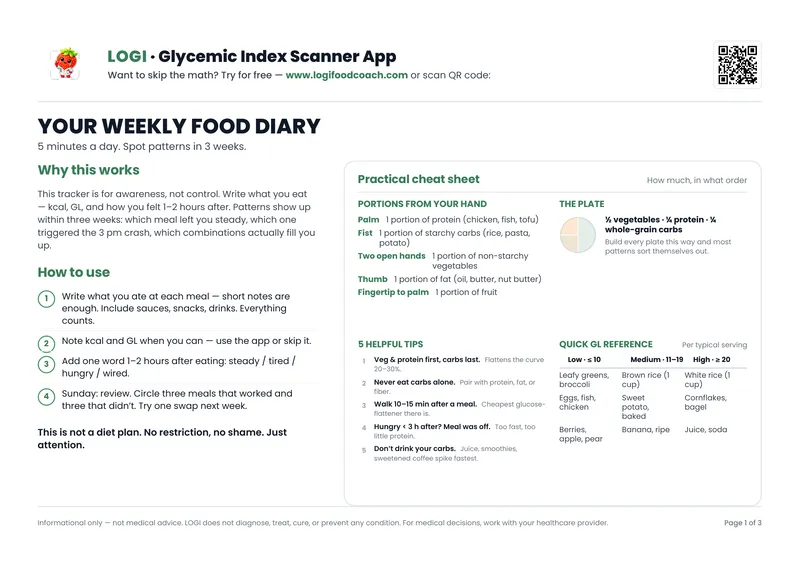
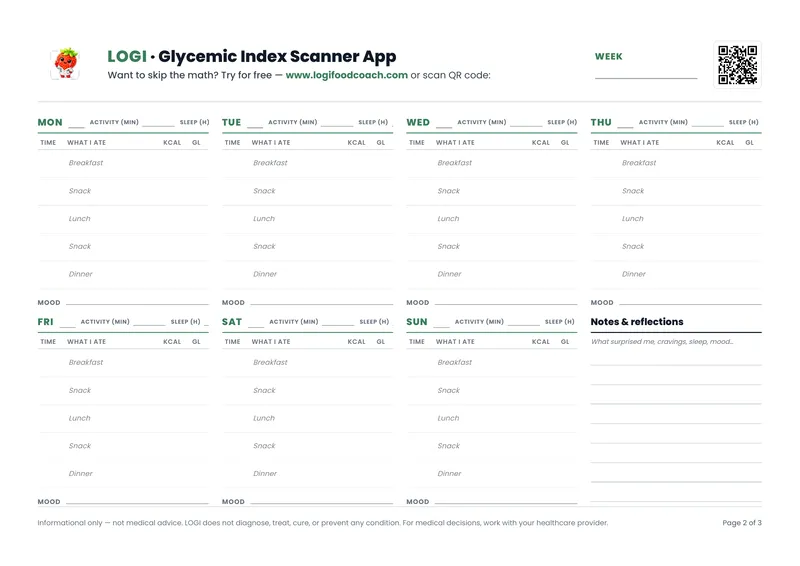
Free PDF — 3 pages
Your Weekly Food Journal
Track meals, glycemic load & mood. Spot patterns in 3 weeks.
No spam. Unsubscribe anytime.