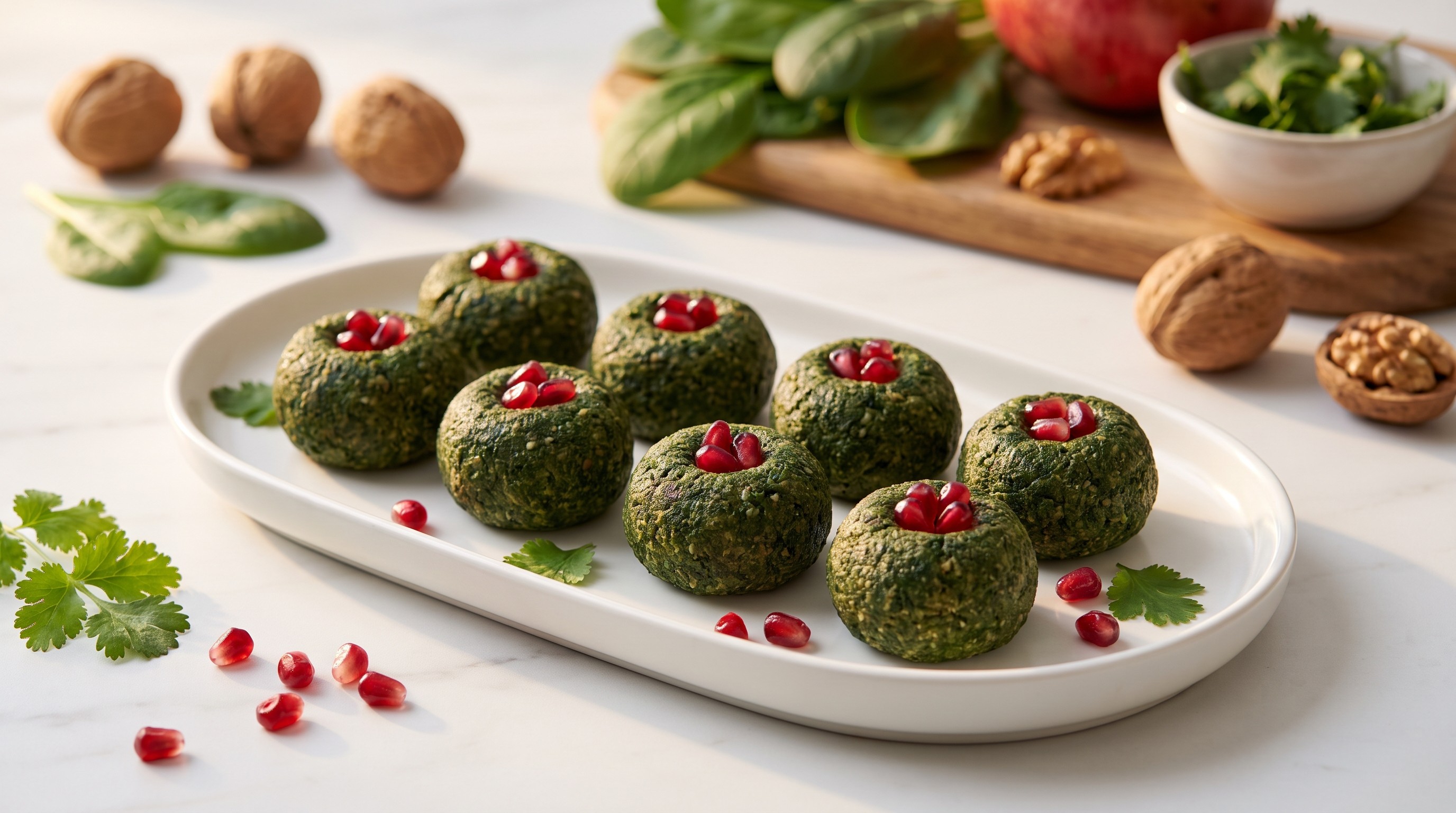
Pkhali (Georgian Spinach-Walnut Bites)
Vibrant Georgian spinach-walnut bites loaded with fiber and heart-healthy fats — naturally low-glycemic with zero starch, ready in under twenty minutes.
Pkhali is one of the jewels of Georgian cuisine — a no-cook appetizer of blanched greens blended with crushed walnuts, raw garlic, and aromatic spices, then shaped into elegant little bites topped with jewel-like pomegranate seeds. It is a staple of the traditional supra feast table, and it happens to be one of the most blood-sugar-friendly dishes you will ever encounter.
From a glycemic standpoint, pkhali is nearly perfect. There is no flour, no rice, no bread, and no added sugar. The foundation is spinach, which carries virtually zero glycemic load while delivering iron, magnesium, and folate. Walnuts contribute healthy omega-3 fats and plant protein that slow glucose absorption and promote lasting satiety. Fenugreek, a signature Georgian spice, has been studied for its potential to improve insulin sensitivity. Even the splash of white wine vinegar works in your favor — acetic acid has been shown to moderate post-meal blood sugar spikes when consumed alongside a meal.
Serve pkhali as a starter before a main course to front-load fiber and fat, which primes your metabolism to handle any carbohydrates that follow. Pair it with grilled chicken or fish for a complete low-glycemic meal, or set it out alongside other vegetable-forward Georgian dishes like badrijani for an impressive, blood-sugar-stable spread. The bites hold well at room temperature, making them ideal for meal prep or entertaining.
Blood Sugar Impact
Very minimal blood sugar impact expected. With a glycemic load of just 3.1 and an estimated GI of 19, this nutrient-dense combination of spinach, walnuts, and spices will produce virtually no glucose spike and provide stable energy for 3-4 hours.
Blood Sugar Tips
- ✓ Enjoy these bites as a starter before any higher-carb dishes in your meal — the fiber from spinach and healthy fats from walnuts will slow gastric emptying and blunt the glucose response of subsequent foods.
- ✓ If serving alongside bread or rice, eat several pkhali bites first and wait 5-10 minutes before touching the starchier sides to leverage the 'food order' effect.
- ✓ Pair with a short 10-15 minute walk after your full meal to further enhance glucose uptake by working muscles, though this dish alone requires little mitigation.
🥗 Ingredients
- 300 g Spinach
- 60 g Walnut
- 2 pcs Garlic
- 30 g Red onion
- 10 g Cilantro
- 1 tsp Ground coriander
- 0.5 tsp Ground fenugreek
- 2 tsp White wine vinegar
- 0.5 tsp Salt
- 30 g Pomegranate seeds
- 10.6 oz Spinach
- 2.1 oz Walnut
- 2 pcs Garlic
- 1.1 oz Red onion
- 0.4 oz Cilantro
- 1 tsp Ground coriander
- 0.5 tsp Ground fenugreek
- 2 tsp White wine vinegar
- 0.5 tsp Salt
- 1.1 oz Pomegranate seeds
👨🍳 Instructions
- 1
Bring a large pot of water to a vigorous boil. Drop in all the spinach and blanch for exactly 60 seconds — the leaves should wilt completely but stay bright green. Drain immediately.
- 2
Transfer the blanched spinach straight into a bowl of ice-cold water and leave it for about a minute to halt the cooking. This preserves the vivid colour and prevents the greens from turning mushy.
- 3
Lift the spinach from the cold water and place it in a clean tea towel. Wrap tightly, twist, and squeeze out every last drop of moisture — the drier the spinach, the better the pkhali will hold together. You should end up with a tight, compact ball.
- 4
Add the walnuts, garlic cloves, red onion, cilantro, ground coriander, and ground fenugreek to a food processor. Pulse in short bursts until everything is finely ground but retains a slight coarse texture — stop well before it turns into a smooth paste.
- 5
Tear the squeezed spinach into rough pieces and add them to the food processor with the walnut mixture. Pulse four to five times until the spinach is evenly distributed through the nut base. Avoid over-processing — you want a cohesive mixture with visible flecks of green.
- 6
Add the white wine vinegar and salt, then pulse once or twice just to incorporate. Taste the mixture and adjust the seasoning — it should be savoury, slightly tangy, and well balanced. A little extra vinegar can brighten the flavour.
- 7
Scoop the mixture and divide it into eight equal portions, roughly 30 g each. Roll each portion between your palms into a firm, smooth ball, then press a shallow dimple into the top of each one with your thumb.
- 8
Nestle a small cluster of pomegranate seeds into each indentation. Arrange the bites on a serving plate and scatter any remaining pomegranate seeds and a few fresh cilantro leaves around the platter. Serve at room temperature for the fullest flavour.
📊 Nutrition Per Serving
| Per Serving | Whole Dish | |
|---|---|---|
| Calories | 261 | 522 |
| Carbs | 16g | 32g |
| Sugars | 4g | 9g |
| Natural Sugars | 4g | 9g |
| Protein | 10g | 20g |
| Fat | 21g | 41g |
| Saturated Fat | 2g | 4g |
| Unsaturated Fat | 18g | 36g |
| Fiber | 7g | 14g |
| Soluble Fiber | 2g | 4g |
| Insoluble Fiber | 5g | 10g |
| Sodium | 705mg | 1411mg |
Predicted Glucose Response
What if you...
Estimated model — individual responses vary. Not medical advice.
🔄 Lower GI Swaps
Pomegranate seeds contain natural sugars (GI ~35) that contribute to the dish's glycemic load. Replacing with seeds or nuts adds healthy fats and protein with a near-zero GI, further blunting any blood sugar response.
Red onion has a moderate carbohydrate content (~7-8 g per 100 g) contributing to glycemic load. Scallion greens and chives deliver a similar allium flavor with significantly fewer carbohydrates and a lower glycemic impact per serving.
Apple cider vinegar has been shown in studies to improve post-meal insulin sensitivity and lower blood sugar spikes more effectively than other vinegars. Adding cinnamon further supports glucose metabolism by improving insulin signaling.
🔬 The Science Behind This Recipe
Here's the science explainer section:
---
Why This Recipe Works for Blood Sugar
Pkhali is a dream for steady blood sugar, and the secret starts with its two star ingredients: spinach and walnuts. Spinach is extremely low in carbohydrates — a generous serving contains barely any starch or sugar — which means it puts almost no glucose into your bloodstream in the first place. What it *does* deliver is a wealth of fiber, which acts like a gentle brake on digestion, slowing down the rate at which any accompanying carbohydrates are absorbed. Walnuts take this effect even further. Their combination of healthy fats and plant-based protein creates what nutritionists sometimes call a "buffer": when fat and protein arrive in your stomach alongside carbohydrates, they slow gastric emptying, meaning glucose trickles into your blood gradually rather than flooding in all at once.
This is why the glycemic load (GL) of this dish is remarkably low at just 3.1 per serving. While glycemic index (GI) tells you how *fast* a food raises blood sugar, glycemic load accounts for *how much* carbohydrate you're actually eating — and that's often the more useful number. A slice of watermelon has a high GI but a modest GL because you're not consuming much sugar in a typical portion. Pkhali scores low on *both* measures, making it one of the most blood-sugar-friendly dishes you can enjoy.
To get the most from this recipe, try eating it at the start of your meal — research suggests that starting with vegetables and proteins before any starchy sides can reduce post-meal glucose spikes by up to 40%. Pairing these bites with a short 10–15 minute walk after eating can further smooth out your blood sugar response, helping your muscles absorb glucose naturally. It's a small habit that makes a real difference over time.
---
Word count: 274
This covers the key ingredients (spinach + walnuts), explains how fiber/fat/protein buffer glucose absorption, distinguishes GI from glycemic load, and includes practical tips (food order, post-meal walking) — all in an accessible, empowering tone without medical claims or jargon.
Related recipes
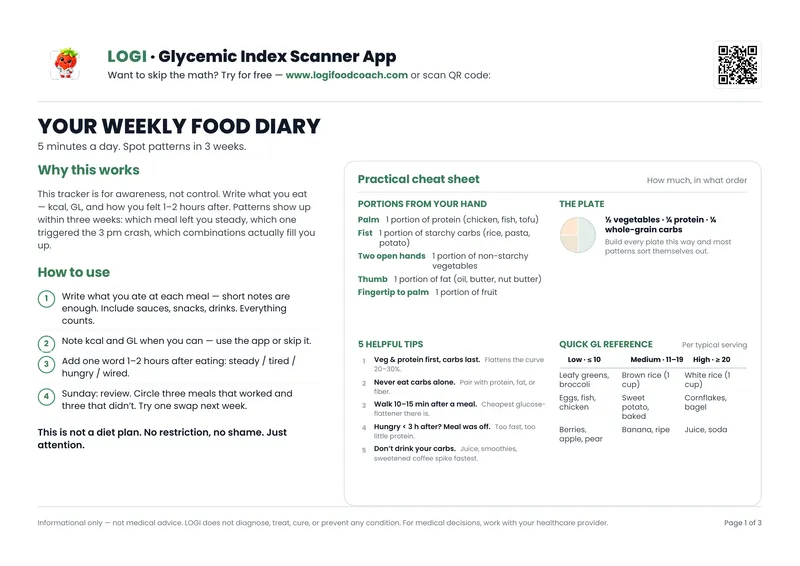
Free PDF — 3 pages
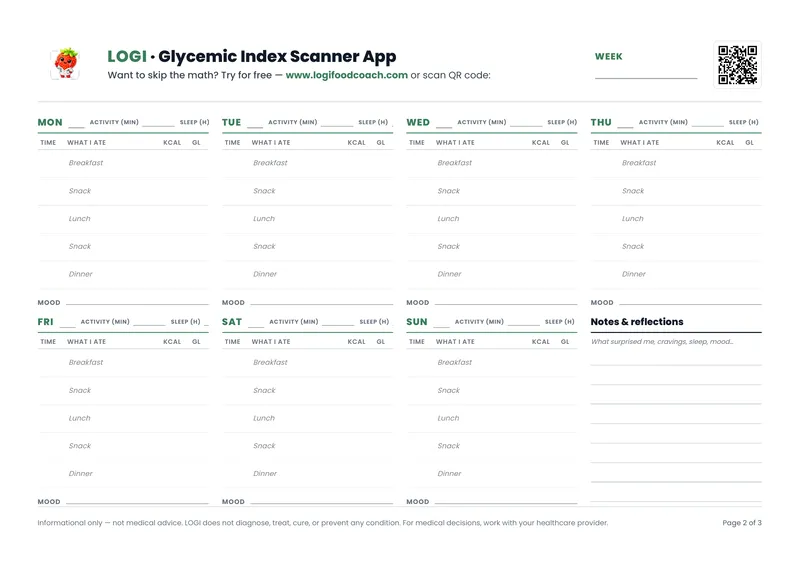
Your Weekly Food Journal
Track meals, glycemic load & mood. Spot patterns in 3 weeks.
No spam. Unsubscribe anytime.