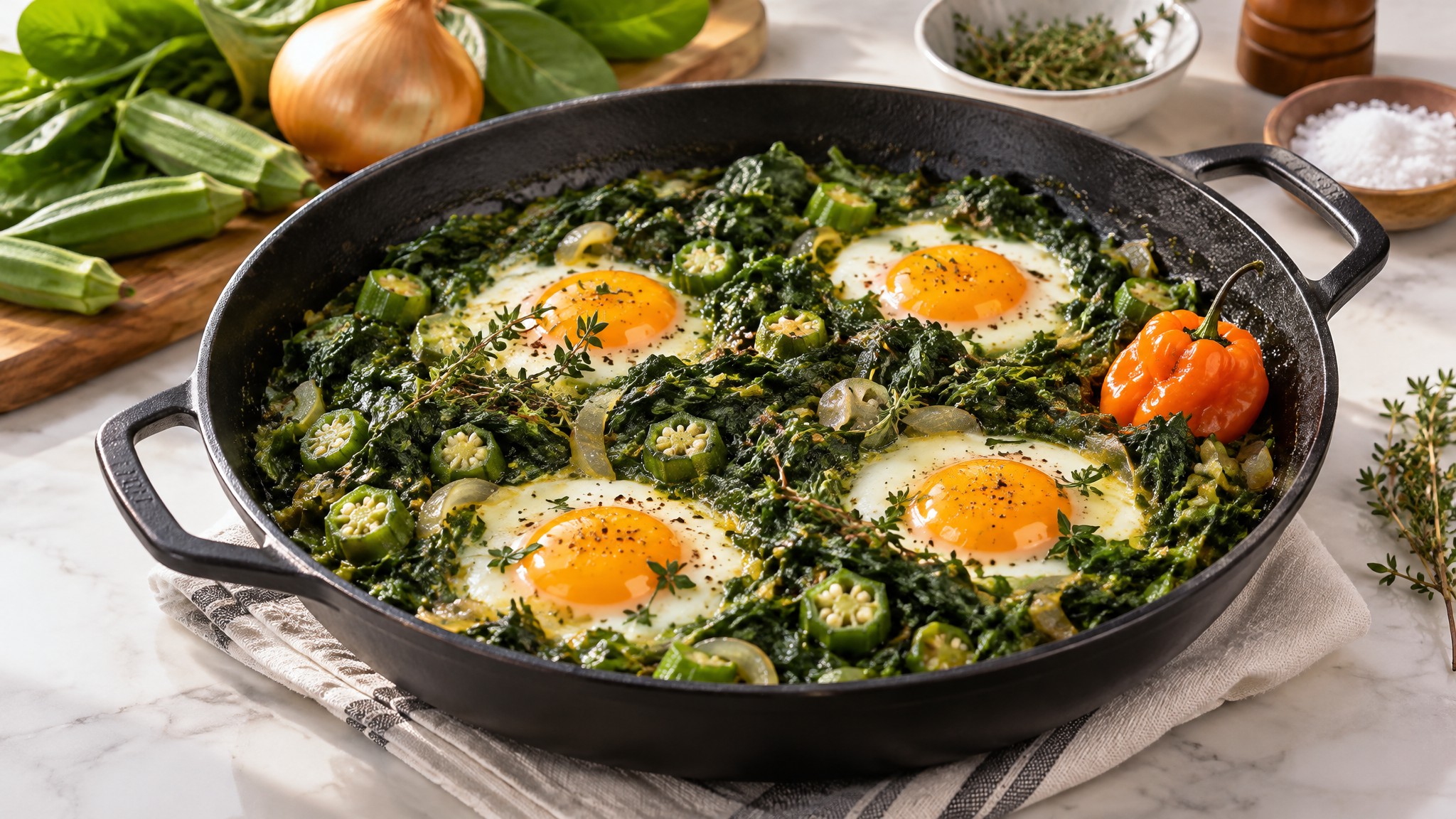
Spinach Callaloo with Okra, Thyme and Eggs
Spinach and okra stewed Caribbean-style with thyme and a whole scotch bonnet, topped with eggs cooked in the greens. Very low GL and high in fibre.
Callaloo is one of the Caribbean's best-loved dishes. Leafy greens are stewed slowly with onion, garlic, thyme and okra until they are soft and glossy. A whole scotch bonnet pepper goes in the pot for fragrance and gentle heat. This one-pan version keeps that character but uses ingredients that are easy to find. Fresh spinach replaces amaranth or dasheen leaves. Eggs cooked in the greens replace the usual saltfish, so you don't need to soak anything overnight. The pepper is pierced once and added whole, so it gives fruity aroma without much fire. Anyone who wants more heat can press it into their own portion at the table.
This dish is a good choice for steady blood sugar. Spinach, onion and okra are non-starchy vegetables with a very low glycemic load, and eggs contain almost no carbohydrate. Spinach is the main ingredient by weight. Okra gives callaloo its silky body through its soluble fibre (mucilage), which can slow how quickly carbohydrate from the whole meal is absorbed. The eggs add protein and fat. These slow the meal down further and keep you full for hours. Olive oil adds monounsaturated fat and helps your body absorb the fat-soluble vitamins A and K in spinach.
Serve it straight from the pan for breakfast, brunch or a light dinner. Eat a few forkfuls of the greens before you break into the yolks, because starting with vegetables can lower the glucose peak after a meal. Callaloo is often served with dumplings, white rice, fried ripe plantain or hard-dough bread. All of these would raise the meal's glycemic load a lot. For a fuller plate, choose a lower-GI side instead. A small portion of boiled green banana (about 100 g) is traditional with callaloo. A slice of dense wholegrain rye bread or about 80 g of cooked lentils also works well. Any one of these adds roughly 5 to 8 to the meal's glycemic load, which keeps the total low to moderate. A short walk after eating helps your muscles use the glucose from the meal.
Blood Sugar Impact
Minimal impact: with a glycemic load of about 2 and plenty of fiber from okra and spinach plus protein and fat from the eggs and olive oil, this meal should keep blood sugar stable for 3-4 hours.
Blood Sugar Tips
- ✓ Pair it with a small serving of a low-GI carbohydrate such as boiled green banana, lentils or whole-grain bread instead of white rice or fried dumplings, which would raise the glycemic load.
- ✓ Eat the eggs and greens first if you serve the meal with a starchy side, so the protein, fat and fiber can slow how fast the carbohydrates are absorbed.
- ✓ Take a 10-15 minute walk after eating to help your muscles use glucose, especially if you add starchy sides.
🥗 Ingredients
👨🍳 Instructions
- 1
Prepare the vegetables. Thinly slice the onion and the 2 garlic cloves. Trim the stem ends from the okra and cut it into 1 cm (1/2 in) rounds. Rinse the spinach and shake off the excess water. Pierce the scotch bonnet once with the tip of a knife, but don't cut it open. Have the 4 eggs ready.
- 2
Put a wide pan with a lid, about 26 cm (10 in) across, over medium heat and add the olive oil. When the oil shimmers, add the onion and garlic. Cook gently for about 4 minutes, stirring now and then, until they are soft and translucent but not browned.
- 3
Add the okra rounds and the 4 thyme sprigs. Cook for about 4 minutes, stirring occasionally, until the edges of the okra start to turn golden. Browning the okra a little first stops it from becoming too slimy later.
- 4
Add the spinach a handful at a time, letting each batch wilt a little before adding the next. Sprinkle in the salt as you go. Place the pierced scotch bonnet on top of the greens, cover the pan and let the spinach wilt for 3 minutes.
- 5
Remove the lid and stir everything together. Simmer uncovered for about 4 minutes, until most of the liquid has cooked off and the greens look dark and glossy. Lift out the scotch bonnet and set it aside, then pick out the bare thyme stems.
- 6
Use the back of a spoon to make 4 wells in the greens, then crack an egg into each well.
- 7
Cover the pan, turn the heat down to low and cook for 5 to 6 minutes, until the egg whites are fully set and the yolks are still runny. Check after 5 minutes so the yolks don't overcook.
- 8
Put the scotch bonnet back at the edge of the pan so anyone who wants more heat can press it into their portion. Serve straight from the pan, with 2 eggs per person. Eat a few bites of the greens before the eggs to help keep your blood sugar steady. If you'd like a side, add a small portion of boiled green banana or a slice of wholegrain rye bread rather than white rice, dumplings or white bread.
📊 Nutrition Per Serving
| Per Serving | Whole Dish | |
|---|---|---|
| Calories | 291 | 583 |
| Carbs | 19g | 37g |
| Sugars | 5g | 10g |
| Natural Sugars | 5g | 10g |
| Protein | 19g | 39g |
| Fat | 17g | 35g |
| Saturated Fat | 4g | 8g |
| Unsaturated Fat | 13g | 27g |
| Fiber | 7g | 14g |
| Soluble Fiber | 2g | 4g |
| Insoluble Fiber | 5g | 10g |
| Sodium | 851mg | 1702mg |
Predicted Glucose Response
What if you...
Estimated model — individual responses vary. Not medical advice.
🔄 Lower GI Swaps
Coconut oil gives a more traditional Caribbean flavour, and rapeseed oil is a neutral option rich in unsaturated fat. Neither changes the glycemic load, because both contain no carbohydrate. If you cook often with coconut oil, keep the amount moderate because it is high in saturated fat.
These are the traditional greens for callaloo, or sturdy alternatives to them. All are non-starchy, very low-GL leafy vegetables. Tougher leaves such as kale, collards or dasheen need 5 to 10 minutes longer to simmer until tender. Always cook dasheen leaves thoroughly.
Saltfish is the classic protein in callaloo, and tofu is a plant-based alternative. Both add protein with almost no carbohydrate, so the meal still has a very low glycemic load. Soak saltfish overnight to reduce the salt, and leave out the added salt if you use it.
Traditional starchy sides can add 20 or more to the meal's glycemic load. These lower-GI options add only about 5 to 8, and they bring resistant starch or extra fibre that releases glucose more slowly.
🔬 The Science Behind This Recipe
This callaloo is built almost entirely from foods that release very little glucose. Spinach is the largest ingredient by weight. It contains only about 1 to 2 g of available carbohydrate per 100 g, so 150 g per person adds very little. Okra and onion add a small amount of carbohydrate, and most of it comes with fibre. The eggs and olive oil contain almost no carbohydrate. In total, one serving has a glycemic load of about 2, which is very low.
There is so little carbohydrate in the dish that a precise GI value for the whole meal can't really be measured. It is best described as very low GI, and the glycemic load is the more useful number. Okra matters more than its weight suggests. Its soluble fibre, the mucilage that makes callaloo silky, forms a viscous gel that can slow how quickly carbohydrate is absorbed. That includes carbohydrate from any side dish eaten with it. The protein and fat in the eggs and olive oil also slow stomach emptying, which flattens the glucose curve and keeps you full for longer.
Eating order also helps. Eating the vegetables before the rest of the meal has been shown to lower the glucose peak after a meal. Starchy sides are where the glycemic load goes up, so the type and amount you choose matters most. A small portion of boiled green banana, dense wholegrain rye bread or lentils adds roughly 5 to 8 GL and keeps the whole meal in a comfortable range. White rice, dumplings or hard-dough bread can add 20 or more.
Related recipes
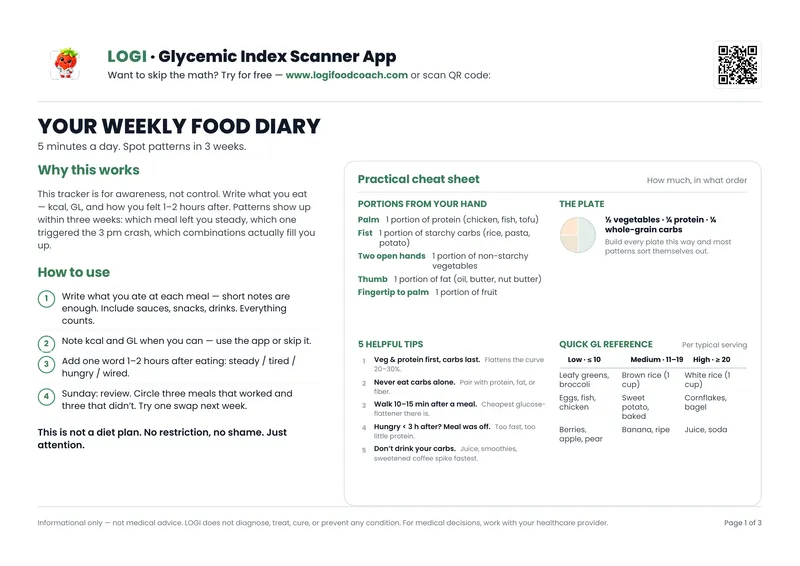
Free PDF — 3 pages
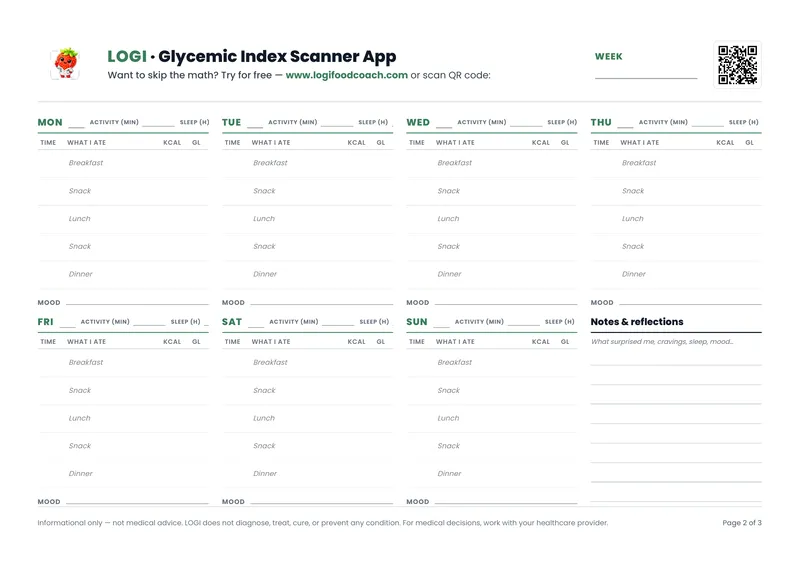
Your Weekly Food Journal
Track meals, glycemic load & mood. Spot patterns in 3 weeks.
No spam. Unsubscribe anytime.