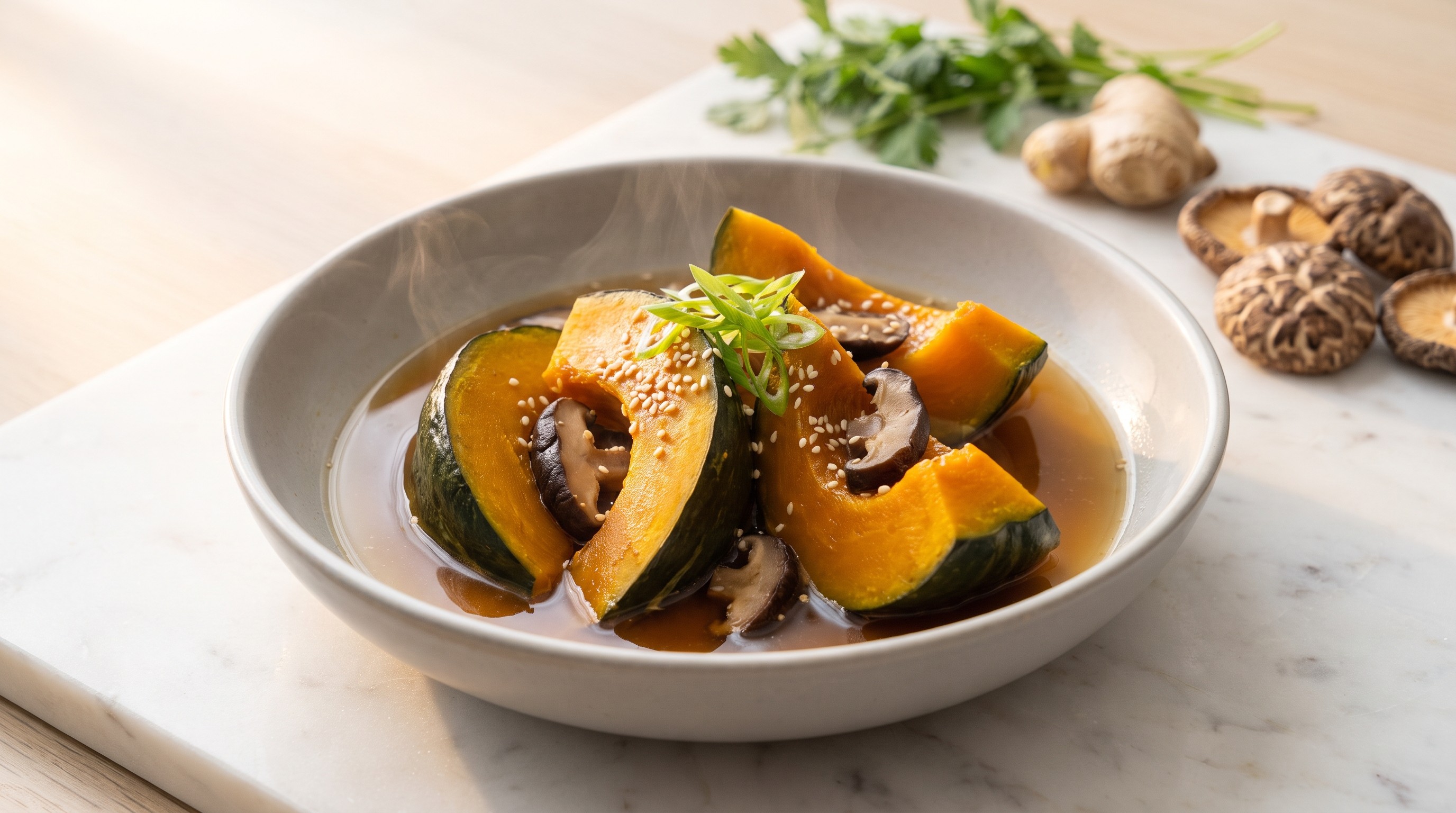
Kabocha no Nimono with Shiitake (No Added Sugar)
Sugar-free simmered kabocha with shiitake in a savory dashi broth — naturally sweet, fibre-rich, and gentle on blood sugar with every comforting bite.
Kabocha no nimono is one of Japan's most beloved home-cooked dishes, and this zero-added-sugar version proves that comfort food can work beautifully within a blood-sugar-conscious diet. By omitting the mirin and sugar found in traditional recipes, the dish relies entirely on kabocha's inherent sweetness — a flavour that deepens as the squash slowly absorbs the savoury dashi broth. Kabocha registers around 55 on the glycemic index, placing it in the medium range, but the portion-controlled serving here (250 g raw per person) combined with its fibre-rich skin and a low-calorie, protein-free broth keeps the overall glycemic load modest at roughly 11 per serving.
Shiitake mushrooms do double duty in this bowl: they contribute virtually zero glycemic impact while delivering powerful umami that tricks the palate into perceiving a richer, more indulgent dish than the numbers suggest. The beta-glucan fibre in shiitake may also help moderate postprandial glucose responses. Ginger adds a warming note along with well-documented anti-inflammatory properties, and the dashi-soy-sake braising liquid delivers savoury satisfaction without a single gram of added sugar.
For the best blood-sugar outcome, serve this nimono as a side alongside grilled fish or tofu for a protein pairing, and eat the vegetables before any accompanying rice. The braising liquid is meant to be sipped — it is low in calories and helps slow the pace of the meal, another proven strategy for flattening the glucose curve. Leftovers taste even better the next day as the kabocha absorbs more broth.
Blood Sugar Impact
Moderate-low blood sugar impact with a gentle, gradual rise. The low GI of 40 and moderate glycemic load of 11.2 suggest stable energy for 3-4 hours, as kabocha's starch is tempered by shiitake fiber, protein-rich dashi, and the fat in sesame seeds.
Blood Sugar Tips
- ✓ Eat the shiitake mushrooms and scallions first before the kabocha pieces — the mushroom fiber slows gastric emptying and blunts the glucose curve from the starchier squash.
- ✓ Keep kabocha pieces in larger chunks rather than mashing; intact cell walls lower the effective GI by slowing starch digestion.
- ✓ Add a drizzle of extra sesame oil or serve alongside a small portion of protein (e.g., tofu or fish) to further flatten the post-meal glucose response.
🥗 Ingredients
- 500 g Kabocha squash
- 120 g Shiitake mushroom
- 350 ml Dashi stock
- 2 tbsp Soy sauce
- 1 tbsp Sake
- 1 tsp Ginger
- 1 pcs Scallion
- 1 tsp Sesame seeds
- 1.1 lb Kabocha squash
- 4.2 oz Shiitake mushroom
- 1.5 cups Dashi stock
- 2 tbsp Soy sauce
- 1 tbsp Sake
- 1 tsp Ginger
- 1 pcs Scallion
- 1 tsp Sesame seeds
👨🍳 Instructions
- 1
Halve the kabocha, scoop out the seeds, and slice the flesh into roughly 3 cm pieces. Keep the skin intact — it prevents the chunks from falling apart as they braise and contributes valuable dietary fibre that helps moderate the glucose response.
- 2
Trim the tough stems from the shiitake mushrooms and cut each cap in half. Finely grate the fresh ginger and set it aside. Thinly slice the scallion for the garnish.
- 3
Pour the dashi stock into a wide, heavy-bottomed saucepan. Add the soy sauce, sake, and grated ginger, then stir to combine. Place the pan over medium heat and bring the liquid to a gentle simmer.
- 4
Arrange the kabocha pieces skin-side down in a single layer across the bottom of the pan. The skin acts as a protective base, allowing the flesh to steam from above while the bottom stays firm. Cover with a lid.
- 5
Simmer gently for 12 to 15 minutes without disturbing the pieces. The kabocha is ready when a chopstick or skewer slides through the thickest part of the flesh with only slight resistance. Avoid overcooking — the pieces should hold their shape.
- 6
Nestle the shiitake halves into the gaps between the kabocha pieces. Remove the lid and continue simmering for 3 to 4 minutes, allowing the mushrooms to turn tender and the braising liquid to reduce and concentrate slightly.
- 7
Carefully transfer the kabocha and shiitake into two shallow serving bowls, keeping the pieces intact. Ladle the warm braising liquid over and around the vegetables.
- 8
Scatter the sliced scallion and toasted sesame seeds over each bowl. Serve promptly — for optimal blood sugar management, enjoy this alongside a protein such as grilled fish or chilled tofu, and eat the vegetables before any accompanying grain.
📊 Nutrition Per Serving
| Per Serving | Whole Dish | |
|---|---|---|
| Calories | 139 | 279 |
| Carbs | 28g | 56g |
| Sugars | 10g | 19g |
| Natural Sugars | 10g | 19g |
| Protein | 6g | 13g |
| Fat | 2g | 3g |
| Saturated Fat | 0g | 1g |
| Unsaturated Fat | 1g | 2g |
| Fiber | 6g | 12g |
| Soluble Fiber | 2g | 4g |
| Insoluble Fiber | 4g | 8g |
| Sodium | 1193mg | 2385mg |
Predicted Glucose Response
What if you...
Estimated model — individual responses vary. Not medical advice.
🔄 Lower GI Swaps
Chayote (GI ~25) and zucchini (GI ~15) are significantly lower-GI alternatives for those seeking a minimal glucose response. The dish will lose some of kabocha's natural sweetness but retains its comforting braised texture.
Mushroom-kombu broth delivers comparable umami depth and is fully plant-based. Bone broth adds protein and collagen, which can further slow glucose absorption when consumed with starchy vegetables.
For those avoiding alcohol entirely, a small splash of rice vinegar provides a similar brightness, while extra dashi keeps the liquid volume consistent. Both options contain negligible sugar.
Tamari is a gluten-free alternative with identical GI impact. Coconut aminos are slightly sweeter but still very low in sugar per serving and suitable for soy-free diets.
🔬 The Science Behind This Recipe
Kabocha squash has a glycemic index of approximately 55, placing it in the medium-GI category. The exact GI can vary by cultivar and cooking method — some published values range from 50 to 65 — but the whole-food preparation used here, with the fibre-rich skin left on, helps keep the effective GI toward the lower end of that range. Each serving delivers roughly 20 g of available carbohydrate from the squash, yielding a glycemic load of about 11 — comfortably within the low-to-moderate range. Shiitake mushrooms contribute negligible carbohydrate but are rich in beta-glucan, a soluble fibre shown to slow gastric emptying and blunt postprandial glucose spikes. The dashi-soy-sake braising liquid adds virtually no sugar: sake contains only trace residual sugars at the 1 tablespoon quantity used, and the alcohol cooks off during simmering. Ginger contains bioactive compounds such as gingerol that have been associated with improved insulin sensitivity in preliminary research. Pairing this dish with a protein source further flattens the glucose curve by slowing digestion and promoting satiety.
Related recipes
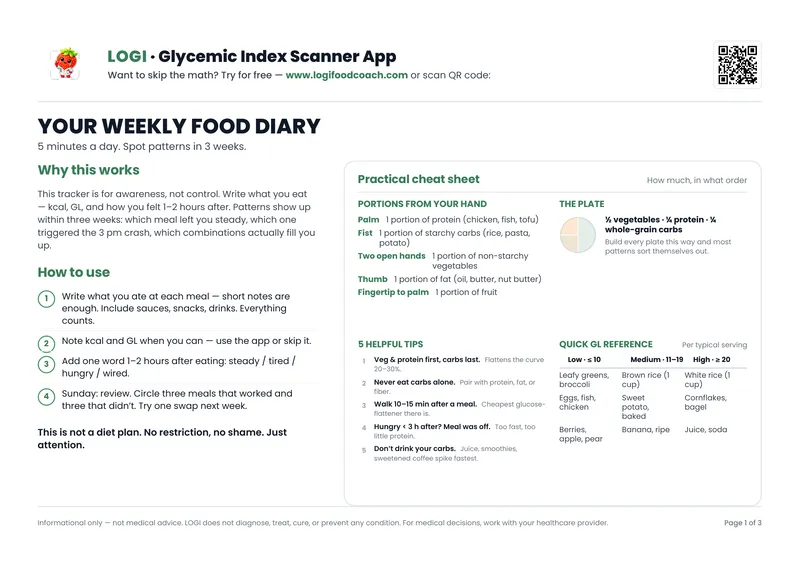
Free PDF — 3 pages
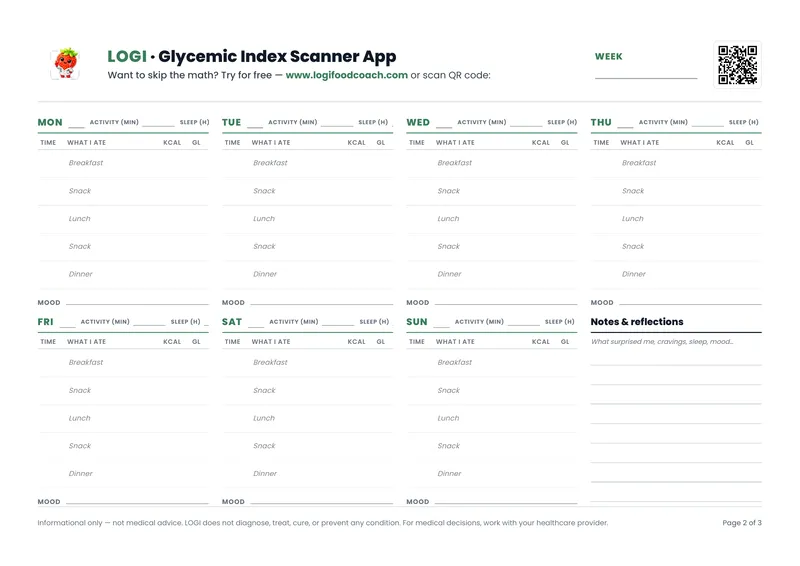
Your Weekly Food Journal
Track meals, glycemic load & mood. Spot patterns in 3 weeks.
No spam. Unsubscribe anytime.