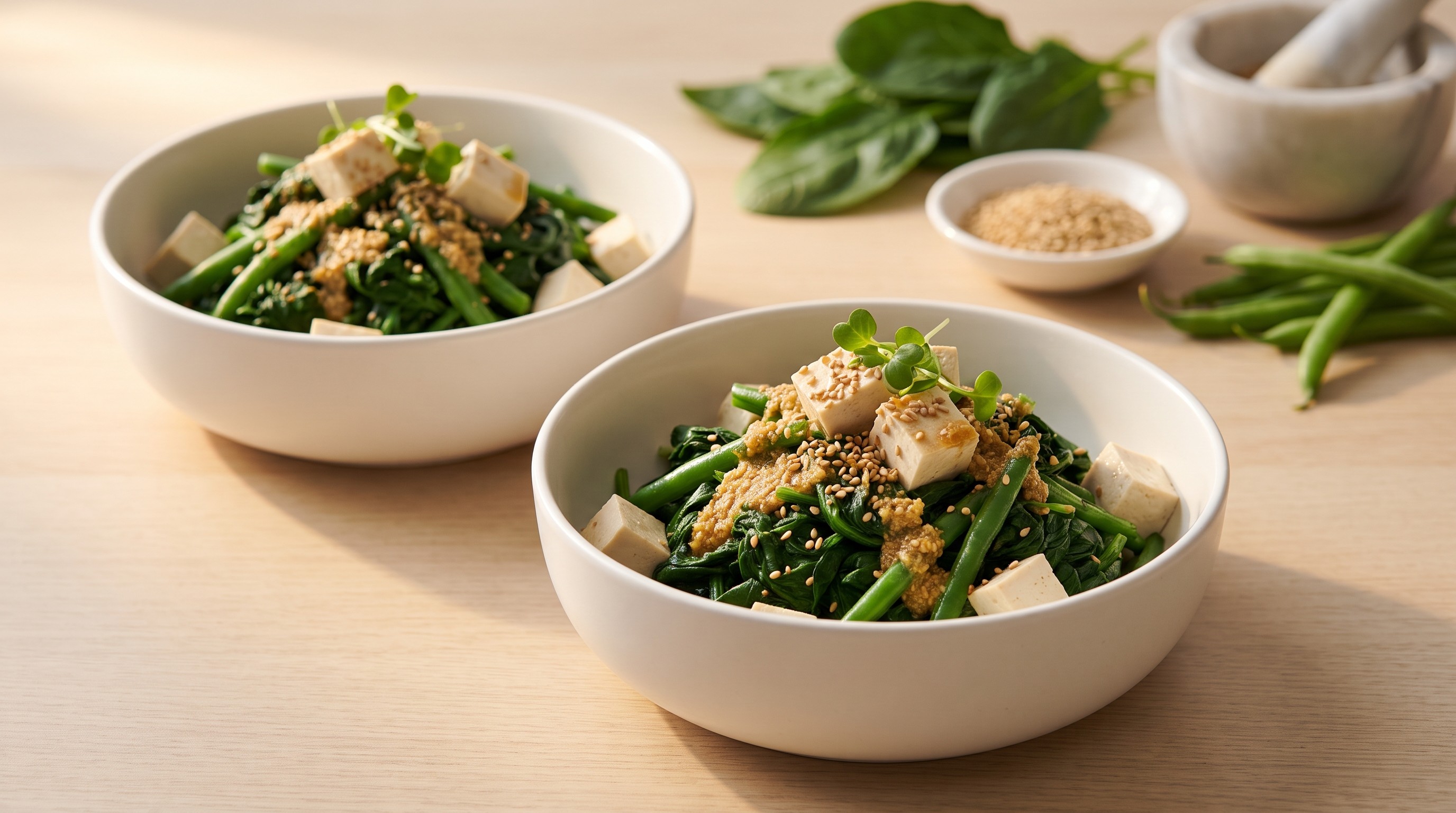
Goma-ae with Firm Tofu
Crisp blanched greens and silky tofu cubes folded into a freshly ground sesame dressing — naturally low-glycemic Japanese comfort with virtually no blood-sugar impact.
Goma-ae is one of Japan's most elegant side dishes: vibrant vegetables dressed in a rich, nutty sesame sauce. This version adds protein-dense firm tofu, turning a classic appetiser into a satisfying light meal that barely registers on the glycemic index. Every ingredient here sits comfortably in the low-GI zone, making it an ideal dish for steady blood-sugar management without any recipe modifications at all.
The secret is freshly ground sesame seeds. Toasting them in a dry pan unlocks deep, caramel-like aromas, and grinding them releases their natural oils into a paste that clings to every surface. That paste, whisked with soy sauce, rice vinegar, and a drizzle of sesame oil, delivers so much umami depth that the traditional pinch of sugar becomes entirely unnecessary. Spinach and green beans contribute fibre that further slows glucose absorption, while tofu adds plant protein and healthy fats — both proven to flatten post-meal blood-sugar curves.
For the best glycemic outcome, serve this dish at the start of a meal: eating vegetables and protein before any carbohydrate course has been shown to reduce post-prandial glucose spikes by up to 30 percent. Pair it with a small bowl of intact whole grains such as brown rice or soba noodles if you want a more substantial plate, or enjoy it on its own as a nutrient-rich, fibre-forward lunch.
Blood Sugar Impact
Very low impact — with a glycemic load of 6.3 and an estimated GI of 29, this whole-food dish rich in plant protein, healthy fats, and fiber will produce a gentle, slow rise in blood sugar and provide stable energy for 3-4 hours.
Blood Sugar Tips
- ✓ Eat the green beans and spinach first to lay down a fiber base that slows glucose absorption from any remaining carbohydrates.
- ✓ Chew the sesame seeds thoroughly to maximize the release of their healthy fats and fiber, which further blunt the glycemic response.
- ✓ Pair this meal with a short 10-15 minute walk afterward to enhance glucose uptake by your muscles and keep blood sugar especially flat.
🥗 Ingredients
- 40 g White sesame seeds
- 150 g Green beans
- 400 g Spinach
- 350 g Firm tofu
- 20 ml Soy sauce
- 2 tsp Rice vinegar
- 2 tsp Toasted sesame oil
- 1.4 oz White sesame seeds
- 5.3 oz Green beans
- 14.1 oz Spinach
- 12.3 oz Firm tofu
- 1 tbsp Soy sauce
- 2 tsp Rice vinegar
- 2 tsp Toasted sesame oil
👨🍳 Instructions
- 1
Spread the sesame seeds in a single layer in a dry frying pan. Place over medium heat and shake the pan every twenty seconds or so for two to three minutes, until the seeds smell toasty and turn light golden. Remove from the heat immediately to prevent burning.
- 2
Set aside a small pinch of the toasted whole seeds for garnish. Transfer the remaining seeds to a mortar and pestle or a spice grinder and pound or pulse until you have a coarse, slightly oily paste — some texture is desirable, so stop before it becomes completely smooth.
- 3
Bring a large pot of water to a vigorous boil. Drop in the trimmed green beans and blanch for two minutes until tender-crisp. Add the spinach, pushing it under the water, and blanch for thirty seconds more until just wilted. Drain everything through a colander and immediately plunge into a bowl of ice water to lock in the bright colour and stop the cooking.
- 4
Once cooled, lift the spinach out in handfuls and squeeze very firmly to extract as much water as possible — wrapping it in a clean tea towel and twisting tightly works well. Cut the pressed spinach into roughly four-centimetre lengths. Halve the green beans crosswise.
- 5
Pat the block of firm tofu thoroughly dry with kitchen paper on all sides. Cut it into neat two-centimetre cubes and set aside on a plate lined with a paper towel to absorb any remaining moisture.
- 6
In a large mixing bowl, combine the ground sesame paste with the soy sauce, rice vinegar, and toasted sesame oil. Stir vigorously until the dressing is smooth, uniform, and slightly glossy.
- 7
Add the spinach, green beans, and tofu cubes to the bowl. Fold gently with a spatula until every piece is evenly coated in the sesame dressing, taking care not to break up the tofu.
- 8
Divide the goma-ae between two serving bowls, mounding it neatly. Scatter the reserved whole sesame seeds over the top and serve straight away at room temperature.
📊 Nutrition Per Serving
| Per Serving | Whole Dish | |
|---|---|---|
| Calories | 364 | 728 |
| Carbs | 21g | 42g |
| Sugars | 4g | 8g |
| Natural Sugars | 4g | 8g |
| Protein | 26g | 51g |
| Fat | 24g | 48g |
| Saturated Fat | 3g | 7g |
| Unsaturated Fat | 20g | 40g |
| Fiber | 10g | 20g |
| Soluble Fiber | 3g | 6g |
| Insoluble Fiber | 7g | 14g |
| Sodium | 866mg | 1731mg |
Predicted Glucose Response
What if you...
Estimated model — individual responses vary. Not medical advice.
🔄 Lower GI Swaps
Apple cider vinegar contains acetic acid shown to slow gastric emptying and reduce post-meal blood sugar spikes more effectively than rice vinegar, which has a slightly higher residual sugar content.
Coconut aminos contains about 40% less sugar per serving than regular soy sauce, resulting in a marginally lower glycemic load contribution. Tamari is also a good option with minimal added sugars.
Hemp seeds and chia seeds provide more fiber and a higher protein-to-carbohydrate ratio than sesame seeds, which helps slow glucose absorption and further blunt any blood sugar response.
Broccoli and asparagus have a lower glycemic index than green beans (GI ~15 vs ~25) and higher fiber density per serving, which slows carbohydrate digestion and reduces the overall glycemic load of the dish.
🔬 The Science Behind This Recipe
Here's the science explainer section:
---
This dish is a quiet powerhouse for steady blood sugar, and the reasons start with its star ingredients. Firm tofu delivers a generous amount of plant-based protein and fat with virtually no carbohydrates, which means it won't raise your blood sugar on its own — and when eaten alongside other foods, it slows the rate at which glucose enters your bloodstream. Sesame seeds amplify this effect: they're rich in healthy fats and fiber, both of which act like a gentle brake on digestion. Together, tofu and sesame create a protein-and-fat buffer that smooths out any potential spike from the small amount of natural sugars in the vegetables.
Speaking of vegetables, spinach and green beans are among the lowest-glycemic foods you can eat. They're packed with fiber, which your body digests slowly, and their carbohydrate content is minimal to begin with. This is where the concept of Glycemic Load becomes useful: it accounts not just for how quickly a food raises blood sugar (that's the GI), but also for how much carbohydrate is actually on your plate. With a Glycemic Load of just 6.3 per serving — well under the "low" threshold of 10 — this meal delivers very little glucose-raising material overall. The estimated GI of 29 confirms the same story from a different angle: this is a slow, gentle release.
To get the most from this meal, try eating the spinach and green beans first, saving any rice or noodle side for last. This simple food-ordering trick gives fiber and protein a head start in your digestive system. A short 10–15 minute walk after eating can further help your muscles absorb glucose efficiently, keeping your energy steady for hours.
Related recipes
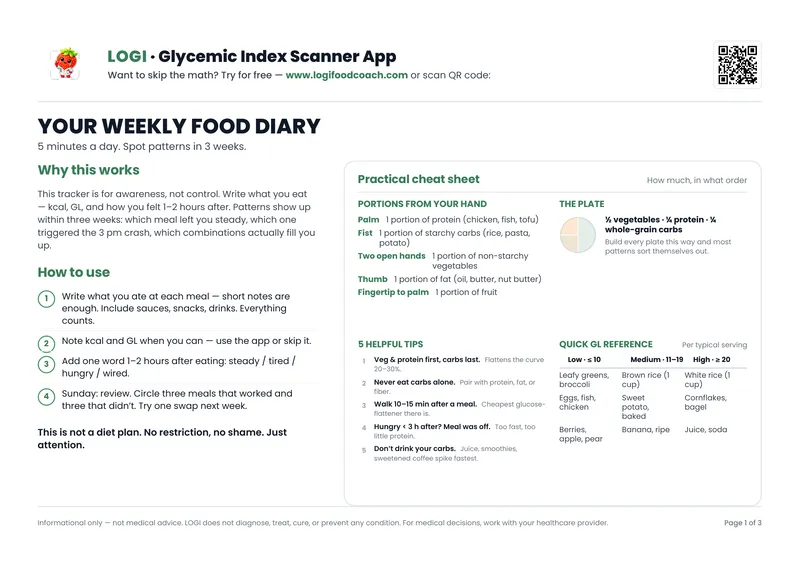
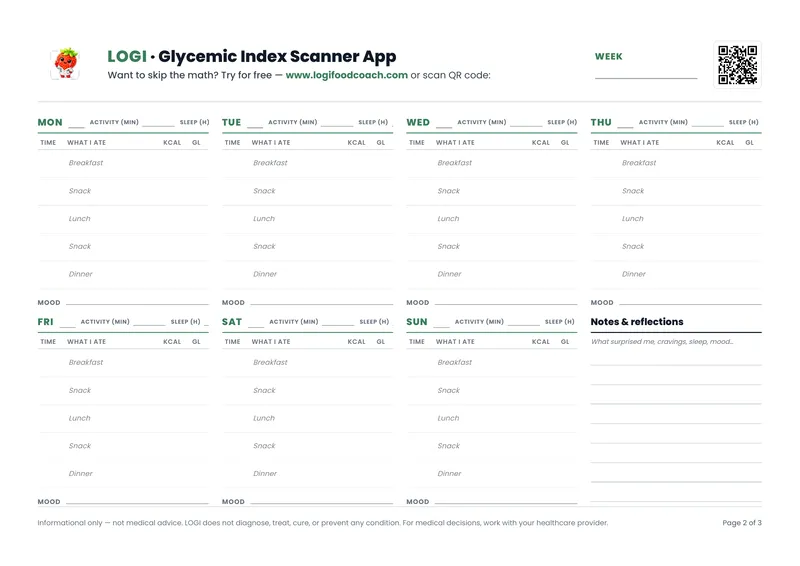
Free PDF — 3 pages
Your Weekly Food Journal
Track meals, glycemic load & mood. Spot patterns in 3 weeks.
No spam. Unsubscribe anytime.