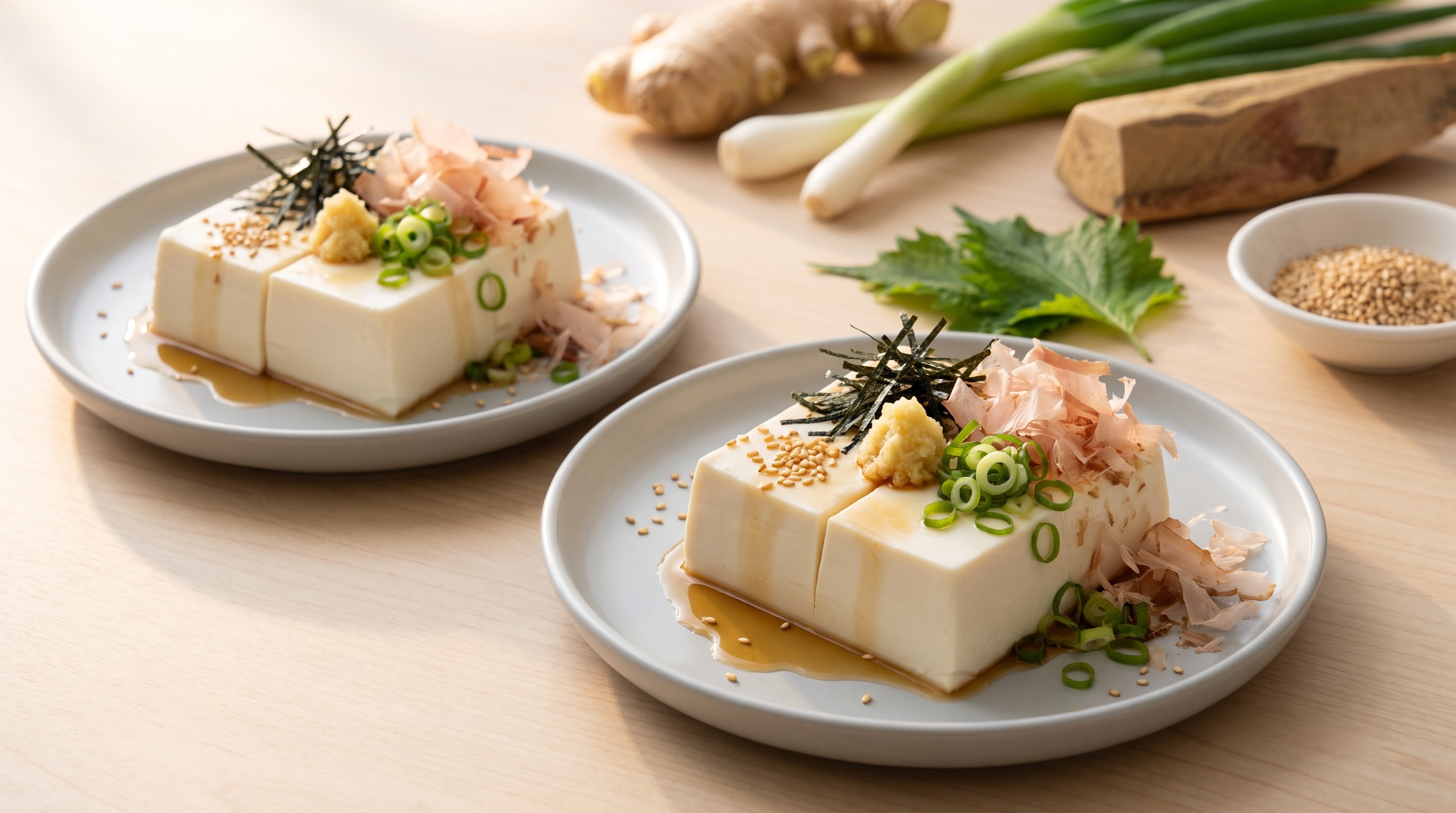
Hiyayakko (Chilled Silken Tofu with Bonito and Ginger)
Ice-cold silken tofu crowned with ginger, bonito, and sesame — a virtually zero-carb Japanese classic ready in five minutes flat, with a negligible glycemic load.
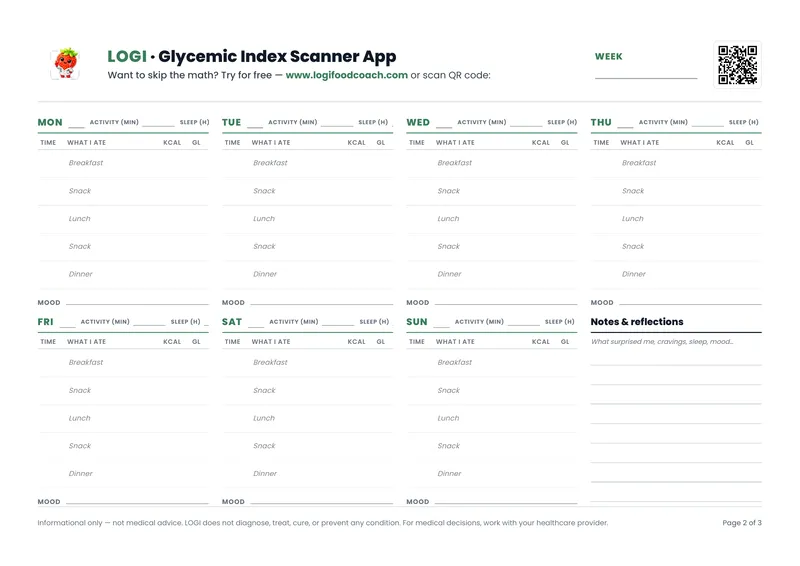
Hiyayakko is the dish Japanese home cooks reach for when summer heat kills every appetite except the craving for something cool, clean, and effortless. A block of chilled silken tofu is split into quarters and layered with freshly grated ginger, wisps of shaved bonito, crisp spring onions, and a restrained drizzle of soy sauce and toasted sesame oil. The entire plate comes together in under five minutes with zero cooking — just knife work and assembly.
From a blood-sugar perspective, hiyayakko is about as close to neutral as a satisfying meal can get. Silken tofu delivers roughly 10 g of plant protein per serving with only a trace of carbohydrate, while the sesame oil and sesame seeds contribute healthy fats that further slow any minimal glucose response. Ginger itself has been studied for its potential to improve insulin sensitivity, adding a functional bonus on top of its sharp, bright flavour. The bonito flakes contribute umami depth and additional protein with virtually no glycemic load at all.
Serve hiyayakko as a light main on its own, or pair it alongside grilled fish or a bowl of edamame for a more substantial low-glycemic meal. Because the dish contains no starch or added sugar, it pairs beautifully with almost any other component without tipping your carbohydrate budget. For the best texture, keep the tofu refrigerated until the moment you plate — the colder it is, the more refreshing the contrast against the warm, aromatic toppings.
Blood Sugar Impact
Minimal blood sugar impact expected. The high protein content from tofu and bonito flakes, combined with healthy fats from sesame oil, will promote slow, steady glucose absorption with a low glycemic load of 11.4 and moderate GI of 52.
Blood Sugar Tips
- ✓ Add a small side of leafy greens or cucumber salad to increase fiber intake and further blunt any glucose response.
- ✓ Eat slowly and mindfully — chilled dishes naturally encourage slower eating, which helps regulate insulin release.
- ✓ If serving with rice, keep the portion small (under ½ cup cooked) and let it cool slightly, as cooled rice forms resistant starch that lowers its glycemic impact.
🥗 Ingredients
- 600 g Silken tofu
- 20 g Ginger
- 50 g Spring onion
- 10 g Bonito flakes
- 2 tbsp Soy sauce
- 1 tbsp Toasted sesame oil
- 10 g Toasted sesame seeds
- 4 g Nori
- 1.3 lb Silken tofu
- 0.7 oz Ginger
- 1.8 oz Spring onion
- 0.4 oz Bonito flakes
- 2 tbsp Soy sauce
- 1 tbsp Toasted sesame oil
- 0.4 oz Toasted sesame seeds
- 0.1 oz Nori
👨🍳 Instructions
- 1
Take the silken tofu blocks from the refrigerator just before serving. Tip each block gently out of its packaging, let any excess water drain away, and set them on a double layer of kitchen paper for about one minute. Avoid pressing — silken tofu fractures easily under pressure.
- 2
Peel the ginger and grate it finely using a microplane or the smallest holes of a box grater. Collect the pulp and its juice together in a small dish.
- 3
Trim the spring onions and slice them thinly on the diagonal. Set aside a small handful of the dark green tops for the final garnish.
- 4
Use kitchen scissors or a sharp knife to cut the nori sheet into very fine ribbons, roughly 3–4 cm long.
- 5
Place one drained tofu block in the centre of each chilled serving plate. Using a wet knife, cut each block into quarters — the moisture on the blade keeps the tofu from sticking and tearing.
- 6
Spoon the grated ginger over the tofu, then scatter the sliced spring onions and a generous pinch of bonito flakes across each plate. Tuck shredded nori around and over the toppings.
- 7
Drizzle one tablespoon of soy sauce and half a tablespoon of toasted sesame oil evenly over each plate, letting the sauces pool around the base of the tofu.
- 8
Finish with a scattering of toasted sesame seeds and the reserved dark-green spring onion tops. Serve immediately while the tofu is still well chilled.
📊 Nutrition Per Serving
| Per Serving | Whole Dish | |
|---|---|---|
| Calories | 420 | 840 |
| Carbs | 22g | 44g |
| Sugars | 4g | 8g |
| Added Sugars | 1g | 2g |
| Natural Sugars | 3g | 7g |
| Protein | 31g | 62g |
| Fat | 25g | 50g |
| Saturated Fat | 4g | 7g |
| Unsaturated Fat | 21g | 43g |
| Fiber | 3g | 5g |
| Soluble Fiber | 1g | 2g |
| Insoluble Fiber | 2g | 4g |
| Sodium | 1590mg | 3180mg |
Predicted Glucose Response
What if you...
Estimated model — individual responses vary. Not medical advice.
🔄 Lower GI Swaps
Coconut aminos contain roughly 40% less sodium than regular soy sauce, while tamari offers a gluten-free option with an identical umami profile. Both keep the carbohydrate contribution negligible and do not alter the glycemic impact of the dish.
Chives deliver a similar mild allium bite with virtually no carbohydrate. Shiso leaves are a traditional Japanese garnish that add a bright, herbaceous note and contain negligible sugars, making either option blood-sugar neutral.
For a vegetarian or vegan version, extra nori or dulse flakes provide a similar savoury umami depth without any animal products. Both are extremely low in carbohydrate and add minerals like iodine and iron.
🔬 The Science Behind This Recipe
Why this dish barely registers on the blood-sugar radar. Silken tofu is overwhelmingly protein and water — a 300 g serving contains roughly 2–3 g of digestible carbohydrate, which is so low that a formal glycemic index cannot be meaningfully assigned. When carbohydrate intake is this minimal, the concepts of GI and glycemic load become practically irrelevant; your body simply does not receive enough glucose from the meal to produce a significant blood-sugar spike.
The supporting ingredients reinforce this near-zero impact. Toasted sesame oil and sesame seeds supply monounsaturated and polyunsaturated fats that slow gastric emptying, while bonito flakes add roughly 3 g of animal protein per serving with no carbohydrate at all. Fresh ginger contributes bioactive compounds — particularly gingerols and shogaols — that research has associated with improved insulin sensitivity and modestly enhanced glucose uptake by muscle cells. Even the soy sauce, despite being a fermented product, adds under 1 g of carbohydrate per tablespoon.
Put together, the entire plate delivers substantial protein and healthy fats with a total carbohydrate load well under 5 g per serving. For anyone monitoring blood sugar, hiyayakko is one of the safest and most satisfying choices you can make — no swaps, no substitutions needed.
Related recipes
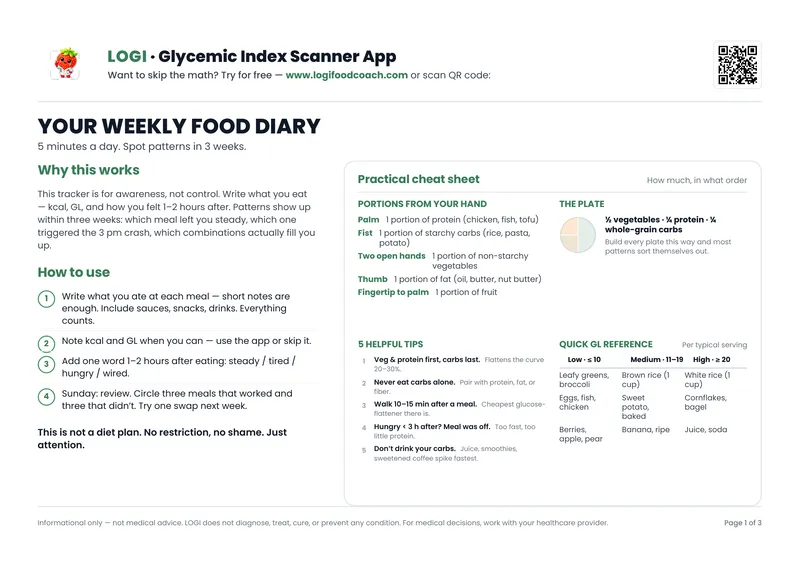
Free PDF — 3 pages
Your Weekly Food Journal
Track meals, glycemic load & mood. Spot patterns in 3 weeks.
No spam. Unsubscribe anytime.