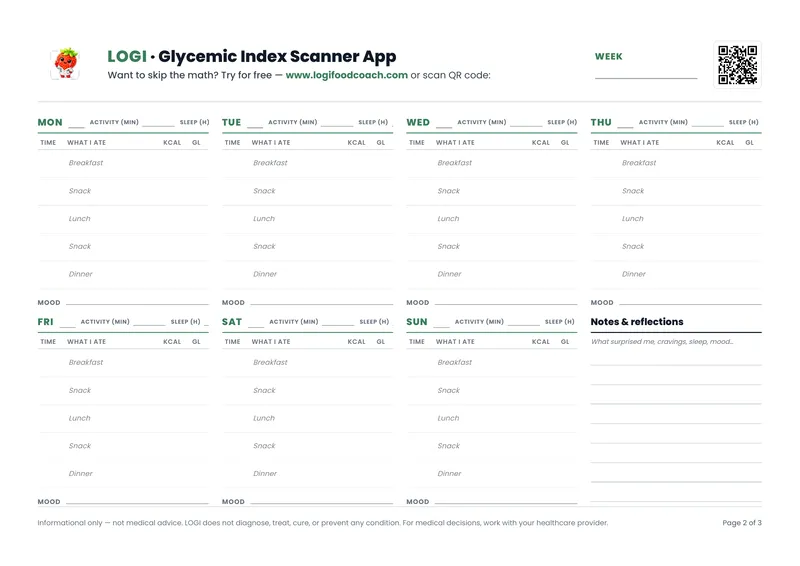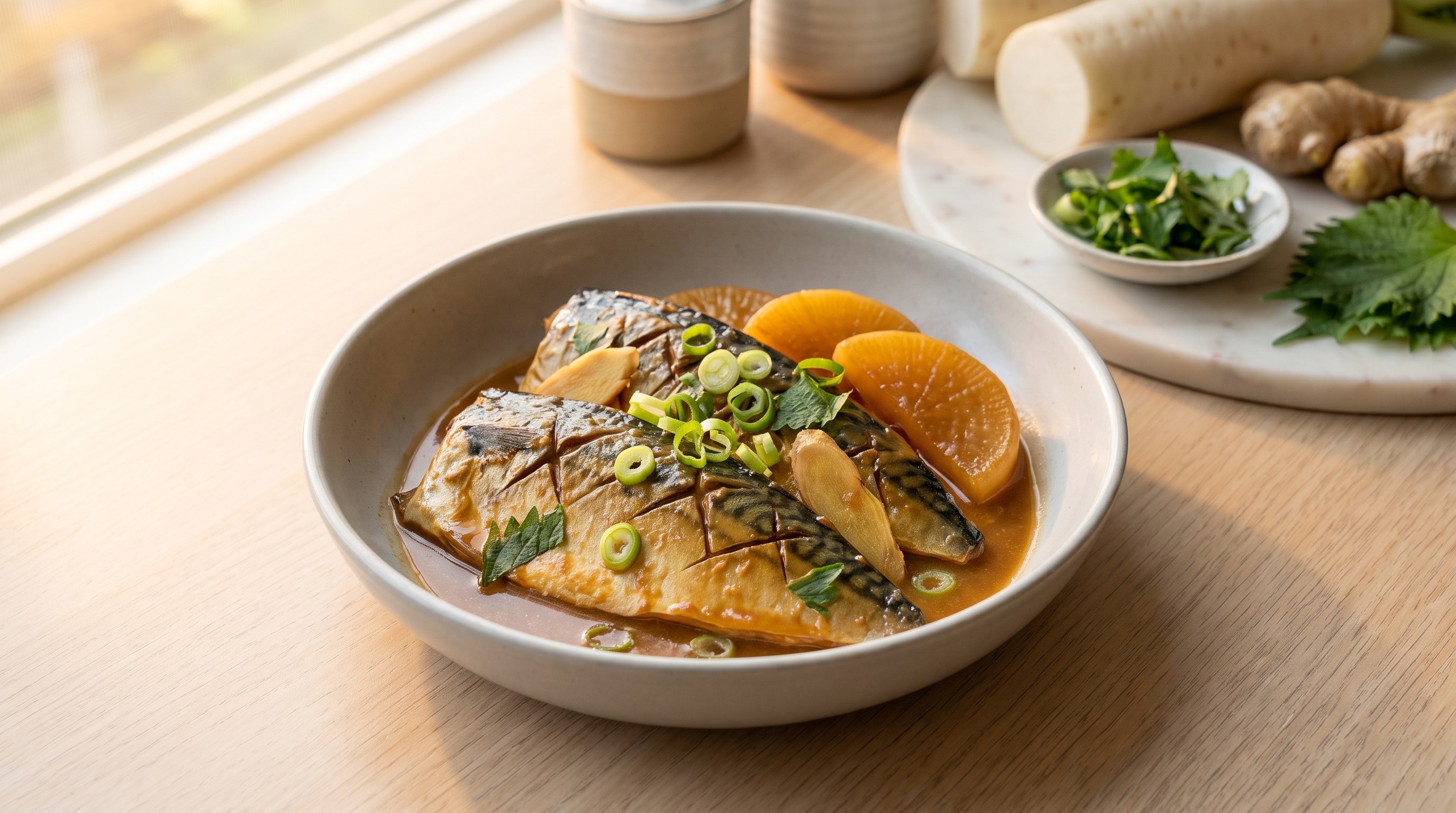
Saba no Misoni — Low-Sugar Miso-Simmered Mackerel with Daikon
Omega-3-rich mackerel simmered in a naturally sweet miso-ginger broth with tender daikon — a blood-sugar-friendly Japanese classic ready in 35 minutes.
This gentle Japanese braise is a masterclass in blood-sugar-smart cooking. Mackerel is one of the richest dietary sources of omega-3 fatty acids, which research links to improved insulin sensitivity and reduced inflammatory markers — making it an ideal centrepiece for anyone managing their glucose response. Paired with daikon radish, a cruciferous vegetable with a glycemic index below 25, the dish delivers a satisfying, nutrient-dense plate without a single high-GI ingredient in sight.
Traditional saba no misoni recipes rely heavily on sugar and generous pours of mirin to build their signature glossy sauce. This adaptation strips the sugar entirely and uses just a single tablespoon of mirin, letting white miso's natural fermented sweetness do the heavy lifting. The result is a savoury-umami broth that coats the fish in a rich glaze without the glucose spike. Fermented foods like miso also support gut microbiome diversity, which emerging science connects to better metabolic health.
The shimofuri blanching technique — briefly dousing the fillets with boiling water — is a small step that makes a big difference, firming the skin and washing away surface oils so the fish absorbs the braising liquid cleanly. Thick half-moons of daikon turn silky as they simmer, soaking up the miso-ginger broth like sponges. For the best glycemic outcome, serve alongside a small portion of cooled and reheated rice (resistant starch lowers its GI) or simply enjoy the broth and daikon as your carbohydrate component. Eating the daikon and broth first, before the protein, can further blunt any post-meal glucose rise.
Blood Sugar Impact
With a low GI of 44 and a moderate glycemic load of 12.4, this meal should produce a gentle, gradual blood sugar rise. The high protein and omega-3 fat content of the mackerel significantly slows gastric emptying and glucose absorption, promoting stable energy for 3-4 hours.
Blood Sugar Tips
- ✓ Eat the daikon radish first — its fiber will form a gel-like barrier in your gut that slows the absorption of sugars from the mirin and sake in the broth.
- ✓ Avoid drinking the simmering broth on its own, as it concentrates the sugars from mirin and sake; instead, enjoy it spooned over the fish and daikon so the protein and fiber buffer absorption.
- ✓ Take a gentle 10-15 minute walk after the meal to enhance glucose uptake by your muscles and further flatten any modest post-meal rise.
🥗 Ingredients
- 2 pcs Mackerel fillet
- 350 g Daikon radish
- 25 g Ginger
- 3 tbsp White miso paste
- 3 tbsp Sake
- 1 tbsp Mirin
- 200 ml Water
- 2 pcs Spring onion
- 2 pcs Mackerel fillet
- 12.3 oz Daikon radish
- 0.9 oz Ginger
- 3 tbsp White miso paste
- 3 tbsp Sake
- 1 tbsp Mirin
- 14 tbsp Water
- 2 pcs Spring onion
👨🍳 Instructions
- 1
Lightly score the skin of each mackerel fillet in a crosshatch pattern, spacing the cuts about 1 cm apart — this helps the braising liquid penetrate evenly and prevents the skin from curling.
- 2
Set the fillets in a colander and slowly pour just-boiled water over the skin side. You will see the skin tighten and turn pale. Immediately rinse the fish under cold running water and pat completely dry with kitchen paper. This shimofuri technique removes surface oils and any lingering fishy aroma.
- 3
Peel the daikon and cut it into 1.5 cm thick half-moon slices. Slice the ginger into thin coins — no need to peel if the skin is clean. Thinly slice the spring onions and set them aside for finishing.
- 4
Pour the water, sake, and mirin into a wide pan or deep skillet. Drop in the ginger coins and daikon slices, then bring the liquid to a gentle simmer over medium heat. Cook for about 8 minutes, until the daikon edges look translucent and a knife slides through with little resistance.
- 5
Tuck the mackerel fillets skin-side up between the daikon pieces. Spoon some of the simmering liquid over the top of the fish. Cut a circle of baking paper slightly smaller than the pan and press it directly onto the surface of the liquid as a drop lid (otoshibuta). Reduce heat to low and simmer gently for 10 minutes.
- 6
Remove the paper lid. Ladle 2 to 3 tablespoons of the hot braising liquid into a small bowl and add the white miso paste. Whisk until completely smooth with no lumps remaining — dissolving the miso separately prevents it from clumping in the pan.
- 7
Pour the miso mixture back into the pan, gently tilting and swirling to distribute it through the broth. Simmer uncovered for 3 minutes, spooning the thickening sauce over the fish two or three times, until the glaze turns glossy and coats the back of a spoon.
- 8
Divide the daikon between two shallow bowls and lay a mackerel fillet on top of each. Spoon the remaining miso-ginger sauce generously over the fish and scatter with the sliced spring onions. For the best blood-sugar response, eat the daikon and broth first before the protein.
📊 Nutrition Per Serving
| Per Serving | Whole Dish | |
|---|---|---|
| Calories | 499 | 997 |
| Carbs | 28g | 56g |
| Sugars | 11g | 21g |
| Added Sugars | 2g | 4g |
| Natural Sugars | 9g | 18g |
| Protein | 37g | 74g |
| Fat | 23g | 46g |
| Saturated Fat | 5g | 11g |
| Unsaturated Fat | 18g | 35g |
| Fiber | 5g | 10g |
| Soluble Fiber | 2g | 3g |
| Insoluble Fiber | 3g | 6g |
| Sodium | 1513mg | 3026mg |
Predicted Glucose Response
What if you...
Estimated model — individual responses vary. Not medical advice.
🔄 Lower GI Swaps
Processed 'spring onion flavor' products often contain added sugars, maltodextrin, or starch-based fillers that raise glycemic load. Whole fresh spring onion greens, chives, or a small amount of sesame oil deliver aromatic depth with virtually zero glycemic impact.
Traditional mirin contains 40-50% sugar and has a high GI, making it one of the largest contributors to this dish's glycemic load. Replacing it with a sugar-free alternative or a rice vinegar and non-caloric sweetener blend preserves the sweet-tangy balance while substantially lowering the GL.
White (shiro) miso is made with a higher proportion of rice koji, giving it more sugar and a higher glycemic impact. Red miso and hatcho miso undergo longer fermentation with less rice, resulting in lower residual sugars and a lower glycemic load while adding deeper umami flavor.
Sake contains residual sugars that contribute to the dish's overall glycemic load. Replacing part or all of the sake with umami-rich dashi stock eliminates those sugars entirely while enhancing savory depth, or using dry white wine provides a lower-sugar alcohol alternative with less residual carbohydrate.
🔬 The Science Behind This Recipe
Why This Meal Is a Blood Sugar Winner
This dish is a masterclass in steady energy. Mackerel is the star here — it's packed with protein and omega-3 rich fats, both of which slow down the rate your body absorbs glucose. When you eat protein and healthy fats alongside any carbohydrates, they act like a gentle brake on digestion, preventing the sharp spikes and crashes that leave you feeling sluggish. With virtually zero carbs of its own, mackerel provides sustained fuel without nudging your blood sugar at all.
Daikon radish is the unsung hero on this plate. It's mostly water and fiber, which means it adds satisfying volume to your meal while contributing very little to your glycemic load. That fiber is key — it forms a gel-like layer in your digestive tract that slows the absorption of sugars from everything else you eat alongside it. Think of daikon as a buffer that smooths out your body's blood sugar response. Meanwhile, ginger has been shown in studies to support healthy glucose metabolism, making it more than just a flavor powerhouse.
Notice the glycemic load of 12.4 per serving — that's solidly in the "low" category (under 10 is low, 11–19 is medium). Glycemic load matters more than GI alone because it accounts for how much carbohydrate you're actually eating, not just how fast it hits. A small amount of miso and sake contribute modest carbs, but the protein-and-fat-forward composition of this dish keeps the overall impact gentle. For an even flatter glucose curve, try eating the daikon first, saving any rice for last, and taking a 10-minute walk after your meal — small habits that make a real difference over time.
Related recipes
Free PDF — 3 pages
Your Weekly Food Journal
Track meals, glycemic load & mood. Spot patterns in 3 weeks.
No spam. Unsubscribe anytime.