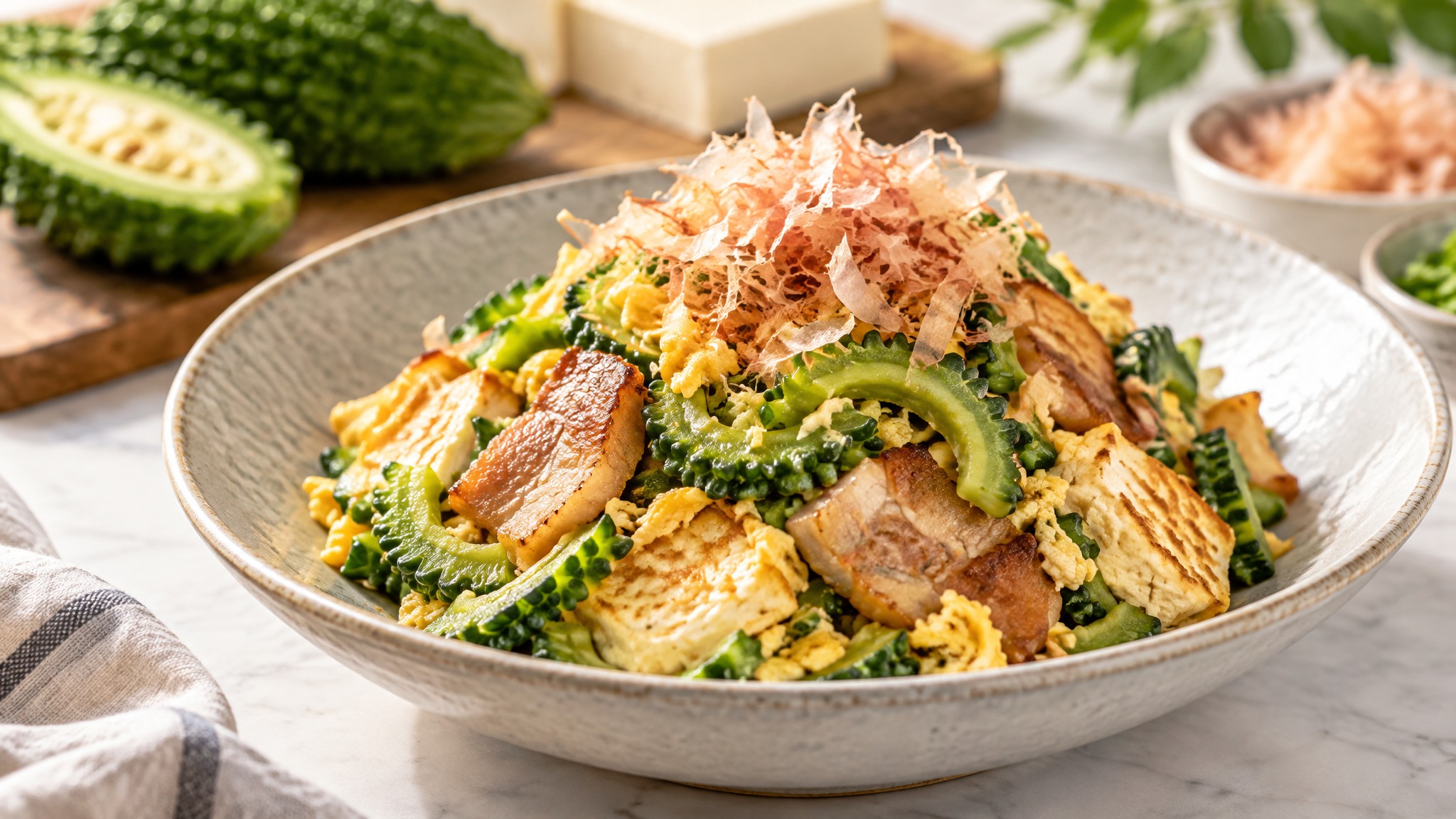
Gōyā Chanpurū (Okinawan Bitter Melon, Tofu and Egg Stir-Fry)
Okinawa's classic gōyā chanpurū: crunchy bitter melon, seared tofu, crisp pork belly and soft egg in one pan. Low-GI by nature, ready in under 30 minutes.
Gōyā chanpurū is the dish Okinawans cook most at home. 'Chanpurū' means 'mixed up' in the local dialect, and the name fits: crunchy bitter melon, golden seared tofu, crisp strips of pork belly and soft folds of egg all go into one hot pan. This version keeps the island recipe exactly as it is. The only change is that the usual bowl of white rice is left off, so the dish itself becomes the whole meal. It takes about 15 minutes to prep and 12 to cook.
The plate is built from protein, fat and fibre-rich vegetables, so it is low-glycemic without any swaps. Firm tofu supplies plant protein and has a GI close to zero. Eggs and pork belly add more protein and fat, which slow down digestion and help keep blood sugar steady. Bitter melon is the star for glucose control. It is very low in carbohydrates and high in fibre, and it has been studied in traditional and clinical research for compounds such as charantin and polypeptide-p, which may help the body handle glucose. Salting and squeezing the melon softens its bitterness while keeping its crunch. Soy sauce and bonito flakes add deep umami flavour with almost no sugar.
To get the most from it for blood sugar, eat the bitter melon and tofu first, then move on to the egg and pork. If you want something on the side, choose a small portion of cooked-and-cooled brown rice, a few spoonfuls of edamame or a bowl of miso soup with seaweed rather than white rice. The plate is filling enough for lunch or dinner, and a 10-minute walk afterwards will help flatten any glucose rise even further.
Blood Sugar Impact
Minimal impact: the dish has almost no starch, plenty of protein and fat from tofu, egg and pork belly, and fiber from bitter melon, so energy should stay steady for 3-4 hours. Bitter melon also contains compounds such as charantin and polypeptide-p that may help a little with glucose uptake.
Blood Sugar Tips
- ✓ Serve it with a small portion of brown rice, barley or cauliflower rice instead of a large bowl of white rice, and eat the stir-fry before the rice.
- ✓ Use a little less pork belly or trim some of its fat, and add more tofu and egg so the meal stays filling and higher in protein with less saturated fat.
- ✓ Take a 10-15 minute walk after eating, especially if you add rice, to help your muscles use the glucose.
🥗 Ingredients
- 1 pcs Bitter melon
- 0.75 tsp Fine salt
- 300 g Firm tofu
- 2 tsp Vegetable oil
- 150 g Pork belly
- 1 tbsp Soy sauce
- 2 pcs Egg
- 3 g Bonito flakes
- 1 pcs Bitter melon
- 0.75 tsp Fine salt
- 10.6 oz Firm tofu
- 2 tsp Vegetable oil
- 5.3 oz Pork belly
- 1 tbsp Soy sauce
- 2 pcs Egg
- 0.1 oz Bonito flakes
👨🍳 Instructions
- 1
Cut the bitter melon in half lengthwise. Use a spoon to scrape out the seeds and every bit of white pith, which is the most bitter part. Slice the halves into 5 mm (¼ in) half-moons, toss them with the salt in a bowl and set aside for 10 minutes.
- 2
While the melon rests, wrap the tofu in paper towels and press it gently for about 5 minutes to remove excess water. Tear it by hand into rough 3 cm (1¼ in) pieces. The torn edges brown better and hold the sauce.
- 3
Heat the oil in a large skillet or wok over medium-high heat. Add the tofu in a single layer and sear for about 4 minutes, turning once, until golden on both sides. Transfer to a plate.
- 4
Put the pork belly strips into the same pan. Fry for about 3 minutes, stirring now and then, until the fat has rendered and the edges are crisp.
- 5
Take handfuls of the salted bitter melon and squeeze them firmly to press out as much liquid as you can. Add the melon to the pork and stir-fry for 2–3 minutes, until it turns bright green but still has some crunch.
- 6
Put the seared tofu back in the pan, drizzle in the soy sauce and toss everything together so the tofu and melon are coated.
- 7
Pour the beaten eggs evenly over the stir-fry. Let them sit for a few seconds, then fold gently for about 1 minute, until just set and still soft. Divide between two plates, scatter the bonito flakes on top and serve right away. Eat the vegetables and tofu first for the gentlest blood sugar response.
📊 Nutrition Per Serving
| Per Serving | Whole Dish | |
|---|---|---|
| Calories | 645 | 1289 |
| Carbs | 8g | 16g |
| Sugars | 3g | 7g |
| Natural Sugars | 3g | 7g |
| Protein | 28g | 57g |
| Fat | 57g | 113g |
| Saturated Fat | 18g | 35g |
| Unsaturated Fat | 38g | 75g |
| Fiber | 4g | 8g |
| Soluble Fiber | 1g | 2g |
| Insoluble Fiber | 3g | 6g |
| Sodium | 1488mg | 2976mg |
Predicted Glucose Response
What if you...
Estimated model — individual responses vary. Not medical advice.
🔄 Lower GI Swaps
Pork belly has almost no carbohydrate, so it barely affects glycemic load. Its large amount of saturated fat can reduce insulin sensitivity over time, though. Leaner proteins keep the meal's satiety and protein content, which helps slow glucose absorption, with less of that metabolic downside.
Generic vegetable oils are high in refined omega-6 fats. Monounsaturated fats like olive and avocado oil are linked to better post-meal glucose control and insulin sensitivity. Avocado oil also handles high stir-fry heat well.
Some commercial soy sauces contain added sugar or wheat-based caramel, which add small amounts of fast-absorbing carbohydrate. Unsweetened reduced-sodium tamari keeps the carbohydrate load close to zero. Coconut aminos contain a little natural sugar, so use them in small amounts.
Extra firm or well-pressed tofu packs more protein per bite and less water. More protein means more satiety and a slower rise in blood sugar after the meal, while the dish's glycemic load stays very low.
Eggs have no glycemic impact. Omega-3 enriched eggs add healthy fats associated with better insulin sensitivity. Adding an extra egg white raises the protein, which further slows how fast glucose from the meal enters the blood.
🔬 The Science Behind This Recipe
Gōyā chanpurū is easy on blood sugar because almost everything in the pan is a low-starch vegetable, a protein or a fat. Bitter melon is the star, and it is mostly water and fiber with very little natural sugar. Researchers are interested in some of its plant compounds and how they might help the body handle sugar. Those early findings are promising, but the clearest benefit is simpler: bitter melon adds bulk, crunch and fiber while adding very little carbohydrate. Salting and rinsing it softens the bitterness and keeps all of that.
Firm tofu, egg and pork belly bring protein and fat, which slow down how fast your stomach empties. Any carbohydrate in the meal then reaches your bloodstream slowly instead of all at once. The fiber in the bitter melon helps the same way, acting like a gentle net that slows digestion. The small amount of vegetable oil used for stir-frying adds to the fat's slowing effect and helps you stay full longer.
This explains the numbers. The estimated Glycemic Index (GI) of 34 measures how quickly a food's carbohydrates tend to raise blood sugar, and anything under 55 counts as low. Glycemic Load (GL) is even more useful because it also counts how much carbohydrate is actually in your portion. A low-GI food can still cause a spike if you eat a lot of it. At just 2.8 per serving, well under the "low" cutoff of 10, this dish barely registers.
To get the most from your meal: - Eat a few bites of bitter melon and tofu before any rice. - Keep rice portions modest, or choose brown rice. - Take a 10–15 minute walk afterward to help your muscles use up glucose.
Related recipes
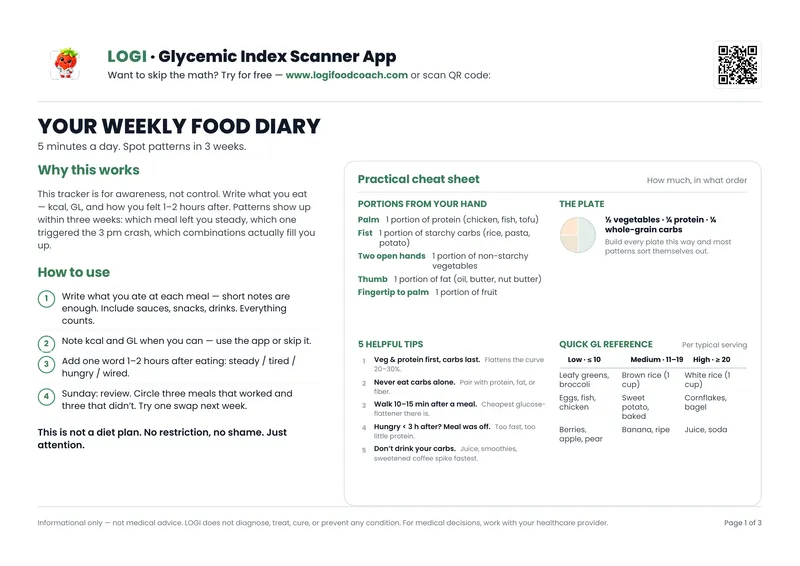
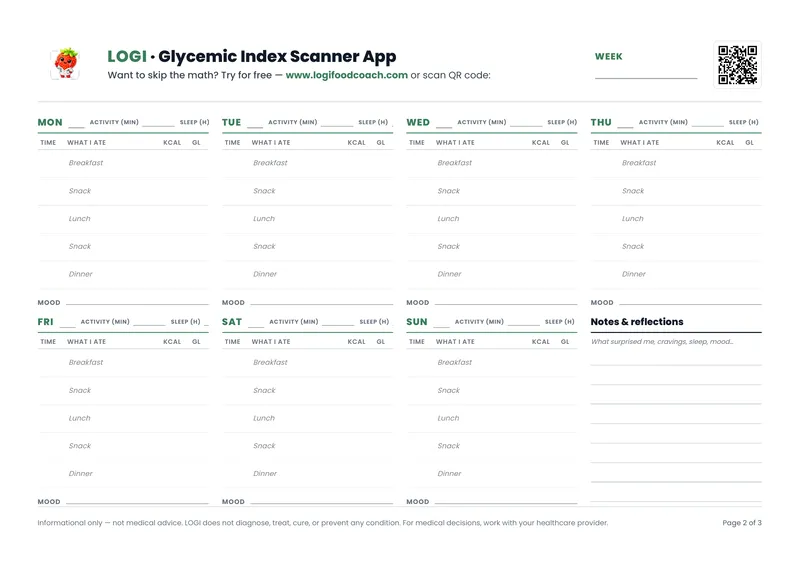
Free PDF — 3 pages
Your Weekly Food Journal
Track meals, glycemic load & mood. Spot patterns in 3 weeks.
No spam. Unsubscribe anytime.