Buta Shabu Salad with Sesame-Ponzu Dressing
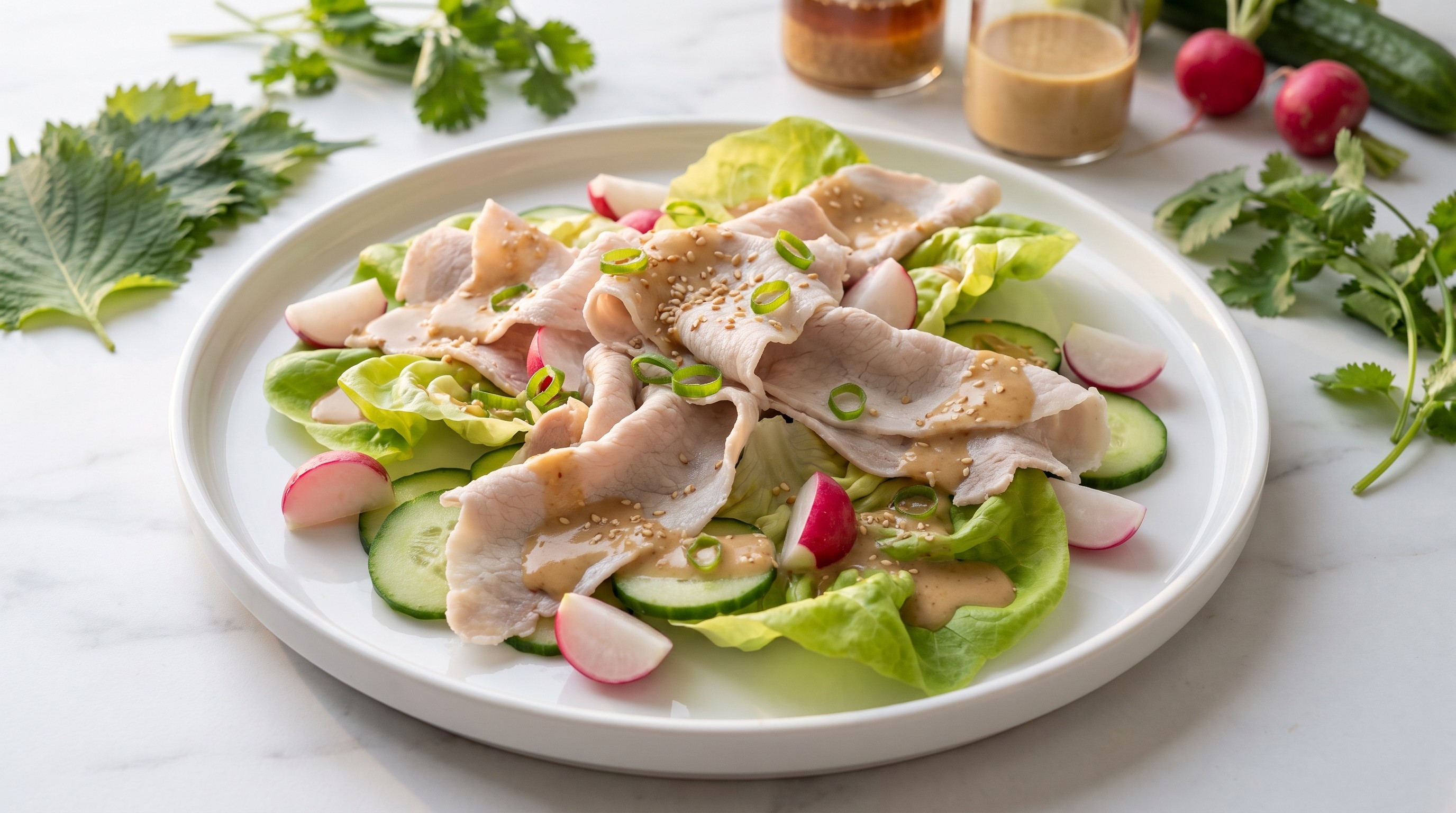
Silky poached pork draped over crisp summer vegetables with a nutty sesame-ponzu dressing — virtually zero glycemic impact in every cool, satisfying bite. GI 23, GL 2. Diabetic-friendly.
Buta shabu salad is one of those rare dishes that feels indulgent yet barely registers on a glucose monitor. Paper-thin pork loin is poached shabu-shabu-style in gently simmering water for just sixty seconds, then plunged into ice water to lock in a melt-in-your-mouth texture. Draped over a bed of butter lettuce, cool cucumber rounds, and peppery radish, it delivers a generous hit of protein without a single starchy element to spike your blood sugar.
The dressing is where this salad truly shines for glycemic health. Tahini provides heart-healthy fats that slow gastric emptying, while rice vinegar and lemon juice contribute acetic acid — shown in clinical studies to blunt post-meal glucose responses by up to 30 percent. A touch of fresh ginger adds warmth and contains gingerols, which research suggests may improve insulin sensitivity. Together these ingredients create a rich, nutty ponzu-style sauce that clings to every leaf and slice of pork. Toasted sesame seeds add crunch and additional healthy fats that further moderate any residual glucose absorption.
Ready in fifteen minutes with no cooking beyond a quick poach, this is the ideal warm-weather meal for anyone managing blood sugar. Each serving provides a generous portion of protein that promotes satiety for hours, while the abundant raw vegetables deliver fiber and micronutrients. For optimal glucose response, eat the dressed vegetables first, then the pork — front-loading fiber creates a physical barrier in the gut that slows carbohydrate absorption from anything you eat afterward.
Blood Sugar Impact
Very low blood sugar impact expected. With a glycemic load of just 2.5 and an estimated GI of 23, this protein-and-vegetable-dominant salad should produce a minimal, gradual rise in blood glucose and provide stable energy for 3-4 hours.
Blood Sugar Tips
- ✓ Eat the leafy greens and raw vegetables first before the pork to slow gastric emptying and blunt any minor glucose response.
- ✓ Take a 10-15 minute walk after eating to further enhance glucose uptake by muscles and keep blood sugar flat.
- ✓ If serving with rice or noodles on the side, keep the starchy portion small and dress it with the vinegar-based ponzu, as acetic acid has been shown to reduce postprandial glycemia.
🥗 Ingredients
- 280 g Pork loin
- 120 g Butter lettuce
- 160 g Cucumber
- 80 g Radish
- 25 g Green onion
- 20 g Tahini
- 20 g Soy sauce
- 15 g Rice vinegar
- 15 g Lemon juice
- 10 g Toasted sesame seeds
- 9.9 oz Pork loin
- 4.2 oz Butter lettuce
- 5.6 oz Cucumber
- 2.8 oz Radish
- 0.9 oz Green onion
- 0.7 oz Tahini
- 0.7 oz Soy sauce
- 0.5 oz Rice vinegar
- 0.5 oz Lemon juice
- 0.4 oz Toasted sesame seeds
👨🍳 Instructions
- 1
Fill a large pot with water and bring it to a full boil over high heat. Once boiling, lower the heat until the surface is barely shimmering with no visible bubbles — this gentle temperature prevents the thin pork slices from toughening.
- 2
Prepare a large bowl of ice water and set it beside the stove. This ice bath is essential for stopping the cooking instantly and giving the pork its signature silky, cool texture.
- 3
Separate the pork slices and gently lower them into the barely simmering water one or two at a time, swishing each piece back and forth for about 60 seconds until the meat turns just opaque throughout with no pink remaining.
- 4
Immediately transfer each poached slice into the ice water using chopsticks or tongs. Let the pork chill for a full 3 minutes until completely cold, then lift out, drain well, and pat dry with kitchen paper.
- 5
While the pork chills, prepare the vegetables: tear the butter lettuce into bite-sized pieces, slice the cucumber into thin rounds, quarter the radishes lengthwise, and thinly slice the green onion on a diagonal, keeping a small handful aside for garnish.
- 6
Make the sesame-ponzu dressing by whisking together the tahini, soy sauce, rice vinegar, lemon juice, and finely grated ginger in a small bowl until completely smooth. The combination of soy sauce, rice vinegar, and citrus juice forms the ponzu base, while tahini adds body and richness. If the dressing is too thick to drizzle, stir in cold water one teaspoon at a time until it reaches a pourable consistency.
- 7
Divide the butter lettuce between two plates and mound the cucumber rounds and quartered radish on top. Drape the chilled pork slices over the vegetables in loose folds so they catch the dressing.
- 8
Spoon the sesame-ponzu dressing generously over each plate, then scatter with toasted sesame seeds and the reserved green onion. Serve immediately while everything is crisp and cold.
📊 Nutrition Per Serving
| Per Serving | Whole Dish | |
|---|---|---|
| Calories | 295 | 589 |
| Carbs | 11g | 21g |
| Sugars | 3g | 6g |
| Natural Sugars | 3g | 6g |
| Protein | 36g | 72g |
| Fat | 13g | 26g |
| Saturated Fat | 3g | 6g |
| Unsaturated Fat | 10g | 20g |
| Fiber | 4g | 7g |
| Soluble Fiber | 1g | 2g |
| Insoluble Fiber | 3g | 5g |
| Sodium | 676mg | 1351mg |
Predicted Glucose Response
What if you...
Estimated model — individual responses vary. Not medical advice.
🔄 Lower GI Swaps
Coconut aminos contain slightly less sodium and no gluten, with a comparable savory depth and no meaningful difference in glycemic impact. Tamari is another gluten-free alternative with a richer flavor.
Both alternatives provide similar heart-healthy fats that slow gastric emptying and moderate glucose absorption, while offering a nut-free or flavor-variation option. All three have a very low glycemic index.
Both substitutes are high-protein, zero-GI alternatives that work well with the shabu-shabu poaching technique. Tofu adds plant-based protein with isoflavones that may support insulin sensitivity.
🔬 The Science Behind This Recipe
This salad is engineered for minimal blood sugar impact through three complementary mechanisms. First, the dish is virtually carbohydrate-free: pork loin is pure protein and fat, while the vegetables — butter lettuce, cucumber, and radish — contain negligible digestible carbohydrate, placing the estimated glycemic load at just 2 per serving.
Second, the dressing leverages the 'acetic acid effect.' Both rice vinegar and lemon juice supply organic acids that have been shown in controlled trials to reduce post-meal glucose peaks by 20–30 percent. The proposed mechanism is that acetic acid inhibits disaccharidase enzymes in the small intestine and may enhance muscle glucose uptake, meaning any trace carbohydrate from the vegetables is absorbed more slowly and cleared more efficiently.
Third, the fat and protein in tahini and pork significantly delay gastric emptying — the rate at which food leaves the stomach and enters the small intestine where glucose absorption occurs. A slower gastric emptying rate translates directly into a flatter, more gradual blood sugar curve. The addition of ginger provides gingerols, bioactive compounds that emerging research links to improved fasting glucose levels and enhanced insulin sensitivity.
Finally, eating the high-fiber vegetable base before the protein — as suggested in the serving step — exploits the 'meal sequence' strategy validated in studies on type 2 diabetes patients, where consuming vegetables first reduced post-meal glucose by up to 39 percent compared with eating carbohydrates first.
Related recipes
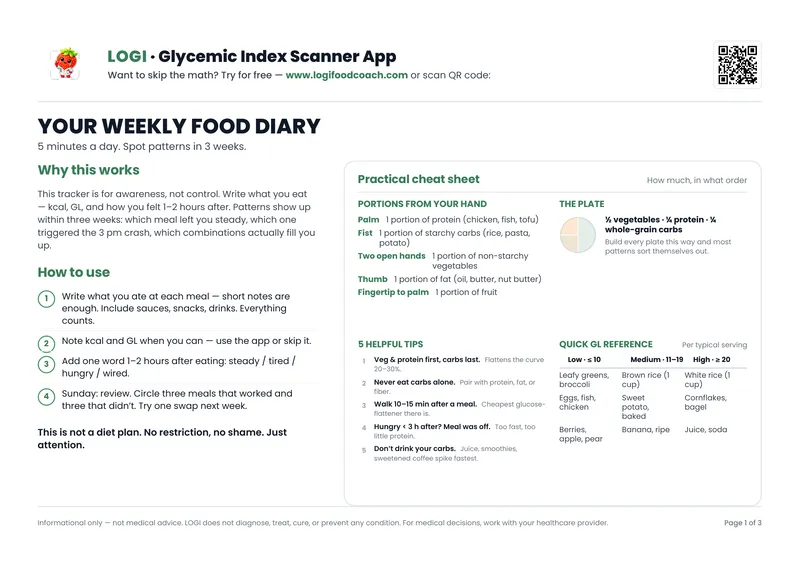
Free PDF — 3 pages
Your Weekly Food Journal
Track meals, glycemic load & mood. Spot patterns in 3 weeks.
No spam. Unsubscribe anytime.