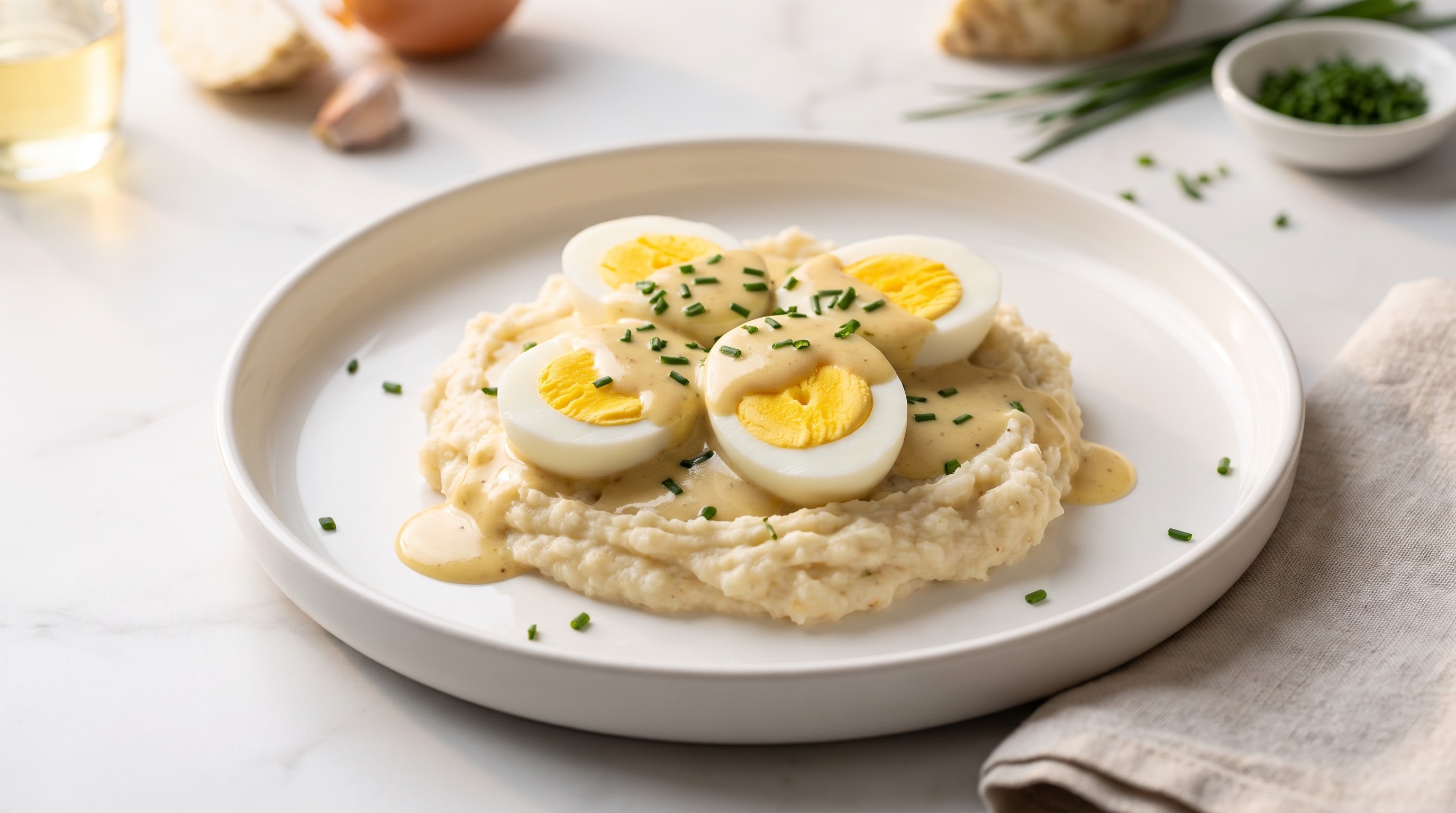
Low-GI Senfeier — Eggs in Mustard Cream with Celeriac Mash
Classic German Senfeier reimagined for steady blood sugar: eggs in tangy mustard cream over creamy celeriac mash instead of potatoes.
Senfeier — eggs in mustard sauce — is one of Germany's most cherished weeknight suppers, traditionally served over floury boiled potatoes and thickened with a flour-based roux. This low-glycemic version honours every comforting element of the original while making two smart swaps that dramatically reduce the glucose load. Celeriac replaces potatoes, cutting the glycemic index of the starchy base from around 78 down to roughly 20, and heavy cream stands in for the flour roux, eliminating refined carbohydrates from the sauce entirely.
The result is a dish that feels indulgent yet sits remarkably well on blood sugar. Celeriac brings an earthy, celery-like sweetness when mashed with butter and nutmeg, and its high fibre content slows digestion further. The sauce is pure simplicity: cream simmered until it thickens naturally, then spiked off the heat with sharp Dijon mustard and a splash of white wine vinegar for brightness. Because the protein from four eggs and the fat from butter and cream dominate the macronutrient balance, the overall meal produces a gentle, sustained energy curve rather than a sharp spike.
For the best glycemic outcome, eat the celeriac mash and a few bites of egg before pouring on the sauce — fibre and protein consumed first help blunt any residual glucose response. This pairs beautifully with a side of steamed green beans or a simple bitter-leaf salad dressed with lemon and olive oil, adding extra fibre and micronutrients without raising the carbohydrate count.
Blood Sugar Impact
Very gentle blood sugar rise expected due to the low glycemic load (7.8) and low GI (46). The combination of protein from eggs, healthy fats from butter and cream, and the fiber-rich celeriac mash (GI ~35) will promote slow, steady glucose absorption and stable energy for 3-4 hours.
Blood Sugar Tips
- ✓ Eat the celeriac mash alongside the eggs rather than finishing one before the other — combining the fiber, fat, and protein in each bite slows gastric emptying and flattens the glucose curve.
- ✓ The white wine vinegar in the mustard sauce is already working in your favor — acetic acid has been shown to reduce postprandial blood sugar by up to 30%, so be generous with the sauce.
- ✓ Take a gentle 10-15 minute walk after eating to further blunt any modest blood sugar rise and enhance insulin sensitivity.
🥗 Ingredients
- 300 g Celeriac
- 4 pcs Egg
- 30 g Unsalted butter
- 100 ml Heavy cream
- 2 tbsp Dijon mustard
- 1 tsp White wine vinegar
- 0.25 tsp Ground nutmeg
- 0.5 tsp Salt
- 0.25 tsp Black pepper
- 1 tbsp Chives
- 10.6 oz Celeriac
- 4 pcs Egg
- 1.1 oz Unsalted butter
- 7 tbsp Heavy cream
- 2 tbsp Dijon mustard
- 1 tsp White wine vinegar
- 0.25 tsp Ground nutmeg
- 0.5 tsp Salt
- 0.25 tsp Black pepper
- 1 tbsp Chives
👨🍳 Instructions
- 1
Bring a large saucepan of lightly salted water to the boil. While it heats, peel the celeriac and cut it into even 2 cm cubes so the pieces cook at the same rate.
- 2
Place the four eggs in a separate saucepan and cover them with cold water. Set over high heat and bring to a rolling boil, then lower the heat and simmer gently for 9 minutes for firmly set yolks.
- 3
Drop the celeriac cubes into the boiling salted water and cook for about 15 minutes, or until a fork slides through them easily. Start this at the same time as the eggs so both finish together.
- 4
When the eggs are done, transfer them immediately to a bowl of cold water to stop the cooking. Let them sit for a few minutes, then peel and halve each egg lengthwise. Set aside.
- 5
Drain the celeriac thoroughly and return it to the warm pot. Add 15 g of the butter and the ground nutmeg, then mash with a fork or potato masher until the texture is chunky-smooth — a few small lumps are welcome. Season with salt and pepper to taste.
- 6
In a small saucepan, melt the remaining 15 g of butter over medium heat. Pour in the heavy cream and bring it to a gentle simmer. Let it bubble softly for about 2 minutes, stirring occasionally, until it thickens just enough to coat the back of a spoon.
- 7
Remove the cream sauce from the heat and stir in the Dijon mustard and white wine vinegar until fully combined. The residual heat will warm the mustard without dulling its sharpness. Taste and adjust seasoning with salt and pepper.
- 8
Divide the celeriac mash between two warmed plates. Arrange four egg halves on top of each portion, spoon the mustard cream sauce generously over the eggs, and finish with a scattering of freshly snipped chives. Serve immediately.
📊 Nutrition Per Serving
| Per Serving | Whole Dish | |
|---|---|---|
| Calories | 496 | 993 |
| Carbs | 17g | 34g |
| Sugars | 6g | 12g |
| Natural Sugars | 6g | 12g |
| Protein | 17g | 34g |
| Fat | 41g | 82g |
| Saturated Fat | 22g | 45g |
| Unsaturated Fat | 19g | 37g |
| Fiber | 8g | 16g |
| Soluble Fiber | 2g | 5g |
| Insoluble Fiber | 6g | 11g |
| Sodium | 925mg | 1851mg |
Predicted Glucose Response
What if you...
Estimated model — individual responses vary. Not medical advice.
🔄 Lower GI Swaps
Celeriac has a relatively high GI (~85 when boiled and mashed). Cauliflower (GI ~15) is the strongest swap, producing a similarly creamy mash with dramatically lower glycemic impact. Kohlrabi (GI ~20) and turnip (GI ~30) also offer significant GI reductions while maintaining a root-vegetable texture suitable for mashing.
While butter is already negligible-GI, replacing it with extra virgin olive oil or avocado oil provides monounsaturated fatty acids and polyphenols that have been shown to improve postprandial insulin sensitivity and slow glucose absorption from the overall meal, further lowering the dish's effective glycemic load.
Heavy cream is already very low GI, but coconut cream provides medium-chain triglycerides (MCTs) that support stable energy without triggering insulin spikes. Cashew cream and thickened almond milk have near-zero glycemic load and add plant-based fats that help moderate the overall blood sugar response of the meal.
Apple cider vinegar has a slightly higher acetic acid concentration than standard white wine vinegar, and studies show acetic acid can reduce postprandial blood glucose by 20-30% when consumed with a meal. Adding lemon juice contributes citric acid and soluble fiber (pectin), both of which further slow gastric emptying and blunt glucose spikes.
🔬 The Science Behind This Recipe
Why This Recipe Works for Your Blood Sugar
The star swap in this dish is celeriac standing in for traditional potatoes. While a serving of mashed potatoes can send your blood sugar on a roller coaster (with a GI around 80–90), celeriac comes in dramatically lower at roughly 35. The secret? Celeriac is packed with fiber — nearly three times more than potatoes — which acts like a speed bump in your digestive system, slowing the rate at which sugars enter your bloodstream. That means a gentler, more gradual rise in energy rather than a sharp spike followed by a crash. With a glycemic load of just 7.8 per serving, this meal falls firmly in the "low" category. Remember, glycemic load takes into account how much carbohydrate you're actually eating, not just how fast it converts to sugar — and that's what really matters on your plate.
Eggs and butter are the unsung heroes here. Eggs deliver roughly 6 grams of protein and 5 grams of fat each, and neither protein nor fat raises blood sugar on its own. Even better, when you eat them alongside carbohydrates like celeriac, they slow gastric emptying — essentially telling your stomach to take its time. The heavy cream in the mustard sauce doubles down on this effect, adding richness that also serves a metabolic purpose. Fat and protein together create a buffer that blunts the glucose response to whatever carbs are in the meal.
Want to maximize the benefits? Try eating a few bites of a green side salad before digging into the celeriac mash — vegetables first, starches last is a simple trick that research shows can reduce post-meal glucose spikes by up to 30%. A short 10–15 minute walk after eating works wonders too, helping your muscles soak up circulating blood sugar naturally. This dish proves that steady blood sugar and deeply satisfying comfort food aren't mutually exclusive — they're a perfect pair.
Related recipes
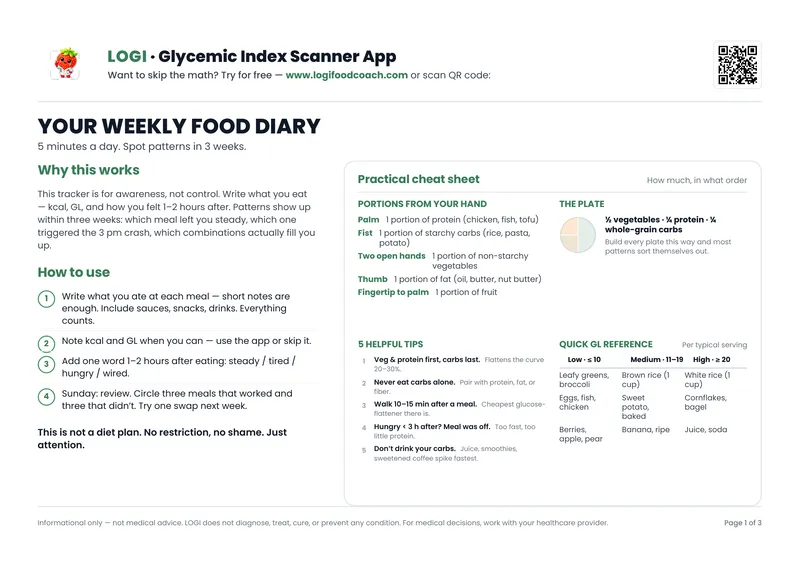
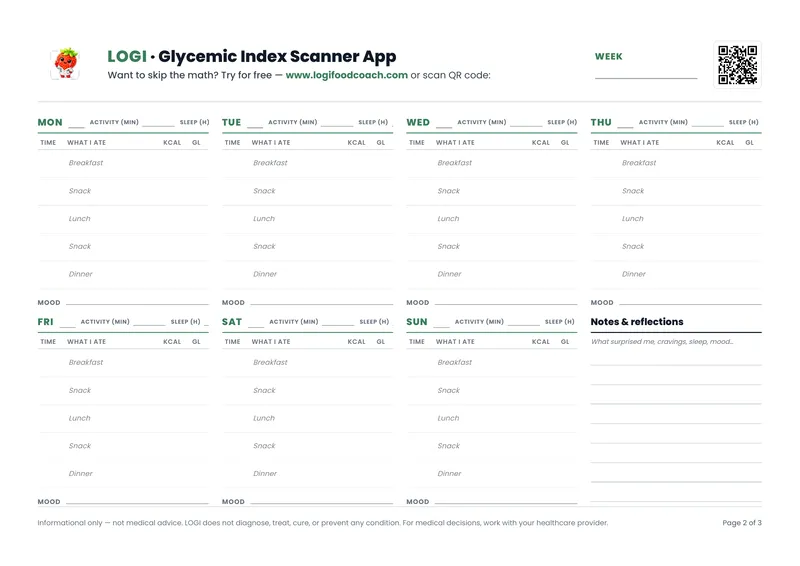
Free PDF — 3 pages
Your Weekly Food Journal
Track meals, glycemic load & mood. Spot patterns in 3 weeks.
No spam. Unsubscribe anytime.