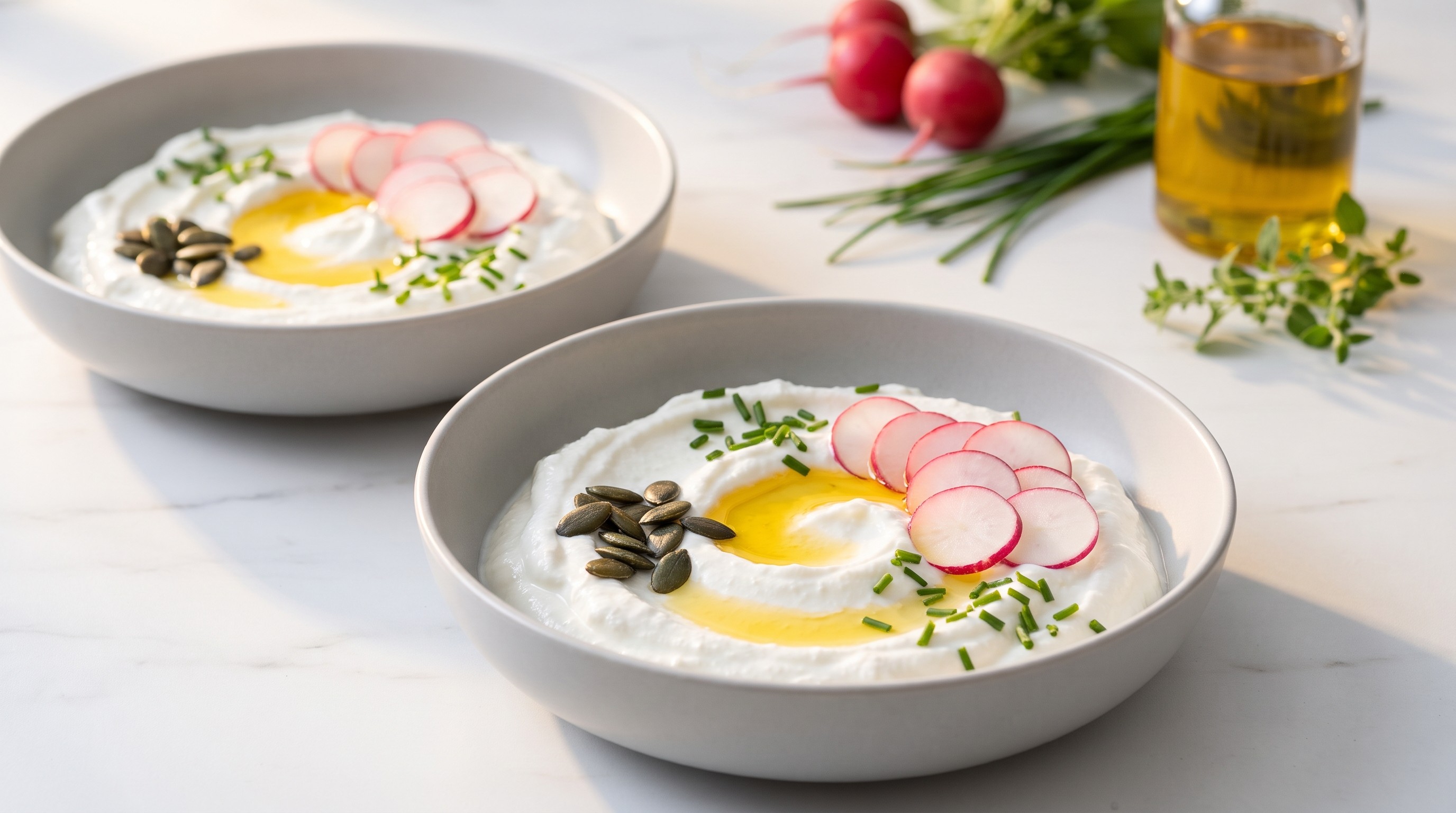
Quark with Linseed Oil, Chives and Radish
Creamy quark drizzled with omega-3-rich linseed oil, peppery radish and toasted pumpkin seeds — virtually zero-carb and ideal for steady blood sugar.
This traditional Spreewald dish is one of the simplest meals you can prepare for stable blood sugar. High-protein quark forms the creamy base, delivering around 24 grams of protein per serving with minimal carbohydrate. Cold-pressed linseed oil adds a distinctive nutty flavour along with a generous dose of alpha-linolenic acid, an omega-3 fatty acid that supports healthy insulin sensitivity and reduces inflammation — a key concern for anyone managing blood glucose levels.
The combination of protein and healthy fat creates a satiating meal that produces virtually no glycemic response. Peppery radishes contribute fibre and micronutrients at negligible carbohydrate cost, while toasted pumpkin seeds add satisfying crunch along with magnesium, a mineral closely linked to improved glucose metabolism. Every component of this dish works in harmony to keep your blood sugar completely flat.
Serve it as a standalone breakfast, a light lunch, or a high-protein snack between meals. For an even gentler glucose response, eat the radish slices first — their fibre helps prime digestion. If you prefer a heartier meal, pair it with a slice of dense seeded rye bread, which has a significantly lower glycemic index than white bread. The entire dish comes together in ten minutes with no cooking required, making it an effortless choice for busy mornings when you still want to eat well.
Blood Sugar Impact
Very minimal blood sugar impact expected. With a glycemic load of just 3.6 and an estimated GI of 28, this high-protein, high-fat quark dish will produce a negligible glucose response and provide stable energy for 3-4 hours.
Blood Sugar Tips
- ✓ Pair with a slice of whole-grain sourdough or raw vegetable sticks to add fiber and extend satiety without significantly raising blood sugar.
- ✓ Eat this as a starter or snack before a higher-carb meal to blunt the glucose spike of the subsequent course, leveraging the protein and fat pre-load effect.
- ✓ Include a short 10-15 minute walk after your full meal to further enhance glucose uptake by working muscles.
🥗 Ingredients
- 400 g Quark
- 0.5 tsp Salt
- 0.13 tsp Black pepper
- 15 g Chives
- 2 tbsp Linseed oil
- 120 g Radish
- 20 g Pumpkin seeds
- 14.1 oz Quark
- 0.5 tsp Salt
- 0.13 tsp Black pepper
- 0.5 oz Chives
- 2 tbsp Linseed oil
- 4.2 oz Radish
- 0.7 oz Pumpkin seeds
👨🍳 Instructions
- 1
Spoon the quark into a mixing bowl. Work it vigorously with a fork for about thirty seconds, pressing against the sides of the bowl, until the texture is completely smooth and free of lumps.
- 2
Add the salt and a pinch of freshly ground black pepper to the quark and stir until the seasoning is evenly distributed throughout.
- 3
Using kitchen scissors, snip the chives into fine rings directly over a small bowl. Set aside roughly one quarter of the cut chives for garnish, then fold the rest into the seasoned quark with a spatula until evenly distributed.
- 4
Wash the radishes under cold running water and trim off the tops and root ends. Slice them into thin rounds about two millimetres thick so the slices are nearly translucent — a mandoline works well here if you have one.
- 5
Scatter the pumpkin seeds into a dry skillet and set it over medium heat. Toast for two to three minutes, shaking the pan every thirty seconds or so, until the seeds begin to pop and turn lightly golden. Immediately transfer them to a plate so they do not burn from residual heat.
- 6
Divide the chive quark evenly between two shallow bowls, smoothing the surface gently with the back of a spoon to create an even layer.
- 7
Press the back of the spoon into the centre of each portion to form a shallow well. Pour one tablespoon of cold-pressed linseed oil into each well, letting it pool naturally over the quark.
- 8
Fan the radish slices in overlapping rings around the edges of each bowl. Scatter the toasted pumpkin seeds over the top and finish with the reserved chives. Serve immediately at room temperature.
📊 Nutrition Per Serving
| Per Serving | Whole Dish | |
|---|---|---|
| Calories | 210 | 419 |
| Carbs | 13g | 25g |
| Sugars | 11g | 21g |
| Added Sugars | 1g | 3g |
| Natural Sugars | 9g | 18g |
| Protein | 28g | 55g |
| Fat | 5g | 11g |
| Saturated Fat | 1g | 2g |
| Unsaturated Fat | 4g | 8g |
| Fiber | 2g | 4g |
| Soluble Fiber | 0g | 1g |
| Insoluble Fiber | 1g | 3g |
| Sodium | 686mg | 1373mg |
Predicted Glucose Response
What if you...
Estimated model — individual responses vary. Not medical advice.
🔄 Lower GI Swaps
Linolade is a linseed oil spread that may contain small amounts of added emulsifiers or fillers. Pure cold-pressed linseed oil, olive oil, or avocado oil have a GI of 0 and provide healthy fats that slow gastric emptying, further blunting any post-meal glucose rise.
While pumpkin seeds are already low-GI, chia seeds form a viscous gel during digestion that significantly slows carbohydrate absorption and reduces glycemic response. Hemp seeds offer more protein per gram (helping stabilize blood sugar), and walnuts have been shown in clinical studies to improve post-meal glucose control.
If the recipe uses low-fat quark, switching to full-fat quark or full-fat Greek yogurt adds dietary fat that slows gastric emptying and reduces the glycemic impact of the overall meal. Skyr is even higher in protein per serving, and higher protein-to-carb ratios are associated with lower post-meal blood sugar spikes.
Radish already has a very low GI, but cucumber (GI ~15), celery, and raw zucchini have marginally lower available carbohydrate content per serving and higher water and fiber ratios, which can further reduce the overall glycemic load of the dish.
🔬 The Science Behind This Recipe
Here's the science explainer section:
---
This recipe is a fantastic example of how simple, whole ingredients can work together to keep your blood sugar steady. Quark is the star here — it's packed with protein and contains virtually no carbohydrates, which means it has almost no direct impact on your blood sugar. Protein also slows down digestion, so when you eat quark alongside other foods in a meal, it helps everything absorb more gradually. Think of it as a natural brake pedal for glucose entering your bloodstream.
Linseed oil (linolade) brings healthy fats — particularly omega-3 fatty acids — to the table. Fat, like protein, slows gastric emptying, which is a fancy way of saying it keeps food in your stomach longer before it moves into your intestines. This slower transit means any carbohydrates you eat alongside this dish get absorbed at a gentler pace, avoiding those sharp blood sugar peaks and crashes that leave you feeling tired. Pairing protein and fat together, as this recipe naturally does, creates a powerful one-two combination for stable energy throughout your day.
Now, let's talk about the numbers. This recipe has a glycemic load of just 3.6 per serving — anything under 10 is considered low. Glycemic load matters more than glycemic index alone because it accounts for how much carbohydrate you're actually eating, not just how fast it raises blood sugar. With an estimated GI of 28, this dish sits firmly in the low category. A practical tip: enjoy this quark dish at the start of your meal before any bread or starchy sides. Eating protein and fat first has been shown to significantly reduce the glucose spike from carbs eaten afterward. A short walk after your meal can help even further by encouraging your muscles to use up circulating blood sugar naturally.
Related recipes
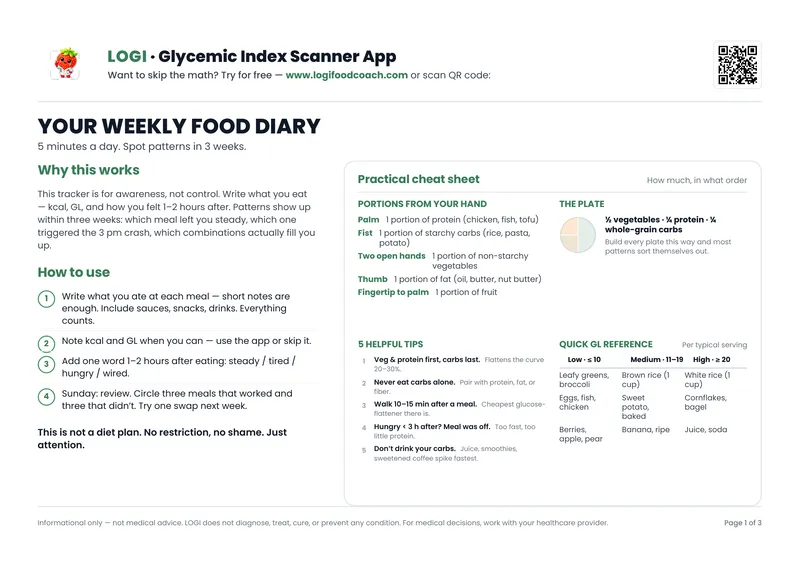
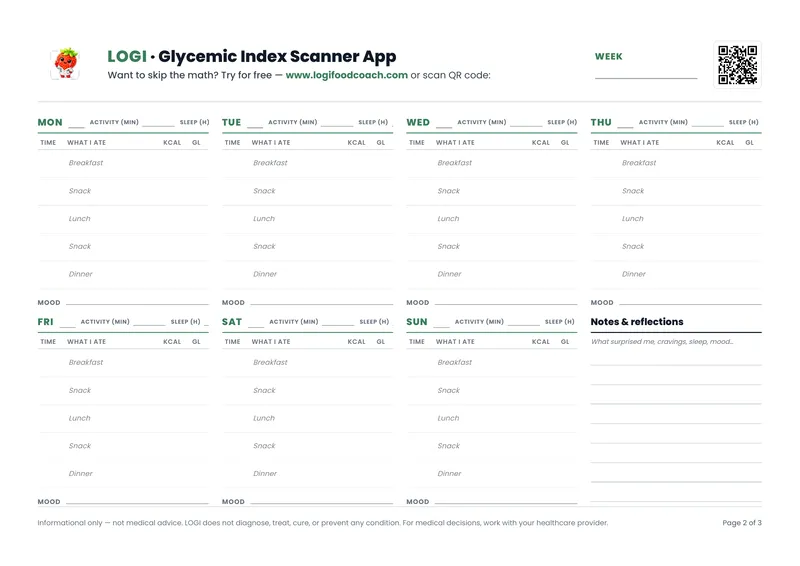
Free PDF — 3 pages
Your Weekly Food Journal
Track meals, glycemic load & mood. Spot patterns in 3 weeks.
No spam. Unsubscribe anytime.