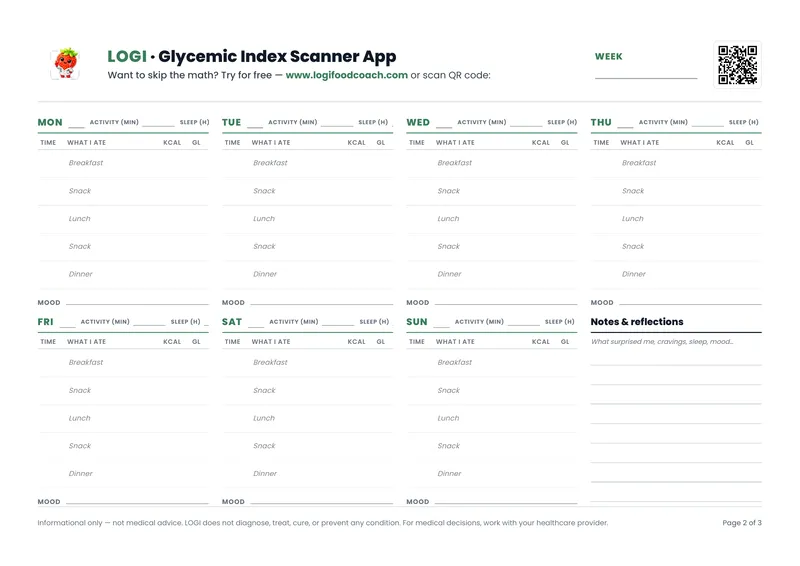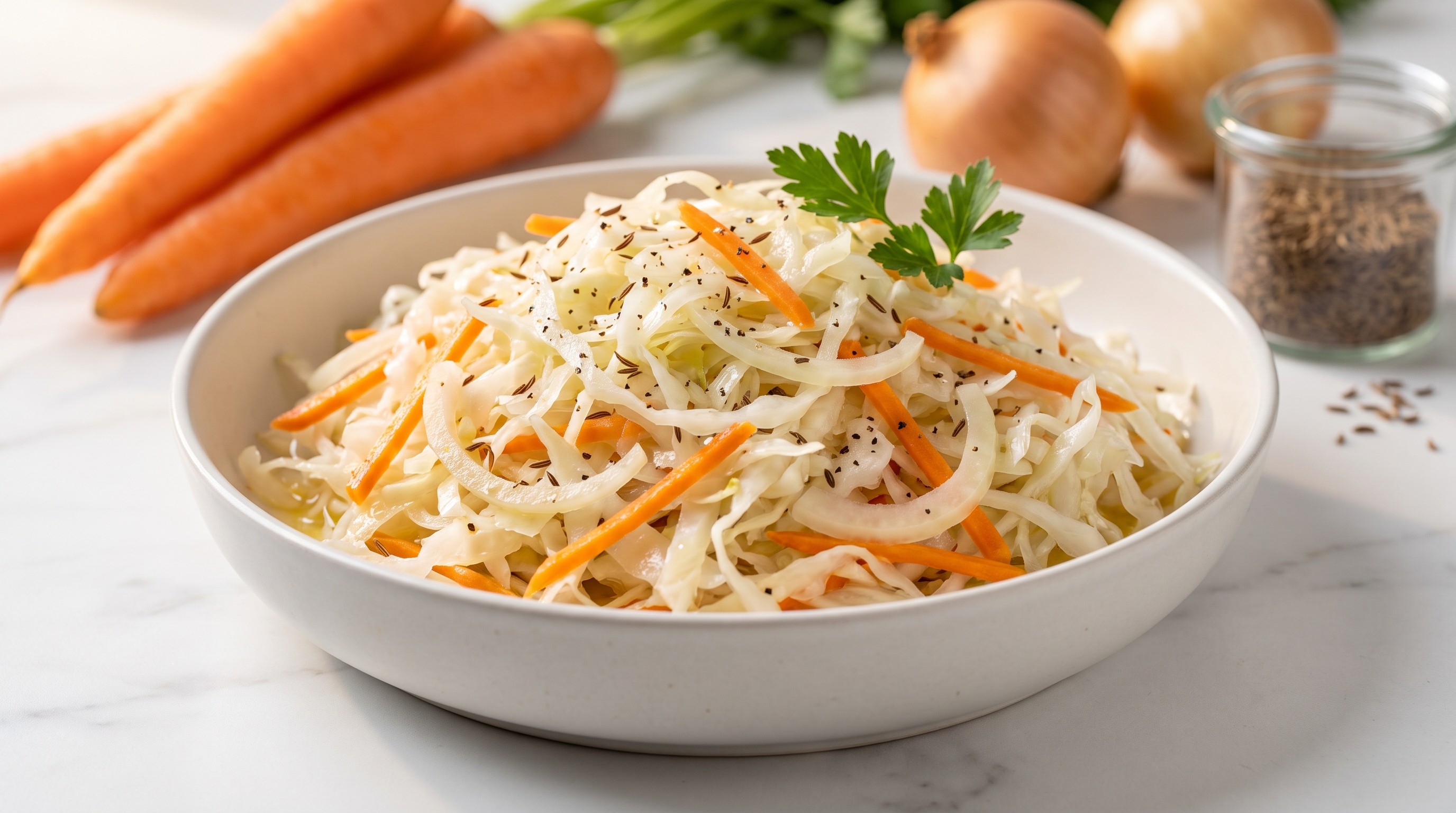
Krautsalat — Pressed Cabbage Salad with Caraway and Vinegar
Silky German cabbage salad dressed in white wine vinegar and caraway — a fiber-rich, near-zero-GI side that actively helps stabilize blood sugar levels.
Krautsalat is one of those rare dishes that tastes indulgent yet does remarkable things for your blood sugar. White cabbage is salted and pressed until its tough fibers relax into silky, compact ribbons, then tossed with white wine vinegar, cold-pressed rapeseed oil, and fragrant caraway seeds. The result is tangy, savory, and deeply satisfying — a staple side dish found on nearly every German table alongside sausages, schnitzel, or roasted meats.
From a glycemic standpoint, this salad is a powerhouse. Cabbage is extremely low on the glycemic index, packed with insoluble fiber that slows digestion and prevents glucose spikes. The real star, however, is the white wine vinegar: acetic acid has been shown in clinical studies to reduce the glycemic response of an entire meal by up to 30 percent when consumed alongside starchy foods. Pairing this salad with any carbohydrate-containing main course effectively lowers the overall blood sugar impact of the meal. The rapeseed oil contributes heart-healthy omega-3 fatty acids and further slows gastric emptying, while caraway seeds offer gentle digestive support.
For the best results, serve this salad at the start of your meal — eating fiber and acid before carbohydrates primes your digestive system for a flatter glucose curve. The salad actually improves overnight as the flavors meld, so consider making it a day ahead. It pairs beautifully with grilled chicken, poached fish, or any protein-rich main, and it keeps well in the refrigerator for up to four days.
Blood Sugar Impact
Very low blood sugar impact expected. With a glycemic load of 5.3 and an estimated GI of 19, this fiber-rich cabbage salad will produce a minimal, slow glucose rise and provide stable energy for 3-4 hours.
Blood Sugar Tips
- ✓ Enjoy this salad as a starter before any higher-carb course — the fiber and vinegar will blunt the glucose response of foods that follow.
- ✓ The white wine vinegar already helps slow gastric emptying and lower postprandial glucose; consider adding an extra splash if you enjoy the tang.
- ✓ Pair with a protein source like grilled chicken or hard-boiled eggs to further flatten the blood sugar curve and increase satiety.
🥗 Ingredients
- 700 g White cabbage
- 2 tsp Sea salt
- 1 pcs Carrot
- 1 pcs White onion
- 3 tbsp White wine vinegar
- 2 tbsp Rapeseed oil
- 1 tsp Caraway seeds
- 0.5 tsp Black pepper
- 1.5 lb White cabbage
- 2 tsp Sea salt
- 1 pcs Carrot
- 1 pcs White onion
- 3 tbsp White wine vinegar
- 2 tbsp Rapeseed oil
- 1 tsp Caraway seeds
- 0.5 tsp Black pepper
👨🍳 Instructions
- 1
Cut the cabbage into quarters and remove the hard core. Shred each quarter as thinly as you can — aim for strips no wider than 2 mm. A mandoline makes quick work of this, but a sharp chef's knife works well too. Transfer all the shreds to a large, wide mixing bowl.
- 2
Scatter the sea salt evenly over the cabbage. Using both hands, toss, squeeze, and massage the shreds firmly for about 2 minutes. You will feel the cabbage soften and turn glossy as the salt draws out moisture and breaks down the tough cell walls.
- 3
Set a plate directly on top of the salted cabbage and weigh it down with something heavy — a large can, a cast-iron skillet, or a pot filled with water all work. Leave the cabbage to press undisturbed for 30 minutes. This is entirely hands-off time.
- 4
Remove the weight and plate. Tilt the bowl and drain off all the liquid the cabbage has released. Then grab handfuls of the cabbage and squeeze them firmly over the sink to wring out as much remaining moisture as possible. Return the pressed cabbage to a clean bowl.
- 5
Peel and coarsely grate the carrot on the large holes of a box grater. Halve the onion through the root end and slice each half into paper-thin half-moons. Add both to the bowl with the pressed cabbage.
- 6
Pour the white wine vinegar and rapeseed oil over the vegetables. Sprinkle in the caraway seeds and freshly ground black pepper. Toss everything together thoroughly with tongs or two forks until every strand of cabbage is evenly coated in the dressing.
- 7
Taste the salad and adjust the seasoning — add a splash more vinegar for brightness, a pinch of salt if it needs it, or a grind of pepper for warmth. The flavors should be tangy, lightly savory, and aromatic from the caraway.
- 8
Serve the salad right away as a side, or cover and refrigerate for at least 2 hours — ideally overnight — to let the flavors deepen. The salad keeps well in the refrigerator for up to 4 days and actually tastes better the next day. For the best blood sugar benefit, eat a generous portion before your main course.
📊 Nutrition Per Serving
| Per Serving | Whole Dish | |
|---|---|---|
| Calories | 251 | 502 |
| Carbs | 28g | 57g |
| Sugars | 15g | 29g |
| Natural Sugars | 15g | 29g |
| Protein | 6g | 11g |
| Fat | 15g | 29g |
| Saturated Fat | 1g | 2g |
| Unsaturated Fat | 13g | 27g |
| Fiber | 11g | 22g |
| Soluble Fiber | 3g | 7g |
| Insoluble Fiber | 8g | 16g |
| Sodium | 2374mg | 4748mg |
Predicted Glucose Response
What if you...
Estimated model — individual responses vary. Not medical advice.
🔄 Lower GI Swaps
Carrots have a moderate glycemic index (GI ~39–47 raw) and are one of the higher-carb vegetables in this salad. Radish (GI ~15), kohlrabi (GI ~15), and celery (GI ~15) all deliver crunch with significantly fewer digestible carbohydrates per serving, helping keep the overall glycemic load even lower.
While all vinegars contain acetic acid that slows gastric emptying and blunts post-meal glucose spikes, apple cider vinegar has the strongest clinical evidence for reducing post-prandial blood sugar responses by up to 20–30%. Red wine vinegar adds polyphenols that may further support insulin sensitivity.
Extra virgin olive oil is rich in oleocanthal and polyphenols shown to improve insulin sensitivity and reduce post-meal blood glucose peaks. Avocado oil similarly provides monounsaturated fats that slow carbohydrate absorption and improve glycemic response compared to more neutral oils.
Red cabbage contains higher concentrations of anthocyanins — pigment compounds clinically associated with improved insulin sensitivity and lower post-meal glucose levels. Savoy cabbage offers more soluble fiber per serving, which slows glucose absorption and reduces glycemic load.
🔬 The Science Behind This Recipe
Why This Salad Is a Blood Sugar Winner
With a glycemic load of just 5.3 and an estimated GI of 19, this traditional German cabbage salad lands firmly in "low-impact" territory for your blood sugar. But what makes it so gentle? It starts with the star ingredient: white cabbage. Cabbage is remarkably low in digestible carbohydrates and rich in fiber — both soluble and insoluble. That fiber acts like a natural speed bump in your digestive system, slowing the rate at which any sugars enter your bloodstream. Instead of a sharp spike followed by a crash, you get a gentle, steady rise that your body can handle with ease.
The supporting cast plays an important role too. Carrots, while slightly higher on the glycemic index when eaten alone, contribute such a small amount of carbohydrate per serving here that their impact is minimal — this is where glycemic *load* matters more than glycemic *index*. It's not just about how fast a food raises blood sugar, but how much of that food you're actually eating. Meanwhile, the white wine vinegar is a quiet powerhouse: research consistently shows that acetic acid — the active component in vinegar — can reduce post-meal blood sugar responses by slowing gastric emptying and improving your cells' ability to take up glucose.
To get the most from this dish, try eating it at the *beginning* of your meal, before any starchy sides or bread. Starting with fiber-rich vegetables helps create a protective buffer in your gut. Pair it alongside a protein like grilled chicken or fish, and consider a short 10–15 minute walk after eating — even gentle movement helps your muscles absorb glucose more efficiently. Small habits, big difference.
Related recipes
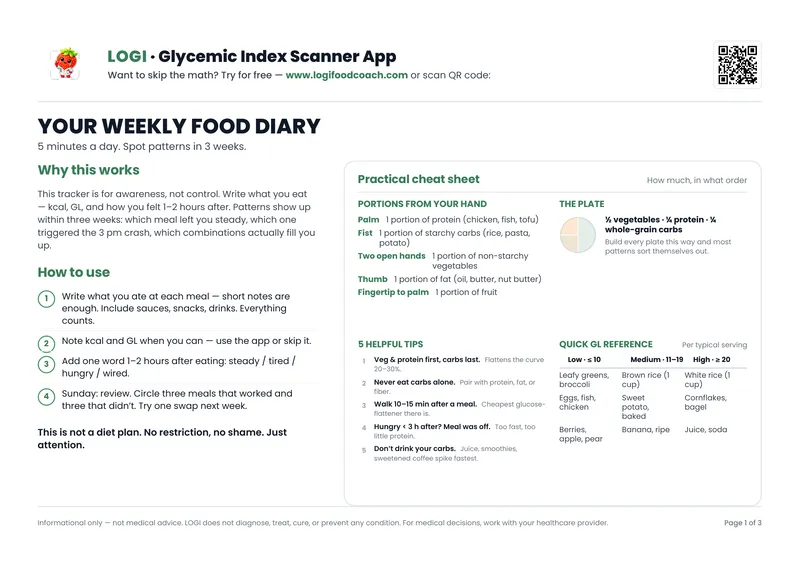
Free PDF — 3 pages
Your Weekly Food Journal
Track meals, glycemic load & mood. Spot patterns in 3 weeks.
No spam. Unsubscribe anytime.