Zaalouk with Crudités
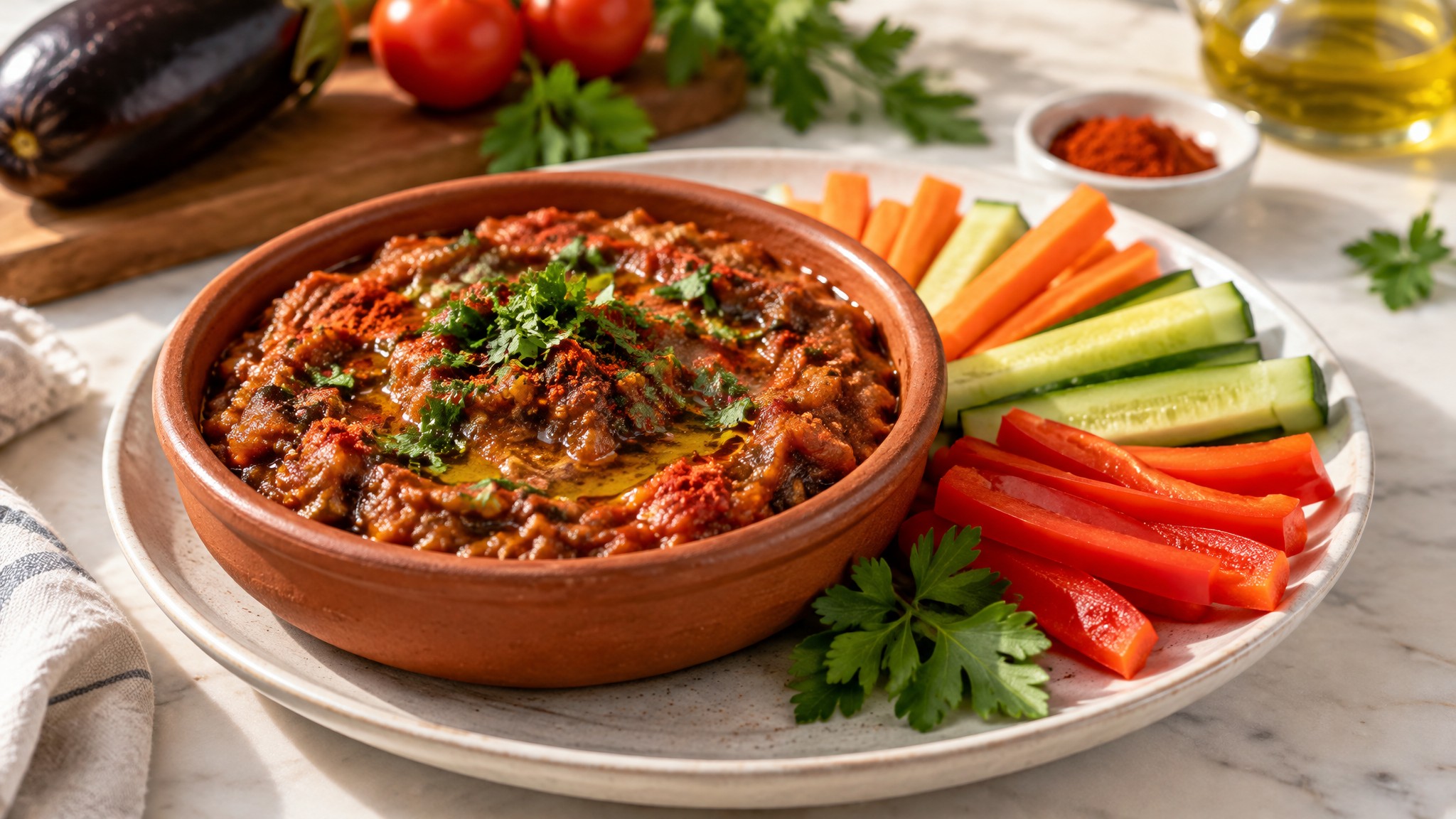
Silky Moroccan aubergine and tomato zaalouk, simmered with cumin and paprika until jammy, served with crisp crudités instead of bread for a gentle glucose curve.
Zaalouk is one of the best-loved cooked salads in Morocco. Aubergine is fried in olive oil until golden, then simmered with garlic, cumin, sweet paprika and freshly grated tomato. As it cooks you mash it down until it turns soft and jammy and the oil begins to separate at the edges. Lemon juice and flat-leaf parsley go in at the end to brighten it. In Morocco it usually comes to the table with khobz, a wheat bread that people use to scoop it up. This version keeps the dip exactly as it is and swaps the bread for crisp sticks of cucumber, carrot and red bell pepper. You still get the crunch and something to scoop with.
The swap matters for blood sugar. Khobz is made from refined white flour and has a high glycemic index, so it is the one part of the traditional meal that can raise glucose quickly. Without it, the whole plate is low-GI vegetables, extra-virgin olive oil and fiber. Aubergine, tomato, cucumber and bell pepper contain very little available carbohydrate. Raw carrot is low GI too, and its firm, fibrous texture means it is digested slowly. The olive oil slows how quickly the stomach empties, and fat-soluble antioxidants such as lycopene from the cooked tomatoes are absorbed better with it. The fiber from the aubergine skins and the vegetable pulp helps keep the glucose response flat and steady.
Zaalouk works well as the opening course of a meal. Eating vegetables first, before any protein or starch, is a simple way to soften the glucose rise from whatever comes next. For a fuller lunch, serve it alongside grilled chicken, lamb kofta, hard-boiled eggs or a spoonful of thick Greek yogurt. If you want something starchy with it, a small portion of lentils or chickpeas is a better choice than white bread. Zaalouk tastes good warm, at room temperature or cold from the fridge the next day, so it is easy to make ahead.
Blood Sugar Impact
Minimal impact. This meal is mostly non-starchy vegetables cooked in olive oil, so expect a gentle, flat glucose curve and steady energy for 3-4 hours.
Blood Sugar Tips
- ✓ Use the cucumber and other raw crudités for dipping instead of bread or pita. If you want bread, keep it to a small piece of whole-grain or sourdough.
- ✓ Add a protein such as eggs, grilled chicken, chickpeas or Greek yogurt to make the meal more filling and keep blood sugar even steadier.
- ✓ Keep the olive oil and the squeeze of lemon. The fat and acidity slow digestion, and a 10-minute walk after eating helps even more.
🥗 Ingredients
- 500 g Aubergine
- 3 tbsp Extra-virgin olive oil
- 3 pcs Garlic
- 1 tsp Ground cumin
- 1.5 tsp Sweet paprika
- 0.75 tsp Fine salt
- 3 pcs Tomato
- 1 tbsp Lemon juice
- 15 g Flat-leaf parsley
- 0.5 pcs Cucumber
- 1 pcs Carrot
- 1 pcs Red bell pepper
- 1.1 lb Aubergine
- 3 tbsp Extra-virgin olive oil
- 3 pcs Garlic
- 1 tsp Ground cumin
- 1.5 tsp Sweet paprika
- 0.75 tsp Fine salt
- 3 pcs Tomato
- 1 tbsp Lemon juice
- 0.5 oz Flat-leaf parsley
- 0.5 pcs Cucumber
- 1 pcs Carrot
- 1 pcs Red bell pepper
👨🍳 Instructions
- 1
Put a wide frying pan over medium-high heat and add 2½ tbsp of the olive oil. When the oil shimmers, add the aubergine cubes in a single layer. Fry for about 8 minutes, turning them from time to time, until golden on the outside and soft all the way through.
- 2
Turn the heat down to medium. Add the minced garlic, cumin, sweet paprika and salt and stir for about 1 minute, until the spices smell toasty and the garlic softens. Don't let the garlic brown.
- 3
Hold each tomato half cut-side down and grate it on the coarse side of a box grater, straight into the pan, until only the skin is left in your hand. Throw the skins away and stir the tomato pulp into the aubergine.
- 4
Leave the pan uncovered and simmer gently for about 15 minutes. Mash the mixture with a fork every few minutes as it cooks down. It's ready when it's thick and jammy and you can see the oil pooling at the edges.
- 5
Take the pan off the heat. Stir in the lemon juice and most of the chopped parsley, keeping a little back for garnish. Taste and add more salt or lemon if needed, then let it cool for about 5 minutes.
- 6
While the zaalouk cools, cut the cucumber and carrot into sticks and the red bell pepper into strips. Arrange them on a platter.
- 7
Spoon the zaalouk into a serving bowl. Drizzle over the remaining ½ tbsp of olive oil and scatter the reserved parsley on top. Serve warm or at room temperature with the vegetable sticks for scooping. Eat it at the start of the meal, before any protein or starch, to keep your glucose response gentle.
📊 Nutrition Per Serving
| Per Serving | Whole Dish | |
|---|---|---|
| Calories | 346 | 693 |
| Carbs | 38g | 75g |
| Sugars | 20g | 41g |
| Natural Sugars | 20g | 41g |
| Protein | 7g | 14g |
| Fat | 22g | 44g |
| Saturated Fat | 3g | 6g |
| Unsaturated Fat | 19g | 37g |
| Fiber | 14g | 28g |
| Soluble Fiber | 4g | 9g |
| Insoluble Fiber | 9g | 19g |
| Sodium | 920mg | 1839mg |
Predicted Glucose Response
What if you...
Estimated model — individual responses vary. Not medical advice.
🔄 Lower GI Swaps
Carrots have the most natural sugar and the highest glycemic load of the crudités here, especially if guests eat a lot of them. Celery, radishes and fennel have almost no digestible carbohydrate and a very low GI, so you can dip freely without raising the dish's GL.
Ripe red, yellow and orange peppers contain more sugar than unripe green ones. Green peppers, endive and raw zucchini keep the crunch with fewer carbs per serving, which lowers the glycemic load of the crudité platter a little more.
Many canned tomatoes and sauces have added sugar or are cooked down until their sugars are concentrated. Fresh tomatoes or unsweetened passata keep the zaalouk's GI and GL low and add no extra sugar.
🔬 The Science Behind This Recipe
Why Zaalouk Is Good for Blood Sugar
Eggplant is the star of this Moroccan dish. It is mostly water and fiber and has very little starch, so it adds very little sugar to your bloodstream. The fiber slows digestion, so the small amount of natural sugar in eggplant is released gradually instead of all at once. The crunchy crudités you serve alongside add more fiber, and they replace the bread or crackers a dip usually comes with.
Olive oil does more than give zaalouk its silky texture. Fat slows down how quickly your stomach empties, so any carbohydrates in the meal reach your bloodstream more slowly. Garlic, cumin and paprika add warmth, smokiness and depth without adding sugar. Because the dish is so flavorful and satisfying, you're less likely to reach for refined carbs to round out the meal.
The recipe's numbers back this up. Its estimated Glycemic Index (GI) of 13 is very low. GI measures how quickly a food's carbohydrates raise blood sugar. But the amount you eat matters just as much, which is where Glycemic Load (GL) comes in. GL combines the speed with the actual amount of carbohydrate in a serving. A GL of 5 is comfortably in the low range (under 10), so a normal portion should have only a gentle effect on blood sugar.
Tips for an even steadier response: - Eat in order: start with the crudités and zaalouk. If you add bread, keep it small and eat it last. - Add protein: a boiled egg, grilled chicken or a spoonful of chickpeas makes the meal more filling and balanced. - Take a walk: a relaxed 10–15 minute walk after eating helps your muscles use glucose from your meal.
Related recipes
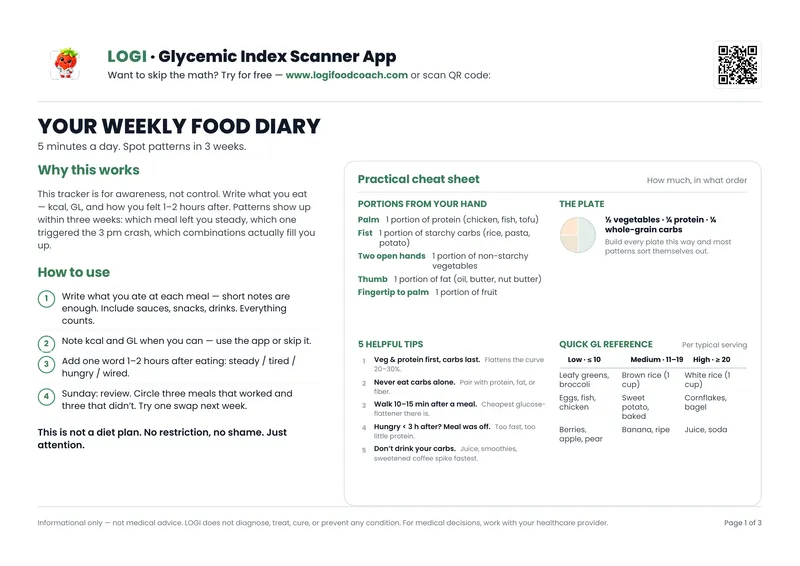
Free PDF — 3 pages
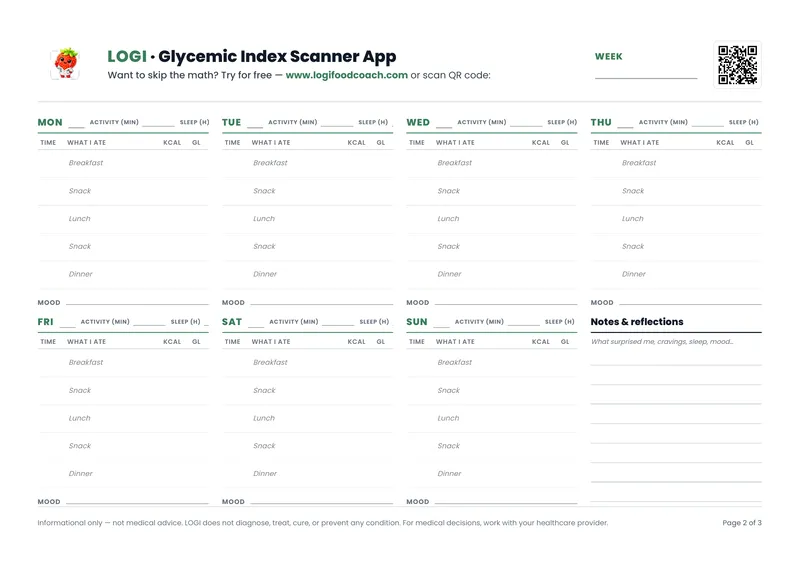
Your Weekly Food Journal
Track meals, glycemic load & mood. Spot patterns in 3 weeks.
No spam. Unsubscribe anytime.