Bhindi Masala with Red Lentil Dal
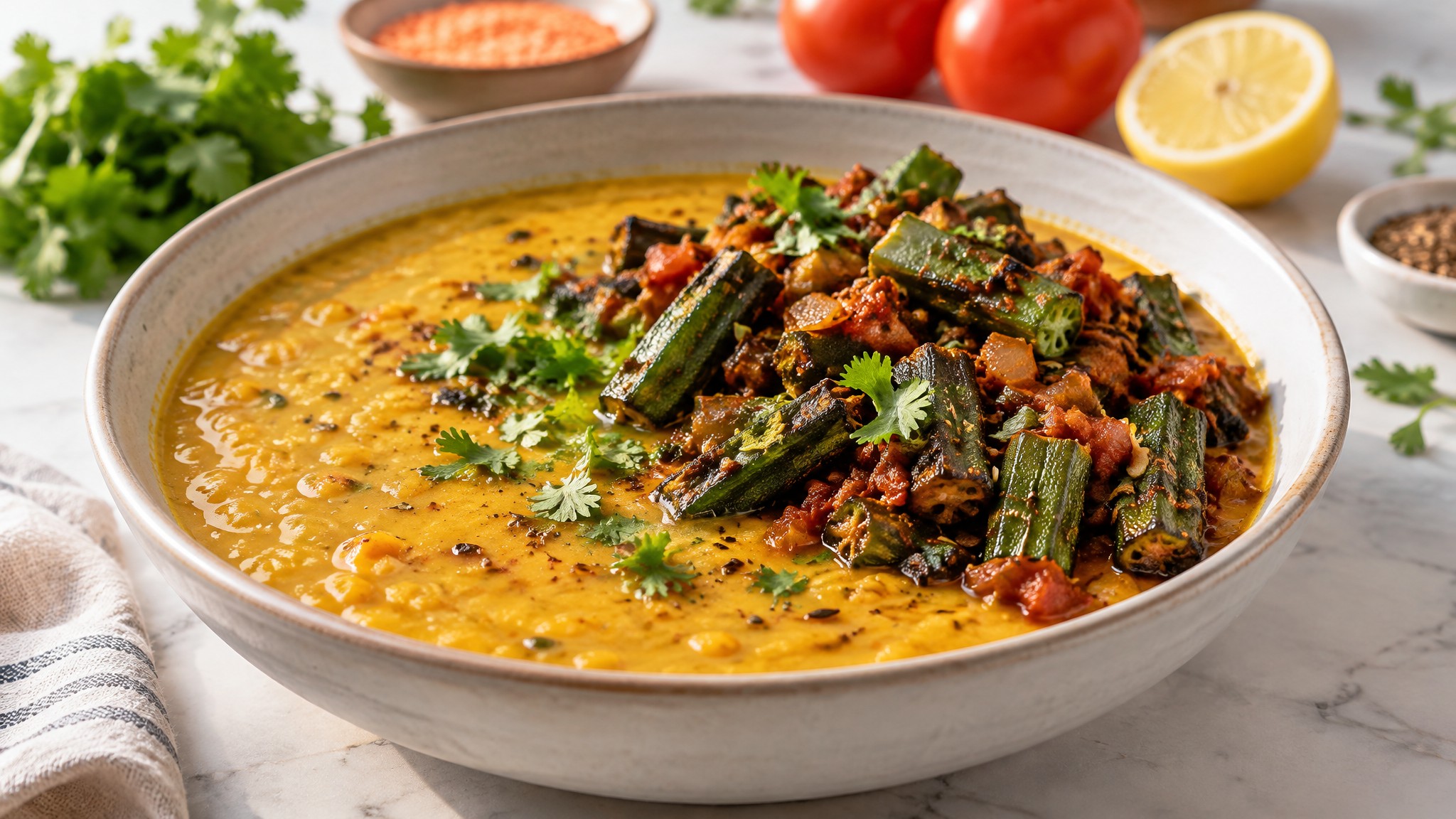
Blistered, dry-fried okra tossed with onion, tomato and warm spices, served with turmeric red lentil dal for a fiber-rich, steady-energy North Indian dinner.
This is a home-style North Indian bhindi masala. Fresh okra is fried in a hot pan without a lid until the pods blister and brown at the edges, which keeps them crisp-tender and not slimy. Then it's tossed with soft golden onion, tomato, cumin, coriander, chili and turmeric until the spices coat every piece. A simple turmeric red lentil dal, finished with lemon juice and salt, goes alongside. Together they make a warming, satisfying meal for two.
The blood sugar benefit comes from what's left off the plate. Bhindi masala usually comes with white rice or roti, which are refined grains that digest quickly and can raise glucose fast. Here the starch comes from red lentils instead. Lentils sit firmly in the low glycemic range, and they bring plant protein and soluble fiber that slow digestion. Okra adds more soluble fiber and very little carbohydrate. Onion and tomato add volume and flavor without much sugar. The sunflower oil the okra fries in also adds fat, which slows how fast the stomach empties. Lemon juice brightens the dal, and some research suggests that acidic foods eaten with a meal may slightly soften the glucose response.
For the steadiest result, start with a few forkfuls of the spiced okra before you move to the dal, so fiber reaches your gut first. If you'd like more protein, add a spoonful of plain full-fat yogurt or a side of paneer or grilled chicken. If you'd still like a grain, try a small portion of cooled and reheated basmati rice, or a roti made from whole-grain or besan (chickpea) flour, instead of white rice. The dal thickens as it stands, so loosen it with a splash of hot water before serving. Leftovers keep well in the fridge for up to three days.
Blood Sugar Impact
Minimal impact: the low GI (17) and low glycemic load (6.4) from fiber-rich okra and protein-rich red lentils should give a slow, gentle rise in blood sugar and steady energy for 3-4 hours.
Blood Sugar Tips
- ✓ Eat the bhindi masala first and the dal after, so the okra's soluble fiber slows how fast the lentil carbs are absorbed.
- ✓ If you add a side, choose a small portion of basmati rice or whole-grain roti, or skip it. White rice or naan in large amounts would raise the meal's glycemic load a lot.
- ✓ Take a 10-15 minute walk after the meal to help your muscles use glucose and keep the post-meal curve flat.
🥗 Ingredients
- 400 g Okra
- 1 pcs Onion
- 1 pcs Tomato
- 100 g Red lentils
- 600 ml Water
- 0.5 tsp Ground turmeric
- 2 tbsp Sunflower oil
- 1 tsp Cumin seeds
- 2 tsp Ground coriander
- 0.5 tsp Chili powder
- 1 tsp Salt
- 1 tbsp Lemon juice
- 5 g Cilantro
- 14.1 oz Okra
- 1 pcs Onion
- 1 pcs Tomato
- 3.5 oz Red lentils
- 2.5 cups Water
- 0.5 tsp Ground turmeric
- 2 tbsp Sunflower oil
- 1 tsp Cumin seeds
- 2 tsp Ground coriander
- 0.5 tsp Chili powder
- 1 tsp Salt
- 1 tbsp Lemon juice
- 0.2 oz Cilantro
👨🍳 Instructions
- 1
Rinse the okra and pat every pod completely dry with a clean towel, because any leftover moisture makes it slimy. Trim off the stem ends and cut the pods into 2 cm (3/4 in) pieces. Thinly slice the onion and chop the tomato.
- 2
Rinse the red lentils until the water runs mostly clear. Put them in a saucepan with 600 ml (20 fl oz) of water and half the turmeric. Bring to a simmer, partly cover, and cook for about 20 minutes, until the lentils have completely broken down into a soft dal. Take the pan off the heat and keep it covered.
- 3
While the dal cooks, heat the sunflower oil in a large frying pan over medium-high heat. Spread the okra out in one layer and fry without a lid for about 10 minutes, stirring now and then, until the pieces are blistered and browned at the edges.
- 4
Push the okra to the edges of the pan to clear a space in the middle. Add the cumin seeds there and let them sizzle for a few seconds until fragrant. Add the sliced onion and fry for about 5 minutes, until soft and golden.
- 5
Add the chopped tomato, ground coriander, chili powder and the rest of the turmeric. Cook for about 5 minutes, stirring, until the tomato softens and turns into a thick masala that coats the okra. Season with half the salt.
- 6
Stir the rest of the salt and the lemon juice into the dal, adding a splash of hot water if it has thickened too much. Spoon the dal into two bowls, pile the bhindi masala next to it and scatter with chopped cilantro. For gentler blood sugar, eat a few bites of the okra first.
📊 Nutrition Per Serving
| Per Serving | Whole Dish | |
|---|---|---|
| Calories | 304 | 608 |
| Carbs | 38g | 76g |
| Sugars | 9g | 17g |
| Natural Sugars | 9g | 17g |
| Protein | 11g | 21g |
| Fat | 15g | 30g |
| Saturated Fat | 2g | 3g |
| Unsaturated Fat | 14g | 27g |
| Fiber | 14g | 28g |
| Soluble Fiber | 4g | 9g |
| Insoluble Fiber | 10g | 19g |
| Sodium | 1191mg | 2381mg |
Predicted Glucose Response
What if you...
Estimated model — individual responses vary. Not medical advice.
🔄 Lower GI Swaps
Split red lentils lose their hull and cook down quickly, so their starch is absorbed faster than that of whole or firmer pulses. Chana dal has one of the lowest GI values of any legume (about 8-11, compared with roughly 21-26 for red lentils). Whole mung beans and beluga lentils keep their fiber-rich skins and hold their shape, which slows starch digestion and lowers the dish's glycemic load further.
Onion is low-GI, but a large amount browned for a masala base adds sugars that concentrate during cooking. Replacing part of it with cauliflower or green bell pepper keeps the volume and texture of the base. These vegetables have very few available carbs, so this lowers total carbohydrate and glycemic load slightly.
These oils are higher in monounsaturated fat than sunflower oil. As part of a mixed meal, fat slows stomach emptying, which helps flatten the glucose rise from the dal. Extra virgin olive oil also contains polyphenols that are linked to better insulin sensitivity.
Fenugreek is rich in soluble fiber (galactomannan). Studies link it to slower carbohydrate absorption and lower blood sugar after meals. Using it alongside cilantro keeps the fresh flavor and adds a classic, blood-sugar-friendly Indian herb.
🔬 The Science Behind This Recipe
This dish works well for steady energy because its main ingredients digest slowly. Okra contains a soft, gel-like soluble fiber that thickens in your digestive tract. This slows how quickly food leaves your stomach, so sugars reach your bloodstream gradually instead of all at once. Red lentils do something similar in their own way. They're one of the best plant sources of protein and fiber, and their starch is packed tightly within that structure, so your body breaks it down slowly. Onions and tomatoes add flavor, extra fiber and antioxidants while contributing very few digestible carbs.
The numbers back this up. The estimated Glycemic Index (GI) of 17 is low. GI measures how fast a carbohydrate food raises blood sugar compared with pure glucose. GI only tells part of the story, though, because it doesn't account for how much you eat. That's where Glycemic Load (GL) helps: it combines the speed of the carbs with the amount in a real serving. At 6.4 per serving, this recipe sits in the low range, so a full, satisfying portion should have only a gentle effect on blood sugar. Even low-GI foods can add up in large amounts, so portion size still matters.
You can make this meal even gentler with a few habits. Eat the bhindi first, since starting with vegetables lets their fiber "line" your stomach before other carbs arrive. If you serve it with rice or roti, eat those last and keep the portion modest. Pairing carbs with the lentils' protein and a little cooking fat also helps slow digestion. Finally, a relaxed 10–15 minute walk after eating helps your muscles use glucose from the meal, which is an easy habit that supports steady energy all afternoon.
Related recipes
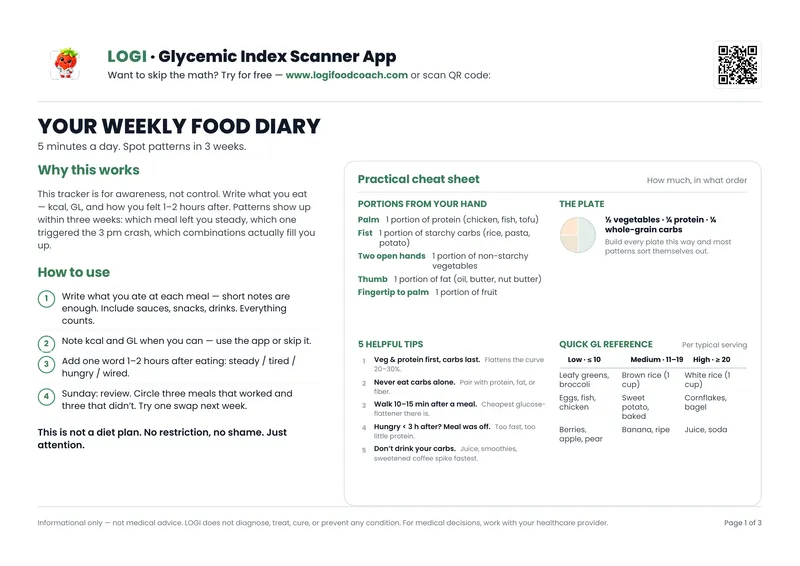
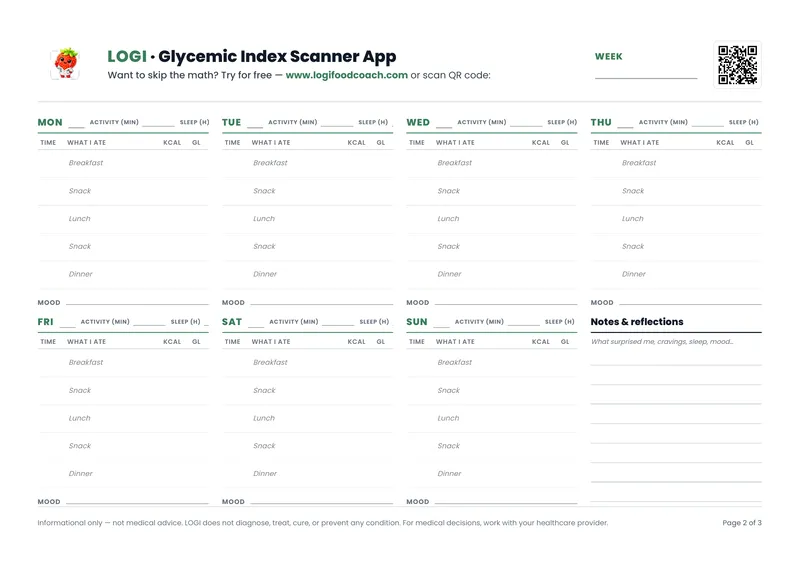
Free PDF — 3 pages
Your Weekly Food Journal
Track meals, glycemic load & mood. Spot patterns in 3 weeks.
No spam. Unsubscribe anytime.