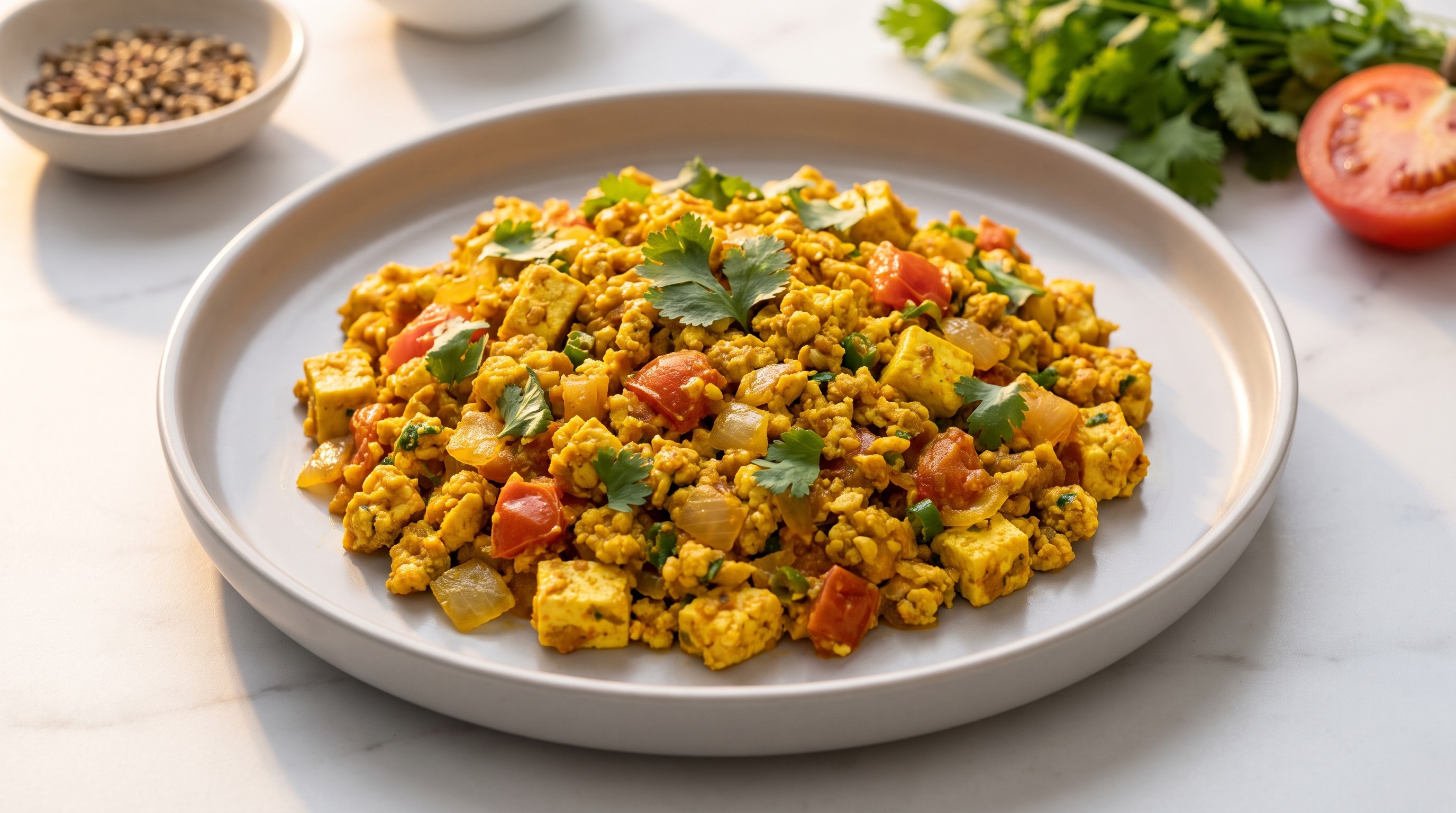
Paneer Bhurji (Spiced Scrambled Paneer)
Protein-packed scrambled paneer with aromatic spices — a naturally low-glycemic Indian breakfast that keeps blood sugar steady for hours.
Paneer bhurji is one of North India's most beloved street-food dishes, and it happens to be a near-perfect meal for anyone managing blood sugar. Fresh paneer is crumbled and tossed through a fragrant base of cumin-tempered onion, tomato, turmeric, and green chilli. Every ingredient in this dish sits firmly in the low-glycemic category, making it a recipe you can enjoy without worry or compromise.
The star here is paneer itself — a fresh cheese that delivers roughly 18 g of protein per 100 g alongside healthy fats that slow gastric emptying and blunt any glucose response from the accompanying vegetables. Cumin and turmeric are not just flavour powerhouses; both spices have been studied for their potential to improve insulin sensitivity. The tomatoes and onion contribute fibre, vitamins, and moisture without meaningfully raising blood sugar, while ghee provides conjugated linoleic acid and a rich, nutty depth that no seed oil can replicate.
For the best glycemic outcome, serve this bhurji on its own or alongside a small portion of almond-flour roti, a side of sautéed greens, or a handful of roasted nuts. Eating the vegetables and protein first — before any carbohydrate side — has been shown to reduce post-meal glucose spikes by up to 30 percent. This dish comes together in just twenty minutes, making it ideal for a weekday morning when you need something fast, satisfying, and entirely blood-sugar friendly.
Blood Sugar Impact
Very low blood sugar impact expected. The combination of high-fat paneer and protein with low-carb vegetables and spices results in a negligible glycemic load of 2.6, promoting stable blood sugar and sustained energy for 3-4 hours.
Blood Sugar Tips
- ✓ Pair with a side of non-starchy vegetables like a cucumber-tomato salad to add fiber and further slow any glucose absorption.
- ✓ If serving with bread or rice, choose a small portion of whole-grain roti or cauliflower rice instead of white rice to keep the overall meal's glycemic load low.
- ✓ Include a short 10-15 minute walk after eating to enhance glucose uptake by muscles and maintain flat blood sugar levels.
🥗 Ingredients
- 250 g Paneer
- 1 pcs Onion
- 2 pcs Tomato
- 2 pcs Green chilli
- 1 tbsp Ghee
- 1 tsp Cumin seeds
- 0.5 tsp Ground turmeric
- 0.5 tsp Salt
- 10 g Coriander leaves
- 8.8 oz Paneer
- 1 pcs Onion
- 2 pcs Tomato
- 2 pcs Green chilli
- 1 tbsp Ghee
- 1 tsp Cumin seeds
- 0.5 tsp Ground turmeric
- 0.5 tsp Salt
- 0.4 oz Coriander leaves
👨🍳 Instructions
- 1
Break the paneer apart by hand into rough, uneven crumbles about the size of garden peas. Avoid grating or mashing — irregular pieces give the bhurji its characteristic texture and allow the spices to cling to the surface.
- 2
Finely dice the onion, chop the tomatoes into small pieces, and slit the green chillies lengthwise from tip to stem, keeping them intact. Set everything within easy reach of the stove.
- 3
Place a wide non-stick pan over medium heat and add the ghee. Once it shimmers, drop in the cumin seeds. Let them splutter and darken for about 30 seconds until the kitchen fills with a warm, toasty aroma.
- 4
Tip in the diced onion and slit green chillies. Stir occasionally and cook for 4 to 5 minutes, allowing the onion to turn soft and pick up light golden colour at the edges. This slow cook draws out natural sweetness without any blood-sugar concern.
- 5
Add the chopped tomatoes along with the ground turmeric and salt. Press the tomatoes with the back of a spatula as they cook. Continue for 3 to 4 minutes until the pieces break down into a thick, jammy paste that coats the onion.
- 6
Scatter the crumbled paneer into the pan. Fold it gently through the masala using broad strokes so the pieces are evenly coated without breaking them further. Cook for 2 to 3 minutes until the paneer is heated through and has absorbed the colour of the spices.
- 7
Remove the pan from the heat and taste for seasoning, adjusting salt or adding an extra pinch of turmeric if desired. The residual heat will continue to meld the flavours without overcooking the paneer.
- 8
Scatter the fresh coriander leaves over the top and serve immediately. For the best glycemic response, eat the bhurji before any carbohydrate side — the protein and fat will slow glucose absorption from whatever follows.
📊 Nutrition Per Serving
| Per Serving | Whole Dish | |
|---|---|---|
| Calories | 457 | 913 |
| Carbs | 14g | 28g |
| Sugars | 7g | 15g |
| Natural Sugars | 7g | 15g |
| Protein | 25g | 50g |
| Fat | 34g | 68g |
| Saturated Fat | 21g | 42g |
| Unsaturated Fat | 13g | 26g |
| Fiber | 3g | 6g |
| Soluble Fiber | 1g | 2g |
| Insoluble Fiber | 2g | 4g |
| Sodium | 622mg | 1244mg |
Predicted Glucose Response
What if you...
Estimated model — individual responses vary. Not medical advice.
🔄 Lower GI Swaps
Onions contain moderate natural sugars that contribute to glycemic load. Mushrooms, zucchini, and bell peppers are lower in sugar and higher in fiber, helping to further reduce the overall glycemic load of the dish.
While ghee is a pure fat with zero GI, replacing it with monounsaturated-fat-rich oils like olive oil or avocado oil has been shown to improve insulin sensitivity and promote a more favorable postprandial blood sugar response.
Tomatoes have a low GI (~15) but still contain natural sugars. Leafy greens like spinach, kale, or swiss chard have a near-zero glycemic index, are rich in fiber and magnesium, and can help further blunt any postprandial glucose rise.
🔬 The Science Behind This Recipe
The Science Behind This Recipe
Paneer Bhurji is a naturally blood-sugar-friendly dish, and the secret lies in its macronutrient balance. Paneer — a fresh Indian cheese — is rich in both protein and fat, with virtually no carbohydrates. When you eat protein and fat together, they slow down the rate at which your stomach empties, meaning any glucose from accompanying ingredients enters your bloodstream gradually rather than all at once. Ghee adds another layer of protection here: its healthy fats further buffer the digestion process, creating a gentle, steady energy release instead of a sharp spike and crash.
The vegetable base of onions and tomatoes provides natural fiber, which acts like a mesh in your digestive tract, slowing carbohydrate absorption even further. While onions and tomatoes do contain some natural sugars, the amounts per serving are modest — and this is where Glycemic Load (GL) becomes more useful than Glycemic Index (GI) alone. GI tells you how fast a food raises blood sugar, but GL accounts for how much of that food you actually eat. With a GL of just 2.6 per serving, this dish falls well within the "low" category (under 10), meaning it has a minimal real-world impact on your blood sugar levels.
To get the most out of this meal, try a few simple strategies: if you're pairing it with roti or rice, eat the paneer bhurji first — research suggests that eating protein and vegetables before carbohydrates can significantly flatten your glucose curve. Adding a side of leafy greens or cucumber raita boosts the fiber content even more. And a short 10–15 minute walk after eating helps your muscles absorb glucose directly, keeping levels steady. This dish proves that satisfying, flavorful food and stable energy can go hand in hand.
Related recipes
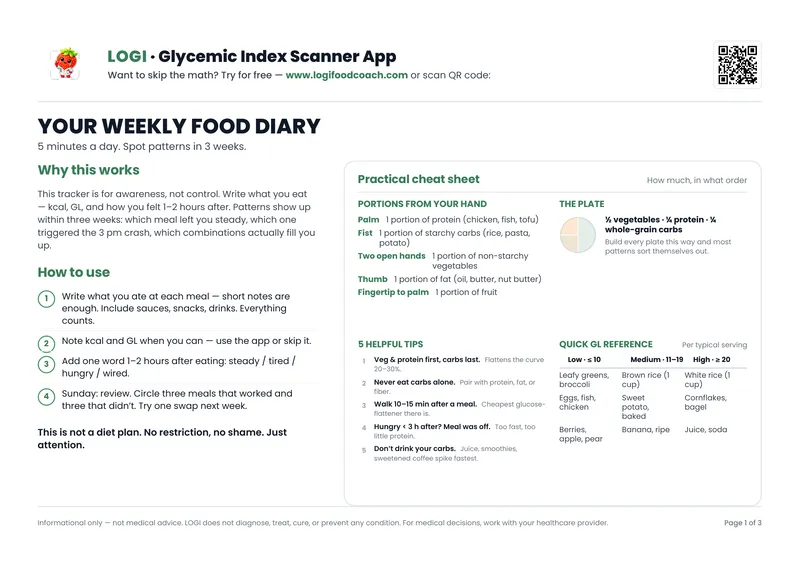
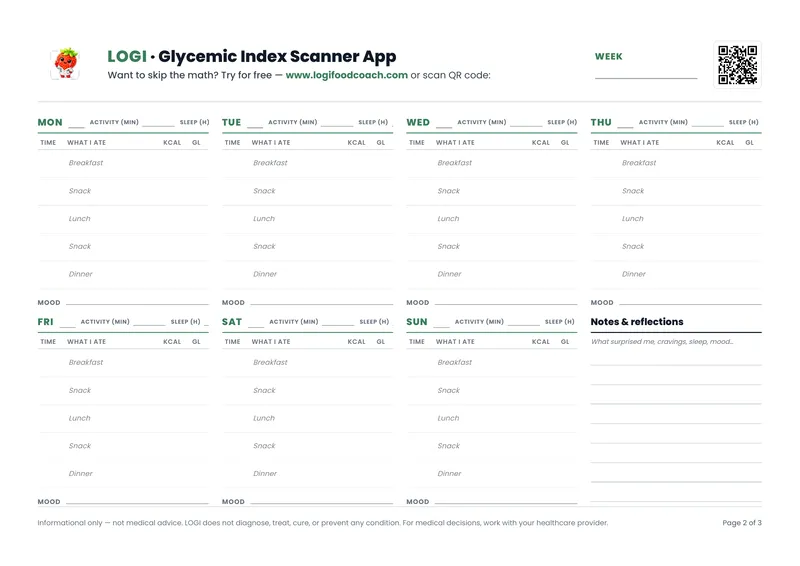
Free PDF — 3 pages
Your Weekly Food Journal
Track meals, glycemic load & mood. Spot patterns in 3 weeks.
No spam. Unsubscribe anytime.