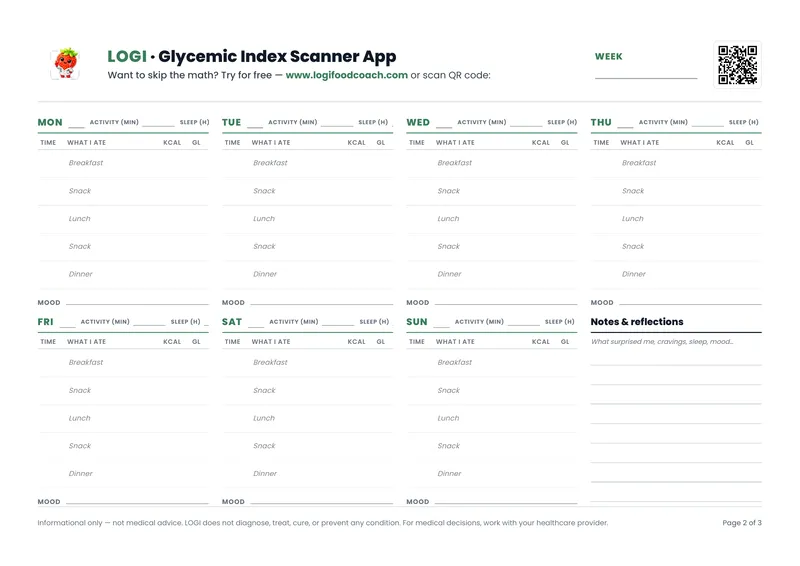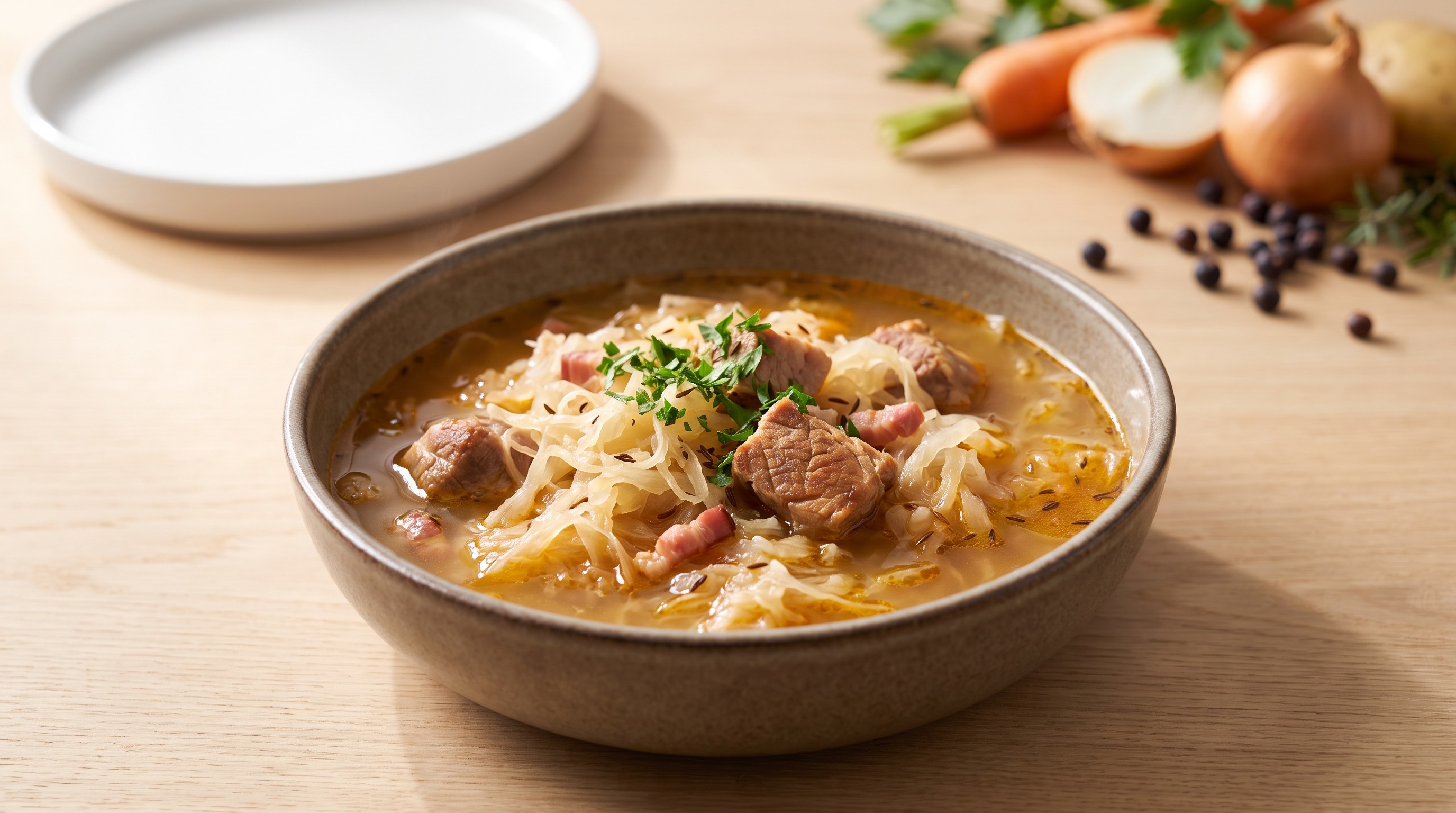
Sauerkrauteintopf (Pork and Sauerkraut Stew)
A hearty German one-pot braise of tender pork, tangy sauerkraut, and smoky speck — naturally low-glycemic with gut-friendly fermented cabbage and zero added starch.
Sauerkrauteintopf is comfort food at its most honest — a slow-simmered German stew built on pork shoulder, lacto-fermented sauerkraut, and smoky speck, perfumed with caraway and sweet paprika. What makes it remarkable from a blood-sugar perspective is everything it leaves out: there is no flour thickener, no potato, no bread dumpling. The body of the stew comes entirely from rendered pork fat, collagen-rich braising liquid, and the silky collapse of long-cooked sauerkraut. The result is deeply satisfying without a single high-glycemic ingredient on the list.
The real metabolic star here is the sauerkraut itself. Lacto-fermented cabbage is rich in soluble fiber and live probiotic cultures, both of which have been shown to slow gastric emptying and moderate the post-meal glucose curve. Paired with a generous portion of protein and fat from the pork and speck, this stew delivers the trifecta that keeps blood sugar steady: fiber, protein, and healthy fats arriving together. The small amount of grated tart apple melts into the braise during cooking, softening the sourness without meaningfully raising the glycemic load — its fructose is buffered by the fiber-rich, fat-rich context of the dish.
For the best glucose response, serve the stew as-is rather than ladling it over rice or bread. If you want a side, try a small portion of steamed cauliflower or a simple green salad dressed with apple-cider vinegar — the additional fiber and acidity will further blunt any glucose rise. Eating the sauerkraut and vegetables first, before the protein, is another simple sequencing trick that research supports for flatter post-meal readings.
Blood Sugar Impact
Very low blood sugar impact expected. The combination of high-protein pork, fiber-rich sauerkraut, and healthy fats from speck results in a very low glycemic load of 5 and GI of 22, promoting stable blood sugar levels for 3-4 hours.
Blood Sugar Tips
- ✓ Eat the sauerkraut and vegetables first before the meat to further blunt any minimal glucose response with its fiber and probiotics.
- ✓ Enjoy the stew at a relaxed pace — slow eating improves satiety signaling and keeps blood sugar even steadier.
- ✓ If serving with bread or potatoes on the side, keep portions small and opt for whole-grain or waxy varieties to preserve the meal's low-glycemic profile.
🥗 Ingredients
- 300 g Pork shoulder
- 50 g Smoked speck
- 300 g Sauerkraut
- 1 pcs Onion
- 2 pcs Garlic
- 1 pcs Apple
- 1 tsp Caraway seeds
- 1 tbsp Sweet paprika
- 1 pcs Bay leaf
- 250 ml Chicken stock
- 0.5 tsp Salt
- 0.25 tsp Black pepper
- 10.6 oz Pork shoulder
- 1.8 oz Smoked speck
- 10.6 oz Sauerkraut
- 1 pcs Onion
- 2 pcs Garlic
- 1 pcs Apple
- 1 tsp Caraway seeds
- 1 tbsp Sweet paprika
- 1 pcs Bay leaf
- 1.1 cups Chicken stock
- 0.5 tsp Salt
- 0.25 tsp Black pepper
👨🍳 Instructions
- 1
Toss the pork cubes in a bowl with the salt, pepper, and half of the sweet paprika until each piece is evenly coated. Set aside while you prepare the remaining ingredients.
- 2
Place the speck lardons into a cold, heavy-based pot or Dutch oven. Set the pot over medium heat and let the fat render slowly, stirring occasionally, until the lardons turn golden and crisp — about 4 minutes.
- 3
Push the rendered speck to the edges of the pot and raise the heat to medium-high. Lay the seasoned pork cubes in a single layer and sear without moving them until deeply browned on each side, roughly 5 minutes total. Work in two batches if the pot is crowded — overcrowding steams the meat instead of browning it. Transfer the pork and speck to a plate.
- 4
Lower the heat back to medium. Add the diced onion to the rendered fat in the pot and cook, stirring often, until softened and translucent, about 3 minutes. Stir in the sliced garlic, caraway seeds, and the remaining paprika, and cook for 30 seconds until the spices bloom and the kitchen smells intensely aromatic.
- 5
Add the drained sauerkraut, grated apple, and bay leaf to the pot, stirring well to combine with the onion and spices. Pour in the chicken stock and return the browned pork and speck along with any resting juices.
- 6
Bring the stew to a gentle simmer, then cover the pot and reduce the heat to low. Let it braise undisturbed for 35 minutes, until the pork is completely fork-tender and the sauerkraut has mellowed into a softer, sweeter tang.
- 7
Remove the lid, fish out and discard the bay leaf. Taste the broth and adjust the seasoning with a pinch more salt or pepper if needed. If the liquid seems too thin, simmer uncovered for 3–4 minutes to concentrate the flavours.
- 8
Ladle the stew into warm bowls and serve immediately. For the best blood-sugar response, enjoy it on its own — no bread or potatoes — and eat the sauerkraut and broth first before the pork, giving the fiber and fat a head start on slowing glucose absorption.
📊 Nutrition Per Serving
| Per Serving | Whole Dish | |
|---|---|---|
| Calories | 584 | 1168 |
| Carbs | 22g | 45g |
| Sugars | 10g | 19g |
| Natural Sugars | 10g | 19g |
| Protein | 39g | 79g |
| Fat | 38g | 77g |
| Saturated Fat | 13g | 27g |
| Unsaturated Fat | 25g | 50g |
| Fiber | 8g | 17g |
| Soluble Fiber | 3g | 5g |
| Insoluble Fiber | 6g | 11g |
| Sodium | 2626mg | 5252mg |
Predicted Glucose Response
What if you...
Estimated model — individual responses vary. Not medical advice.
🔄 Lower GI Swaps
Apple is the primary sugar contributor in this stew. Apple cider vinegar delivers the tart, fruity note without the sugars (GI ~0). Granny Smith apples have notably less sugar and a lower GI than sweet apple varieties. Underripe pear is higher in fiber and lower in available sugars than ripe apple, reducing glycemic load.
Many commercial chicken stocks contain added sugars and dextrose that contribute unnecessary glycemic load. Homemade bone broth or explicitly sugar-free broth eliminates hidden carbohydrates. The added gelatin and protein in bone broth also help slow glucose absorption.
Cooked onions concentrate their natural sugars through caramelization, raising their effective GI. Leeks and spring onions have a higher fiber-to-sugar ratio, contributing less to blood sugar spikes. Celery adds aromatic depth with virtually zero glycemic impact (GI ~15, GL ~0).
While paprika itself has negligible glycemic impact, switching to smoked paprika paired with a pinch of cinnamon adds a blood-sugar-management benefit: cinnamon has been shown to improve insulin sensitivity and slow gastric emptying, actively helping blunt postprandial glucose response.
🔬 The Science Behind This Recipe
Here's the science explainer section:
---
Why This Stew Is a Blood Sugar Winner
This hearty Sauerkrauteintopf is one of the most naturally blood-sugar-friendly meals you can eat, and the reason comes down to what's *not* in it as much as what is. With a glycemic load of just 5.0 per serving and an estimated GI of 22, this stew sits firmly in the "low" category on both scales. But what do those numbers actually mean? Glycemic load takes into account not just how quickly a food raises blood sugar (that's the GI), but also how much carbohydrate you're actually eating in a real-world portion. A glycemic load under 10 is considered low — and at 5.0, this recipe barely moves the needle.
The magic here starts with pork shoulder and speck, both rich in protein and healthy fats. When you eat protein and fat, your stomach empties more slowly, which means any carbohydrates in the meal get absorbed gradually rather than flooding your bloodstream all at once. Think of it like a slow-release mechanism — your body gets a steady trickle of energy instead of a sudden rush. Sauerkraut adds another powerful layer: it's fermented cabbage, which means it's low in carbohydrates but packed with fiber and beneficial probiotics. Fiber acts like a physical barrier in your gut, slowing down the breakdown of food and smoothing out your blood sugar response over time.
To get the most out of this already excellent meal, try eating a small side salad or the sauerkraut first before the rest of the stew — research suggests that eating vegetables and fiber before protein and carbohydrates can further flatten your glucose curve. A gentle 10-to-15-minute walk after eating is another simple strategy that helps your muscles use up circulating blood sugar. Since this stew is naturally high in protein and fat with very few carbohydrates, it's a great example of how satisfying, traditional comfort food can also be incredibly kind to your metabolism.
---
That comes in at ~280 words. It covers the three key ingredients (pork shoulder, speck, sauerkraut), explains glycemic load vs. GI in plain language, highlights the protein/fat/fiber mechanisms, and includes practical tips (food order, post-meal walking) — all in a warm, educational tone without medical claims or jargon.
Related recipes
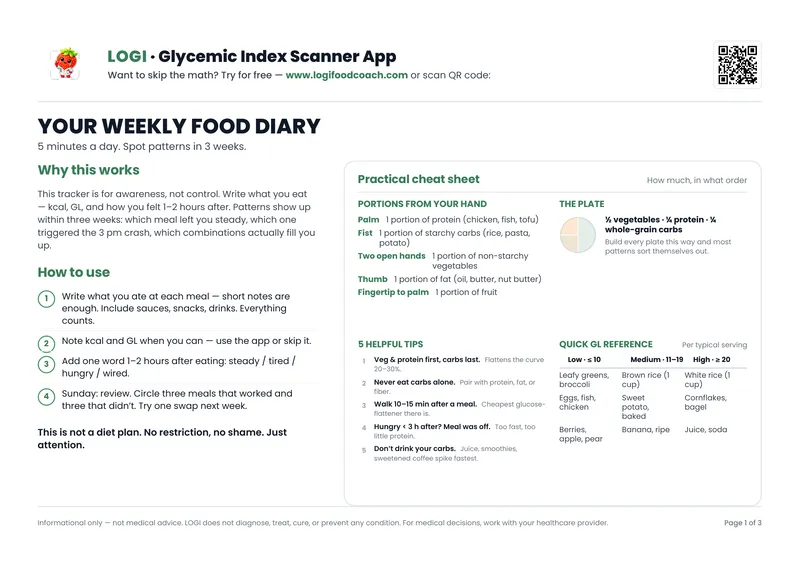
Free PDF — 3 pages
Your Weekly Food Journal
Track meals, glycemic load & mood. Spot patterns in 3 weeks.
No spam. Unsubscribe anytime.