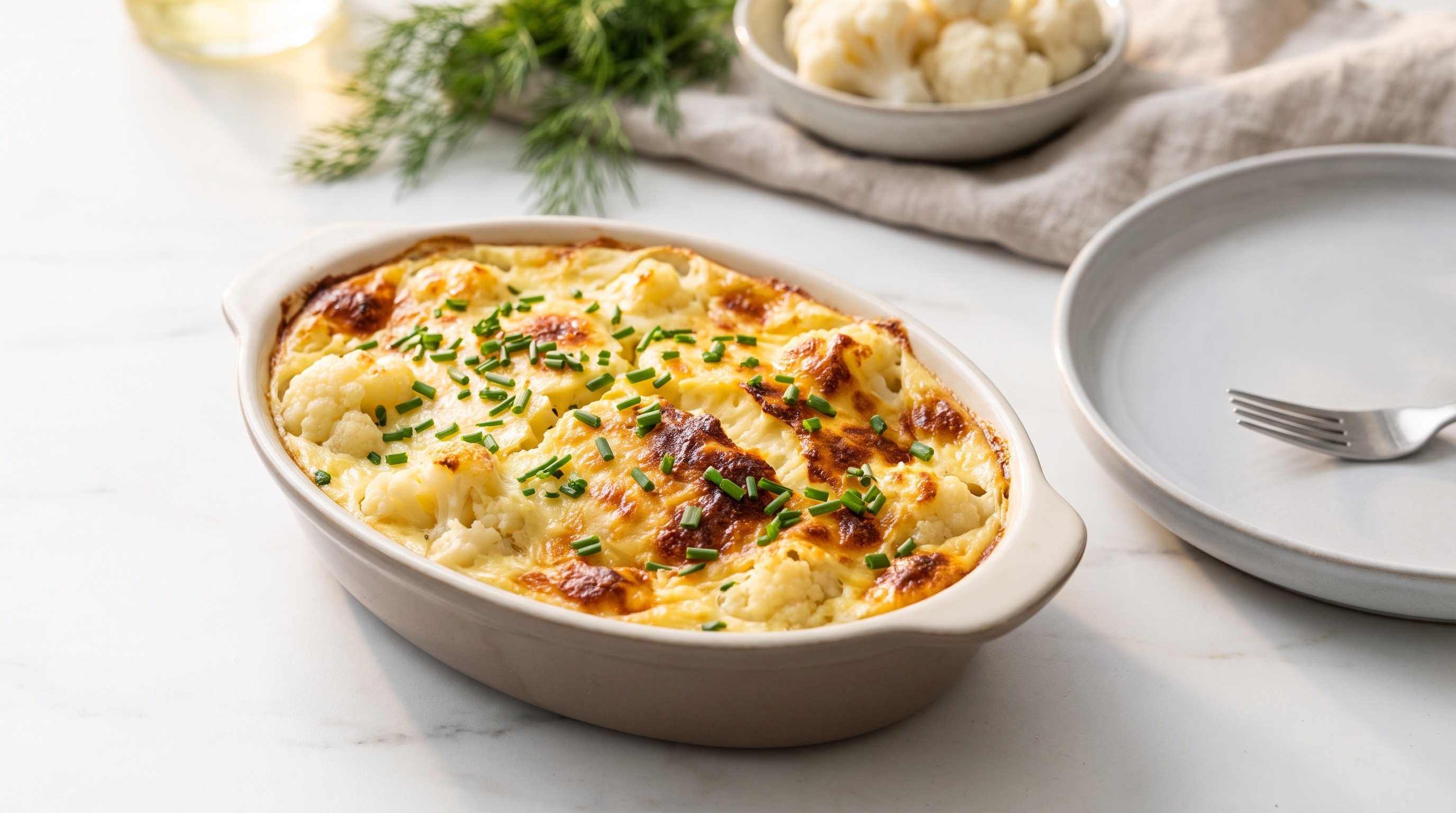
Blomkålsgratäng — Swedish Cauliflower Gratin with Egg Custard
A naturally low-glycemic Swedish gratin where cauliflower bakes in silky egg custard under golden cheese — rich comfort food with virtually no blood sugar impact.
This classic Swedish cauliflower gratin is one of those rare comfort dishes that needs zero modification to qualify as genuinely blood-sugar-friendly. Cauliflower is a standout low-GI vegetable with a glycemic index around 15, yet when baked under a bubbly cheese crust it delivers the same golden, savoury satisfaction as a potato gratin. The custard base — just eggs and cream — sets into a rich binder that replaces the flour-thickened béchamel found in many gratins, eliminating the only potential glucose spike in the traditional recipe.
From a glycemic perspective, every ingredient here works in your favour. Eggs and cheese contribute protein and fat, both of which slow gastric emptying and blunt any post-meal glucose rise. Heavy cream adds richness without the lactose load of milk, and Dijon mustard brings sharpness with negligible carbohydrates. Even the nutmeg is more than flavour: early research suggests it may support insulin sensitivity, though the pinch used here is mainly for its warm, aromatic depth.
For the best blood-sugar outcome, serve the gratin as a main alongside a leafy salad dressed with vinegar — acetic acid has been shown to reduce post-meal glucose by up to 30 percent. If you want to add a starch side, choose a small portion of firm-cooked lentils or a slice of genuine sourdough rather than white bread. Eating the salad and any vegetables first, then the protein-rich gratin, follows the meal-sequencing principle that keeps glucose curves flatter. This dish also reheats beautifully, making it ideal for meal prep — cold leftovers even have a slightly lower glycemic impact thanks to retrograde starch formation in the trace carbohydrates present.
Blood Sugar Impact
Very minimal blood sugar impact expected. With a glycemic load of just 2.1 and an estimated GI of 16, this high-fat, high-protein, low-carbohydrate gratin will produce a negligible glucose rise and provide stable energy for 3-4 hours.
Blood Sugar Tips
- ✓ Pair with a side of leafy greens or a small salad dressed in vinegar to add fiber and further blunt any minor glucose response.
- ✓ Take a gentle 10-15 minute walk after eating to enhance insulin sensitivity and muscle glucose uptake.
- ✓ Eat slowly and mindfully — this dish is already very low-glycemic, but pacing your meal supports satiety hormones and prevents overeating of any accompanying higher-GI sides like bread.
🥗 Ingredients
- 400 g Cauliflower
- 10 pcs Butter
- 2 pcs Egg
- 100 ml Heavy cream
- 1 tsp Dijon mustard
- 0.25 tsp Ground nutmeg
- 0.5 tsp Fine salt
- 0.25 tsp Black pepper
- 80 g Cheddar cheese
- 1 tbsp Chives
- 14.1 oz Cauliflower
- 10 pcs Butter
- 2 pcs Egg
- 7 tbsp Heavy cream
- 1 tsp Dijon mustard
- 0.25 tsp Ground nutmeg
- 0.5 tsp Fine salt
- 0.25 tsp Black pepper
- 2.8 oz Cheddar cheese
- 1 tbsp Chives
👨🍳 Instructions
- 1
Heat your oven to 200 °C (400 °F) with a rack in the centre position. Rub the inside of a small oven-safe dish — about 20 × 15 cm (8 × 6 in) — with the butter, coating the base and sides evenly.
- 2
Bring a large pot of lightly salted water to a vigorous boil. Drop in the cauliflower florets and blanch for 4 minutes until they yield slightly to a knife tip but still feel firm in the centre. Drain immediately in a colander and give it several firm shakes to drive off excess moisture — wet florets will thin the custard.
- 3
Crack the eggs into a mixing bowl and add the heavy cream, Dijon mustard, ground nutmeg, salt, and black pepper. Whisk briskly until the mixture is completely smooth with no visible streaks of egg white.
- 4
Arrange the drained cauliflower florets in a single snug layer in the buttered dish. Tilt and nudge pieces so they sit relatively flat with small gaps between them for the custard to flow through.
- 5
Pour the egg custard slowly and evenly over the cauliflower, gently shifting any florets that block the liquid from reaching the base of the dish. The custard should come roughly halfway up the florets, not submerge them.
- 6
Scatter the coarsely grated cheddar in an even layer across the top, letting some fall into the gaps between the florets for pockets of melted cheese throughout.
- 7
Transfer the dish to the centre rack and bake for 22 to 25 minutes. The gratin is ready when the custard has puffed up slightly and feels set when you press the centre gently, and the cheese topping is deep golden-brown with scattered blistered spots.
- 8
Remove from the oven and let the gratin rest for 5 minutes — the custard continues to firm as it cools and will slice more cleanly. Scatter the chopped chives over the top and serve straight from the dish.
📊 Nutrition Per Serving
| Per Serving | Whole Dish | |
|---|---|---|
| Calories | 495 | 991 |
| Carbs | 13g | 26g |
| Sugars | 6g | 12g |
| Natural Sugars | 6g | 12g |
| Protein | 21g | 43g |
| Fat | 41g | 83g |
| Saturated Fat | 24g | 47g |
| Unsaturated Fat | 17g | 35g |
| Fiber | 4g | 9g |
| Soluble Fiber | 1g | 3g |
| Insoluble Fiber | 3g | 6g |
| Sodium | 1026mg | 2051mg |
Predicted Glucose Response
What if you...
Estimated model — individual responses vary. Not medical advice.
🔄 Lower GI Swaps
Full-fat Greek yogurt and crème fraîche deliver more protein per serving than heavy cream, which helps slow gastric emptying and blunt any postprandial glucose rise. Unsweetened almond milk with cream cheese provides a similar creamy texture with fewer total carbohydrates and added protein.
Extra virgin olive oil and avocado oil are rich in monounsaturated fatty acids and polyphenols (especially EVOO), which have been shown to improve insulin sensitivity and reduce postprandial glycemic response compared to saturated fats.
Aged hard cheeses like Parmesan and Pecorino Romano have higher protein density and stronger flavor, so less is needed to achieve the same taste. This increases the protein-to-carbohydrate ratio of the dish, further supporting a minimal glycemic response.
Whole grain mustard retains intact mustard seeds that contribute a small amount of fiber and slow digestion. Apple cider vinegar has been demonstrated to reduce postprandial blood glucose by delaying gastric emptying and improving insulin sensitivity.
🔬 The Science Behind This Recipe
Here's the science explainer section:
---
Why This Recipe Is a Blood Sugar Win
Cauliflower is the quiet star of this gratin, and for good reason. Unlike starchy gratin bases like potato or pasta, cauliflower is a non-starchy vegetable packed with fiber and water — two things that naturally slow down digestion. That means the sugars it does contain trickle into your bloodstream gradually rather than arriving all at once. With a glycemic index of just 16 and a glycemic load of 2.1 per serving, this dish sits firmly in "gentle on your blood sugar" territory. For context, anything under 10 is considered a low glycemic load — so at 2.1, this gratin barely registers.
What makes this recipe especially smart is how the egg custard and cream work together as a built-in buffer. Protein from the eggs and fat from the butter and heavy cream both slow gastric emptying — the rate at which food leaves your stomach. Think of it like a natural speed bump for digestion. When carbohydrates are eaten alongside protein and fat, they're absorbed more slowly, which helps keep your energy steady instead of sending you on a spike-and-crash roller coaster. The Dijon mustard even contributes a small amount of fiber and vinegar, both of which have been shown in studies to further blunt post-meal glucose rises.
Here's a practical tip to get even more out of this meal: if you're serving the gratin alongside bread or rice, eat the cauliflower and custard first, saving any starchy sides for last. This simple food-order trick lets the fiber, fat, and protein create a cushion before the faster-digesting carbs arrive. A short 10–15 minute walk after eating can also help your muscles absorb glucose more efficiently. Remember, glycemic load matters more than glycemic index alone — it accounts for how much you actually eat, not just how fast a food raises blood sugar in theory. With a dish this satisfying, a single generous serving keeps you full without tipping the scales.
Related recipes
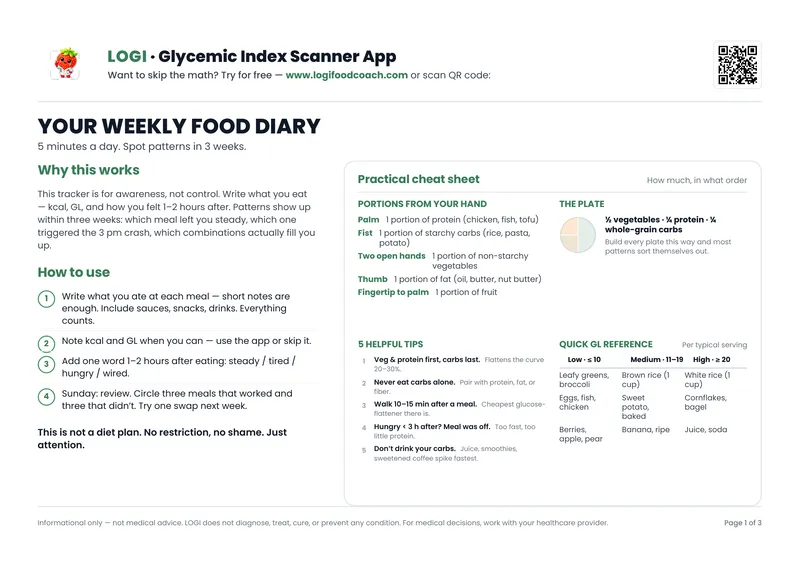
Free PDF — 3 pages
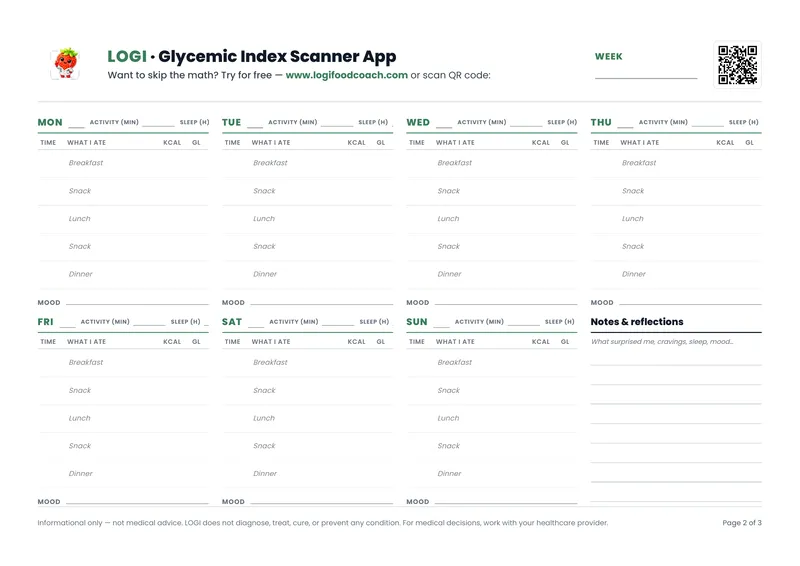
Your Weekly Food Journal
Track meals, glycemic load & mood. Spot patterns in 3 weeks.
No spam. Unsubscribe anytime.