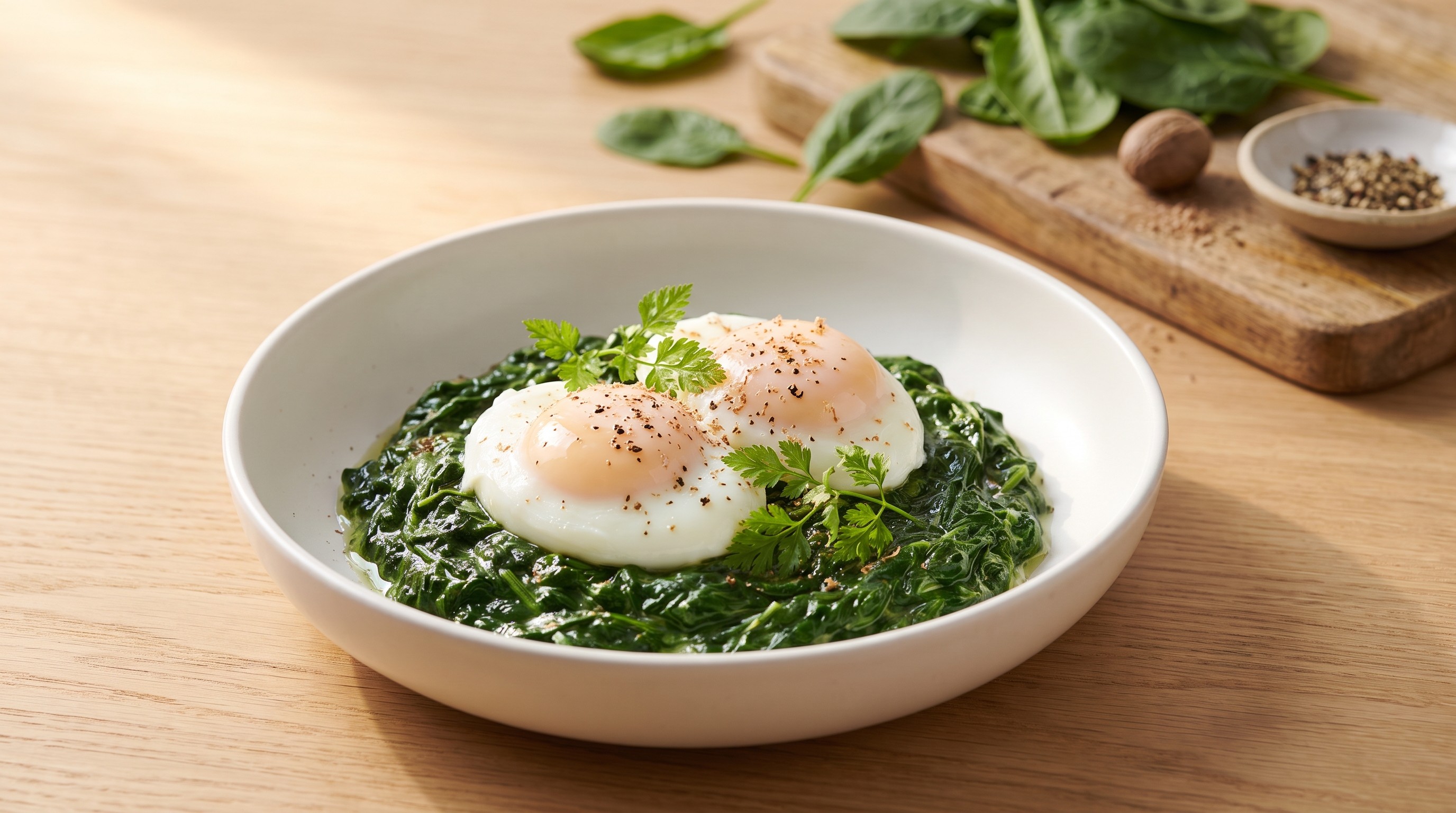
Gräddstuvad Spenat with Poached Eggs
Sweden's silky creamed spinach enriched with tangy cream cheese and crowned with perfectly poached eggs — a naturally low-GI, high-protein meal.
This Swedish classic is a blood-sugar dream: virtually zero high-glycemic ingredients, no flour roux, and no hidden starches. Instead of thickening with wheat flour — which would spike the glycemic load — cream cheese melts into the wilted spinach to create a luscious, glossy sauce entirely on its own. The result is a dish that sits comfortably in the very-low-carbohydrate range while delivering deeply satisfying flavour from butter, garlic, and a whisper of nutmeg.
Four poached eggs supply roughly 24 grams of complete protein, which alongside the fat from cream and butter creates the ideal metabolic combination for steady glucose. Spinach itself is rich in magnesium — a mineral linked to improved insulin sensitivity — and its natural fibre slows any residual carbohydrate absorption. The vinegar used in the poaching water is more than technique: acetic acid has been shown in studies to modestly blunt postprandial blood sugar responses.
For the best glycemic outcome, enjoy this as a standalone meal rather than pairing it with bread or toast. If you want more volume, serve it over a bed of raw baby spinach or alongside roasted low-GI vegetables such as broccoli or courgette. Eating the spinach and vegetables first, before breaking into the egg yolks, further helps to flatten any glucose curve. This dish is ready in under twenty minutes, making it an ideal weeknight dinner or a leisurely weekend brunch that keeps energy levels even for hours.
Blood Sugar Impact
Very minimal blood sugar impact expected. With a glycemic load of only 1.9 and an estimated GI of 15, this high-fat, high-protein, very low-carb meal should produce a nearly flat glucose response and provide stable energy for 3-4 hours.
Blood Sugar Tips
- ✓ Eat the spinach and eggs first before any side dishes like bread or potatoes, as the fiber, fat, and protein will slow glucose absorption from subsequent carbohydrates.
- ✓ If serving with bread or toast (a common Swedish pairing), choose a dense sourdough rye and limit to one small slice to keep the overall glycemic load low.
- ✓ Add a short 10-15 minute walk after the meal to further blunt any minor blood sugar rise, especially if you include a carbohydrate side.
🥗 Ingredients
- 15 g Butter
- 2 pcs Garlic
- 400 g Spinach
- 60 g Cream cheese
- 80 ml Heavy cream
- 0.25 tsp Nutmeg
- 0.5 tsp Salt
- 0.25 tsp Black pepper
- 4 pcs Egg
- 1 tbsp White vinegar
- 0.5 oz Butter
- 2 pcs Garlic
- 14.1 oz Spinach
- 2.1 oz Cream cheese
- 5 tbsp Heavy cream
- 0.25 tsp Nutmeg
- 0.5 tsp Salt
- 0.25 tsp Black pepper
- 4 pcs Egg
- 1 tbsp White vinegar
👨🍳 Instructions
- 1
Place a large, wide pan over medium heat and add the butter. Once it foams, scatter in the sliced garlic and stir gently for about 30 seconds until it smells fragrant but has not taken on any colour.
- 2
Pile the fresh spinach into the pan in several batches, using tongs to turn and fold it until every leaf has wilted and collapsed — this takes roughly 3 minutes. Press the spinach against the side of the pan with the back of a spoon to squeeze out any excess liquid, then discard the liquid.
- 3
Drop the cream cheese into the wilted spinach and pour in the heavy cream. Stir continuously until the cream cheese has melted completely and the sauce turns smooth and glossy, about 2 minutes.
- 4
Season the creamed spinach with the ground nutmeg, salt, and black pepper. Taste and adjust the seasoning if needed, then turn the heat to low and cover the pan to keep the spinach warm while you poach the eggs.
- 5
Fill a wide, shallow saucepan with about 8 cm of water and bring it to a bare simmer — small bubbles should rise from the bottom but the surface should be barely moving. Stir in the white vinegar.
- 6
Crack each egg into a small cup or ramekin first, then gently lower them one at a time into the simmering water. Poach undisturbed for 3 minutes until the whites are fully set but the yolks remain soft and runny. Lift the eggs out with a slotted spoon and let them drain briefly on a clean cloth or paper towel.
- 7
Divide the warm creamed spinach evenly between two shallow bowls or warm plates, spreading it into a slight well in the centre.
- 8
Nestle two poached eggs on top of the spinach in each bowl. Finish with a fine grating of nutmeg and a generous crack of black pepper. Serve immediately.
📊 Nutrition Per Serving
| Per Serving | Whole Dish | |
|---|---|---|
| Calories | 493 | 987 |
| Carbs | 12g | 25g |
| Sugars | 4g | 9g |
| Natural Sugars | 4g | 9g |
| Protein | 21g | 43g |
| Fat | 42g | 84g |
| Saturated Fat | 23g | 45g |
| Unsaturated Fat | 19g | 37g |
| Fiber | 5g | 9g |
| Soluble Fiber | 1g | 3g |
| Insoluble Fiber | 3g | 6g |
| Sodium | 996mg | 1991mg |
Predicted Glucose Response
What if you...
Estimated model — individual responses vary. Not medical advice.
🔄 Lower GI Swaps
Heavy cream contains lactose which contributes a small glycemic load. Coconut cream has fewer carbohydrates and its MCTs may support insulin sensitivity. Full-fat Greek yogurt adds protein which further blunts any blood sugar rise. Unsweetened almond milk has near-zero carbohydrates and a negligible glycemic impact.
Cream cheese contains some lactose-derived carbohydrates. Avocado provides monounsaturated fats and soluble fiber, both shown to slow glucose absorption and lower overall glycemic load. Full-fat ricotta has a slightly lower carbohydrate content per serving than cream cheese.
While butter has a negligible GI, extra virgin olive oil is rich in oleic acid and polyphenols that have been shown in studies to improve postprandial glucose response. Ghee and avocado oil are also virtually zero-carb alternatives with favorable fatty acid profiles for metabolic health.
All vinegars help blunt blood sugar spikes via acetic acid, but apple cider vinegar has the most clinical evidence for improving post-meal glucose response — studies show it can reduce the glycemic impact of a meal by up to 20-30%. White wine vinegar offers a similar benefit with a milder flavor profile.
🔬 The Science Behind This Recipe
Here's the science explainer section:
---
Why This Recipe Works for Blood Sugar
This dish is a natural friend to steady blood sugar, and it starts with spinach. Leafy greens like spinach are exceptionally low in carbohydrates — a generous serving contains just a few grams — while delivering a meaningful dose of fiber. That fiber slows down digestion, which means any sugars present enter your bloodstream gradually rather than all at once. Think of it as a built-in speed bump for glucose absorption. On top of that, spinach brings magnesium to the table, a mineral that plays a supporting role in how your body processes insulin.
Then there's the fat and protein combination. The butter, cream cheese, and heavy cream aren't just there for richness — they fundamentally change how your body handles the meal. Dietary fat slows gastric emptying, meaning food lingers longer in your stomach before moving into the small intestine where glucose gets absorbed. Poached eggs add high-quality protein, which triggers a gentler, more sustained insulin response compared to carbohydrates eaten alone. When you pair fat and protein together like this, the effect compounds — your blood sugar curve flattens into a gentle rolling hill instead of a sharp spike and crash.
This is where glycemic load tells the real story. While glycemic index measures how quickly a food raises blood sugar, glycemic load factors in how much carbohydrate you're actually eating. With a glycemic load of just 1.9 per serving, this recipe sits firmly in the "low" category (anything under 10 is considered low). That's because the meal is built almost entirely from fat, protein, and non-starchy vegetables — there simply aren't enough carbohydrates present to cause a meaningful glucose rise. For an even steadier response, try eating any bread or starchy side after finishing the creamed spinach and eggs, and consider a short 10–15 minute walk after your meal — both are simple, evidence-backed strategies that help your muscles absorb glucose more efficiently.
Related recipes
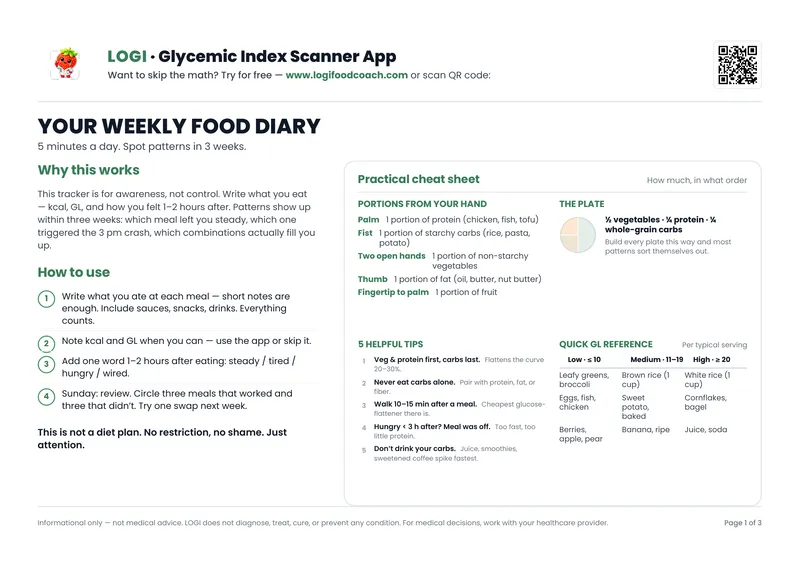
Free PDF — 3 pages
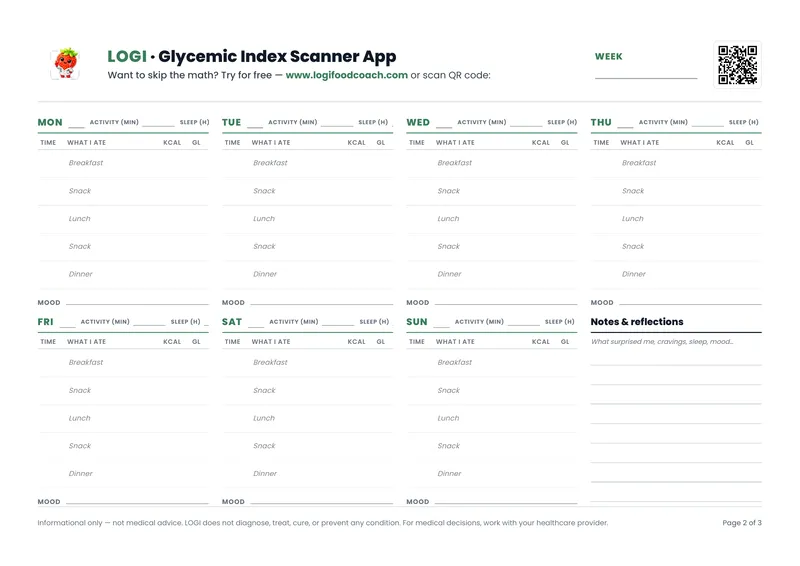
Your Weekly Food Journal
Track meals, glycemic load & mood. Spot patterns in 3 weeks.
No spam. Unsubscribe anytime.