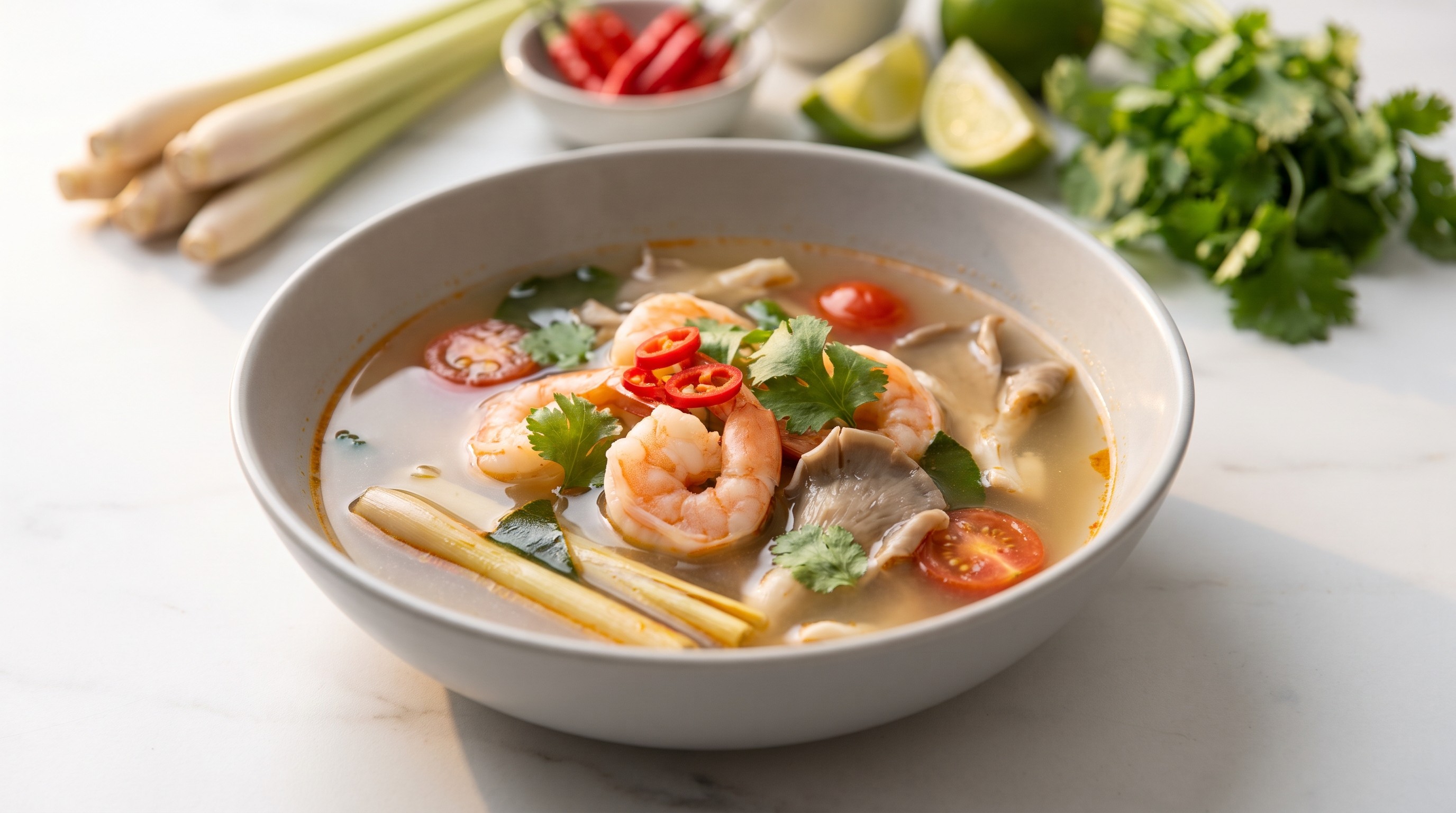
Tom Yum Goong (Hot & Sour Prawn Soup)
A fragrant Thai hot-and-sour prawn soup that is naturally low-glycemic — pure protein broth, zero starch, and bold aromatics that support steady blood sugar.
Tom Yum Goong is one of those rare dishes that needs zero modification for a blood-sugar-friendly diet. The broth is built entirely on protein (prawns and chicken stock) and aromatic compounds (lemongrass, galangal, kaffir lime) rather than starchy thickeners, so it delivers deep, complex flavour with virtually no glycemic impact. Each serving is packed with high-quality protein from the prawns, which slows gastric emptying and helps stabilise post-meal glucose — making this an ideal starter or light main.
Many restaurant versions sneak in palm sugar or cane sugar to balance the sour-salty punch. This version skips that entirely, letting fresh lime juice and the natural heat of bird's eye chillies create a bright, clean equilibrium. Research suggests capsaicin from chillies may improve insulin sensitivity, while the galangal and lemongrass contribute anti-inflammatory compounds that support metabolic health. The oyster mushrooms add satisfying, meaty texture along with beta-glucan fibre, which has been shown to moderate glucose absorption.
For optimal blood sugar management, serve this soup at the start of a meal — eating protein and vegetables before any carbohydrate course blunts the glucose spike from whatever follows. If you want to extend it into a full meal, pair it with a small portion of cooled jasmine rice (cooling increases resistant starch) or, better still, cauliflower rice. The soup keeps well for a day in the fridge; the aromatics actually deepen overnight.
Blood Sugar Impact
Very minimal blood sugar impact expected. With a glycemic load of just 2.2 and an estimated GI of 14, this protein-rich, low-carbohydrate soup will cause virtually no glucose spike and should support stable energy levels for 3-4 hours.
Blood Sugar Tips
- ✓ Eat the solid ingredients first — shrimp, mushrooms, and tomatoes — before sipping the broth, as chewing whole foods slows gastric emptying and blunts any minor glucose response.
- ✓ Avoid pairing with white jasmine rice or rice noodles, which are traditional accompaniments but would dramatically raise the meal's glycemic load; opt for a small portion of cauliflower rice or konjac noodles instead.
- ✓ If you do add a starchy side, take a 10-15 minute walk after the meal — post-meal movement helps shuttle glucose into muscles and keeps blood sugar flat.
🥗 Ingredients
- 300 g Prawn
- 600 ml Chicken stock
- 100 g Oyster mushroom
- 80 g Cherry tomato
- 2 pcs Lemongrass
- 15 g Galangal
- 4 pcs Kaffir lime leaf
- 4 pcs Bird's eye chilli
- 2 tbsp Fish sauce
- 3 tbsp Lime juice
- 10 g Coriander leaf
- 10.6 oz Prawn
- 2.5 cups Chicken stock
- 3.5 oz Oyster mushroom
- 2.8 oz Cherry tomato
- 2 pcs Lemongrass
- 0.5 oz Galangal
- 4 pcs Kaffir lime leaf
- 4 pcs Bird's eye chilli
- 2 tbsp Fish sauce
- 3 tbsp Lime juice
- 0.4 oz Coriander leaf
👨🍳 Instructions
- 1
Peel and devein the prawns, collecting the shells in a separate bowl. Set the cleaned prawns aside in the refrigerator — cold prawns cook more evenly and stay tender.
- 2
Pour the chicken stock into a medium saucepan, add the reserved prawn shells, and bring to a boil. Lower the heat and let the shells simmer gently for about 5 minutes — this extracts a rich, savoury depth that forms the backbone of the soup. Strain the stock through a fine sieve into a clean pan, discarding the shells.
- 3
Place the enriched stock over medium-high heat and add the smashed lemongrass pieces, sliced galangal, torn kaffir lime leaves, and crushed bird's eye chillies. Allow the aromatics to infuse at a steady simmer for 5 minutes until the broth smells intensely fragrant and citrusy.
- 4
Drop in the torn oyster mushrooms and halved cherry tomatoes. Cook for about 2 minutes, just until the tomatoes begin to soften and release their juices into the broth while the mushrooms turn silky.
- 5
Add the prawns to the simmering broth in a single layer. Cook for 2 to 3 minutes until they turn pink and curl into a gentle C-shape. Pull the pan off the heat the moment they are just cooked through — residual heat will finish the job, and overcooked prawns turn rubbery.
- 6
With the pan off the heat, stir in the fish sauce and freshly squeezed lime juice. Taste the broth carefully and adjust: add more lime juice if it needs sharpness, or a splash more fish sauce if it needs savoury depth. The soup should hit sour first, then salty, then hot.
- 7
Ladle the soup into warmed bowls, dividing the prawns and mushrooms evenly. Scatter the fresh coriander leaves generously over the top and serve immediately while the aromatics are at their most vibrant.
📊 Nutrition Per Serving
| Per Serving | Whole Dish | |
|---|---|---|
| Calories | 234 | 468 |
| Carbs | 16g | 33g |
| Sugars | 4g | 8g |
| Natural Sugars | 4g | 8g |
| Protein | 42g | 83g |
| Fat | 2g | 3g |
| Saturated Fat | 0g | 1g |
| Unsaturated Fat | 1g | 3g |
| Fiber | 3g | 5g |
| Soluble Fiber | 1g | 2g |
| Insoluble Fiber | 2g | 4g |
| Sodium | 2493mg | 4986mg |
Predicted Glucose Response
What if you...
Estimated model — individual responses vary. Not medical advice.
🔄 Lower GI Swaps
Commercial chicken broths often contain added sugars or dextrose that contribute to glycemic load. Homemade bone broth or sugar-free vegetable broth eliminates hidden sugars and adds collagen protein, which helps moderate any post-meal glucose response.
Many commercial fish sauces include added sugar as a secondary ingredient, which slightly raises glycemic load. Sugar-free coconut aminos or artisanal fish sauce without added sugar deliver the same umami depth with a lower glycemic impact.
Cherry tomatoes have a GI of around 15. Green tomatoes and tomatillos have a slightly lower GI due to higher acidity and lower natural sugar content, and the added acidity further slows gastric emptying, blunting any blood sugar rise.
While oyster mushrooms are already low-GI, shiitake and especially maitake mushrooms contain bioactive polysaccharides (beta-glucans) shown to support improved glycemic response. Maitake in particular has been studied for its blood-sugar-lowering properties, making it a functional upgrade at the same negligible glycemic load.
🔬 The Science Behind This Recipe
Here's the science explainer section:
---
Why This Soup Loves Your Blood Sugar
Tom Yum Goong is a naturally blood-sugar-friendly meal, and the numbers tell the story: with a glycemic load of just 2.2 per serving, this soup barely registers on your glucose radar. That's because glycemic load accounts for both the *type* and *amount* of carbohydrates in a dish — and this recipe simply doesn't have many. Shrimp is virtually carb-free, delivering pure protein instead, while chicken broth provides a savory, satisfying base without adding sugars or starches. When your meal is built on protein and water rather than grains or starchy vegetables, there's very little glucose for your body to process in the first place.
The supporting ingredients pull their weight too. Oyster mushrooms are rich in dietary fiber, which slows down digestion and creates a gentler, more gradual release of any glucose into your bloodstream. Cherry tomatoes contribute additional fiber along with their natural acidity — and here's a useful insight: acidic foods like tomatoes and the lime juice in Tom Yum have been shown to slow gastric emptying, meaning your stomach takes longer to pass food along, which helps flatten the post-meal blood sugar curve. The aromatic ingredients — lemongrass, galangal, and chili — aren't just for flavor; they round out a meal that's naturally high in water content and volume, helping you feel full and satisfied.
To get the most from this recipe, enjoy it as a starter before a larger meal. Eating a broth-based soup first — especially one packed with protein from the prawns — helps prepare your body for whatever comes next. If your meal includes rice or noodles on the side, the protein and fat you've already consumed will act as a buffer, slowing carbohydrate absorption. A short 10-15 minute walk after eating can further help your muscles absorb glucose efficiently. With a glycemic load this low, though, Tom Yum Goong is about as gentle on your blood sugar as a meal can get.
Related recipes
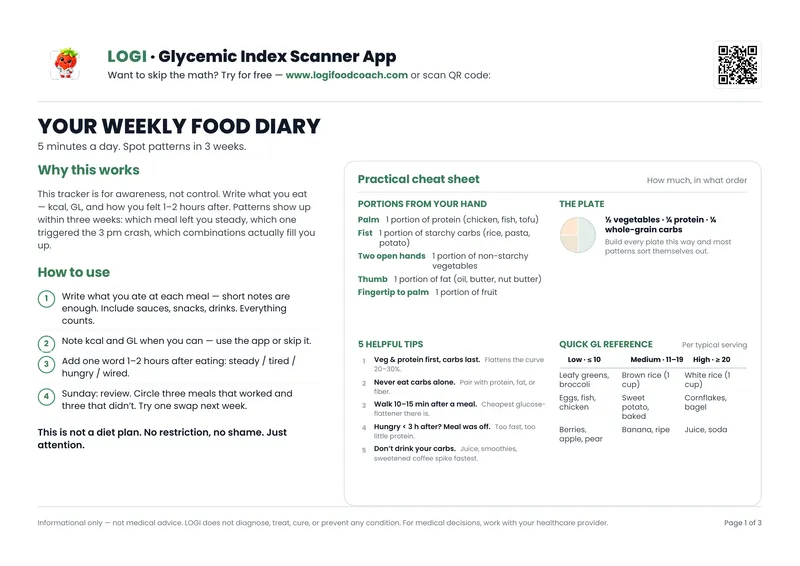
Free PDF — 3 pages
Your Weekly Food Journal
Track meals, glycemic load & mood. Spot patterns in 3 weeks.
No spam. Unsubscribe anytime.