Larb Gai in Lettuce Cups
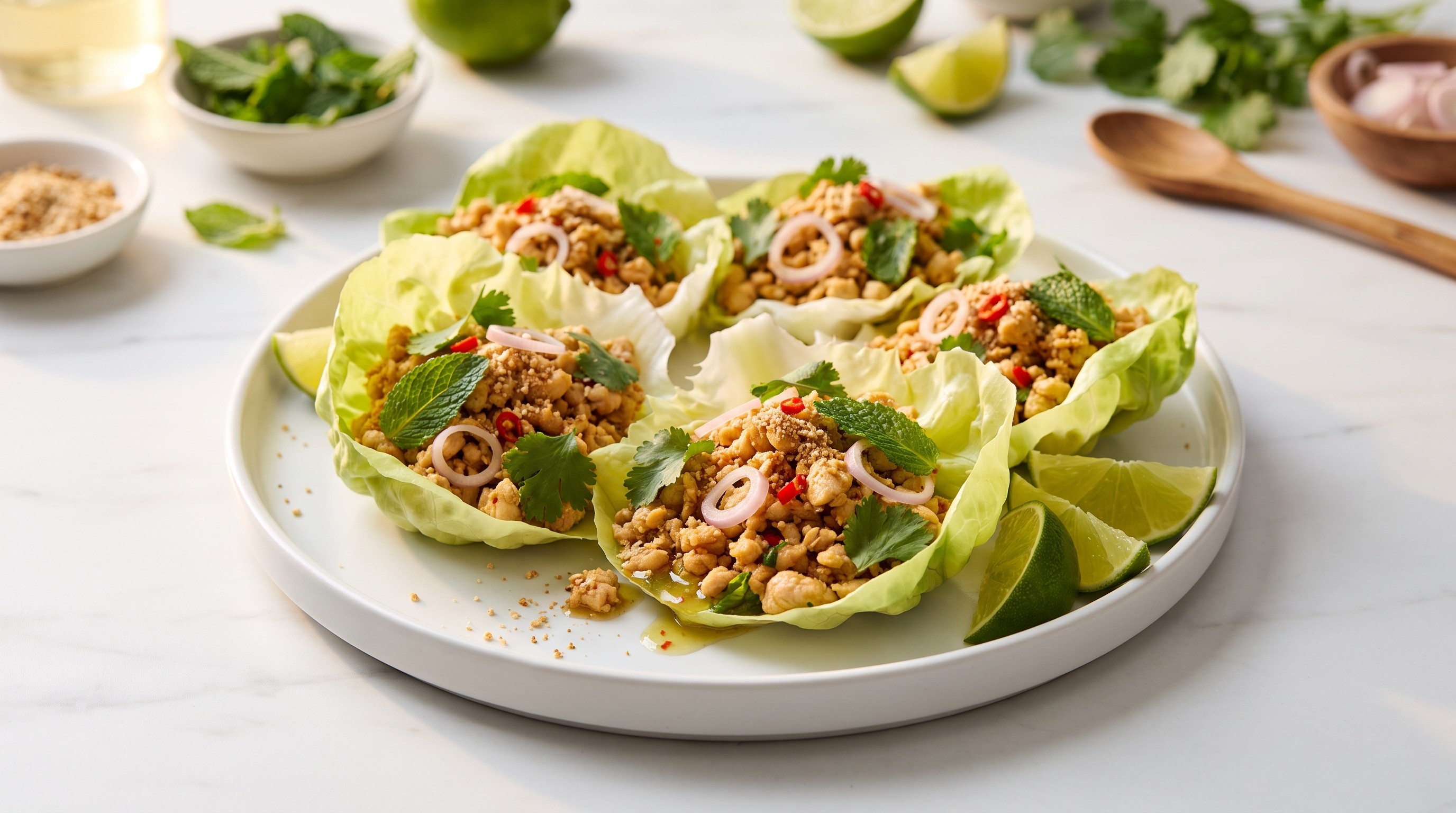
Thai chicken larb loaded with herbs and lime, wrapped in crisp lettuce cups — almost zero-starch, high-protein, and naturally low-glycemic.
Larb gai is Thailand's most beloved meat salad, and it happens to be one of the most blood-sugar-friendly dishes in any cuisine. Chicken thigh mince is cooked until deeply savoury, then dressed off the heat with sharp lime juice, umami-rich fish sauce, and a generous shower of fresh mint and cilantro. Crisp shallots and spring onions add aromatic bite without meaningful carbohydrate, while a light dusting of toasted rice powder — khao khua — lends the signature nutty crunch that defines larb.
Served in chilled butter lettuce cups rather than alongside sticky rice, this version keeps the glycemic load remarkably low. The entire dish is built on protein, healthy fats, and fibre-rich herbs and vegetables, with the only starch coming from a scant tablespoon of rice powder per person — roughly 10 grams of dry grain that barely registers on a glucose monitor. The high protein content from the chicken thigh mince actively slows gastric emptying, which further blunts any residual blood-sugar response.
For optimal glucose management, eat the lettuce leaves first to lay down a fibre buffer, then enjoy the larb filling. The combination of acid from the lime juice and protein from the chicken creates an ideal metabolic pairing. This is a perfect weeknight dinner that comes together in twenty minutes and proves that eating for steady blood sugar never means sacrificing bold, exciting flavour.
Blood Sugar Impact
Very low blood sugar impact expected. The high protein from chicken mince, fiber-rich lettuce cups, and modest portion of jasmine rice yield a glycemic load of just 3.8, promoting stable energy for 3-4 hours without a meaningful spike.
Blood Sugar Tips
- ✓ Eat the lettuce and herbs first before the rice-containing filling to slow glucose absorption.
- ✓ Keep the jasmine rice portion small — it's the highest-GI ingredient; the current ratio is already well-balanced.
- ✓ Add a squeeze of extra lime juice, as the acidity can further blunt the glycemic response from the rice.
🥗 Ingredients
- 400 g Chicken thigh mince
- 1 pcs Butter lettuce
- 3 pcs Shallot
- 3 pcs Spring onion
- 3 tbsp Lime juice
- 1.5 tbsp Fish sauce
- 1.5 tbsp Jasmine rice
- 1 cup Mint leaves
- 0.5 cup Cilantro leaves
- 1 tsp Dried chili flakes
- 14.1 oz Chicken thigh mince
- 1 pcs Butter lettuce
- 3 pcs Shallot
- 3 pcs Spring onion
- 3 tbsp Lime juice
- 1.5 tbsp Fish sauce
- 1.5 tbsp Jasmine rice
- 1 cup Mint leaves
- 0.5 cup Cilantro leaves
- 1 tsp Dried chili flakes
👨🍳 Instructions
- 1
Toast the jasmine rice in a dry skillet over medium heat, shaking the pan frequently for 3 to 4 minutes until the grains turn deep golden and smell nutty. Transfer the toasted rice to a mortar and pestle or spice grinder and pound or blitz to a coarse, sandy powder. Set aside.
- 2
Peel and finely slice the shallots into thin rings. Trim and slice the spring onions on a diagonal. Pick the mint and cilantro leaves from their stems, keeping them whole.
- 3
Separate the butter lettuce into individual cup-shaped leaves, wash gently under cold water, and pat dry with a clean towel. Arrange on a serving platter and chill while you prepare the filling.
- 4
Squeeze the limes to yield 3 tablespoons of juice. Measure out the fish sauce and chili flakes so everything is ready to add quickly once the chicken is cooked.
- 5
Place a large skillet over high heat and let it get very hot. Add the chicken thigh mince and cook for 5 to 6 minutes, breaking the meat into fine crumbles with the edge of a spatula, until fully cooked through with no pink remaining.
- 6
Pull the skillet off the heat immediately and pour in the lime juice, fish sauce, sliced shallots, spring onions, and chili flakes. Add two-thirds of the toasted rice powder and stir everything together so the residual heat just wilts the shallots.
- 7
Scatter the mint and cilantro leaves over the larb mixture and toss gently to combine, keeping the herbs vibrant and fresh rather than letting them cook down.
- 8
Spoon the larb into the chilled butter lettuce cups, dust with the remaining toasted rice powder, and serve immediately. For the best blood-sugar response, take a few bites of the plain lettuce leaf before eating the filling to create a fibre buffer.
📊 Nutrition Per Serving
| Per Serving | Whole Dish | |
|---|---|---|
| Calories | 450 | 901 |
| Carbs | 15g | 31g |
| Sugars | 4g | 8g |
| Natural Sugars | 4g | 8g |
| Protein | 51g | 101g |
| Fat | 23g | 45g |
| Saturated Fat | 6g | 13g |
| Unsaturated Fat | 16g | 32g |
| Fiber | 4g | 8g |
| Soluble Fiber | 1g | 2g |
| Insoluble Fiber | 3g | 5g |
| Sodium | 858mg | 1717mg |
Predicted Glucose Response
What if you...
Estimated model — individual responses vary. Not medical advice.
🔄 Lower GI Swaps
Jasmine rice has a very high glycemic index (GI ~89). Cauliflower rice has virtually no digestible carbohydrate and negligible glycemic impact. Black rice (GI ~42) and konjac rice (GI ~0) are much lower-GI alternatives that still provide texture and bulk without spiking blood sugar.
Shallots contain slightly more natural sugar per gram than spring onion greens. Using the green tops of spring onions adds aromatic depth with fewer digestible carbohydrates and a lower overall glycemic load contribution.
Switching to fattier thigh mince (chicken or turkey) increases the fat-to-protein ratio of the dish, which slows gastric emptying and reduces the glycemic response of accompanying carbohydrates like rice. The effect is modest but beneficial when paired with higher-GI sides.
🔬 The Science Behind This Recipe
The Science Behind This Recipe
This Larb Gai scores a remarkably low glycemic load of just 3.8 per serving, making it one of the most blood-sugar-friendly meals you can enjoy. The secret starts with the lettuce cups themselves. By swapping out rice or noodles for butter lettuce, you're replacing a concentrated source of starch with a crisp, water-rich vegetable that contributes almost no carbohydrates. Since glycemic load measures both the quality *and* quantity of carbs in a serving, fewer carbs on the plate means a dramatically smaller glucose response — even if you eat until you're completely satisfied.
Chicken mince is the real workhorse here. Protein slows the rate at which your stomach empties its contents into the small intestine, which means any carbohydrates from the shallots and spring onions are absorbed gradually rather than all at once. Think of it like a slow-drip rather than a flood. The small amount of fat naturally present in the chicken amplifies this effect, giving your body more time to manage incoming glucose without a sharp spike. Meanwhile, the lime juice adds more than just flavor — acids have been shown to further slow gastric emptying and can modestly reduce the overall glycemic response of a meal.
To get the most from this dish, try eating a few plain lettuce leaves before diving into the filled cups, giving your body a head start on the fiber. If you're serving this alongside rice for others at the table, keep your own portion of any starch small and eat it last, after the protein-rich larb. A short 10–15 minute walk after the meal can also help your muscles absorb circulating glucose more efficiently, smoothing out your blood sugar curve even further.
Related recipes
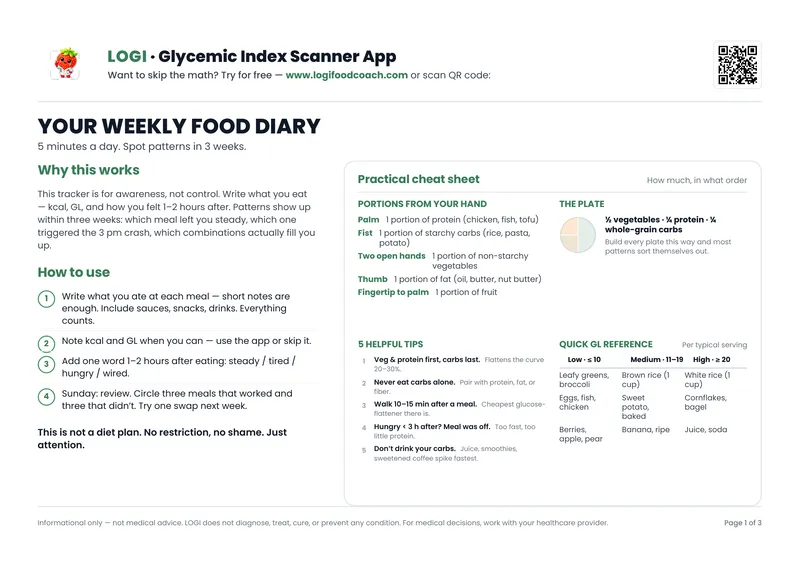
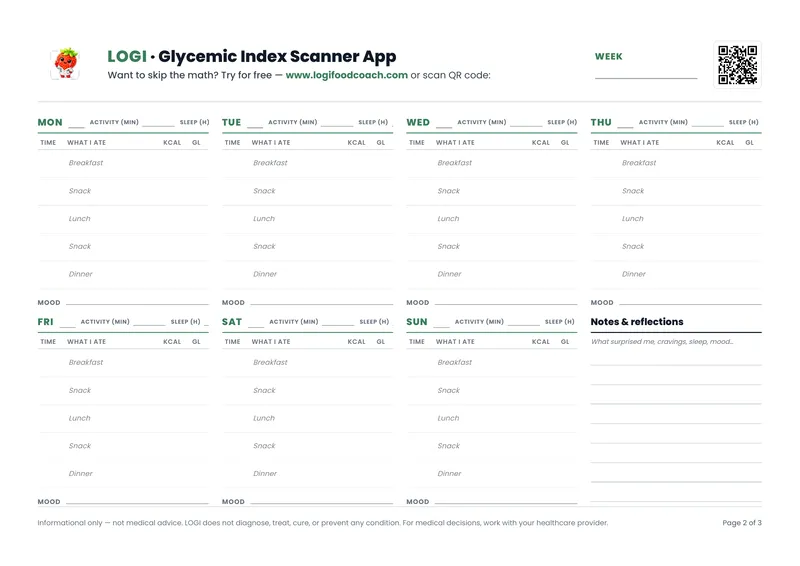
Free PDF — 3 pages
Your Weekly Food Journal
Track meals, glycemic load & mood. Spot patterns in 3 weeks.
No spam. Unsubscribe anytime.