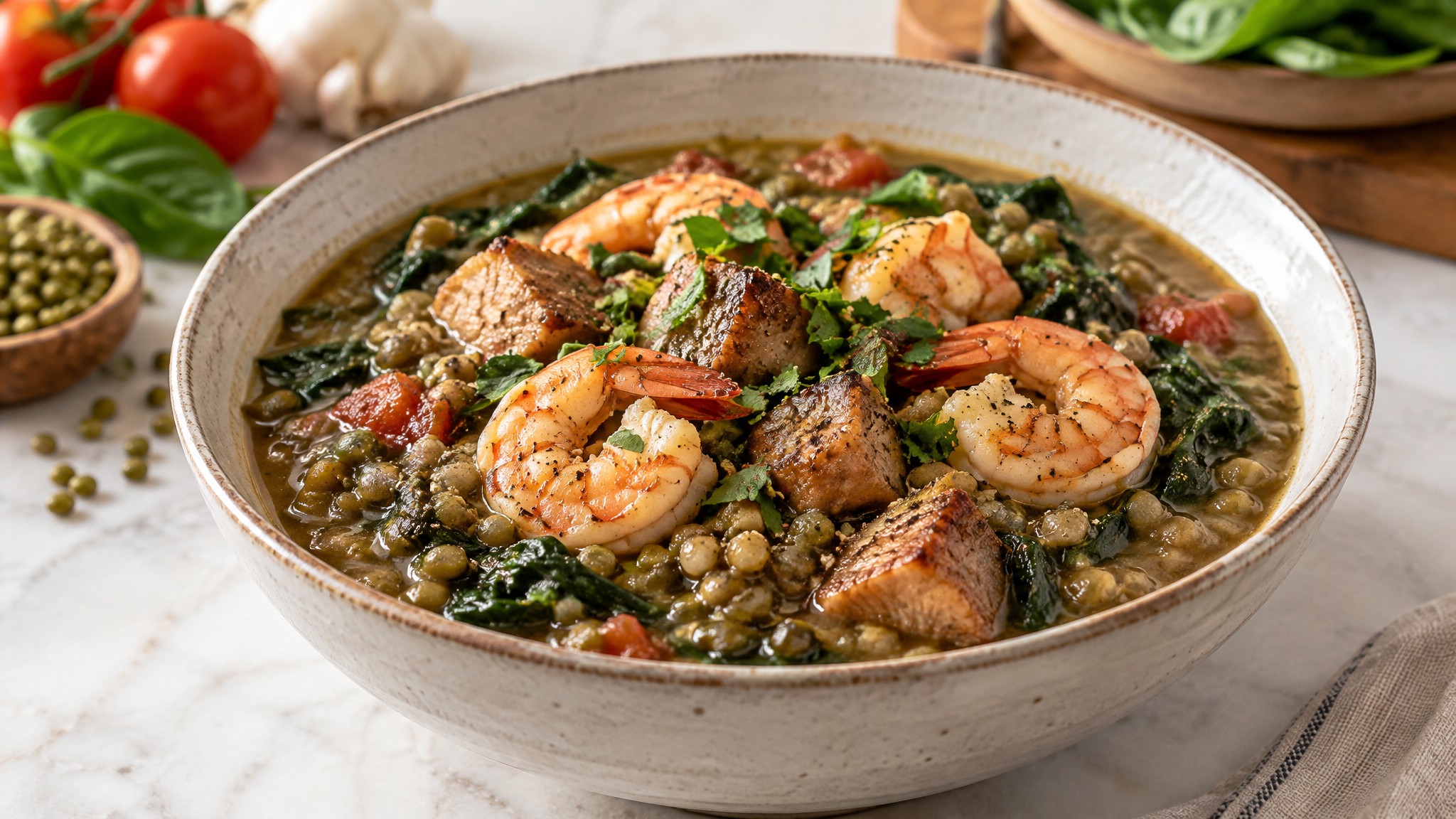
Ginisang Monggo Bowl with Pork, Shrimp and Spinach
Filipino ginisang monggo turned into a hearty low-GI bowl: creamy mung beans, browned pork, sweet shrimp and spinach in a garlicky tomato broth, no rice needed.
Ginisang monggo is a Filipino weeknight stew. Mung beans simmer until they split and turn creamy, then go into a sauté of garlic, onion and tomato with a little pork for depth. This version stays close to the original. Lean pork shoulder replaces fatty pork belly, juicy shrimp go in at the end, and spinach stands in for malunggay (moringa) leaves, which can be hard to find. If you can get malunggay, use it. Fish sauce gives the broth its savoury, slightly funky taste, so the stew needs very little extra salt. Fish sauce is high in sodium, so use a reduced-sodium brand if you can, and add it a little at a time to taste.
The mung beans are what make this dish good for steady blood sugar. Published glycemic index values for boiled mung beans usually fall between about 25 and 39, which is low. They are full of plant protein and soluble fiber, which slow digestion and release glucose into the blood gradually instead of all at once. Mashing some of the beans into the broth makes it thick and filling without flour or cornstarch. Cook the beans until they are tender and split, but stop before they become a smooth purée. Beans that keep some shape are digested more slowly than fully broken-down ones. The usual side of white rice, which has a high GI, is left out, so the beans carry the meal on their own. Pork and shrimp add more protein, and the tomatoes, onion and spinach add fiber, potassium and antioxidants. None of the ingredients is high-glycemic or ultra-processed.
To help your blood sugar further, eat a few spoonfuls of the spinach and broth before you start on the beans. Starting with vegetables and protein softens the glucose rise from the starchy part of the meal. Most Filipino diners expect rice with monggo. If you want some, serve a small portion of cauliflower rice, or limit yourself to about 1/3 cup (60 g) of cooked brown or red rice per person. A crisp cucumber and tomato salad with a splash of vinegar also goes well with it. A 10 to 15 minute walk after eating helps your muscles use glucose. The stew keeps in the fridge for up to three days and gets thicker overnight, which makes it a good lunch to cook ahead. Loosen it with a splash of water when you reheat it.
Blood Sugar Impact
Minimal impact. The mung beans' fiber and resistant starch, together with protein from the pork and shrimp, should keep glucose rises small and give steady energy for 3-4 hours.
Blood Sugar Tips
- ✓ Eat it on its own or with cauliflower rice instead of white rice. A cup of white rice would raise the glycemic load a lot.
- ✓ Cook the mung beans only until tender, not until they turn to mush. Beans that keep their shape are digested more slowly and cause a gentler glucose rise.
- ✓ Take a 10-15 minute walk after the meal to help your muscles absorb any glucose that does rise.
🥗 Ingredients
- 140 g Dried mung beans
- 1000 ml Water
- 150 g Pork shoulder
- 1 pcs Onion
- 4 pcs Garlic
- 2 pcs Tomato
- 1 tbsp Vegetable oil
- 1 tbsp Fish sauce
- 120 g Shrimp
- 100 g Spinach
- 0.25 tsp Salt
- 0.25 tsp Black pepper
- 4.9 oz Dried mung beans
- 4.2 cups Water
- 5.3 oz Pork shoulder
- 1 pcs Onion
- 4 pcs Garlic
- 2 pcs Tomato
- 1 tbsp Vegetable oil
- 1 tbsp Fish sauce
- 4.2 oz Shrimp
- 3.5 oz Spinach
- 0.25 tsp Salt
- 0.25 tsp Black pepper
👨🍳 Instructions
- 1
Get everything ready first. Cut 150 g (5 oz) pork shoulder into 1.5 cm (1/2 inch) cubes. Dice 1 onion, mince 4 garlic cloves and chop 2 tomatoes. Peel and devein 150 g (5 oz) raw shrimp. Rinse 100 g (about 3 packed cups) fresh spinach or malunggay leaves. Rinse 120 g (2/3 cup) dried mung beans in a sieve under cold water and pick out any small stones.
- 2
Put the mung beans in a pot with 1 L (about 4 1/4 cups) of water and bring to a boil. Lower the heat, partly cover the pot and simmer for 25 to 30 minutes, until the beans are tender and many have split open but still mostly hold their shape. Don't let them turn into a smooth mush. Keep all the cooking liquid, because it becomes the base of the broth.
- 3
While the beans cook, heat 1 tbsp vegetable oil in a second large pot over medium-high heat. Add the pork cubes in a single layer and brown them for about 5 minutes, turning now and then, until most sides are golden.
- 4
Add the onion and garlic to the pork and stir for about 2 minutes, until soft and fragrant. Add the tomatoes and cook for 3 minutes more, pressing them with the back of a spoon until they break down into a thick, jammy base.
- 5
Pour the mung beans and all their liquid into the pork pot. Stir in 2 teaspoons of fish sauce, ideally a reduced-sodium one. You'll taste and add more later. Simmer gently for 5 minutes. While it simmers, mash only about a quarter of the beans against the side of the pot. This thickens the broth without added starch, and the whole beans keep their slower-digesting texture.
- 6
Stir in the shrimp and spinach (or malunggay). Cook for about 3 minutes, until the shrimp turn pink and opaque and the greens have wilted. Don't overcook the shrimp or they will turn rubbery.
- 7
Taste the stew. Add up to 1 more teaspoon of fish sauce if needed, then a pinch of salt only if it still needs it, and black pepper to taste. Ladle into bowls and serve hot. Eat some of the greens and broth before the beans to keep the blood sugar response gentle. If you want rice, serve a small scoop of cauliflower rice or about 1/3 cup (60 g) of cooked brown or red rice per person.
📊 Nutrition Per Serving
| Per Serving | Whole Dish | |
|---|---|---|
| Calories | 482 | 963 |
| Carbs | 28g | 55g |
| Sugars | 7g | 14g |
| Natural Sugars | 7g | 14g |
| Protein | 41g | 81g |
| Fat | 24g | 48g |
| Saturated Fat | 7g | 14g |
| Unsaturated Fat | 17g | 34g |
| Fiber | 9g | 18g |
| Soluble Fiber | 3g | 6g |
| Insoluble Fiber | 6g | 12g |
| Sodium | 1086mg | 2172mg |
Predicted Glucose Response
What if you...
Estimated model — individual responses vary. Not medical advice.
🔄 Lower GI Swaps
Replacing half of the mung beans with a lower-carb legume or vegetable lowers the glycemic load per serving while keeping the stew thick and hearty.
Malunggay is the traditional green in ginisang monggo. Any leafy green adds fiber and minerals with almost no effect on blood sugar.
Any of these keeps the protein high, which helps slow glucose absorption. Chicken and tofu are leaner than pork.
Regular fish sauce is very high in sodium. Measuring it carefully or using a lower-sodium version keeps the savoury flavour and cuts the salt.
White rice has a high GI and would greatly increase the meal's glycemic load. A small portion of whole-grain rice or a vegetable side keeps the meal blood-sugar-friendly.
🔬 The Science Behind This Recipe
Mung beans are a low-glycemic legume. Published GI values for boiled mung beans usually range from about 25 to 39, so this bowl is best described as having an estimated GI of roughly 25 to 35. The meat, oil and vegetables add very little carbohydrate, and the extra protein and fat slow how quickly the stomach empties. Each serving uses 60 g of dry mung beans, which provides about 28 g of available carbohydrate. That gives an estimated glycemic load of about 8 to 10 per serving, which is low. Bigger portions raise the GL, so keep to the stated serving size if you are watching your numbers. The fiber in mung beans, especially the soluble kind, forms a gel in the gut that slows how fast starch is broken down and absorbed. Some of the starch also behaves as resistant starch and is not digested in the small intestine at all. How long you cook the beans matters. The longer legumes cook and the more they break down, the easier their starch is to digest and the faster glucose reaches the blood. Cooking the beans until tender but not puréed, and mashing only a quarter of them, keeps the broth creamy while protecting most of the slow-release structure. Pork and shrimp add complete protein, which encourages a steadier insulin response and keeps you full for longer. Spinach or malunggay adds magnesium, which supports insulin sensitivity. Eating the greens and broth first, and adding a vinegar-dressed salad on the side, can further soften the glucose rise after the meal.
Related recipes
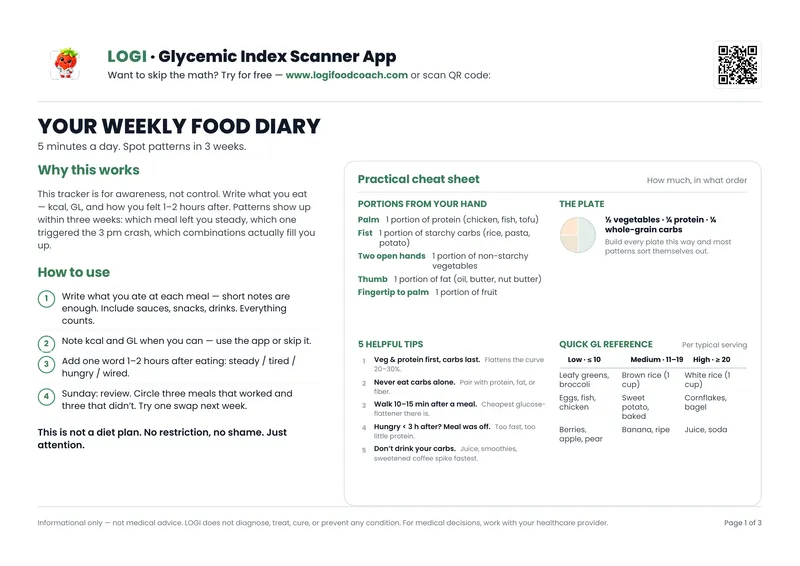
Free PDF — 3 pages
Your Weekly Food Journal
Track meals, glycemic load & mood. Spot patterns in 3 weeks.
No spam. Unsubscribe anytime.