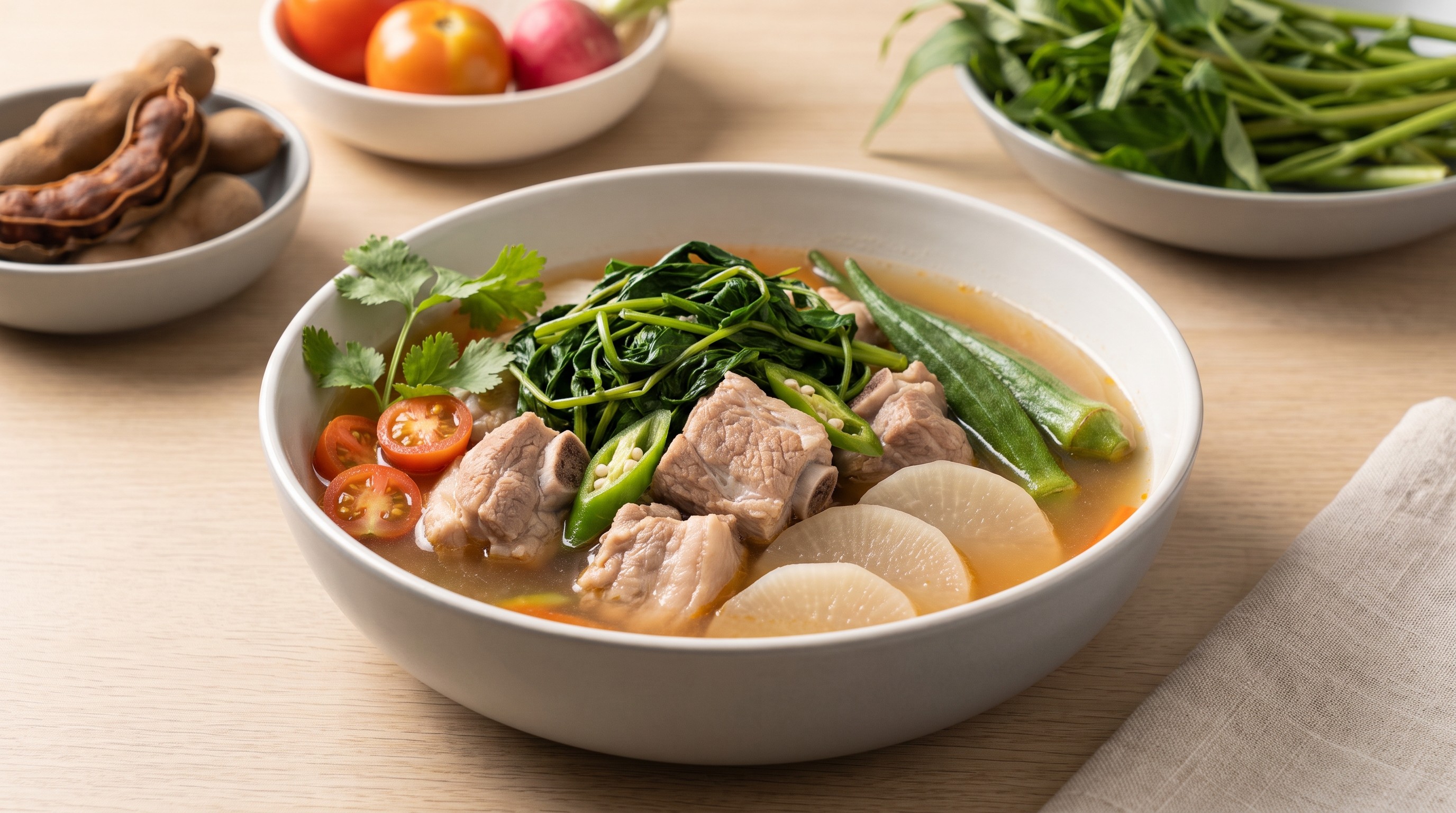
Sinigang na Baboy (Filipino Sour Pork Soup with Radish and Kangkong)
A bracingly sour tamarind broth loaded with tender pork, okra, and kangkong — naturally low-glycemic Filipino comfort food that keeps blood sugar steady.
Sinigang na Baboy is the quintessential Filipino home-cooked soup, and it happens to be one of the most blood-sugar-friendly dishes in any cuisine. Bone-in pork shoulder delivers rich, slow-digesting protein and healthy fats that blunt any glucose response, while a generous tangle of daikon radish, okra, and kangkong provides fiber, micronutrients, and almost negligible carbohydrate load. The tamarind broth itself is a quiet metabolic ally — its organic acids have been shown to slow gastric emptying, which means glucose from any accompanying food enters the bloodstream more gradually.
Okra deserves special attention here. Its mucilaginous fiber acts as a natural thickener for the broth while also forming a gel in the digestive tract that slows sugar absorption. Combined with the soluble fiber from tomatoes and the capsaicin in green chili — which may improve insulin sensitivity — this soup is a masterclass in how traditional cooking can align perfectly with modern glycemic science.
Serve the sinigang as a complete bowl without rice and you have a meal that is virtually all protein and non-starchy vegetables. If you want a starchy side, choose a small portion of cooled and reheated brown rice or cauliflower rice to keep the overall glycemic load minimal. Eat the vegetables and pork first, sip the broth throughout, and you will feel satisfied for hours without the energy crash that follows high-carbohydrate meals.
Blood Sugar Impact
Very low blood sugar impact expected. With a GI of 17 and glycemic load of just 5.3, this protein-and-vegetable-rich soup will produce a minimal, gradual rise in blood glucose and provide stable energy for 3-4 hours.
Blood Sugar Tips
- ✓ Eat the pork, vegetables, and okra first before drinking the broth — the protein, fat, and fiber will slow gastric emptying and blunt any glucose response.
- ✓ Include all the okra in your serving; its soluble fiber (mucilage) helps slow carbohydrate absorption and supports steady blood sugar levels.
- ✓ Avoid pairing with large portions of white rice — if you want rice, limit it to half a cup and eat it after the meat and vegetables.
🥗 Ingredients
- 400 g Bone-in pork shoulder
- 1 pcs Onion
- 2 pcs Garlic
- 2 pcs Tomato
- 30 g Tamarind paste
- 800 ml Water
- 150 g Daikon radish
- 100 g Okra
- 1 pcs Green chili
- 100 g Kangkong
- 1.5 tbsp Fish sauce
- 0.5 tsp Fine salt
- 14.1 oz Bone-in pork shoulder
- 1 pcs Onion
- 2 pcs Garlic
- 2 pcs Tomato
- 1.1 oz Tamarind paste
- 3.4 cups Water
- 5.3 oz Daikon radish
- 3.5 oz Okra
- 1 pcs Green chili
- 3.5 oz Kangkong
- 1.5 tbsp Fish sauce
- 0.5 tsp Fine salt
👨🍳 Instructions
- 1
Pat the pork chunks dry and season lightly with the fine salt. Place a large, heavy-bottomed pot over medium-high heat. Once the pot is hot, arrange the pork in a single layer and sear without moving for about 2 minutes per side, until deep golden brown on two faces. Remove the pork to a plate and set aside. Work in batches if necessary so the pieces are not crowded.
- 2
Lower the heat to medium. Add the quartered onion and crushed garlic to the pot, stirring them through the rendered pork fat for about 1 minute until fragrant. Toss in the quartered tomatoes and press them firmly against the base of the pot with a wooden spoon so they burst and release their juices. Cook for 2 to 3 minutes until the tomatoes have softened into a rough paste.
- 3
Return the seared pork to the pot and pour in the water. Raise the heat and bring the liquid to a full boil, skimming off any foam that rises to the surface. Reduce to a gentle, steady simmer, set the lid slightly ajar, and let the pork cook for 25 minutes until it is fork-tender and the broth has turned cloudy and rich.
- 4
Spoon the tamarind paste into the broth and stir until it dissolves completely, tasting as you go — the broth should be distinctly sour but balanced. Add the daikon radish half-moons, making sure they are submerged in the liquid. Simmer uncovered for 8 minutes until the radish pieces turn translucent and yield easily when pierced with a knife.
- 5
Add the trimmed okra and the halved green chili to the pot. Cook for 3 minutes — the okra should be just tender while still holding its shape, and its natural mucilage will begin to lend a subtle body to the broth.
- 6
Drop in the kangkong stems first, pushing them into the liquid, then lay the leaves on top. Let everything wilt for no more than 1 minute — kangkong cooks very quickly and should remain vibrant green.
- 7
Stir in the fish sauce and taste the broth. Adjust the balance by adding a small amount of extra tamarind paste for more sourness, or a pinch of salt if it needs depth. The final broth should be bright, tart, and savoury.
- 8
Ladle the sinigang into deep bowls, distributing the pork and vegetables evenly. Serve immediately while the kangkong is still vivid and the broth is steaming. For optimal blood sugar management, eat the vegetables and pork before sipping the broth, and skip the traditional white rice — the bowl is deeply satisfying on its own.
📊 Nutrition Per Serving
| Per Serving | Whole Dish | |
|---|---|---|
| Calories | 723 | 1447 |
| Carbs | 32g | 63g |
| Sugars | 18g | 37g |
| Natural Sugars | 18g | 37g |
| Protein | 53g | 105g |
| Fat | 44g | 87g |
| Saturated Fat | 15g | 31g |
| Unsaturated Fat | 28g | 56g |
| Fiber | 8g | 15g |
| Soluble Fiber | 2g | 5g |
| Insoluble Fiber | 5g | 10g |
| Sodium | 1583mg | 3165mg |
Predicted Glucose Response
What if you...
Estimated model — individual responses vary. Not medical advice.
🔄 Lower GI Swaps
Tamarind paste or concentrate is the highest sugar contributor in this recipe, with a moderate glycemic index due to its natural sugars. Calamansi juice, green mango, or lime juice deliver the signature sour flavor of sinigang with significantly less sugar and a negligible glycemic load.
Ripe tomatoes contain more natural sugars than their unripe counterparts. Green tomatoes or tomatillos provide the tartness and body sinigang needs while contributing fewer sugars per serving, slightly lowering the overall glycemic load.
Standard onions have a moderate carbohydrate content that caramelizes into simple sugars when cooked. Using scallion greens or the green tops of leeks provides aromatic depth with substantially fewer digestible carbohydrates and a lower glycemic impact per serving.
While daikon is already low-GI, bitter melon (ampalaya) contains charantin and polypeptide-p, compounds shown to support blood sugar regulation. Chayote is another traditional Filipino sinigang vegetable with an extremely low glycemic index and high fiber content that further blunts glucose response.
🔬 The Science Behind This Recipe
Why This Recipe Works for Blood Sugar
Sinigang na Baboy is a naturally blood-sugar-friendly dish, and the numbers tell the story: with a glycemic index of just 17 and a glycemic load of 5.3 per serving, this soup sits comfortably in the "low" category on both scales. But what do those numbers actually mean? Glycemic index measures how quickly a food raises blood sugar, while glycemic load factors in how much carbohydrate you're actually eating. Think of it this way — watermelon has a high GI, but because a typical serving contains relatively little carbohydrate, its glycemic load is low. With Sinigang, both numbers are low, which means this dish delivers steady, gentle energy rather than a sharp spike and crash.
The magic lies in how the ingredients work together. Pork shoulder provides protein and fat, both of which slow down the rate at which your stomach empties its contents into the small intestine. This means any carbohydrates from the tomatoes and onions enter your bloodstream gradually rather than all at once. The tamarind broth adds acidity, and research suggests that acidic foods — like vinegar, citrus, and tamarind — can further blunt the glucose response to a meal. Meanwhile, kangkong (water spinach) and radish contribute fiber, which acts like a net in your digestive system, trapping sugars and releasing them slowly.
To get the most out of this dish, try eating the vegetables and pork first before any rice you might serve alongside it. This simple "food order" strategy — vegetables and protein first, starches last — has been shown to reduce post-meal glucose spikes. A short 10-15 minute walk after eating can also help your muscles absorb glucose more efficiently. If you do pair Sinigang with rice, the soup's protein, fat, and acidity will help buffer the rice's higher glycemic impact, making the entire meal more balanced.
Related recipes
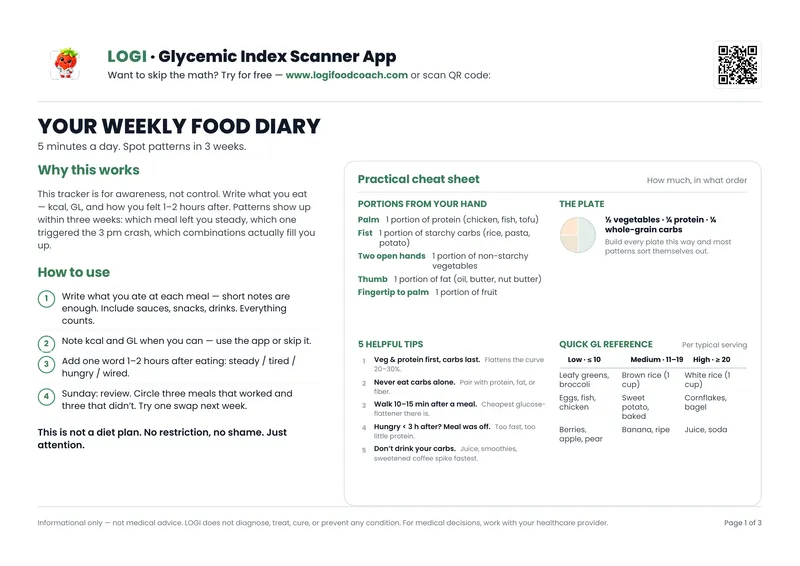
Free PDF — 3 pages
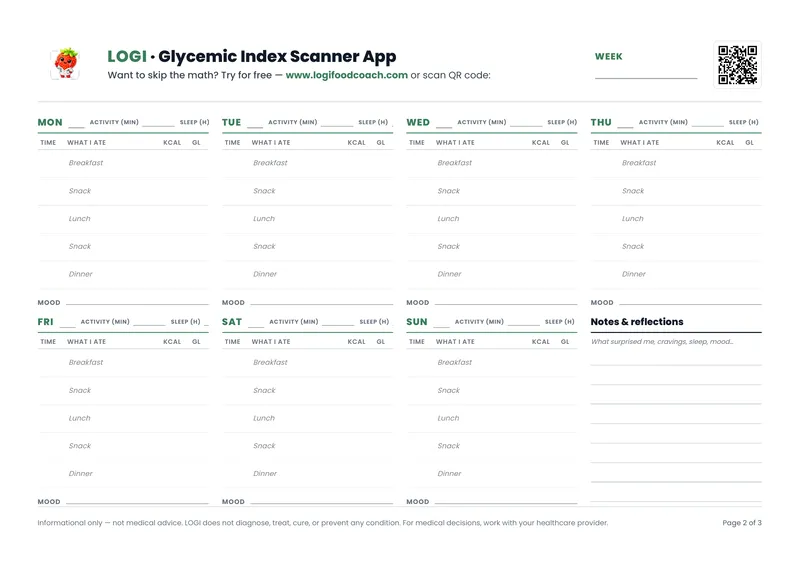
Your Weekly Food Journal
Track meals, glycemic load & mood. Spot patterns in 3 weeks.
No spam. Unsubscribe anytime.