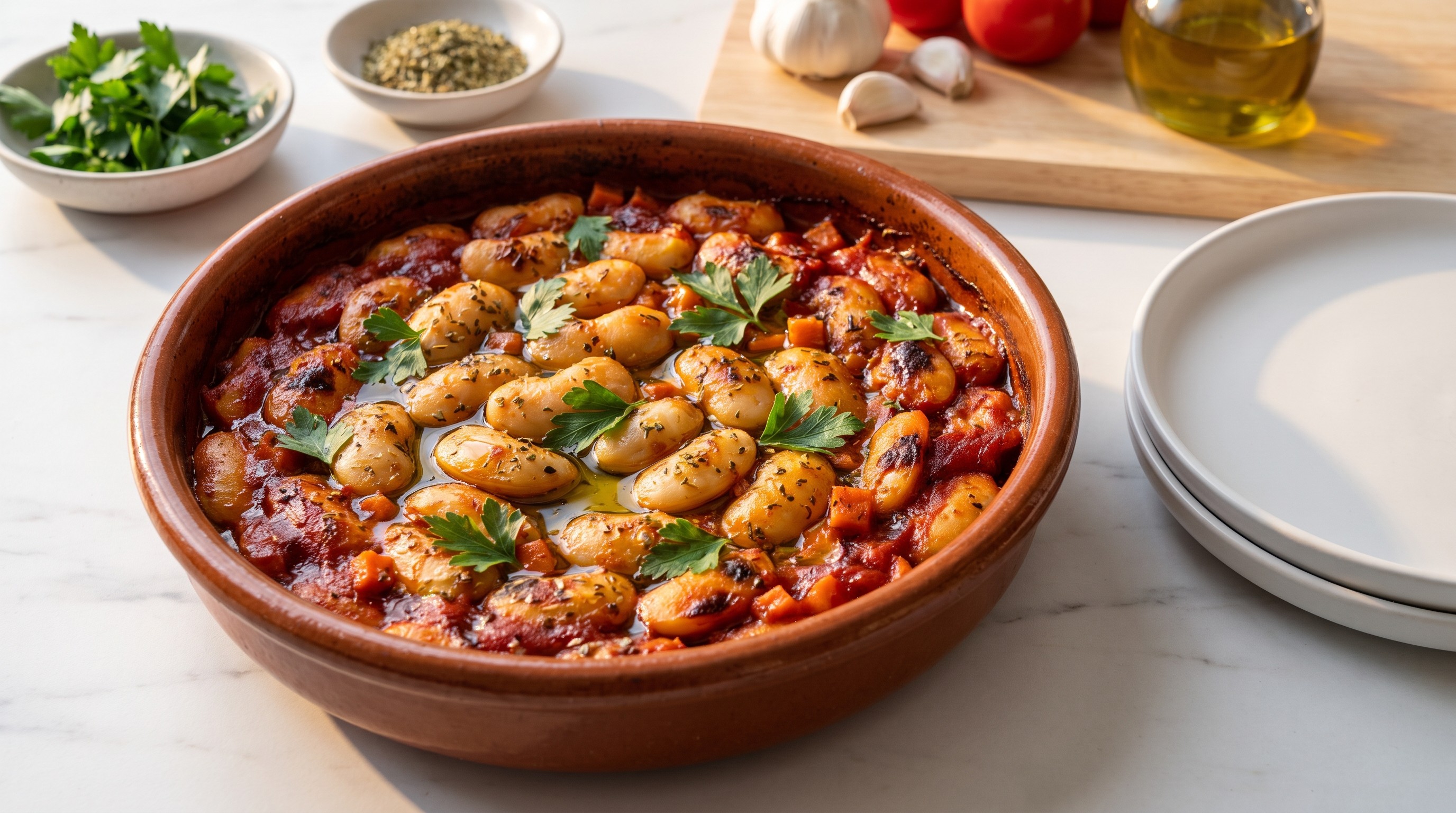
Gigantes Plaki (Greek Baked Butter Beans)
Giant butter beans slow-baked in a thick, caramelised tomato sauce — naturally low-glycemic, high in soluble fibre, and utterly comforting.
Gigantes plaki is one of the great staples of Greek home cooking, and it happens to be a blood-sugar champion. Butter beans (also called gigantes or lima beans) sit at around GI 30–35, making them one of the gentlest legumes on your glucose curve. Their dense soluble fibre forms a gel during digestion that physically slows the release of glucose into the bloodstream, while their protein content further blunts any post-meal spike. This dish delivers all of that in the most satisfying way possible.
The method is beautifully simple: softened aromatics meet a concentrated tomato sauce, and then the beans bake uncovered until the top blisters and the edges turn jammy. There is no added sugar anywhere — the sweetness comes entirely from slow-roasted carrot and naturally caramelised tomato. Extra-virgin olive oil provides heart-healthy monounsaturated fats that also slow gastric emptying, giving your body even more time to process the meal's carbohydrates gradually.
Each serving is roughly 250 g of beans and sauce. For the best glycemic response, serve this as a main course alongside a simple green salad dressed with lemon and olive oil — eating the greens first primes your digestive system with additional fibre before the beans arrive. A small piece of crusty sourdough on the side is a far better companion than regular white bread, thanks to sourdough's organic acids which measurably lower the glycemic impact of a meal. This dish reheats beautifully, and leftovers eaten cold the next day benefit from increased resistant starch, further lowering the glucose load.
Blood Sugar Impact
Low impact — the combination of fiber-rich butter beans (low GI of 32) with healthy fats from olive oil and slow-digesting vegetables will produce a gentle, gradual rise in blood sugar with stable energy lasting 3-4 hours.
Blood Sugar Tips
- ✓ Eat a small side salad or the vegetable portion of the dish first before the beans to further blunt any glucose response.
- ✓ Pair the meal with a 15-20 minute walk afterward to enhance glucose uptake by your muscles.
- ✓ Avoid serving with high-GI sides like white bread or white rice; choose a small portion of sourdough or a green salad instead.
🥗 Ingredients
- 400 g Butter bean
- 1 pcs Onion
- 1 pcs Carrot
- 3 pcs Garlic
- 200 g Crushed tomato
- 1 tbsp Tomato paste
- 2 tbsp Extra virgin olive oil
- 1 tsp Dried oregano
- 1 pcs Bay leaf
- 2 tbsp Flat-leaf parsley
- 0.5 tsp Salt
- 0.25 tsp Black pepper
- 8.5 oz Butter bean
- 1 pcs Onion
- 1 pcs Carrot
- 3 pcs Garlic
- 7.1 oz Crushed tomato
- 1 tbsp Tomato paste
- 2 tbsp Extra virgin olive oil
- 1 tsp Dried oregano
- 1 pcs Bay leaf
- 2 tbsp Flat-leaf parsley
- 0.5 tsp Salt
- 0.25 tsp Black pepper
👨🍳 Instructions
- 1
Set your oven to 180 °C (350 °F) so it is fully heated by the time the stovetop stage is done. Drain and rinse the butter beans thoroughly — rinsing removes excess sodium and some of the starchy canning liquid.
- 2
Dice the onion into roughly 1 cm pieces. Peel the carrot and cut it into a fine dice, about half the size of the onion — smaller pieces melt into the sauce and release their natural sweetness more evenly. Mince the garlic.
- 3
Warm the extra-virgin olive oil in an oven-safe baking dish or cast-iron skillet over medium heat. Add the diced onion and carrot, and cook for about 6 minutes, stirring now and then, until the vegetables have softened and are just beginning to take on some golden colour at the edges.
- 4
Stir in the minced garlic and tomato paste. Cook for roughly 1 minute, pressing the paste against the base of the dish so it darkens slightly and becomes fragrant — this brief caramelisation deepens the savoury flavour of the sauce.
- 5
Pour in the crushed tomatoes and add the dried oregano, bay leaf, salt, and black pepper. Stir everything together and let the sauce come to a gentle simmer. Allow it to bubble for about 2 minutes so the flavours begin to meld.
- 6
Fold the drained butter beans into the sauce, nudging them into a single layer so that the tops sit just above the liquid. This half-submerged arrangement means the exposed tops will blister and lightly caramelise in the oven while the bottoms stay creamy.
- 7
Transfer the dish, uncovered, to the centre rack of the oven. Bake for 35–40 minutes until the sauce has thickened into a jammy consistency, the surface is blistered in places, and the edges of the beans are tinged golden. If the sauce reduces too fast, add a splash of water halfway through.
- 8
Remove the dish from the oven, discard the bay leaf, and scatter the roughly chopped parsley over the top. Let the beans rest for 5 minutes — the sauce will continue to thicken as it cools slightly. Serve straight from the dish.
📊 Nutrition Per Serving
| Per Serving | Whole Dish | |
|---|---|---|
| Calories | 303 | 606 |
| Carbs | 37g | 75g |
| Sugars | 11g | 22g |
| Natural Sugars | 11g | 22g |
| Protein | 10g | 19g |
| Fat | 15g | 29g |
| Saturated Fat | 2g | 4g |
| Unsaturated Fat | 12g | 25g |
| Fiber | 10g | 19g |
| Soluble Fiber | 3g | 6g |
| Insoluble Fiber | 7g | 13g |
| Sodium | 1022mg | 2043mg |
Predicted Glucose Response
What if you...
Estimated model — individual responses vary. Not medical advice.
🔄 Lower GI Swaps
White bread has a high GI (~75). Sourdough's organic acids lower its effective GI to around 54, and seed crackers add fibre and healthy fats that further slow glucose absorption.
Some canned beans contain added sugar in the brine which raises the glycemic load. Choosing no-sugar-added varieties or cooking from dried keeps the GI at its natural low of 30–35.
🔬 The Science Behind This Recipe
Why This Dish Works for Blood Sugar
Butter beans are among the lowest-GI legumes available, sitting at roughly GI 30–35. Their high soluble-fibre content forms a viscous gel in the digestive tract that physically slows the absorption of glucose into the bloodstream, producing a gentle, drawn-out rise rather than a sharp spike. The protein in the beans further moderates post-meal blood sugar by stimulating insulin in a measured way.
Extra-virgin olive oil plays a supporting role: its monounsaturated fats slow gastric emptying, meaning the entire meal spends longer in the stomach before reaching the small intestine where glucose is absorbed. This delay spreads the carbohydrate load over a wider window, keeping the blood-sugar curve flatter.
The tomato-based sauce contributes lycopene and a modest amount of natural acidity, both of which have been associated with improved glycemic responses in mixed meals. Meanwhile, the small amount of carrot — although it can reach a moderate GI when cooked soft — is present in such a minor quantity relative to the fibre-dense beans that its contribution to the overall glycemic load is negligible.
Serving tip: eating a simple green salad before this dish adds an extra fibre barrier and has been shown in clinical studies to reduce post-meal glucose peaks by up to 30 percent. Leftovers eaten cold or reheated the next day will contain more resistant starch, lowering the glycemic load even further.
Related recipes
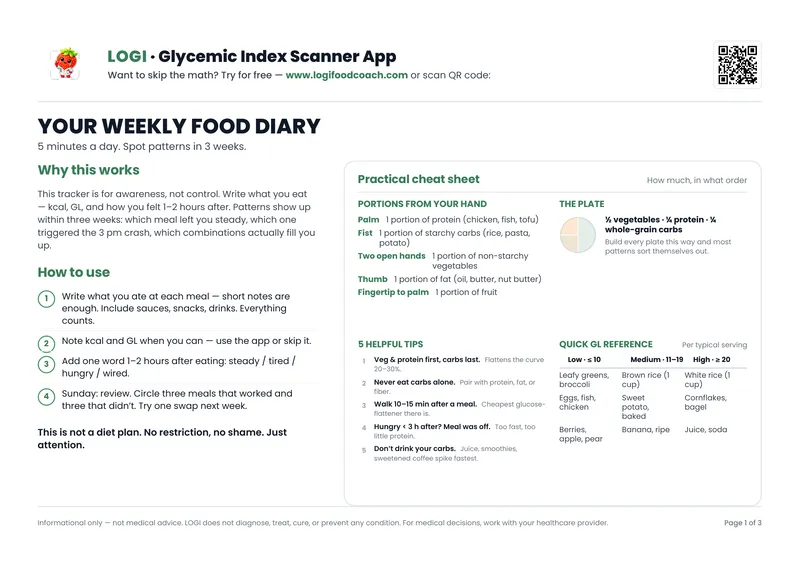
Free PDF — 3 pages
Your Weekly Food Journal
Track meals, glycemic load & mood. Spot patterns in 3 weeks.
No spam. Unsubscribe anytime.