Blutzuckerfreundliche Bananen-Hafer-Pfannkuchen
Vollwertige Vollkorn-Pfannkuchen, natürlich gesüßt mit Banane. Der hohe Ballaststoff- und Proteingehalt hilft, den Blutzuckerspiegel den ganzen Morgen über stabil zu halten.
Diese nährstoffreichen Pfannkuchen kombinieren die Kraft von Vollkorn mit natürlicher Süße, um ein Frühstück zu schaffen, das stabile Blutzuckerwerte unterstützt. Die kernigen Haferflocken liefern lösliche Ballaststoffe, die die Glukoseaufnahme verlangsamen, während das Vollkornmehl zusätzliche Ballaststoffe und Nährstoffe beisteuert, die Weißmehl fehlen. Die Banane trägt natürliche Süße bei, sodass wir zugesetzten Zucker minimieren können.
Was diese Pfannkuchen besonders blutzuckerfreundlich macht, ist die Kombination aus komplexen Kohlenhydraten, Protein aus Ei und Joghurt sowie gesunden Fetten aus Rapsöl. Diese Makronährstoff-Balance hilft, die schnellen Glukosespitzen zu vermeiden, die mit herkömmlichen Pfannkuchen aus raffiniertem Mehl verbunden sind. Der Zimt fügt mehr als nur Geschmack hinzu – Studien deuten darauf hin, dass er die Insulinsensitivität verbessern kann.
WICHTIGER HINWEIS ZUM GLYKÄMISCHEN INDEX: Dieses Rezept enthält kleine Mengen braunen Zucker (GI ~65-68) und Weizenmehl Type 405 (GI ~75) für Textur und Geschmack. Für optimale Blutzuckerkontrolle verwende leicht unreife Bananen (mehr gelb als braun gefleckt, GI ~51 vs. ~62 bei sehr reifen Bananen) und ziehe die unten angegebenen Alternativen mit niedrigerem GI stark in Betracht. Die Kombination aus Hafer, Vollkornmehl, Protein und Fett hilft, die gesamte glykämische Reaktion zu moderieren, aber Portionskontrolle bleibt entscheidend.
Für optimale glykämische Kontrolle kombiniere diese Pfannkuchen mit einer Proteinquelle wie griechischem Joghurt oder Eiern und erwäge, zuerst eine kleine Handvoll Nüsse zu essen. Die ballaststoffreichen Haferflocken haben einen niedrigen glykämischen Index von etwa 55, was sie zu einer ausgezeichneten Wahl für anhaltende Energie ohne Blutzucker-Achterbahn macht. Eine Portion entspricht 3 mittelgroßen Pfannkuchen (etwa 10 cm Durchmesser).
Blutzucker-Auswirkung
Moderate Auswirkung auf den Blutzucker mit einer glykämischen Last von 28,1 und einem GI von 52. Erwarten Sie einen allmählichen Anstieg des Blutzuckers über 1-2 Stunden mit Energie, die 2-3 Stunden anhält, obwohl die Kombination aus raffiniertem Mehl und braunem Zucker eine stärkere Spitze verursacht als Vollwertalternativen.
Blutzucker-Tipps
- ✓ Fügen Sie eine Eiweißquelle wie griechischen Joghurt, Eier oder Nussbutter als Beilage hinzu, um die Glukoseaufnahme zu verlangsamen und das Sättigungsgefühl zu verlängern
- ✓ Essen Sie eine kleine Handvoll Nüsse oder Samen vor den Pfannkuchen, um Fett und Ballaststoffe bereitzustellen, die die Blutzuckerreaktion abmildern
- ✓ Machen Sie nach dem Essen einen 10-15-minütigen Spaziergang, um den Muskeln zu helfen, Glukose aufzunehmen und die Spitze nach der Mahlzeit zu reduzieren
🥗 Zutaten
- 0.5 cup kernige Haferflocken
- 1 cup heißes Wasser
- 2 tbsp Rapsöl
- 2 tbsp brauner Zucker
- 0.5 cup Vollkornmehl
- 0.5 cup Weizenmehl
- 1.5 tsp Backpulver
- 0.25 tsp Natron
- 0.25 tsp Salz
- 0.25 tsp gemahlener Zimt
- 0.5 cup Magermilch
- 0.25 cup fettfreier Naturjoghurt
- 1 pcs reife Banane, zerdrückt
- 1 pcs großes Ei
- 0.5 cup kernige Haferflocken
- 1 cup heißes Wasser
- 2 tbsp Rapsöl
- 2 tbsp brauner Zucker
- 0.5 cup Vollkornmehl
- 0.5 cup Weizenmehl
- 1.5 tsp Backpulver
- 0.25 tsp Natron
- 0.25 tsp Salz
- 0.25 tsp gemahlener Zimt
- 0.5 cup Magermilch
- 0.25 cup fettfreier Naturjoghurt
- 1 pcs reife Banane, zerdrückt
- 1 pcs großes Ei
👨🍳 Anleitung
- 1
Gieße heißes Wasser über die Haferflocken in einer großen Rührschüssel und lasse sie 2 Minuten einweichen, bis sie weich und cremig werden. Rühre das Rapsöl und den braunen Zucker ein und stelle die Mischung dann für ein paar Minuten zum Abkühlen beiseite, während du die trockenen Zutaten vorbereitest.
- 2
Verquirle beide Mehlsorten, Backpulver, Natron, Salz und gemahlenen Zimt in einer separaten mittelgroßen Schüssel, bis alles gleichmäßig vermischt ist. Dies stellt sicher, dass die Triebmittel gleichmäßig in der Mehlmischung verteilt sind.
- 3
Gib die Magermilch, den Joghurt und die zerdrückte Banane zur abgekühlten Hafermischung und rühre, bis alles gut vermischt ist. Schlage das Ei hinein und verrühre es gründlich mit den feuchten Zutaten, bis keine Streifen mehr zu sehen sind.
- 4
Gieße die Mehlmischung in die feuchte Hafermischung und hebe alles vorsichtig mit einem Teigschaber oder Holzlöffel unter. Rühre nur so lange, bis die trockenen Zutaten gerade befeuchtet sind – ein paar kleine Klümpchen sind in Ordnung, und zu viel Rühren macht die Pfannkuchen zäh.
- 5
Erhitze eine beschichtete Grillplatte oder große Pfanne bei mittlerer Hitze. Sobald die Oberfläche heiß ist, besprühe sie bei Bedarf leicht mit Bratspray. Gieße etwa 60 ml Teig für jeden Pfannkuchen auf die Platte und halte dabei etwa 5 cm Abstand zwischen ihnen.
- 6
Backe die Pfannkuchen ungestört für 2 bis 2,5 Minuten, bis sich kleine Bläschen auf der gesamten Oberfläche bilden und die Ränder fest und leicht golden aussehen. Das ist dein Signal, dass sie zum Wenden bereit sind.
- 7
Verwende einen breiten Pfannenwender, um jeden Pfannkuchen vorsichtig zu wenden, und backe ihn weitere 2 bis 3 Minuten auf der zweiten Seite, bis er goldbraun und durchgebacken ist. Lege fertige Pfannkuchen auf einen warmen Teller und wiederhole den Vorgang mit dem restlichen Teig, wobei du die Hitze bei Bedarf anpasst, um Anbrennen zu vermeiden.
- 8
Serviere die Pfannkuchen warm, idealerweise mit einem proteinreichen Topping wie griechischem Joghurt oder einer kleinen Menge Nussbutter. Für beste Blutzuckerkontrolle iss sie zusammen mit Eiern oder nachdem du etwas Gemüse oder Nüsse gegessen hast, um die Glukoseaufnahme weiter zu verlangsamen. Eine Portion entspricht 3 mittelgroßen Pfannkuchen.
📊 Nährwerte pro Portion
| Pro Portion | Gesamtes Gericht | |
|---|---|---|
| Kalorien | 299 | 1194 |
| Kohlenhydrate | 45g | 182g |
| Zucker | 12g | 49g |
| Zugesetzter Zucker | 6g | 24g |
| Natürlicher Zucker | 6g | 24g |
| Protein | 9g | 35g |
| Fett | 10g | 40g |
| Gesättigtes Fett | 1g | 6g |
| Ungesättigtes Fett | 9g | 34g |
| Ballaststoffe | 4g | 16g |
| Lösliche Ballaststoffe | 1g | 5g |
| Unlösliche Ballaststoffe | 3g | 11g |
| Natrium | 447mg | 1788mg |
Vorhergesagte Glukosereaktion
Was wäre, wenn du...
Geschätztes Modell — individuelle Reaktionen variieren. Keine medizinische Beratung.
🔄 Niedrigere GI-Alternativen
Brauner Zucker hat einen mittleren bis hohen glykämischen Index, der den Blutzucker erhöhen kann. Erythrit und Mönchsfrucht liefern Süße, ohne den Blutzucker zu beeinflussen, was sie ideal für das Blutzuckermanagement macht. Reiner Ahornsirup hat zwar immer noch einen niedrigeren GI als brauner Zucker und enthält wertvolle Mineralien, sollte aber sparsam verwendet werden. Sich ausschließlich auf die natürliche Bananensüße zu verlassen, ist die Option mit der geringsten Auswirkung.
Weizenmehl Type 405 ist ein raffiniertes Getreide mit hohem glykämischen Index, das schnelle Blutzuckerspitzen verursacht. Mandelmehl hat praktisch keinen GI und fügt Protein und gesunde Fette hinzu, die den Blutzucker weiter stabilisieren. Die Verwendung von zusätzlichem Vollkornmehl erhält die Textur, während der Gesamt-GI gesenkt wird. Die Kokos-Hafermehl-Kombination liefert maximale Ballaststoffe und die niedrigste glykämische Wirkung, kann aber die Textur leicht verändern.
Der Reifegrad der Banane beeinflusst die glykämische Wirkung erheblich – unreife Bananen enthalten mehr resistente Stärke und haben einen GI von etwa 51 gegenüber 60-62 bei sehr reifen Bananen. Ungesüßtes Apfelmus liefert ähnliche Feuchtigkeit und natürliche Süße mit niedrigerem GI. Pürierte Süßkartoffel bietet vergleichbare Textur und Süße mit zusätzlichen Nährstoffen und einer niedrigeren glykämischen Reaktion, was sie zu einer ausgezeichneten blutzuckerfreundlichen Alternative macht.
Während Magermilch einen moderaten GI von etwa 32 hat, haben ungesüßte pflanzliche Milchsorten wie Mandelmilch praktisch keine glykämische Wirkung aufgrund des minimalen Kohlenhydratgehalts. Ungesüßte Sojamilch liefert zusätzliches Protein, das hilft, den Blutzucker zu stabilisieren, während sie einen niedrigen GI beibehält. Diese Alternativen reduzieren die gesamte Kohlenhydratmenge des Rezepts, ohne die Textur zu beeinträchtigen.
Brauner Zucker erhöht die Glukose immer noch schnell; Süßstoffe mit niedrigerem GI sind vorzuziehen.
🔬 Die Wissenschaft hinter diesem Rezept
Die blutzuckerfreundliche Natur dieser Pfannkuchen ergibt sich aus ihrer strategischen Kombination von Makronährstoffen und Ballaststoffen. Kernige Haferflocken enthalten Beta-Glucan, einen löslichen Ballaststoff, der im Verdauungstrakt eine gelartige Substanz bildet und die Aufnahme von Glukose ins Blut physisch verlangsamt. Dies führt zu einem allmählicheren Blutzuckeranstieg im Vergleich zu Pfannkuchen aus raffiniertem Getreide. Das Vollkornmehl trägt zusätzliche Ballaststoffe bei und hat einen niedrigeren glykämischen Index (etwa 69) als Weizenmehl Type 405 (etwa 75), obwohl beide noch moderate GI-Zutaten sind. Das Protein aus Ei und griechischem Joghurt verlangsamt die Verdauung zusätzlich und hilft, den Blutzucker zu stabilisieren, indem es eine gemäßigtere Insulinreaktion auslöst. Gesunde Fette aus Rapsöl tragen ebenfalls zu diesem verlangsamenden Effekt bei. Zimt enthält bioaktive Verbindungen, die die Insulinsensitivität verbessern können, indem sie den Zellen helfen, effektiver auf Insulinsignale zu reagieren. Es ist jedoch wichtig zu beachten, dass dieses Rezept braunen Zucker (GI ~65-68) und Weizenmehl Type 405 enthält, die die gesamte glykämische Reaktion erhöhen. Die Verwendung der vorgeschlagenen Alternativen – Erythrit oder Mönchsfrucht-Süßstoff statt braunem Zucker und Mandelmehl statt Weizenmehl Type 405 – kann die glykämische Wirkung erheblich senken. Der Reifegrad der Banane ist von großer Bedeutung: Eine leicht unreife Banane hat einen GI von etwa 51, während eine überreife Banane 62 oder höher erreichen kann, da resistente Stärke während der Reifung in einfache Zucker umgewandelt wird. Die Kombination dieser Zutaten erzeugt eine ausgewogenere glykämische Reaktion als herkömmliche Pfannkuchen, aber Portionskontrolle und die Kombination mit zusätzlichem Protein bleiben wichtige Strategien für optimales Blutzuckermanagement.
Ähnliche Rezepte
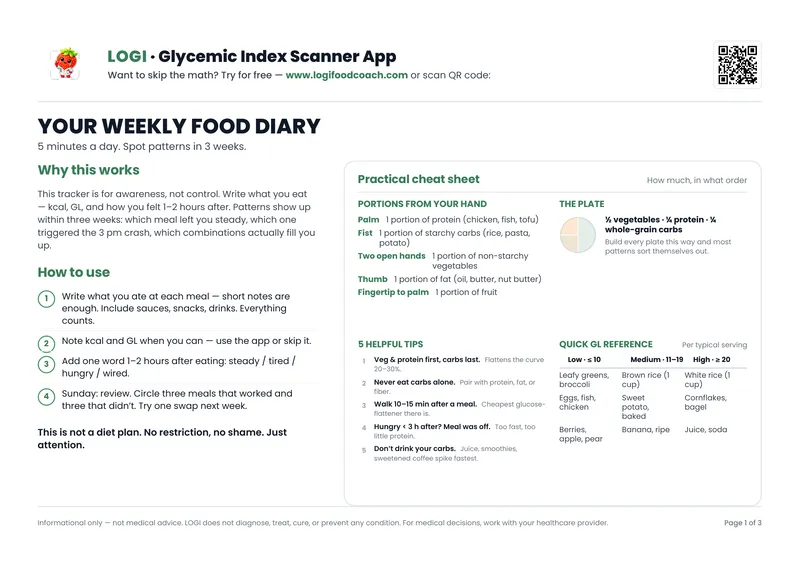
Kostenloses PDF — 3 Seiten
Dein Wochen-Ernährungstagebuch
Mahlzeiten, glykämische Last & Stimmung erfassen. Muster in 3 Wochen erkennen.
Kein Spam. Jederzeit abmeldbar.