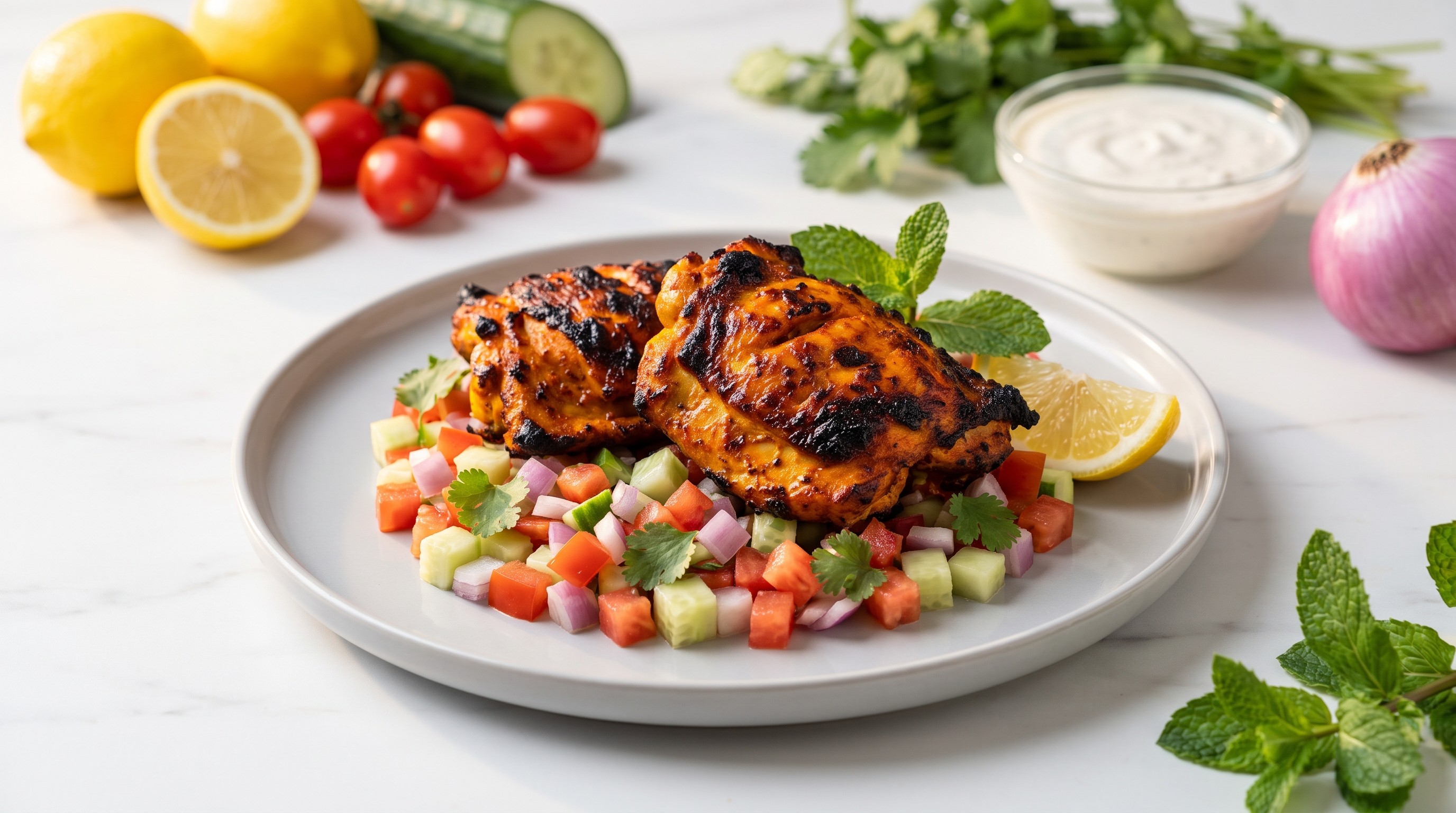
Tandoori Chicken with Kachumber Salad
Yogurt-marinated chicken thighs roasted until charred, served over a crisp kachumber salad — a naturally low-glycemic, high-protein meal with zero added starch.
Tandoori chicken is one of those rare dishes that needs almost no adaptation to fit a blood-sugar-friendly plate. The marinade is built on full-fat Greek yogurt, which contributes protein and healthy fats that slow gastric emptying, while turmeric and cumin bring anti-inflammatory compounds linked to improved insulin sensitivity. Scoring the chicken thighs before marinating ensures the spiced yogurt penetrates deep into the meat, producing a tender interior and beautifully charred edges under high heat.
Instead of the traditional naan or basmati rice — both high-GI accompaniments that can send blood glucose soaring — the chicken rests on a bed of kachumber salad. This raw salad of tomato, cucumber, and red onion is virtually carbohydrate-free and rich in fibre and water, both of which support steady glucose levels. The fresh lemon juice adds brightness and a dose of vitamin C, which some research suggests may help moderate post-meal blood sugar spikes.
For best results, eat the salad first: starting a meal with raw vegetables and acidic dressing has been shown to blunt the glucose response to whatever follows. If you want extra satiety, add a tablespoon of extra-virgin olive oil to the salad dressing — the additional fat further slows digestion. The entire plate delivers roughly 45 g of protein per serving with minimal carbohydrate, making it an ideal dinner for anyone managing blood sugar through diet.
Blood Sugar Impact
Very minimal blood sugar impact expected. With a glycemic load of just 4.0 and an estimated GI of 22, this high-protein, virtually zero-carb meal will produce a flat, stable glucose response and sustained energy for 3-5 hours.
Blood Sugar Tips
- ✓ Eat the kachumber salad (raw vegetables and fiber) before the chicken to further blunt any minor glucose response from the yogurt marinade.
- ✓ Add a side of non-starchy vegetables like sautéed spinach or roasted cauliflower to increase fiber and volume without raising glycemic load.
- ✓ Take a gentle 10-15 minute walk after the meal to enhance insulin sensitivity and keep blood sugar completely stable.
🥗 Ingredients
- 400 g Chicken thigh
- 120 g Greek yogurt
- 3 pcs Garlic
- 10 pcs Ginger
- 1 pcs Lemon
- 1.5 tsp Smoked paprika
- 1 tsp Ground cumin
- 0.75 tsp Ground turmeric
- 1 tsp Salt
- 2 tsp Olive oil
- 150 g Tomato
- 150 g Cucumber
- 50 g Red onion
- 10 g Coriander
- 14.1 oz Chicken thigh
- 4.2 oz Greek yogurt
- 3 pcs Garlic
- 10 pcs Ginger
- 1 pcs Lemon
- 1.5 tsp Smoked paprika
- 1 tsp Ground cumin
- 0.75 tsp Ground turmeric
- 1 tsp Salt
- 2 tsp Olive oil
- 5.3 oz Tomato
- 5.3 oz Cucumber
- 1.8 oz Red onion
- 0.4 oz Coriander
👨🍳 Instructions
- 1
Lay the chicken thighs on a cutting board and make 3–4 shallow cuts, about 5 mm deep, on each side of every thigh. These slashes allow the marinade to work its way into the meat, ensuring flavour throughout and faster, more even cooking.
- 2
In a mixing bowl, stir together the Greek yogurt, grated garlic, grated ginger, juice of half the lemon, smoked paprika, ground cumin, ground turmeric, and ¾ teaspoon of the salt until evenly blended. Add the scored chicken thighs and turn them to coat completely, pressing the marinade into every cut. Let the chicken rest at room temperature for 15 minutes, or cover and refrigerate for up to 12 hours for deeper flavour.
- 3
Preheat your oven to 230 °C (450 °F). Line a baking tray with aluminium foil, set a wire rack on top, and brush the rack lightly with the olive oil to prevent sticking.
- 4
Lift the chicken thighs from the marinade, allowing any excess to drip off, and arrange them on the prepared rack in a single layer with a little space between each piece for air circulation.
- 5
Roast in the upper third of the oven for 20–22 minutes until the edges are well charred and caramelised and the internal temperature reads 75 °C (165 °F) on an instant-read thermometer. The high heat creates the characteristic tandoori char while keeping the inside juicy.
- 6
While the chicken roasts, prepare the kachumber salad. Combine the diced tomato, cucumber, and red onion in a bowl. Squeeze the juice of the remaining lemon half over the vegetables, add the remaining ¼ teaspoon of salt, and toss gently to combine.
- 7
Scatter the chopped coriander over the salad and give it one final toss. Taste and adjust the lemon or salt to your preference — the salad should be bright and sharp to contrast the rich, spiced chicken.
- 8
Divide the kachumber salad between two plates. Place the charred chicken thighs on top or alongside, and serve immediately with any remaining lemon wedges on the side. For the best blood-sugar response, eat a few bites of the raw salad before starting the chicken.
📊 Nutrition Per Serving
| Per Serving | Whole Dish | |
|---|---|---|
| Calories | 528 | 1055 |
| Carbs | 18g | 36g |
| Sugars | 8g | 16g |
| Natural Sugars | 8g | 16g |
| Protein | 53g | 105g |
| Fat | 30g | 60g |
| Saturated Fat | 10g | 20g |
| Unsaturated Fat | 20g | 40g |
| Fiber | 4g | 8g |
| Soluble Fiber | 1g | 3g |
| Insoluble Fiber | 3g | 5g |
| Sodium | 1358mg | 2717mg |
Predicted Glucose Response
What if you...
Estimated model — individual responses vary. Not medical advice.
🔄 Lower GI Swaps
Acetic acid (vinegar) has been shown in clinical studies to reduce post-meal blood glucose spikes by up to 30% by slowing gastric emptying and improving insulin sensitivity, adding a glycemic-lowering effect beyond what lemon juice provides.
Ceylon cinnamon contains bioactive compounds that improve insulin sensitivity and can lower fasting blood glucose levels. Fenugreek seeds are rich in soluble fiber that slows carbohydrate absorption, reducing glycemic response. Either spice adds active blood-sugar-management benefits that paprika alone does not offer.
Cold-pressed extra virgin olive oil has significantly higher polyphenol content than refined olive oil, and these polyphenols have been shown to improve postprandial glycemic response and insulin sensitivity. Avocado oil is similarly rich in oleic acid and has a high smoke point ideal for tandoori-style cooking, helping slow glucose absorption.
Mixing chia seeds into the yogurt marinade adds soluble fiber that forms a gel, further slowing carbohydrate digestion and blunting any blood sugar rise. Sheep's milk yogurt and skyr have higher protein-to-carbohydrate ratios than standard Greek yogurt, which supports a lower glycemic response.
🔬 The Science Behind This Recipe
The Science Behind This Recipe
With a glycemic load of just 4.0 and an estimated GI of 22, this Tandoori Chicken with Kachumber Salad is one of the most blood-sugar-friendly meals you can make. But what makes it so gentle on your glucose levels? It comes down to the powerful combination of protein, healthy fats, and fiber working together on your plate. Chicken thigh is a rich source of complete protein, which slows down the rate at which your stomach empties its contents into the small intestine. This means any carbohydrates you eat alongside it get absorbed much more gradually, preventing the sharp spikes and crashes that leave you feeling tired and hungry an hour after eating. Full-fat Greek yogurt in the tandoori marinade doubles down on this effect — it brings both additional protein and natural fat to the table, creating what nutrition researchers call a "blunting effect" on blood sugar response.
The kachumber salad is the unsung hero here. Raw vegetables like tomatoes, onions, and cucumber are packed with fiber, which acts like a mesh that slows sugar absorption in your gut. Here's a practical tip worth remembering: eat your kachumber salad before you dig into the chicken, and save any rice or bread for last. Studies show that eating vegetables and protein before carbohydrates can reduce post-meal glucose spikes significantly. If you do pair this with a small portion of naan or rice, the protein and fat from the chicken and yogurt will help cushion the impact.
It's also worth understanding why glycemic load matters more than glycemic index alone. The GI tells you how quickly a food raises blood sugar, but glycemic load factors in how much you're actually eating. A GL of 4.0 is considered very low, meaning this meal delivers steady, sustained energy without taxing your body's insulin response. For an extra boost, try a 10-to-15-minute walk after dinner — even light movement helps your muscles absorb glucose more efficiently, keeping your levels smooth and stable.
Related recipes
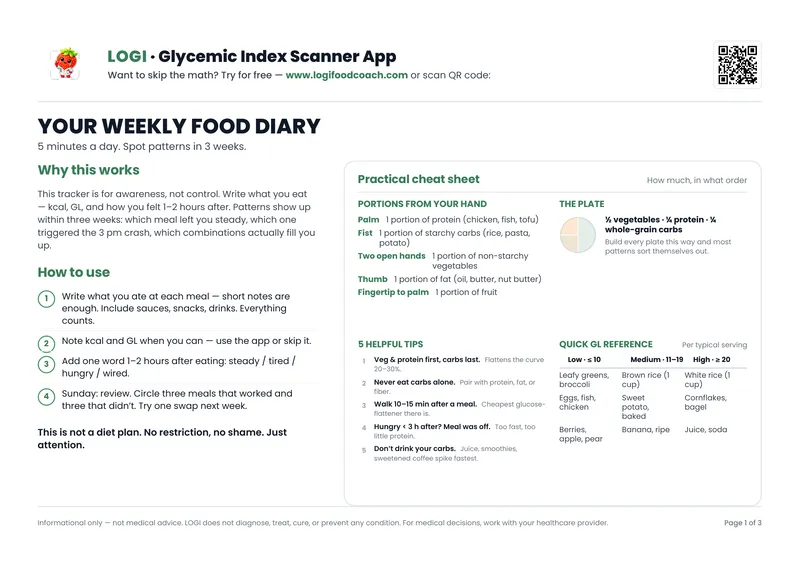
Free PDF — 3 pages
Your Weekly Food Journal
Track meals, glycemic load & mood. Spot patterns in 3 weeks.
No spam. Unsubscribe anytime.