Low-GI Laksa with Shirataki Noodles
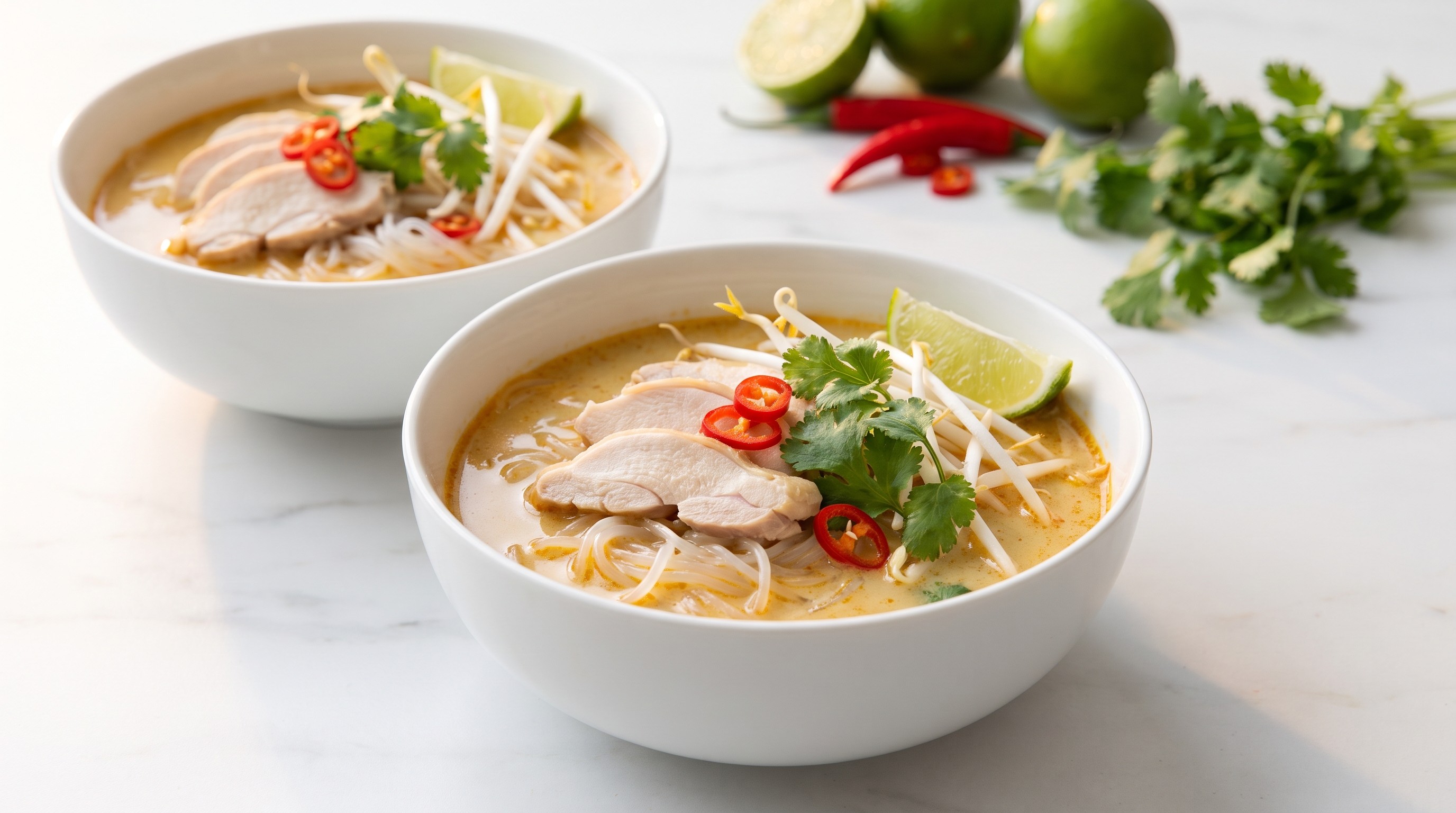
Aromatic coconut curry laksa with near-zero-carb shirataki noodles and tender chicken thigh — all the soul-warming richness with minimal blood sugar impact.
Classic laksa is one of Southeast Asia's most beloved noodle soups, but the traditional rice vermicelli can send blood glucose soaring. This adaptation keeps the deeply spiced coconut broth completely authentic while swapping in shirataki noodles — made from the konjac plant's glucomannan fibre — which contribute virtually zero digestible carbohydrate. The result is a bowl that tastes indulgent yet barely registers on the glycemic scale.
Boneless chicken thigh provides generous protein and healthy fats that further blunt any glucose response, while the full-fat coconut milk delivers satiety and carries the laksa's signature richness. Red curry paste, lemongrass, and fish sauce build layers of fragrance without adding meaningful sugar. Together, the fat-protein-fibre combination creates a meal that keeps energy levels steady for hours rather than triggering the spike-and-crash pattern common with carb-heavy noodle soups.
For the gentlest blood sugar response, start with a few bites of the crunchy bean sprouts before diving into the broth — raw vegetables eaten first slow gastric emptying and reduce the overall glycemic impact of the meal. A generous squeeze of fresh lime at the table adds brightness and a dose of vitamin C, which some research links to improved post-meal glucose metabolism. This laksa is ready in about twenty-five minutes, making it a realistic weeknight option for anyone managing blood sugar without sacrificing bold, comforting flavour.
Blood Sugar Impact
Very low blood sugar impact expected. With a glycemic load of 6.9 and GI of 22, the shirataki noodles contribute virtually zero digestible carbohydrates, while the high fat content from coconut milk and protein from chicken thigh will further slow any glucose absorption, promoting stable energy for 3-4 hours.
Blood Sugar Tips
- ✓ Eat the chicken and bean sprouts first before sipping the coconut broth — protein and fiber ahead of liquid calories blunts any residual glucose response.
- ✓ Avoid pairing with high-GI sides like jasmine rice or white bread; if you want more bulk, add extra bean sprouts or leafy greens to the bowl.
- ✓ Take a gentle 10-15 minute walk after eating to enhance glucose uptake by your muscles and keep blood sugar steady.
🥗 Ingredients
- 250 g Chicken thigh
- 400 g Shirataki noodles
- 1 tbsp Vegetable oil
- 40 g Red curry paste
- 1 pcs Lemongrass
- 400 ml Coconut milk
- 300 ml Chicken stock
- 1 tbsp Fish sauce
- 80 g Bean sprouts
- 1 pcs Red chili
- 10 g Cilantro
- 1 pcs Lime
- 8.8 oz Chicken thigh
- 14.1 oz Shirataki noodles
- 1 tbsp Vegetable oil
- 1.4 oz Red curry paste
- 1 pcs Lemongrass
- 1.7 cups Coconut milk
- 1.3 cups Chicken stock
- 1 tbsp Fish sauce
- 2.8 oz Bean sprouts
- 1 pcs Red chili
- 0.4 oz Cilantro
- 1 pcs Lime
👨🍳 Instructions
- 1
Drain the shirataki noodles and rinse them thoroughly under cold running water for about thirty seconds to remove any residual liquid. Shake off excess water.
- 2
Place a dry non-stick pan over medium-high heat. Add the rinsed noodles and toss them for roughly two minutes until they stop squeaking against the pan and the surface appears dry. This step removes excess moisture so the noodles absorb the laksa broth better. Transfer to a bowl and set aside.
- 3
Slice the chicken thigh into thin strips, roughly 5 mm thick, cutting against the grain for tenderness. Bruise the lemongrass stalk firmly with the flat side of a knife and cut it into three pieces. Thinly slice the red chilli and pick the cilantro leaves from the stems. Cut the lime in half.
- 4
Heat the vegetable oil in a large, deep saucepan over medium heat. Add the red curry paste and lemongrass pieces, then stir-fry for about one minute until the paste darkens slightly, the oil turns a deep orange, and the kitchen fills with fragrance. Note: check your curry paste label for added sugar — many commercial brands include cane sugar or palm sugar, which can raise the glycemic load of the dish.
- 5
Pour in the coconut milk and chicken stock, stirring to dissolve the curry paste evenly into the liquid. Bring the broth to a gentle simmer — avoid a rolling boil, which can cause the coconut milk to separate and turn grainy.
- 6
Add the chicken strips to the simmering broth. Cook for eight minutes without stirring too frequently, allowing the chicken to poach gently until completely cooked through and no longer pink in the centre.
- 7
Stir in the fish sauce, then taste the broth and adjust the seasoning — a little more fish sauce for salt, or a squeeze of lime for brightness. Remove and discard the lemongrass pieces.
- 8
Divide the dry-fried shirataki noodles between two deep bowls. Ladle the hot broth and chicken over the noodles. Top each bowl with a handful of bean sprouts, sliced red chilli, and cilantro leaves. Serve immediately with a lime half alongside for squeezing over at the table.
📊 Nutrition Per Serving
| Per Serving | Whole Dish | |
|---|---|---|
| Calories | 850 | 1700 |
| Carbs | 32g | 64g |
| Sugars | 10g | 19g |
| Added Sugars | 0g | 1g |
| Natural Sugars | 9g | 18g |
| Protein | 40g | 80g |
| Fat | 66g | 132g |
| Saturated Fat | 47g | 93g |
| Unsaturated Fat | 19g | 39g |
| Fiber | 12g | 25g |
| Soluble Fiber | 5g | 10g |
| Insoluble Fiber | 8g | 15g |
| Sodium | 2089mg | 4177mg |
Predicted Glucose Response
What if you...
Estimated model — individual responses vary. Not medical advice.
🔄 Lower GI Swaps
Rice vermicelli has a GI of 55–60 and delivers around 45 g of rapidly digested carbohydrate per serving. Shirataki noodles are made from glucomannan fibre and contain virtually zero digestible carbohydrate, dropping the glycemic load of the entire bowl from roughly 28 down to 7.
Many commercial red curry pastes contain cane sugar or palm sugar as a top-five ingredient, which can add 4–8 g of sugar per serving. Always check the label and choose a brand with no added sugar, or make your own paste from scratch to keep the glycemic load minimal.
Standard fish sauce is very high in sodium, which many blood-sugar-conscious eaters also monitor since elevated sodium intake can compound cardiovascular risk. Reduced-sodium fish sauce cuts salt by roughly 40 percent while preserving umami. Coconut aminos offer a lower-sodium alternative with a slightly sweeter profile — use a little more to match the savoury intensity.
Generic vegetable oil is often highly refined and rich in omega-6 fatty acids. Coconut oil complements the laksa's coconut base and contains medium-chain triglycerides that are metabolised differently from long-chain fats. Avocado oil has a high smoke point and a favourable monounsaturated fat profile.
🔬 The Science Behind This Recipe
Why This Laksa Loves Your Blood Sugar
Traditional laksa is built on rice vermicelli, a refined-starch noodle with a GI around 55–60 that can deliver 45 g or more of rapidly digested carbohydrate per bowl. This version replaces the vermicelli with shirataki noodles, which are composed almost entirely of glucomannan — a soluble fibre derived from the konjac root. Glucomannan is not broken down by human digestive enzymes, so it passes through the gut without raising blood glucose at all. The net digestible carbohydrate from the noodles is effectively zero.
The coconut milk and chicken thigh contribute a high proportion of fat and protein to the meal. Both macronutrients slow gastric emptying — the rate at which food leaves the stomach and enters the small intestine — which means any residual carbohydrate from the curry paste or vegetables is absorbed more gradually. Research consistently shows that meals with a higher fat-to-carbohydrate ratio produce flatter post-meal glucose curves.
Bean sprouts, served raw on top, add crunch and a small amount of additional fibre. Eating fibre-rich vegetables at the start of a meal has been shown in clinical studies to reduce post-meal glucose spikes by up to 30 percent compared to eating carbohydrates first. The fresh lime juice squeezed over at serving contributes citric acid, which may further moderate the glycemic response by slowing starch digestion — though in this dish, starch is already minimal.
With an estimated glycemic index of 22 and a glycemic load of just 7 per serving, this laksa sits firmly in the low-GI, low-GL category, making it suitable for people aiming to keep blood sugar stable throughout the day.
Related recipes
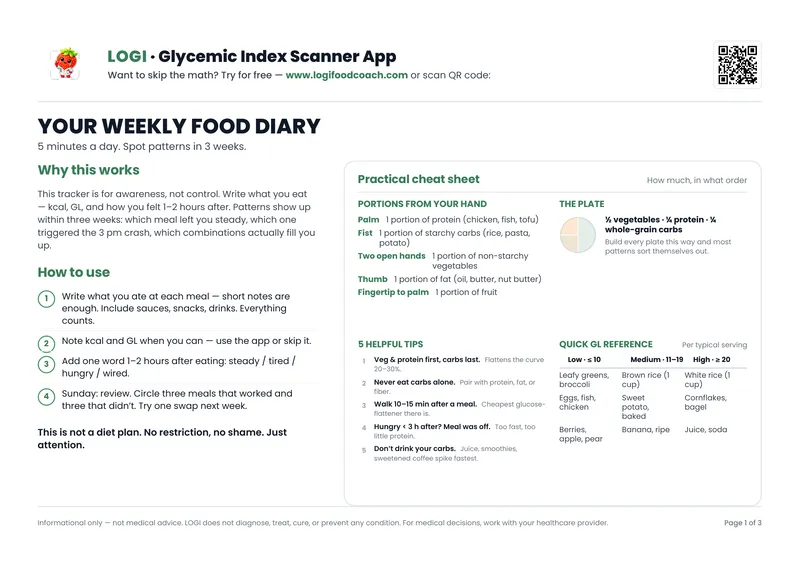
Free PDF — 3 pages
Your Weekly Food Journal
Track meals, glycemic load & mood. Spot patterns in 3 weeks.
No spam. Unsubscribe anytime.