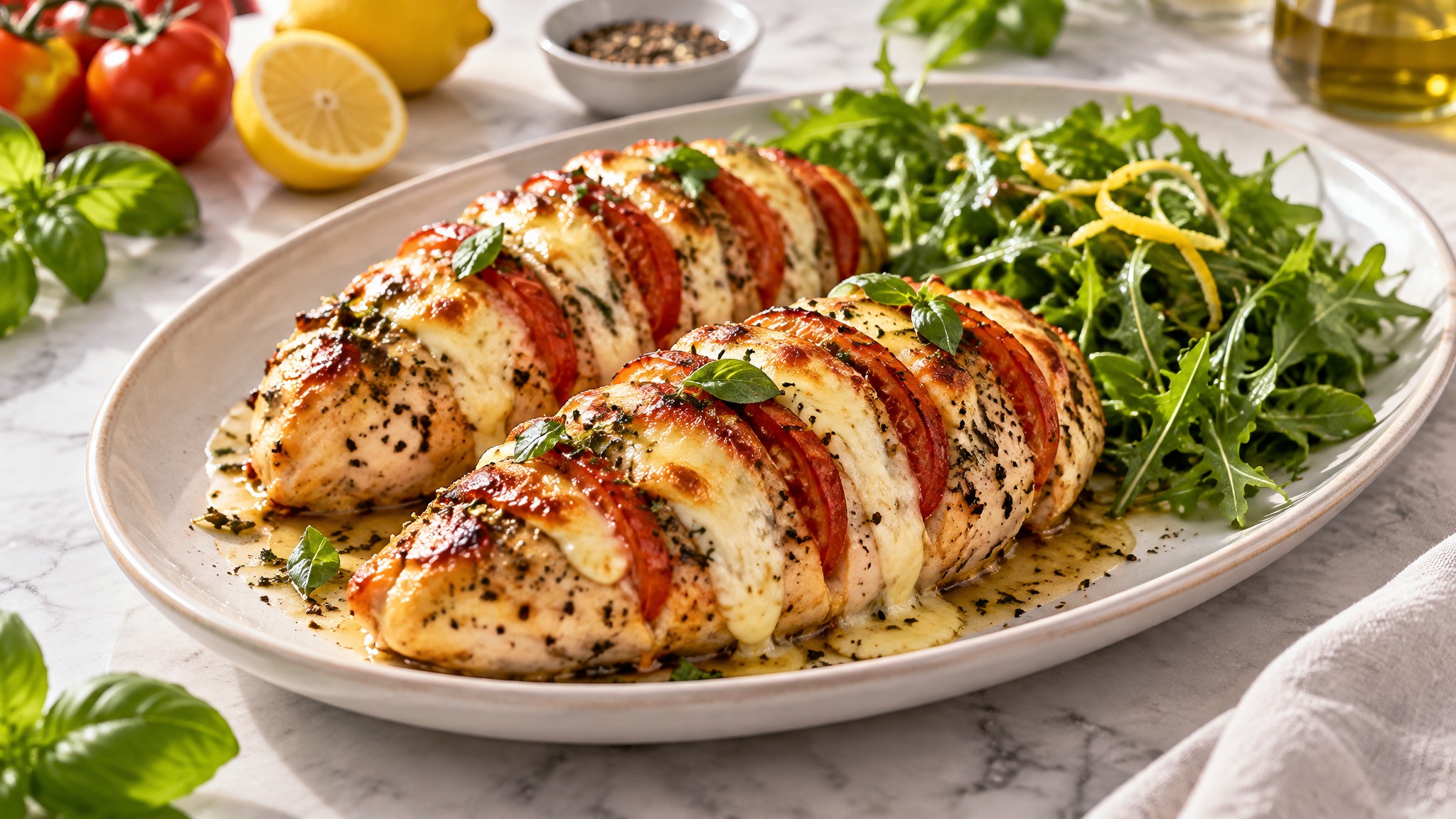
Hasselback Chicken with Tomato, Mozzarella and Lemon Greens
Accordion-cut chicken breast stuffed with juicy tomato and melting mozzarella, roasted in 22 minutes and served with lemony greens for a steady, low-GL dinner.
The hasselback cut started at Stockholm's Hasselbacken restaurant, where potatoes were sliced into thin, fanned layers that crisp at the edges. Here the same accordion cut goes into chicken breast. Each deep slit holds a thin half-moon of ripe tomato and a slice of fresh mozzarella. As the chicken roasts, the cheese melts into every pocket and the tomato softens into a light, savoury juice that keeps the meat moist. It looks impressive, but it takes only about ten minutes to prepare. Each serving uses about 180 g of raw chicken breast, which gives roughly 40 g of protein. Use 150 to 180 g per person, depending on your appetite and protein goals.
The classic potato version is high glycemic, so this recipe swaps the starch for a bright salad of mixed greens dressed with lemon juice and olive oil. Chicken breast and mozzarella provide plenty of protein and some fat with almost no carbohydrate. Tomatoes and leafy greens are very low GI and add fibre, water and antioxidants. The acid in the lemon dressing may also help soften the blood sugar response to the meal. Nothing on the plate is refined, there is no added sugar, and the only liquid besides the dressing is the natural pan juice.
If you need more energy, for example on an active day, add a slow-carb side. Good options are 100 g (about 1/2 cup) of cooked lentils, 80 g (about 1/2 cup) of cooked quinoa, or 100 g of small new potatoes boiled in their skins and cooled slightly. Any of these raises the meal's glycemic load from about 1 to roughly 5–12, which is still in the low-to-moderate range. A note for anyone taking insulin or sulfonylureas: without a side, this meal is very low in carbohydrate, and that can increase the risk of low blood sugar if your medication isn't adjusted. Check with your doctor or diabetes team, and consider adding one of the sides above. For the best result, eat a few forkfuls of the lemon greens before you start on the chicken. It works equally well as a weekday lunch or an early dinner.
Blood Sugar Impact
Minimal impact. This meal is high in protein and fat and has almost no carbs, so blood sugar should stay flat and you should have steady energy for 3-4 hours.
Blood Sugar Tips
- ✓ Eat the lemon-dressed greens and tomatoes first, then the chicken and mozzarella, to slow digestion even more.
- ✓ If you add a side starch like bread, potatoes or rice, keep the portion small and eat it last. A whole-grain or legume option is a better choice.
- ✓ Take a 10-minute walk after the meal to help your muscles use glucose and keep blood sugar steady.
🥗 Ingredients
- 360 g Chicken breast
- 0.5 tsp Salt
- 0.5 tsp Black pepper
- 2 pcs Tomato
- 125 g Mozzarella
- 1.5 tbsp Olive oil
- 120 g Mixed salad greens
- 1 tbsp Lemon juice
- 12.7 oz Chicken breast
- 0.5 tsp Salt
- 0.5 tsp Black pepper
- 2 pcs Tomato
- 4.4 oz Mozzarella
- 1.5 tbsp Olive oil
- 4.2 oz Mixed salad greens
- 1 tbsp Lemon juice
👨🍳 Instructions
- 1
Preheat the oven to 200°C (400°F). Pat the 2 chicken breasts (about 180 g each) dry with paper towels and lay them flat, side by side, in a small baking dish.
- 2
Cut the tomatoes in half from top to bottom, then slice each half into thin half-moons about 5 mm (1/4 in) thick. Cut the mozzarella into 12–14 thin slices of about the same size. Pat the mozzarella dry with a paper towel so it doesn't make the dish watery.
- 3
With a sharp knife, make 6–7 deep crosswise cuts along each breast, spacing them about 1 cm (1/2 in) apart. Stop about 1 cm above the bottom so each breast stays in one piece and fans open like an accordion.
- 4
Season the chicken all over with the salt and black pepper, working some of the seasoning down into each cut.
- 5
Fill the cuts by tucking a tomato slice into one and a mozzarella slice into the next, alternating along each breast. Drizzle 1 tbsp of the olive oil evenly over the top.
- 6
Roast for 20–22 minutes, until the mozzarella is golden and bubbling and a thermometer in the thickest part of the chicken reads 74°C (165°F).
- 7
Take the dish out of the oven and let the chicken rest for 5 minutes so the juices settle back into the meat.
- 8
While the chicken rests, toss the salad greens in a bowl with the lemon juice and the remaining 1/2 tbsp of olive oil until lightly coated. If you are serving a slow-carb side such as lentils, quinoa or skin-on new potatoes, warm it now.
- 9
Put the chicken on plates, spoon the pan juices over it, and serve the lemon greens alongside. Eat a few bites of salad first for a gentler blood sugar response.
📊 Nutrition Per Serving
| Per Serving | Whole Dish | |
|---|---|---|
| Calories | 565 | 1130 |
| Carbs | 9g | 17g |
| Sugars | 4g | 7g |
| Natural Sugars | 4g | 7g |
| Protein | 69g | 137g |
| Fat | 28g | 56g |
| Saturated Fat | 10g | 21g |
| Unsaturated Fat | 17g | 35g |
| Fiber | 3g | 6g |
| Soluble Fiber | 1g | 2g |
| Insoluble Fiber | 2g | 4g |
| Sodium | 1061mg | 2121mg |
Predicted Glucose Response
What if you...
Estimated model — individual responses vary. Not medical advice.
🔄 Lower GI Swaps
Part-skim mozzarella and ricotta melt well, contain less saturated fat and still have almost no carbohydrate. The dairy-free option suits people who avoid dairy. Check the label and choose one with no more than 2 g of carbohydrate per serving, because some brands add starch.
Roasted peppers are low GI and give a similar sweet, juicy filling. Sun-dried tomatoes have a lot of concentrated sugar and more calories than fresh tomatoes, so use only 1–2 tbsp for the whole dish. That keeps the glycemic load low.
Both are very low GI and high in fibre. Eaten first, they help slow digestion of the rest of the meal.
These slow-carb sides add energy for active days or for people on glucose-lowering medication. They raise the meal's GL from about 1 to roughly 5–12. Lentils have the smallest effect and new potatoes the largest.
🔬 The Science Behind This Recipe
Glycemic index (GI) measures how quickly a carbohydrate food raises blood sugar. Chicken, mozzarella and olive oil contain almost no carbohydrate, so they don't have a meaningful GI of their own. The GI of about 12 given for this dish is an estimate for the whole meal, based on the small amount of carbohydrate from the tomatoes, greens and lemon juice. Glycemic load (GL) is the more useful number here because it accounts for how much carbohydrate you actually eat. At roughly 1 per serving, the GL is very low, and anything under 10 counts as low.
The protein in the chicken and cheese triggers the release of gut hormones such as GLP-1, which slow the rate at which the stomach empties. The fat in the mozzarella and olive oil slows it further. The fibre in the greens and tomatoes adds bulk and slows things down too. Eating the salad first puts that fibre in your stomach before anything else, and studies on food order show this can lower the rise in glucose after a meal. Lemon juice adds a little acid, and some research suggests acid can modestly slow starch digestion and the emptying of the stomach. That matters mainly if you serve the dish with a carbohydrate side.
This meal contains very little carbohydrate, so it does more than keep blood sugar stable. If you take insulin or sulfonylureas, it could also let your blood sugar drop too low, so plan your doses with your care team or add a measured slow-carb side.
Related recipes
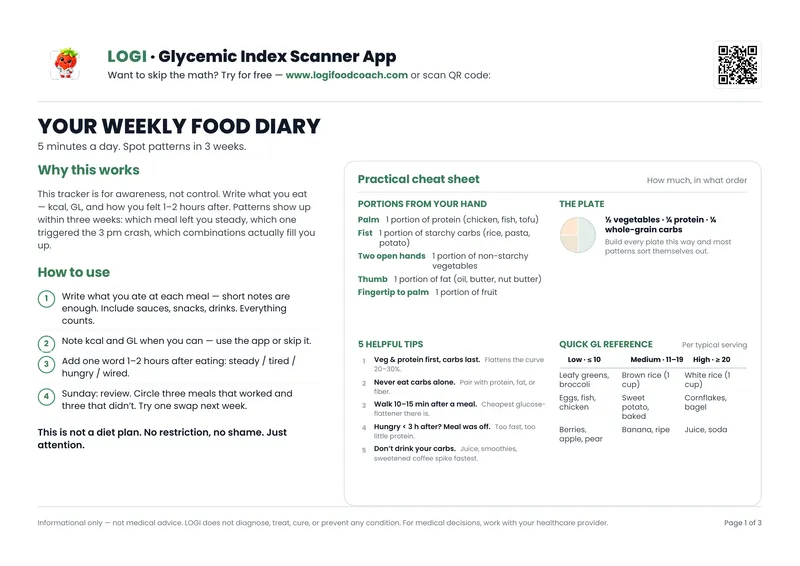
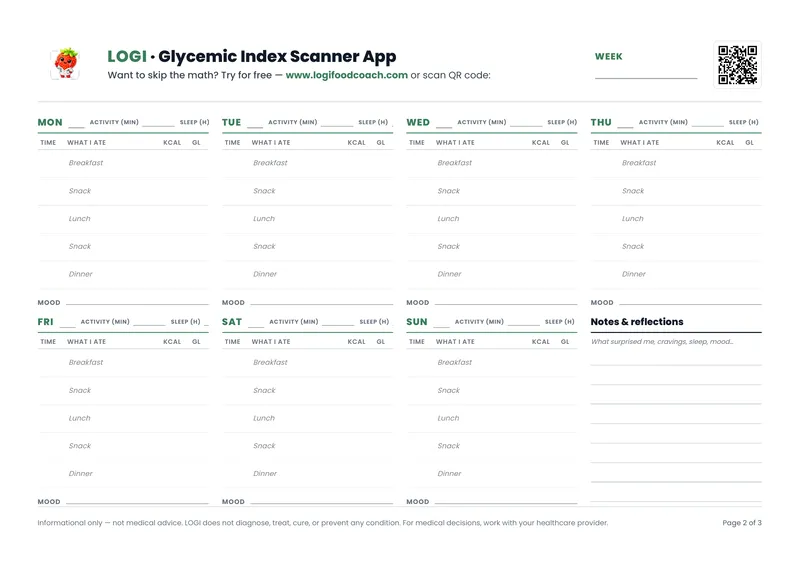
Free PDF — 3 pages
Your Weekly Food Journal
Track meals, glycemic load & mood. Spot patterns in 3 weeks.
No spam. Unsubscribe anytime.