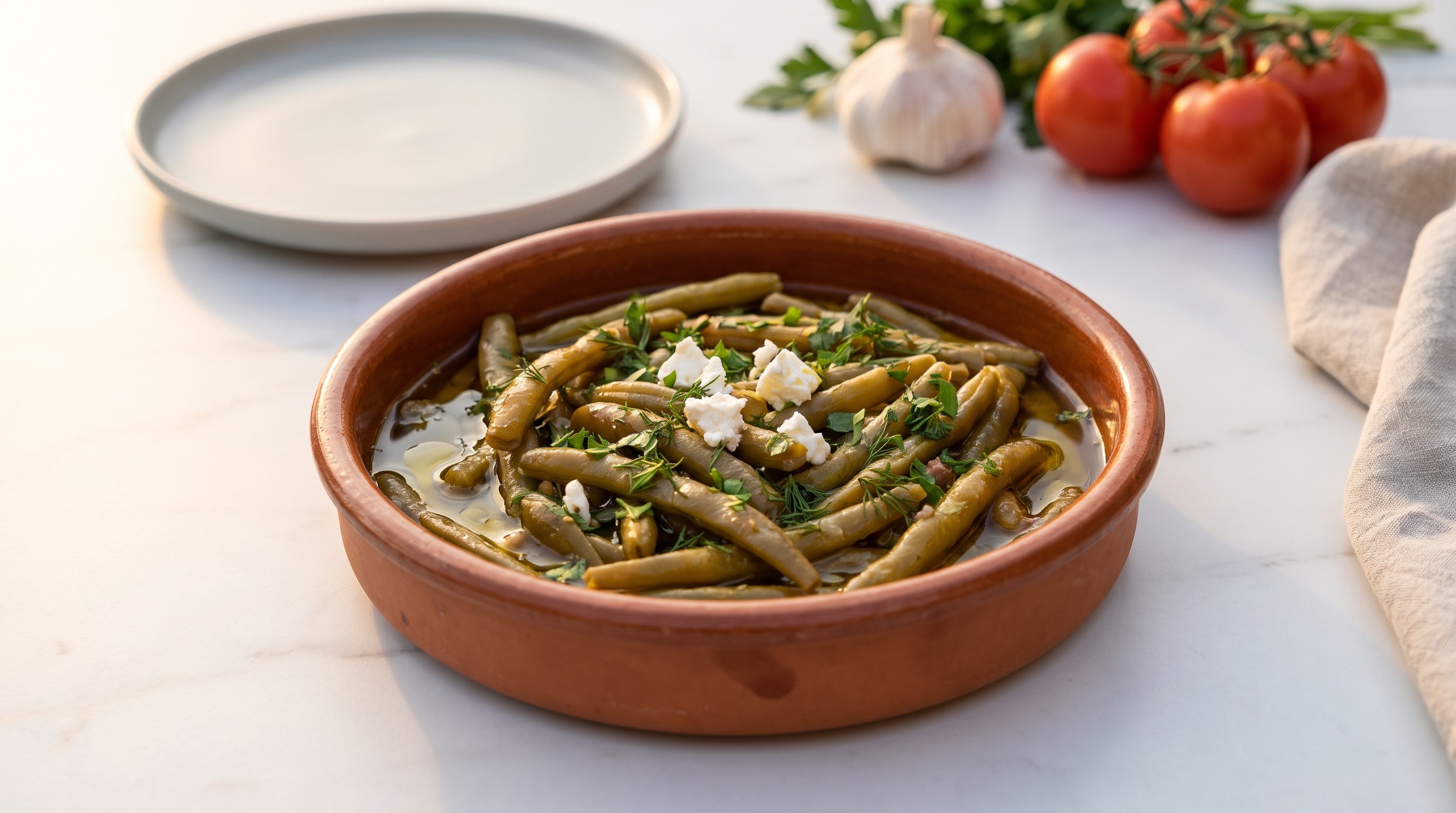
Fasolakia Ladera (Greek Green Beans Braised in Tomato)
Silky Greek green beans slow-braised in olive oil and tomato — a fiber-rich, very low-GI main course that keeps blood sugar beautifully steady.
Fasolakia ladera is one of the crown jewels of Greek "ladera" cooking — vegetables braised generously in extra-virgin olive oil until they turn meltingly tender. Green beans sit at the very bottom of the glycemic index (GI ~15), and when you pair them with healthy monounsaturated fat from olive oil and the soluble fiber in slow-cooked tomatoes, you get a dish that produces an almost flat glucose curve. This is comfort food that works hard for your metabolism.
The technique matters as much as the ingredients. Slow braising over low heat for forty minutes breaks down the beans' cell walls without spiking their glycemic load, because the fiber matrix stays intact and the generous olive oil further slows gastric emptying. The small amount of natural sweetness from the onion and tomato paste is tempered by protein-rich feta crumbled on top at serving — a classic pairing that adds satiety and blunts any residual glucose response.
Serve this warm or at room temperature as a standalone main course with a thick slice of sourdough or alongside grilled fish for extra protein. For optimal blood-sugar management, eat a few bites of the beans and vegetables before any accompanying bread, and consider pairing with a small side salad dressed in vinegar — the acetic acid can reduce the glycemic impact of the entire meal by up to 30 percent. This dish tastes even better the next day, when the flavors deepen and the sauce thickens further.
Blood Sugar Impact
Very low blood sugar impact expected. The combination of high-fiber green beans, healthy fats from olive oil, and slow-digesting vegetable proteins results in a gentle, gradual rise in blood glucose with stable energy for 3-4 hours.
Blood Sugar Tips
- ✓ Eat the green beans and vegetables first before any bread or starchy side dish you may serve alongside, as fiber slows subsequent glucose absorption.
- ✓ Pair with a small portion of protein such as feta cheese or grilled chicken to further blunt any glucose response.
- ✓ If the recipe calls for added sugar, reduce or omit it entirely — the natural sweetness from the tomatoes and slow-cooked onions provides sufficient flavor without the extra glycemic load.
🥗 Ingredients
- 400 g Green bean
- 60 ml Extra-virgin olive oil
- 1 pcs Onion
- 3 pcs Garlic
- 1 tbsp Tomato paste
- 200 g Crushed tomato
- 0.5 tsp Sugar
- 0.75 tsp Salt
- 0.25 tsp Black pepper
- 1 pcs Flat-leaf parsley
- 1 tbsp Dill
- 40 g Feta cheese
- 14.1 oz Green bean
- 4 tbsp Extra-virgin olive oil
- 1 pcs Onion
- 3 pcs Garlic
- 1 tbsp Tomato paste
- 7.1 oz Crushed tomato
- 0.5 tsp Sugar
- 0.75 tsp Salt
- 0.25 tsp Black pepper
- 1 pcs Flat-leaf parsley
- 1 tbsp Dill
- 1.4 oz Feta cheese
👨🍳 Instructions
- 1
Wash the green beans, snap off the stem ends, and cut them into roughly 5 cm pieces. Peel and dice the onion into small cubes. Peel and finely mince the garlic cloves.
- 2
Pour the olive oil into a wide saucepan or deep skillet that has a lid. Set it over medium heat and let the oil warm for about a minute until it shimmers.
- 3
Add the diced onion to the pan and cook, stirring now and then, for about 7 minutes until it turns soft, translucent, and just beginning to pick up a light golden colour at the edges.
- 4
Stir in the minced garlic and tomato paste. Cook for 1 minute, stirring constantly, until the paste deepens in colour and the garlic becomes fragrant.
- 5
Add the green beans, crushed tomatoes, 120 ml of water, sugar, salt, and black pepper. Toss everything together so the beans are evenly coated in the sauce. Raise the heat slightly and bring the liquid to a gentle simmer — this should take about 2 minutes.
- 6
Once simmering, cover the pan and turn the heat down to low. Let the beans braise undisturbed for 40 minutes, checking once around the halfway mark. If the sauce looks like it is drying out, add a small splash of water. The beans are done when they are completely tender and the tomato sauce has reduced to a thick, clinging glaze.
- 7
Remove the pan from the heat. Scatter the chopped parsley and dill over the surface of the beans and fold them in gently with a spoon.
- 8
Serve warm or at room temperature in shallow bowls. Crumble the feta cheese over each portion just before eating. For the best blood-sugar response, start with the vegetables before any accompanying bread, and enjoy alongside a protein source such as grilled fish if desired.
📊 Nutrition Per Serving
| Per Serving | Whole Dish | |
|---|---|---|
| Calories | 436 | 872 |
| Carbs | 33g | 67g |
| Sugars | 17g | 34g |
| Added Sugars | 1g | 2g |
| Natural Sugars | 16g | 32g |
| Protein | 10g | 19g |
| Fat | 32g | 64g |
| Saturated Fat | 7g | 14g |
| Unsaturated Fat | 25g | 50g |
| Fiber | 11g | 21g |
| Soluble Fiber | 3g | 6g |
| Insoluble Fiber | 7g | 15g |
| Sodium | 1100mg | 2201mg |
Predicted Glucose Response
What if you...
Estimated model — individual responses vary. Not medical advice.
🔄 Lower GI Swaps
Sugar has a GI of ~65 and directly spikes blood glucose. These zero-GI sweeteners provide the balancing sweetness this braise needs to offset tomato acidity without any impact on blood sugar or glycemic load.
Some canned crushed tomatoes contain added sugars that raise glycemic load. Fresh tomatoes have a lower GI (~15 vs ~25-30 for sweetened canned varieties) and give you full control over sugar content in the braising liquid.
Commercial tomato paste is highly concentrated and some brands include added sugars, increasing glycemic load. Sun-dried tomato paste or a reduced fresh puree delivers intense umami flavor with fewer concentrated sugars per tablespoon.
Cooked onion has a moderate GI (~15) and relatively high natural sugar content (8-9g per onion) that caramelizes during braising. Leek greens, scallions, and celery provide aromatic depth with significantly less natural sugar per serving, marginally reducing the dish's overall glycemic load.
🔬 The Science Behind This Recipe
Here's the science explainer section:
---
Why This Dish Is a Blood Sugar Winner
Fasolakia Ladera is a beautiful example of how traditional Mediterranean cooking naturally supports steady blood sugar. Green beans are the star here — they're packed with soluble fiber, which forms a gel-like barrier in your digestive system that slows the absorption of sugars into your bloodstream. Instead of a rapid spike followed by a crash, you get a gentle, gradual rise in energy. With a glycemic index of just 23 and a glycemic load of 7.8 per serving, this dish sits comfortably in the "low" category on both scales. Remember, glycemic load accounts for how much carbohydrate you're actually eating — not just how fast it hits. A generous bowl of these braised beans delivers satisfying volume without overloading your system.
The generous use of extra-virgin olive oil isn't just for flavor — it plays a key metabolic role. Healthy fats slow gastric emptying, meaning your stomach takes longer to pass food into the small intestine. This built-in braking system gives your body more time to process glucose gradually. The combination of fiber from the green beans and fat from the olive oil creates what nutritionists sometimes call a "glucose buffer" — two complementary mechanisms working together to flatten the blood sugar curve.
Want to maximize the benefits? Try eating the green beans and sauce first before any bread or grains you might serve alongside. This "vegetables first" approach has been shown to reduce post-meal glucose responses. A short 10–15 minute walk after eating can further help your muscles absorb circulating glucose. And if you're adding a side of crusty bread, pair each bite with a forkful of these oil-rich, fiber-dense beans — the protein and fat slow down the carbs beautifully.
Related recipes
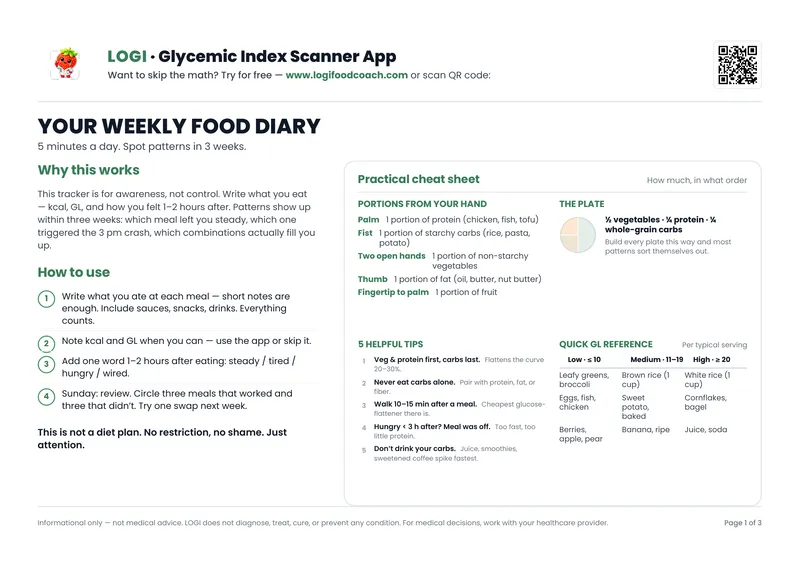
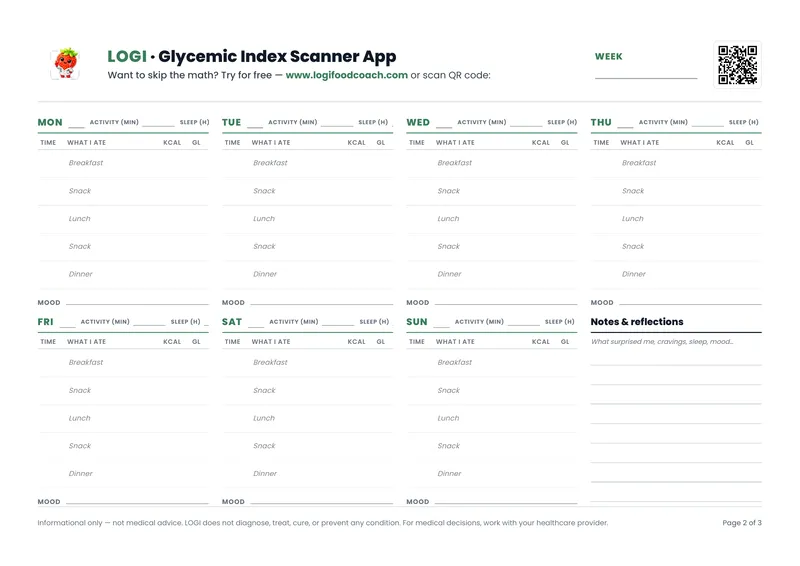
Free PDF — 3 pages
Your Weekly Food Journal
Track meals, glycemic load & mood. Spot patterns in 3 weeks.
No spam. Unsubscribe anytime.