Geroosterde zoete aardappelen met pittige bonenragout
Bloedsuikervriendelijk comfortfood met vezelrijke zoete aardappelen en eiwitrijke bonen in een rokerige paprikasaus—klaar in slechts 35 minuten.
Dit voedzame doordeweekse diner combineert de natuurlijke zoetheid van geroosterde zoete aardappelen met een stevige, eiwitrijke bonenragout die helpt om de bloedsuikerspiegel te stabiliseren. Zoete aardappelen hebben, ondanks hun naam, een lagere glycemische impact dan gewone aardappelen dankzij hun hoge vezelgehalte en resistente zetmeel, hoewel hun GI kan variëren van 44-96 afhankelijk van de variëteit en bereidingswijze—roosteren levert doorgaans een gemiddelde GI van ongeveer 63 op. In combinatie met gemengde bonen—een uitstekende bron van plantaardig eiwit en oplosbare vezels—zorgt deze maaltijd voor een evenwichtige glycemische respons die je urenlang verzadigd houdt. De rokerige paprika en gekarameliseerde uien voegen diepte toe zonder te vertrouwen op toegevoegde suikers. Dit recept bevat een kleine hoeveelheid bruine suiker in de saus voor traditionele smaak, maar dit kan en moet volledig worden weggelaten of vervangen door erythritol of allulose voor optimale bloedsuikercontrole, vooral voor mensen die diabetes of prediabetes beheren. De bonen zorgen voor langdurige energie door hun complexe koolhydraten en eiwitgehalte, wat de glucoseabsorptie vertraagt. Voor optimaal glycemisch beheer eet je eerst het bonenmengsel voordat je aan de zoete aardappel begint, want beginnen met eiwit en vezels helpt de glucosepiek van zetmeel af te vlakken. Dit recept is perfect voor meal prep—maak een dubbele portie van de bonenragout en vries porties in voor snelle, bloedsuikervriendelijke maaltijden door de week. De combinatie van vezels, eiwit en gezonde vetten uit de olijfolie en zure room zorgt voor een complete, verzadigende maaltijd die stabiele bloedsuikerspiegels ondersteunt. Portiecontrole is belangrijk bij zoete aardappelen; dit recept gebruikt kleine zoete aardappelen (ongeveer 150g per stuk) om het koolhydraatgehalte per portie gematigd te houden. De glycemische lading van 71,0 voor het volledige recept betekent dat elke portie een GL heeft van ongeveer 18, wat gematigd is. Voor striktere bloedsuikercontrole kun je overwegen om één kleine zoete aardappel te serveren met 1 kopje ragout en te combineren met extra niet-zetmeelrijke groenten of een salade.
Bloedsuikerimpact
Deze maaltijd zal een matige tot hoge bloedsuikerstijging veroorzaken vanwege de hoge glycemische lading van 71, ondanks de gemiddelde GI van 49. De combinatie van zoete aardappelen en bonen zorgt voor langdurige energie, maar het totale koolhydraatgehalte is aanzienlijk, wat waarschijnlijk 2-3 uur bloedsuikerstijging veroorzaakt voordat het stabiliseert.
Bloedsuikertips
- ✓ Halveer de portiegrootte en voeg niet-zetmeelrijke groenten toe zoals een grote salade of geroosterde broccoli om vezels en volume te verhogen zonder koolhydraten toe te voegen
- ✓ Eet eerst een eiwitrijk voedsel zoals gegrilde kip, vis of een handvol noten 10-15 minuten voor de maaltijd om de koolhydraatabsorptie te vertragen
- ✓ Maak een wandeling van 15-20 minuten na het eten om spieren te helpen glucose op te nemen en de bloedsuikerpiek af te vlakken
🥗 Ingrediënten
- 4 pcs kleine zoete aardappels
- 1 tbsp gerookte paprikapoeder, plus extra om te serveren
- 1 tbsp olijfolie
- 1 pcs grote ui, gesnipperd
- 1 tbsp bruine suiker
- 1 tbsp rode wijnazijn
- 1 tbsp Worcestershire saus
- 800 g gemengde bonen in water, uitgelekt
- 400 g gehakte tomaten
- 4 tbsp lichte zure room, om te serveren
- 4 pcs kleine zoete aardappels
- 1 tbsp gerookte paprikapoeder, plus extra om te serveren
- 1 tbsp olijfolie
- 1 pcs grote ui, gesnipperd
- 1 tbsp bruine suiker
- 1 tbsp rode wijnazijn
- 1 tbsp Worcestershire saus
- 1.8 lb gemengde bonen in water, uitgelekt
- 14.1 oz gehakte tomaten
- 4 tbsp lichte zure room, om te serveren
👨🍳 Instructies
- 1
Verwarm je oven voor op 200°C (180°C hetelucht/gasstand 6). Prik met een vork meerdere keren over de hele zoete aardappel om stoom te laten ontsnappen tijdens het koken.
- 2
Leg de geprakte zoete aardappels op een magnetronbestendig bord en kook op hoog vermogen gedurende 8 minuten, of totdat ze meegeven bij lichte druk maar nog stevig zijn. Deze voorbereidingsstap verkort de oventijd terwijl de textuur behouden blijft.
- 3
Meng in een klein kommetje 1 theelepel gerookte paprikapoeder met 1 theelepel olijfolie en een snufje zout en peper. Wrijf dit mengsel gelijkmatig over de warme zoete aardappels en leg ze dan op een bakplaat. Rooster in de voorverwarmde oven gedurende 10-15 minuten totdat de schil knapperig en gekarameliseerd is.
- 4
Terwijl de zoete aardappels roosteren, verhit je de resterende olijfolie in een grote koekenpan of steelpan op middelhoog vuur. Voeg de gesnipperde ui toe en bak 5-6 minuten, af en toe roerend, totdat de ui zacht is en aan de randjes goudbruin begint te worden.
- 5
Voeg de geperste knoflook, resterende gerookte paprikapoeder, rode wijnazijn en Worcestershire saus toe aan de uien. Blijf 1-2 minuten roeren totdat het mengsel geurig en licht plakkerig wordt en de uien bedekt met het smaakvolle glazuur. Let op: Laat de bruine suiker volledig weg voor optimale bloedsuikercontrole, of gebruik erythritol of allulose als vervanger als je de traditionele smaak wilt.
- 6
Voeg de uitgelekte gemengde bonen en gehakte tomaten zonder toegevoegde suiker toe, samen met 50 ml water om een sausachtige consistentie te krijgen. Roer goed door elkaar, verlaag het vuur naar middel-laag en laat 8-10 minuten sudderen, af en toe roerend, totdat de saus dikker wordt en de smaken samensmelten. Breng op smaak met zout en peper.
- 7
Om te serveren, snijd je elke geroosterde zoete aardappel in de lengte door en druk je de uiteinden voorzichtig open. Schep de pittige bonenragout royaal over elke aardappel (ongeveer 1 kop per portie), doe er een eetlepel lichte zure room op en werk af met een extra snufje gerookte paprikapoeder voor kleur en smaak.
- 8
Voor een optimale bloedsuikerspiegel kun je het beste eerst het bonenmengsel eten voordat je het zoete aardappelvlees eet, omdat de eiwitten en vezels helpen om de glycemische reactie van het zetmeel te matigen. Bewaar overgebleven bonenragout in een luchtdichte bak in de koelkast tot 4 dagen of vries in tot 3 maanden. Elke portie levert ongeveer 18g glycemische belasting, wat matig is—combineer met niet-zetmeelhoudende groenten voor een meer uitgebalanceerde maaltijd.
📊 Voeding per portie
| Per portie | Hele gerecht | |
|---|---|---|
| Calorieën | 472 | 1888 |
| Koolhydraten | 85g | 339g |
| Suikers | 17g | 66g |
| Toegevoegde suikers | 4g | 14g |
| Natuurlijke suikers | 13g | 52g |
| Eiwitten | 20g | 79g |
| Vet | 8g | 32g |
| Verzadigd vet | 2g | 9g |
| Onverzadigd vet | 5g | 21g |
| Vezels | 19g | 77g |
| Oplosbare vezels | 1g | 3g |
| Onoplosbare vezels | 1g | 6g |
| Natrium | 267mg | 1066mg |
Voorspelde glucoserespons
Wat als je...
Geschat model — individuele reacties variëren. Geen medisch advies.
🔄 Lager GI alternatieven
Bruine suiker heeft een hoge GI van ongeveer 64 en zal een snelle bloedsuikerpiek veroorzaken. Erythritol en allulose geven zoetheid zonder de bloedglucosespiegels te beïnvloeden. Voor optimale glycemische controle wordt aanbevolen om zoetstof volledig weg te laten, omdat de gekarameliseerde uien en natuurlijke zoetheid van de zoete aardappelen voldoende smaak geven.
Paarse zoete aardappelen bevatten anthocyanines die de insulinegevoeligheid kunnen verbeteren en hebben een lagere GI dan oranje variëteiten. Het verminderen van de portie zoete aardappelen en het toevoegen van niet-zetmeelrijke groenten zoals bloemkool verlaagt de glykemische belasting drastisch terwijl het volume en verzadiging behouden blijven. Pompoen heeft een GI van ongeveer 51, iets lager dan oranje zoete aardappelen.
Traditionele Worcestershiresaus bevat toegevoegde suikers en glucosestroop die de bloedsuikerspiegel kunnen beïnvloeden. Suikervrije versies bieden dezelfde umamismaak zonder de glykemische impact. Kokos aminos met een beetje melasse biedt vergelijkbare diepte met minimale suiker, terwijl tamari en balsamicoazijn vergelijkbare hartige-zurige tonen creëren.
Het specificeren van bonensoorten met een lagere GI zorgt voor optimale bloedsuikercontrole. Zwarte bonen, kidneybonen en kikkererwten hebben allemaal GI-waarden onder de 35, waardoor ze uitstekende keuzes zijn voor glykemisch beheer. Hun hoge eiwitgehalte (7-8g per half kopje) en vezelgehalte (6-8g per half kopje) vertragen de glucoseopname verder en bevorderen verzadiging.
Lichte zure room bevat vaak toegevoegde suikers, stabilisatoren en gemodificeerd zetmeel die de bloedsuikerspiegel kunnen beïnvloeden. Volle versies hebben minder toevoegingen en het vetgehalte helpt de glucoseopname te vertragen. Griekse yoghurt biedt extra eiwit (ongeveer 10g per portie) wat de glykemische respons verder matigt. Cashewroom biedt een zuivelvrij alternatief met gezonde vetten.
Bruine suiker verhoogt de bloedsuikerspiegel nog steeds snel; zoetstoffen met een lagere GI hebben de voorkeur.
🔬 De wetenschap achter dit recept
Zoete aardappelen bevatten resistent zetmeel en oplosbare vezels die de glucoseabsorptie vertragen, wat resulteert in een meer geleidelijke bloedsuikerstijging vergeleken met gewone aardappelen. Hun GI varieert aanzienlijk (44-96) op basis van variëteit, bereidingswijze en temperatuur—roosteren op 200°C levert doorgaans een gemiddelde GI van ongeveer 63 op. Het vezelgehalte (ongeveer 3-4g per portie van 150g) helpt de glycemische respons te matigen. In combinatie met bonen, die zowel oplosbare vezels als eiwit leveren (ongeveer 7-8g per halve kop portie), wordt de algehele glycemische impact verder verminderd. Het eiwit en de vezels in bonen vertragen de maaglediging en glucoseabsorptie, wat zorgt voor een stabielere bloedsuikercurve. Het eten van de eiwitrijke bonenragout vóór de zetmeelrijke zoete aardappel maakt gebruik van het tweede-maaltijdeffect, waarbij eiwit en vezels die eerst worden geconsumeerd de glucosepiek van daarna gegeten koolhydraten kunnen verminderen. De toevoeging van azijn in de ragout kan ook de insulinegevoeligheid verbeteren en de postprandiale glucosespiegels verlagen. Voor optimale bloedsuikercontrole gebruik je kleinere zoete aardappelen (150g per stuk), laat je toegevoegde suikers volledig weg en combineer je met extra niet-zetmeelrijke groenten om het vezelgehalte te verhogen en de algehele glycemische lading van de maaltijd te verlagen.
Gerelateerde recepten
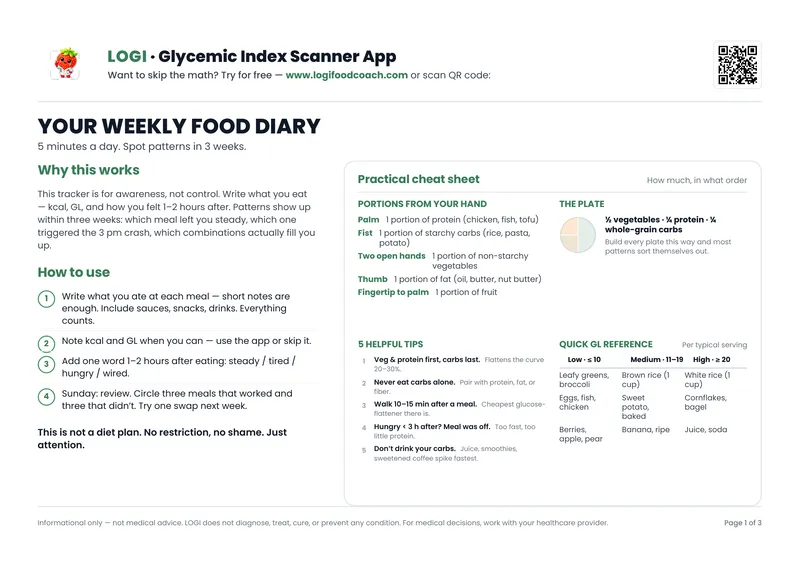
Gratis PDF — 3 pagina's
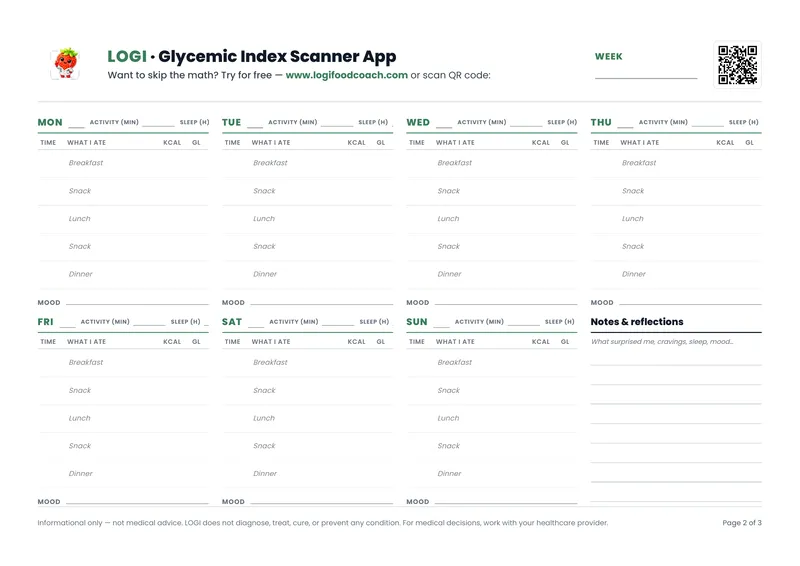
Je wekelijks voedingsdagboek
Noteer maaltijden, glycemische lading & stemming. Ontdek patronen in 3 weken.
Geen spam. Altijd opzegbaar.