Patate dolci al forno con ragù di fagioli affumicato
Comfort food amico della glicemia con patate dolci ricche di fibre e fagioli proteici in salsa affumicata alla paprika—pronto in soli 35 minuti.
Questa cena nutriente per tutti i giorni combina la dolcezza naturale delle patate dolci al forno con un sostanzioso ragù di fagioli ricco di proteine che aiuta a stabilizzare i livelli di zucchero nel sangue. Le patate dolci, nonostante il nome, hanno un impatto glicemico inferiore rispetto alle patate normali grazie al loro alto contenuto di fibre e amido resistente, anche se il loro IG può variare da 44 a 96 a seconda della varietà e del metodo di cottura—la cottura al forno produce tipicamente un IG moderato intorno a 63. Quando abbinate a fagioli misti—un'eccellente fonte di proteine vegetali e fibre solubili—questo piatto crea una risposta glicemica equilibrata che ti mantiene sazio per ore. La paprika affumicata e le cipolle caramellate aggiungono profondità senza fare affidamento su zuccheri aggiunti. Questa ricetta include una piccola quantità di zucchero di canna nella salsa per il sapore tradizionale, ma questo può e dovrebbe essere omesso completamente o sostituito con eritritolo o allulosio per un controllo ottimale della glicemia, specialmente per chi gestisce diabete o prediabete. I fagioli forniscono energia sostenuta attraverso i loro carboidrati complessi e il contenuto proteico, che rallenta l'assorbimento del glucosio. Per una gestione glicemica ottimale, mangia prima il composto di fagioli e poi la patata dolce, poiché iniziare con proteine e fibre aiuta a smorzare il picco glicemico degli amidi. Questa ricetta è perfetta per la preparazione dei pasti—prepara una doppia porzione del ragù di fagioli e congela le porzioni per pasti veloci e amici della glicemia durante la settimana. La combinazione di fibre, proteine e grassi sani dall'olio d'oliva e dalla panna acida crea un pasto completo e soddisfacente che supporta livelli stabili di zucchero nel sangue. Il controllo delle porzioni è importante con le patate dolci; questa ricetta usa patate dolci piccole (circa 150g ciascuna) per mantenere moderato il contenuto di carboidrati per porzione. Il carico glicemico di 71,0 per la ricetta completa significa che ogni porzione ha un CG di circa 18, che è moderato. Per una gestione più rigorosa della glicemia, considera di servire una patata dolce piccola con 1 tazza di ragù e abbinala a verdure non amidacee aggiuntive o un'insalata.
Impatto sulla glicemia
Questo pasto causerà un aumento moderato o elevato della glicemia a causa dell'alto carico glicemico di 71, nonostante l'IG medio di 49. La combinazione di patate dolci e fagioli fornisce energia sostenuta ma il contenuto totale di carboidrati è sostanziale, causando probabilmente un'elevazione della glicemia per 2-3 ore prima di stabilizzarsi.
Consigli glicemia
- ✓ Riduci la porzione a metà e aggiungi verdure non amidacee come una grande insalata o broccoli al forno per aumentare fibre e volume senza aggiungere carboidrati
- ✓ Mangia prima un alimento ricco di proteine come pollo alla griglia, pesce o una manciata di noci 10-15 minuti prima del pasto per rallentare l'assorbimento dei carboidrati
- ✓ Fai una passeggiata di 15-20 minuti dopo aver mangiato per aiutare i muscoli ad assorbire il glucosio e smorzare il picco glicemico
🥗 Ingredienti
- 4 pcs patate dolci piccole
- 1 tbsp paprika affumicata, più un po' per servire
- 1 tbsp olio d'oliva
- 1 pcs cipolla grande, tritata
- 1 tbsp zucchero di canna
- 1 tbsp aceto di vino rosso
- 1 tbsp salsa Worcestershire
- 800 g fagioli misti in acqua, scolati
- 400 g pomodori tritati
- 4 tbsp panna acida leggera, per servire
- 4 pcs patate dolci piccole
- 1 tbsp paprika affumicata, più un po' per servire
- 1 tbsp olio d'oliva
- 1 pcs cipolla grande, tritata
- 1 tbsp zucchero di canna
- 1 tbsp aceto di vino rosso
- 1 tbsp salsa Worcestershire
- 1.8 lb fagioli misti in acqua, scolati
- 14.1 oz pomodori tritati
- 4 tbsp panna acida leggera, per servire
👨🍳 Istruzioni
- 1
Preriscalda il forno a 200°C (180°C ventilato). Con una forchetta, buca ogni patata dolce più volte su tutta la superficie per permettere al vapore di uscire durante la cottura.
- 2
Metti le patate dolci bucate su un piatto adatto al microonde e cuoci a potenza alta per 8 minuti, o finché cedono a una leggera pressione ma sono ancora sode. Questo passaggio di precottura riduce il tempo in forno mantenendo la consistenza.
- 3
In una ciotolina, unisci 1 cucchiaino di paprika affumicata con 1 cucchiaino di olio d'oliva e un pizzico di sale e pepe. Strofina questo composto uniformemente sulle patate dolci ancora calde, poi trasferiscile su una teglia. Cuoci in forno preriscaldato per 10-15 minuti finché le bucce sono croccanti e caramellate.
- 4
Mentre le patate dolci si cuociono in forno, scalda l'olio d'oliva rimanente in una padella grande o casseruola a fuoco medio. Aggiungi la cipolla tritata e cuoci per 5-6 minuti, mescolando di tanto in tanto, finché si ammorbidisce e inizia a dorarsi sui bordi.
- 5
Aggiungi l'aglio schiacciato, la paprika affumicata rimanente, l'aceto di vino rosso e la salsa Worcestershire alle cipolle. Mescola continuamente per 1-2 minuti finché il composto diventa profumato e leggermente appiccicoso, rivestendo le cipolle con la glassa saporita. Nota: ometti completamente lo zucchero di canna per un controllo ottimale della glicemia, oppure usa eritritolo o allulosio come sostituto se desideri il sapore tradizionale.
- 6
Aggiungi i fagioli misti scolati e i pomodori tritati senza zucchero aggiunto, insieme a 50 ml di acqua per creare una consistenza da salsa. Mescola bene per amalgamare, poi abbassa il fuoco a medio-basso e fai sobbollire per 8-10 minuti, mescolando di tanto in tanto, finché la salsa si addensa e i sapori si fondono insieme. Aggiusta di sale e pepe a piacere.
- 7
Per servire, tagliare ogni patata dolce arrostita per il lungo e premere delicatamente le estremità per aprirla. Distribuire generosamente il ragù di fagioli affumicato su ogni patata (circa 1 tazza per porzione), guarnire con un cucchiaio di panna acida light e completare con un pizzico extra di paprika affumicata per colore e sapore.
- 8
Per una gestione ottimale della glicemia, mangiare prima il composto di fagioli e poi la polpa della patata dolce, poiché le proteine e le fibre aiuteranno a moderare la risposta glicemica dell'amido. Conservare l'eventuale ragù di fagioli avanzato in un contenitore ermetico in frigorifero fino a 4 giorni o in freezer fino a 3 mesi. Ogni porzione fornisce circa 18g di carico glicemico, che è moderato—abbinare con verdure non amidacee per un pasto più equilibrato.
📊 Nutrizione per porzione
| Per porzione | Piatto intero | |
|---|---|---|
| Calorie | 472 | 1888 |
| Carboidrati | 85g | 339g |
| Zuccheri | 17g | 66g |
| Zuccheri aggiunti | 4g | 14g |
| Zuccheri naturali | 13g | 52g |
| Proteine | 20g | 79g |
| Grassi | 8g | 32g |
| Grassi saturi | 2g | 9g |
| Grassi insaturi | 5g | 21g |
| Fibre | 19g | 77g |
| Fibra solubile | 1g | 3g |
| Fibra insolubile | 1g | 6g |
| Sodio | 267mg | 1066mg |
Risposta glicemica prevista
E se tu...
Modello stimato — le risposte individuali variano. Non è un consiglio medico.
🔄 Alternative a basso IG
Lo zucchero di canna ha un IG elevato di circa 64 e causerà un rapido picco glicemico. L'eritritolo e l'allulosio forniscono dolcezza senza influenzare i livelli di glucosio nel sangue. Per un controllo glicemico ottimale, si consiglia di omettere completamente il dolcificante poiché le cipolle caramellate e la dolcezza naturale delle patate dolci forniscono sapore sufficiente.
Le patate dolci viola contengono antociani che possono migliorare la sensibilità all'insulina e hanno un IG più basso rispetto alle varietà arancioni. Ridurre la porzione di patate dolci e aggiungere verdure non amidacee come il cavolfiore abbassa drasticamente il carico glicemico mantenendo volume e sazietà. La zucca butternut ha un IG intorno a 51, leggermente inferiore alle patate dolci arancioni.
La salsa Worcestershire tradizionale contiene zuccheri aggiunti e sciroppo di mais che possono influire sulla glicemia. Le versioni senza zucchero offrono lo stesso sapore umami senza impatto glicemico. Gli aminos di cocco con un tocco di melassa offrono una profondità simile con zuccheri minimi, mentre tamari e aceto balsamico creano note sapide e acidule comparabili.
Specificare varietà di legumi a basso IG garantisce un controllo ottimale della glicemia. Fagioli neri, fagioli rossi e ceci hanno tutti valori di IG inferiori a 35, rendendoli scelte eccellenti per la gestione glicemica. Il loro alto contenuto di proteine (7-8g per mezza tazza) e fibre (6-8g per mezza tazza) rallenta ulteriormente l'assorbimento del glucosio e favorisce la sazietà.
La panna acida light contiene spesso zuccheri aggiunti, stabilizzanti e amidi modificati che possono influire sulla glicemia. Le versioni intere hanno meno additivi e il contenuto di grassi aiuta a rallentare l'assorbimento del glucosio. Lo yogurt greco fornisce proteine aggiuntive (circa 10g per porzione) che moderano ulteriormente la risposta glicemica. La crema di anacardi offre un'alternativa senza latticini con grassi sani.
Lo zucchero di canna fa ancora salire velocemente la glicemia; sono preferibili dolcificanti a basso indice glicemico.
🔬 La scienza dietro questa ricetta
Le patate dolci contengono amido resistente e fibre solubili che rallentano l'assorbimento del glucosio, risultando in un aumento più graduale della glicemia rispetto alle patate normali. Il loro IG varia significativamente (44-96) in base alla varietà, al metodo di cottura e alla temperatura—la cottura al forno a 200°C produce tipicamente un IG moderato intorno a 63. Il contenuto di fibre (circa 3-4g per porzione da 150g) aiuta a moderare la risposta glicemica. Quando combinate con i fagioli, che forniscono sia fibre solubili che proteine (circa 7-8g per mezza tazza), l'impatto glicemico complessivo è ulteriormente ridotto. Le proteine e le fibre nei fagioli rallentano lo svuotamento gastrico e l'assorbimento del glucosio, creando una curva glicemica più stabile. Mangiare il ragù di fagioli ricco di proteine prima della patata dolce amidacea sfrutta l'effetto del secondo pasto, dove proteine e fibre consumate per prime possono ridurre il picco glicemico dai carboidrati mangiati dopo. L'aggiunta di aceto nel ragù può anche migliorare la sensibilità all'insulina e ridurre i livelli di glucosio postprandiale. Per un controllo ottimale della glicemia, usa patate dolci più piccole (150g ciascuna), ometti completamente gli zuccheri aggiunti e abbina a verdure non amidacee aggiuntive per aumentare il contenuto di fibre e ridurre il carico glicemico complessivo del pasto.
Ricette correlate
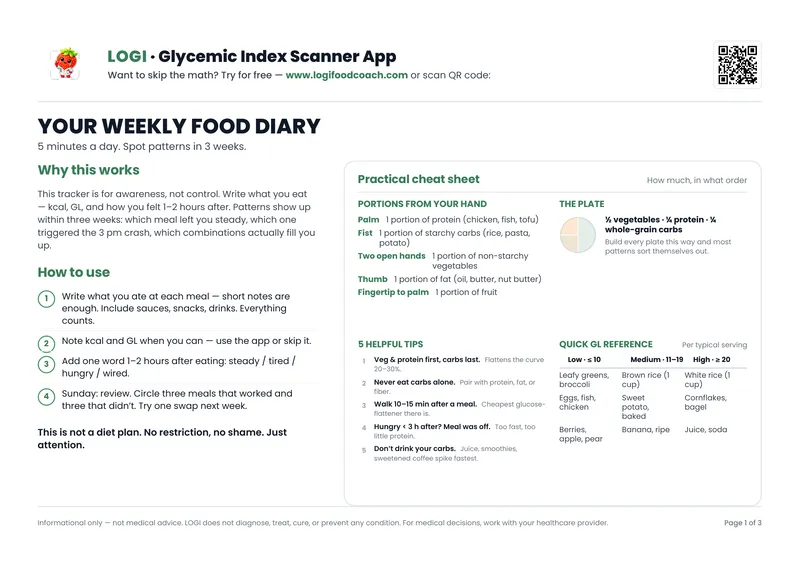
PDF gratuito — 3 pagine
Il tuo diario alimentare settimanale
Registra pasti, carico glicemico e umore. Individua schemi in 3 settimane.
Niente spam. Cancellati quando vuoi.