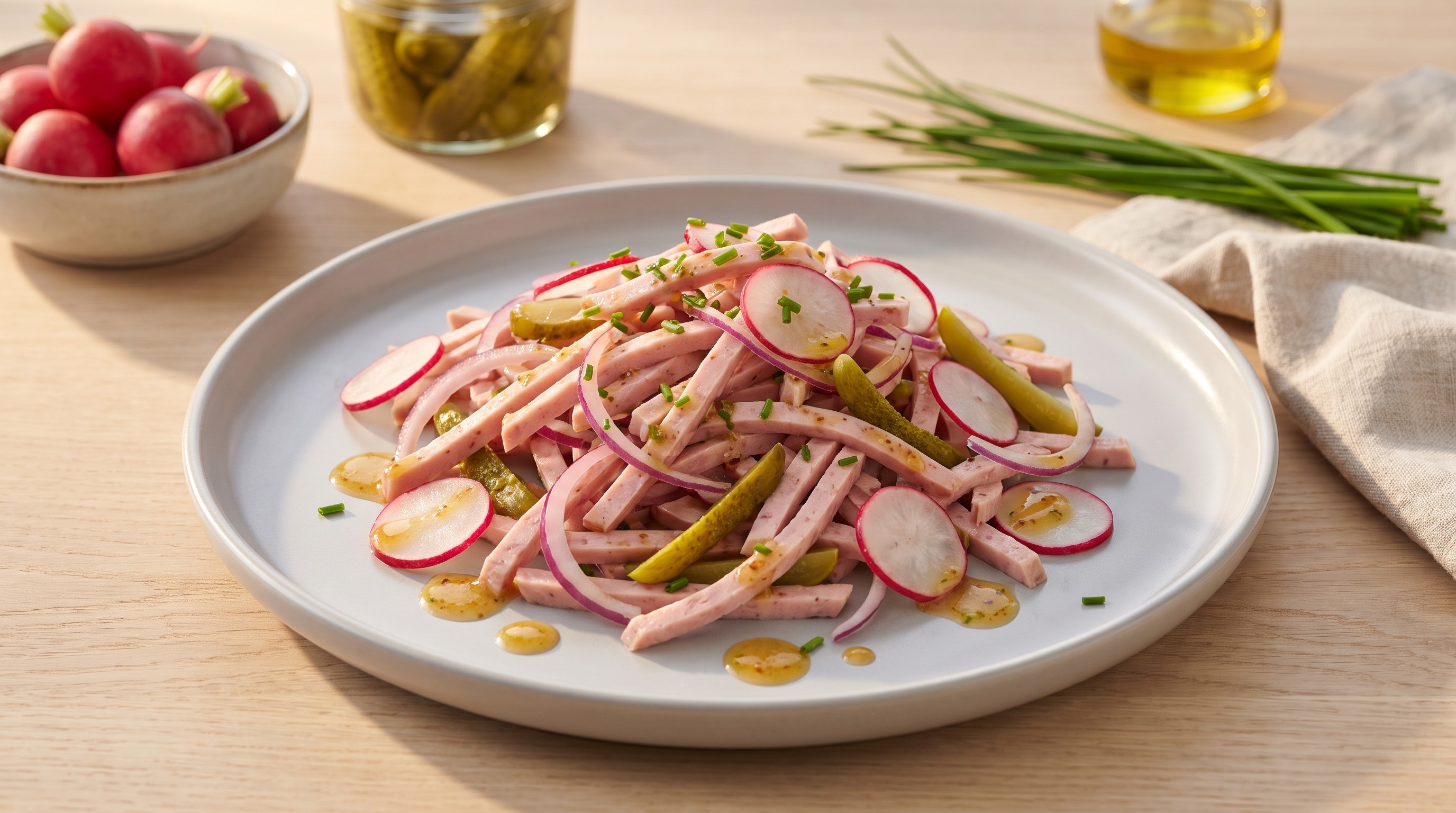
Wurstsalat — German Sausage Salad with Gherkins and Radishes
A tangy Bavarian sausage salad with crunchy radishes, gherkins, and a mustardy vinaigrette — naturally low-glycemic and ready in 25 minutes.
Wurstsalat is proof that blood-sugar-friendly eating can be effortless and deeply satisfying. This classic Bavarian cold salad pairs strips of mild Lyoner sausage with sharp red onion, snappy gherkins, and peppery radishes, all dressed in a brisk white wine vinaigrette sharpened with Dijon mustard. Every component sits comfortably in the low-glycemic range, and the generous splash of vinegar contributes acetic acid — shown in research to slow gastric emptying and reduce post-meal glucose spikes by up to 30 percent.
What makes this recipe remarkable from a metabolic standpoint is what it leaves out. There is no bread, no potato, no added sugar — just protein, healthy fats, and non-starchy vegetables. The sausage delivers steady-burning protein and fat that keeps you satiated for hours without triggering an insulin surge. Radishes and onions contribute fiber and polyphenols that support healthy glucose metabolism, while the gherkins add satisfying crunch with virtually zero glycemic load.
Serve this as a light summer supper or a high-protein lunch. For an even gentler glucose curve, start your meal with a few bites of the raw vegetables before adding the sausage — the fiber creates a physical barrier in the small intestine that slows carbohydrate absorption. Pair with a glass of sparkling mineral water and a side of leafy greens for a complete, blood-sugar-stable Biergarten plate.
Blood Sugar Impact
Very minimal blood sugar impact expected. With a glycemic load of only 1.4 and an estimated GI of 12, this protein-and-vegetable-based salad will cause virtually no blood sugar spike and should provide stable energy for 3-4 hours.
Blood Sugar Tips
- ✓ Eat this salad as a starter before any carbohydrate-containing course to leverage the 'food order' effect — the vinegar, fat, and protein will slow gastric emptying and blunt glucose absorption from subsequent foods.
- ✓ The white wine vinegar and Dijon mustard both contain acetic acid, which has been shown to reduce post-meal blood sugar responses — consider adding an extra splash of vinegar to the dressing for even greater benefit.
- ✓ If serving alongside bread or potatoes, eat the full salad first and wait 10-15 minutes before touching the starchy sides to take advantage of the protein and fat preload effect.
🥗 Ingredients
- 300 g Lyoner sausage
- 1 pcs Red onion
- 6 pcs Radish
- 8 pcs Gherkin
- 2 tbsp Sunflower oil
- 2 tbsp White wine vinegar
- 1 tbsp Dijon mustard
- 0.5 tsp Salt
- 0.5 tsp Black pepper
- 10 g Chive
- 10.6 oz Lyoner sausage
- 1 pcs Red onion
- 6 pcs Radish
- 8 pcs Gherkin
- 2 tbsp Sunflower oil
- 2 tbsp White wine vinegar
- 1 tbsp Dijon mustard
- 0.5 tsp Salt
- 0.5 tsp Black pepper
- 0.4 oz Chive
👨🍳 Instructions
- 1
Peel away any casing from the Lyoner sausage. Slice the sausage into rounds about 5 mm (¼ inch) thick, then stack several rounds together and cut them into neat strips roughly 5 cm (2 inches) long. Transfer the strips to a large mixing bowl.
- 2
Peel the red onion, halve it from root to tip, and slice each half into thin half-rings. Set aside.
- 3
Trim the radishes and slice them into thin rounds, about 2 mm thick. Cut each gherkin lengthwise into thin strips or quarter them lengthwise for a chunkier texture.
- 4
In a small bowl, combine the sunflower oil, white wine vinegar, Dijon mustard, salt, and black pepper. Whisk briskly for about 30 seconds until the dressing emulsifies into a smooth, slightly creamy vinaigrette.
- 5
Pour the vinaigrette over the sausage strips in the large bowl. Add the sliced red onion, radish rounds, and gherkin strips.
- 6
Toss everything together thoroughly with two forks or clean hands, making sure every piece of sausage and vegetable is evenly coated with the dressing.
- 7
Let the salad rest at room temperature for 10 minutes. This resting period allows the sausage to absorb the tangy vinaigrette and all the flavours to meld together.
- 8
Snip the fresh chives finely with kitchen scissors directly over the salad. Give it one final gentle toss and serve immediately on chilled plates.
📊 Nutrition Per Serving
| Per Serving | Whole Dish | |
|---|---|---|
| Calories | 457 | 913 |
| Carbs | 12g | 24g |
| Sugars | 6g | 11g |
| Added Sugars | 2g | 3g |
| Natural Sugars | 4g | 8g |
| Protein | 23g | 46g |
| Fat | 36g | 71g |
| Saturated Fat | 8g | 17g |
| Unsaturated Fat | 26g | 51g |
| Fiber | 3g | 6g |
| Soluble Fiber | 1g | 2g |
| Insoluble Fiber | 2g | 4g |
| Sodium | 3012mg | 6024mg |
Predicted Glucose Response
What if you...
Estimated model — individual responses vary. Not medical advice.
🔄 Lower GI Swaps
Processed sausages like lyoner often contain hidden starches, dextrose, or maltodextrin as fillers and binders, which contribute to a higher glycemic response. Unprocessed poultry has virtually zero carbohydrates and no added sugars, keeping the glycemic load as close to zero as possible.
While neither oil has a direct GI value, extra-virgin olive oil and avocado oil are rich in monounsaturated fatty acids and polyphenols that have been shown to improve insulin sensitivity and help moderate postprandial blood sugar spikes when consumed as part of a meal.
All vinegars help slow gastric emptying and reduce post-meal blood sugar spikes, but apple cider vinegar in particular has been studied for its acetic acid content that may improve insulin sensitivity. Red wine vinegar also adds polyphenols that support glucose metabolism.
Many commercial pickles contain added sugar or high-fructose corn syrup in the brine, which increases glycemic load. Naturally fermented gherkins or fresh cucumber have virtually no sugar and zero glycemic impact. Always check labels for added sweeteners.
🔬 The Science Behind This Recipe
Here's the science explainer section:
---
Why This Salad Is a Blood Sugar Winner
This Wurstsalat is about as gentle on your blood sugar as a meal can get — and the reason comes down to what's *not* on the plate. There are virtually no starches or sugars here, which is why the glycemic load lands at a remarkably low 1.4 per serving. Glycemic load matters more than glycemic index alone because it accounts for the actual amount of carbohydrates you're eating, not just how fast they hit your bloodstream. A food could have a moderate GI, but if the portion contains very few carbs, the real-world impact on your blood sugar stays minimal. That's exactly what's happening here.
Chicken lyoner is the protein anchor of this dish, and protein is one of the most effective nutrients for keeping blood sugar steady. It slows gastric emptying — the speed at which food leaves your stomach — which means any carbohydrates present get absorbed more gradually. Sunflower oil plays a similar supporting role: dietary fat further slows digestion and helps blunt any glucose response. Together, the protein-fat combination in this salad creates a natural buffer against blood sugar spikes. The radishes and gherkins contribute fiber and volume with almost no digestible carbohydrate, adding crunch and satisfaction without moving the glucose needle.
If you're pairing this salad alongside bread or potatoes, here's a practical tip: eat the salad first. Research suggests that eating vegetables, protein, and fat before carbohydrates can reduce post-meal glucose spikes by up to 30–40 percent compared to eating carbs first. A short 10–15 minute walk after your meal can further help your muscles absorb circulating glucose. This Wurstsalat isn't just a side dish — it's a smart starter that primes your body to handle whatever comes next on the plate.
Related recipes
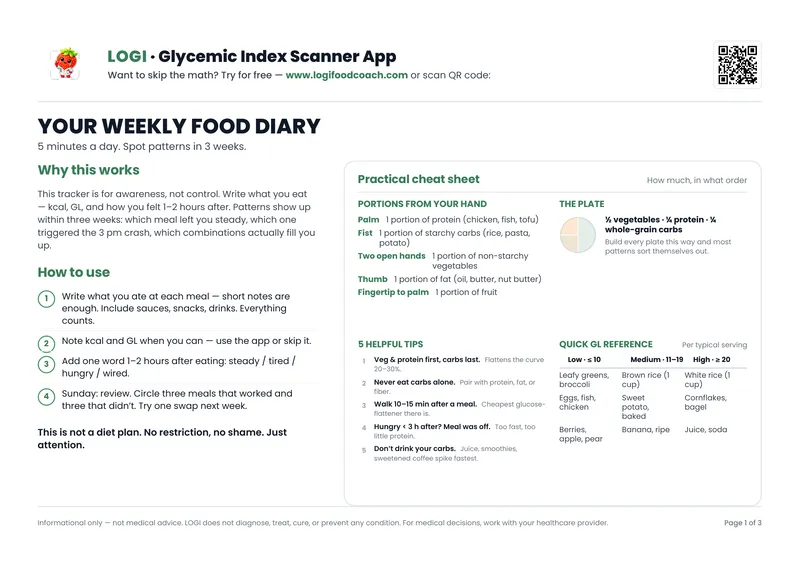
Free PDF — 3 pages
Your Weekly Food Journal
Track meals, glycemic load & mood. Spot patterns in 3 weeks.
No spam. Unsubscribe anytime.