Low-GI Mujadara with Bulgur and Crispy Onions
A blood-sugar-friendly Lebanese classic pairing brown lentils and coarse bulgur under a crown of crispy onions — high fibre, slow-digesting, deeply satisfying.
Mujadara is one of the great comfort dishes of the Levant, and this low-glycemic version keeps every ounce of its soul intact. By swapping white rice for coarse bulgur — a minimally processed whole grain with a GI of around 46 — and tilting the ratio firmly toward protein-rich brown lentils, the dish delivers steady energy without the glucose spike that traditional versions can trigger. The soluble fibre in lentils forms a gel in the gut that slows carbohydrate absorption, while the intact wheat kernel structure of bulgur resists rapid enzymatic breakdown.
The method is beautifully efficient: lentils simmer on one burner while onions turn deep golden in a skillet on the other. A portion of those crispy onions is reserved for the crown — a textural contrast that is, as tradition demands, entirely non-negotiable. Cumin and coriander bloom in the onion-slicked pan before the bulgur and lentils join together to finish cooking in the reserved lentil broth, absorbing every layer of flavour.
Serve with a generous spoonful of full-fat Greek yogurt, which adds protein and healthy fats that further blunt postprandial glucose, and a squeeze of fresh lemon whose acidity has been shown to lower the glycemic response of a meal by up to 20-30 percent. For optimal blood sugar management, eat the yogurt and a few bites of lentils before reaching for the bulgur-heavy portion of the plate.
Blood Sugar Impact
Very low blood sugar impact expected. The combination of whole brown lentils and bulgur wheat provides a high-fiber, high-protein matrix that slows glucose absorption significantly, resulting in a gentle, sustained energy release over 3-4 hours.
Blood Sugar Tips
- ✓ Start with a generous dollop of Greek yogurt — the protein and fat further slow gastric emptying and blunt any residual glucose spike.
- ✓ Squeeze fresh lemon over the dish before eating; the acidity has been shown to lower the glycemic response of starchy meals by up to 20-30%.
- ✓ Take a 10-15 minute walk after the meal to enhance glucose uptake by muscles and keep blood sugar levels even flatter.
🥗 Ingredients
- 150 g Brown lentils
- 80 g Coarse bulgur
- 2 pcs Onion
- 2 tbsp Olive oil
- 1 tsp Ground cumin
- 0.5 tsp Ground coriander
- 1 tsp Salt
- 0.25 tsp Black pepper
- 0.5 pcs Lemon
- 100 g Greek yogurt
- 1 tbsp Flat-leaf parsley
- 5.3 oz Brown lentils
- 2.8 oz Coarse bulgur
- 2 pcs Onion
- 2 tbsp Olive oil
- 1 tsp Ground cumin
- 0.5 tsp Ground coriander
- 1 tsp Salt
- 0.25 tsp Black pepper
- 0.5 pcs Lemon
- 3.5 oz Greek yogurt
- 1 tbsp Flat-leaf parsley
👨🍳 Instructions
- 1
Rinse the brown lentils in a fine-mesh sieve under cold running water until the water runs clear. Transfer them to a medium saucepan, add 500 ml of cold water and a small pinch of salt, and bring to a boil over high heat. Once boiling, reduce to a gentle simmer and cook uncovered for about 20 minutes until the lentils are just tender but still hold their shape with a slight bite.
- 2
While the lentils cook, heat the olive oil in a wide skillet over medium heat. Add all the thinly sliced onions and spread them into an even layer. Cook for 18–20 minutes, stirring every 3–4 minutes, until the onions are deep golden-brown with crispy, caramelised edges. Resist the urge to stir too often — letting them sit builds colour and crunch.
- 3
Using a slotted spoon, lift roughly one-third of the crispy onions onto a plate lined with kitchen paper. These are your garnish — set them aside and keep them uncovered so they stay crisp.
- 4
Drain the cooked lentils through a sieve set over a bowl, catching and reserving 150 ml of the starchy cooking liquid. This liquid will hydrate the bulgur and bind the dish together. Set the drained lentils aside.
- 5
Return the skillet with the remaining onions to medium heat. Add the coarse bulgur, ground cumin, and ground coriander. Stir continuously for about 1 minute until the spices bloom and become fragrant and each grain of bulgur is lightly coated in the spiced oil.
- 6
Tip the drained lentils into the skillet and pour in the reserved 150 ml of cooking liquid. Season with the salt and black pepper, then stir gently to combine everything without crushing the lentils. Bring to a brief simmer, then cover the skillet tightly with a lid, reduce the heat to low, and cook undisturbed for 12 minutes until the bulgur is tender and all the liquid has been absorbed.
- 7
Remove the skillet from the heat and keep it covered for 5 minutes — this resting period allows residual steam to finish cooking the bulgur and makes the grains fluffy. Uncover and fluff the mixture gently with a fork, then fold in the roughly chopped flat-leaf parsley.
- 8
Mound the mujadara onto serving plates, crown generously with the reserved crispy onions, and serve alongside a dollop of Greek yogurt and a lemon wedge. For best blood sugar results, take a few spoonfuls of the yogurt before eating the grain and lentil mixture, and squeeze the lemon over the top — the acidity helps lower the glycemic response of the entire meal.
📊 Nutrition Per Serving
| Per Serving | Whole Dish | |
|---|---|---|
| Calories | 458 | 916 |
| Carbs | 62g | 125g |
| Sugars | 10g | 20g |
| Natural Sugars | 10g | 20g |
| Protein | 19g | 38g |
| Fat | 17g | 34g |
| Saturated Fat | 2g | 5g |
| Unsaturated Fat | 15g | 29g |
| Fiber | 14g | 28g |
| Soluble Fiber | 4g | 9g |
| Insoluble Fiber | 10g | 20g |
| Sodium | 1194mg | 2388mg |
Predicted Glucose Response
What if you...
Estimated model — individual responses vary. Not medical advice.
🔄 Lower GI Swaps
Bulgur has a GI of ~48. Cauliflower rice has a negligible GI and drastically cuts the dish's glycemic load. Pearled barley (GI ~28) is one of the lowest-GI grains due to its high beta-glucan content, which slows glucose absorption. Alternatively, replacing some or all bulgur with additional lentils (GI ~30) keeps the dish's texture while lowering the overall GL by substituting starchy grain with high-fiber, high-protein legume.
If using low-fat Greek yogurt, switching to full-fat Greek yogurt or labneh increases the fat content of the meal, which slows gastric emptying and reduces the postprandial glucose spike. The higher fat-to-carb ratio blunts the overall glycemic response of the dish.
Fenugreek leaves are rich in soluble fiber and galactomannan, which slow carbohydrate digestion and reduce postprandial blood glucose. Swapping in fenugreek as the herb garnish adds a complementary earthy flavor while contributing compounds shown to improve glycemic control.
While olive oil is already beneficial, pairing the fat with nuts adds protein, fiber, and additional healthy fats that further slow glucose absorption. Walnuts and almonds have been shown to reduce the glycemic response of carbohydrate-rich meals when consumed together, helping to lower the overall GL of the dish.
🔬 The Science Behind This Recipe
Why This Recipe Works for Blood Sugar
Mujadara is one of the most naturally blood-sugar-friendly meals you can make, and the secret lies in its two star ingredients working together. Brown lentils are packed with both soluble fiber and plant protein — a powerful combination that slows the rate at which your body breaks down and absorbs carbohydrates. Think of soluble fiber as a gentle brake pedal: it forms a gel-like substance in your digestive tract that prevents sugars from rushing into your bloodstream all at once. Meanwhile, the protein in lentils triggers a slower, steadier insulin response compared to eating carbohydrates alone.
Bulgur wheat is the unsung hero here. Unlike refined grains that have been stripped of their protective bran layer, bulgur retains its fiber-rich outer coating, which means your body has to work harder — and slower — to extract the sugars inside. Pairing bulgur with lentils creates what nutritionists call a "second meal effect": the combination of fiber, protein, and the healthy fats from olive oil all work together to flatten your glucose curve even further. The olive oil isn't just for flavor — fat slows gastric emptying, keeping food in your stomach longer and giving your body more time to process the carbohydrates gradually.
With an estimated Glycemic Index of just 24 and a Glycemic Load of 14.9 per serving, this dish scores impressively low on both measures. Remember, Glycemic Load accounts for how much carbohydrate you're actually eating — not just how fast it hits your bloodstream. To maximize these benefits, try eating the lentils and vegetables first before the bulgur, and consider a 10-15 minute walk after your meal. Even light movement helps your muscles absorb glucose more efficiently, turning a great meal into an even smarter one.
Related recipes
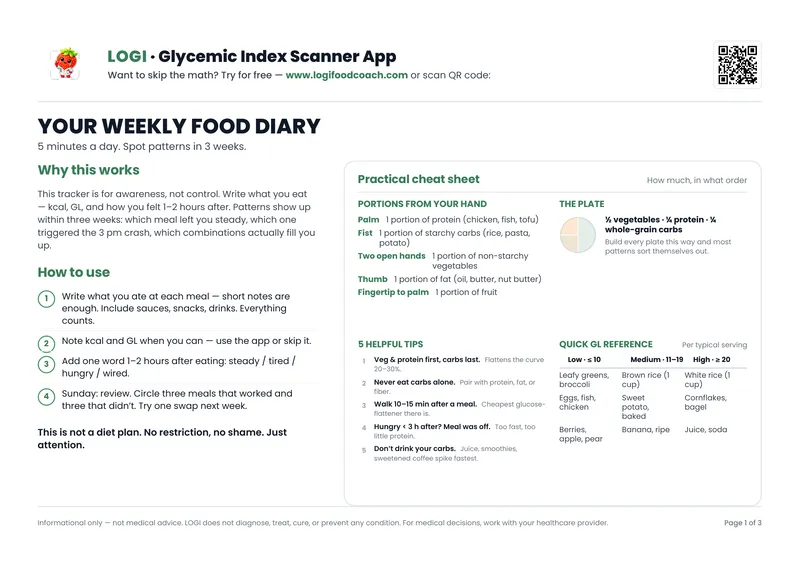
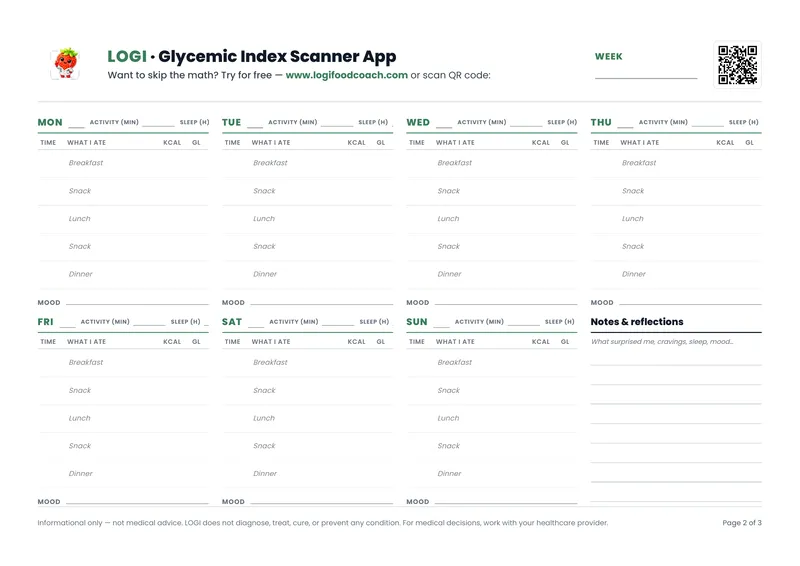
Free PDF — 3 pages
Your Weekly Food Journal
Track meals, glycemic load & mood. Spot patterns in 3 weeks.
No spam. Unsubscribe anytime.