Low-GI Borscht with Celeriac
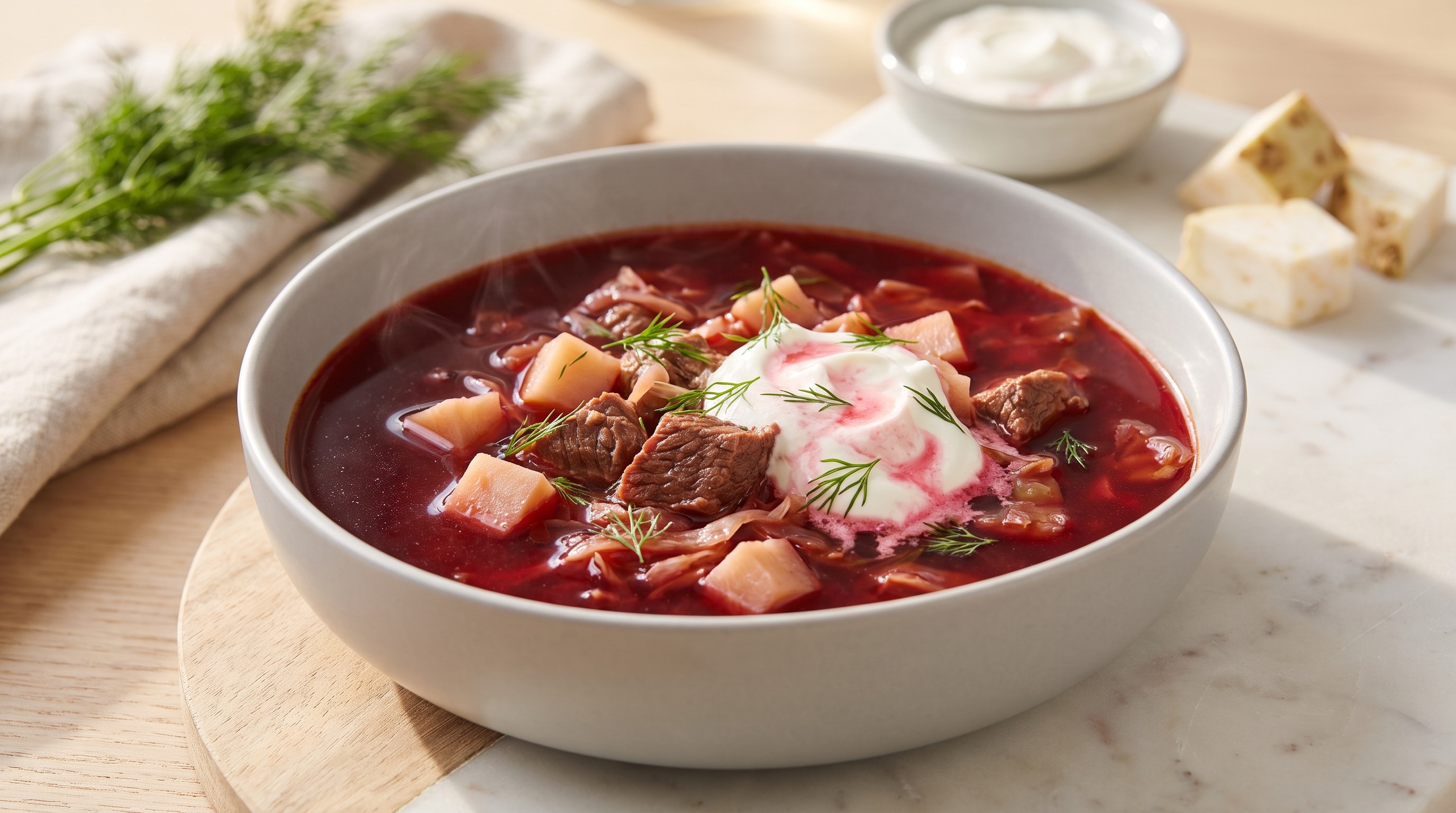
A hearty Ukrainian beet soup where celeriac stands in for potato, keeping the starchy body intact while beef and sour cream slow glucose absorption naturally.
This blood-sugar-friendly borscht proves that managing glucose doesn't mean giving up the deep, soul-warming comfort of Eastern European cooking. Celeriac — with a glycemic index of roughly 35 compared to potato's 78 — delivers the same starchy body and silky mouthfeel without the sharp glucose spike. Simmered low and slow in real bone broth, the root vegetable breaks down just enough to thicken the broth while holding its shape in every spoonful.
The glycemic strategy here is layered and deliberate. Beef provides a generous dose of protein that slows gastric emptying, while the olive oil and cold sour cream contribute healthy fats that further blunt the post-meal glucose curve. Beetroot does carry natural sugars, but grating it into a long-simmered broth alongside fibre-rich cabbage and carrots distributes those sugars across a matrix of fibre, fat, and protein — exactly the kind of food pairing that keeps blood sugar steady. A splash of red wine vinegar at the end adds brightness and has been shown in studies to modestly reduce the glycemic response of a meal.
For the best blood-sugar outcome, eat the broth and vegetables first before finishing any bread on the side. Pair this borscht with a slice of dense, seeded sourdough rather than white bread, and consider adding an extra dollop of sour cream — the additional fat is your friend here. This recipe yields two generous bowls, making it ideal for a warming weeknight dinner or a nourishing weekend lunch.
Blood Sugar Impact
With a low GI of 37 and a medium glycemic load of 15.7, this borscht will produce a gradual, moderate rise in blood sugar. The protein from beef stew, healthy fats from olive oil, and fiber from celeriac and other root vegetables will slow glucose absorption, providing steady energy for 3-4 hours.
Blood Sugar Tips
- ✓ Eat the solid beef and vegetable pieces first before drinking the broth — consuming protein and fiber before the liquid portion slows gastric emptying and blunts the glucose response.
- ✓ Be mindful of portion size since beetroot and carrot are higher-GI root vegetables; keeping to one standard bowl preserves the medium glycemic load.
- ✓ Take a 10-15 minute walk after eating to activate glucose uptake by muscles, which can reduce the post-meal blood sugar peak by up to 30%.
🥗 Ingredients
- 200 g Beef stewing meat
- 4 g Fine salt
- 1 tbsp Olive oil
- 100 g Onion
- 6 g Garlic
- 250 g Beetroot
- 80 g Carrot
- 150 g Celeriac
- 1 tbsp Tomato paste
- 600 ml Beef bone broth
- 100 g White cabbage
- 1 tbsp Red wine vinegar
- 2 tbsp Sour cream
- 5 g Fresh dill
- 7.1 oz Beef stewing meat
- 0.1 oz Fine salt
- 1 tbsp Olive oil
- 3.5 oz Onion
- 0.2 oz Garlic
- 8.8 oz Beetroot
- 2.8 oz Carrot
- 5.3 oz Celeriac
- 1 tbsp Tomato paste
- 2.5 cups Beef bone broth
- 3.5 oz White cabbage
- 1 tbsp Red wine vinegar
- 2 tbsp Sour cream
- 0.2 oz Fresh dill
👨🍳 Instructions
- 1
Pat the beef cubes dry with a paper towel and season them evenly with the fine salt. Set a large heavy-bottomed pot over high heat and add the olive oil. Once the oil is shimmering, arrange the beef in a single layer and sear without moving for about 2 minutes per side until a deep brown crust forms on all sides — roughly 4 minutes total. Transfer the browned beef to a clean plate and set aside.
- 2
Lower the heat to medium. Add the diced onion to the same pot, scraping up any caramelised bits stuck to the bottom. Cook for about 3 minutes, stirring occasionally, until the onion turns translucent and soft. Stir in the minced garlic and cook for 30 seconds until fragrant — avoid letting it brown.
- 3
Add the grated beetroot, grated carrot, and diced celeriac to the pot. Stir everything together and cook for 5 minutes, stirring from time to time, until the beetroot begins releasing its deep ruby juices and the vegetables soften slightly at the edges.
- 4
Stir the tomato paste into the vegetables and cook for 1 minute, allowing it to caramelise slightly and deepen in colour. This concentrates the flavour and adds a subtle sweetness without any added sugar.
- 5
Pour in the beef bone broth and return the seared beef along with any juices that have collected on the plate. Bring the liquid to a rolling boil, then immediately reduce the heat to low. Cover the pot with a lid and let the borscht simmer gently for 25 minutes, until the beef is fork-tender and the celeriac yields easily when pressed.
- 6
Remove the lid, add the shredded white cabbage and the red wine vinegar, and stir to combine. Simmer uncovered for 10 minutes — the cabbage should wilt and soften but still retain a slight bite. The vinegar brightens the soup and may help moderate the post-meal glucose response.
- 7
Taste the borscht and adjust the seasoning with a pinch more salt or a small splash of vinegar if needed. The flavour should be balanced between the earthy sweetness of the beets and a gentle tang from the vinegar.
- 8
Ladle the hot borscht into two wide bowls. Drop a generous spoonful of cold sour cream into the centre of each bowl — the contrast between the chilled cream and the steaming soup is part of the experience. Scatter the fresh dill over the top and serve immediately.
📊 Nutrition Per Serving
| Per Serving | Whole Dish | |
|---|---|---|
| Calories | 403 | 805 |
| Carbs | 42g | 85g |
| Sugars | 20g | 39g |
| Natural Sugars | 20g | 39g |
| Protein | 22g | 44g |
| Fat | 19g | 37g |
| Saturated Fat | 6g | 12g |
| Unsaturated Fat | 12g | 25g |
| Fiber | 12g | 24g |
| Soluble Fiber | 4g | 8g |
| Insoluble Fiber | 8g | 17g |
| Sodium | 1893mg | 3786mg |
Predicted Glucose Response
What if you...
Estimated model — individual responses vary. Not medical advice.
🔄 Lower GI Swaps
Beetroot has a moderate-to-high GI (~64 cooked) and is the biggest glycemic driver in this recipe. Halving the amount and replacing with very-low-GI vegetables like cabbage (GI ~10), radishes (GI ~15), or celeriac (GI ~35) significantly lowers the overall glycemic load while preserving the borscht character.
Cooked carrot has a moderate GI (~49) due to starch gelatinization during simmering. Turnip (GI ~30), celeriac (GI ~35), and daikon (GI ~18) all provide a similar hearty root-vegetable texture in the broth with a meaningfully lower glycemic impact.
Tomato paste is a concentrate with roughly 4-5× the sugar density of fresh tomatoes. Switching to fresh or canned whole tomatoes delivers the same acidity and umami at a fraction of the glycemic load per serving, since the sugars are diluted by water and fiber.
While sour cream is already relatively low-GI, full-fat Greek yogurt (GI ~11) and avocado cream (GI ~0) offer higher protein and healthy fat content respectively, both of which slow gastric emptying and further blunt the post-meal blood sugar spike from the overall dish.
🔬 The Science Behind This Recipe
The Science Behind This Recipe
This borscht gets its blood-sugar-friendly profile from a smart swap and a powerful trio of ingredients working together. Celeriac — the star substitution — has a much lower glycemic index than traditional potatoes or beets, thanks to its higher fiber content and lower starch density. That fiber acts like a natural speed bump in your digestive system, slowing the rate at which sugars enter your bloodstream. The result is a gentle, steady rise in energy rather than the sharp spike-and-crash cycle that leaves you reaching for snacks an hour later.
The beef stew meat plays an equally important role. Protein takes longer to digest than carbohydrates, and when you eat protein alongside carb-containing vegetables, it significantly blunts the glucose response. Think of it as a buffering effect — the protein and the generous amount of olive oil in this recipe both slow gastric emptying, meaning your stomach releases food into the small intestine more gradually. This one-two punch of protein and healthy fat is one of the most reliable ways to keep blood sugar stable after a meal.
With a glycemic index of 37 and a glycemic load of 15.7 per serving, this borscht sits comfortably in the low-GI, moderate-GL range. Remember, glycemic load accounts for how much carbohydrate you're actually eating — not just how fast it hits your bloodstream. A small amount of a higher-GI food can be perfectly fine, and a large bowl of a low-GI soup like this one keeps the total impact modest. To get even more benefit, try eating the broth and vegetables first before any bread on the side, and a short 10–15 minute walk after your meal can further smooth out your glucose curve.
Related recipes
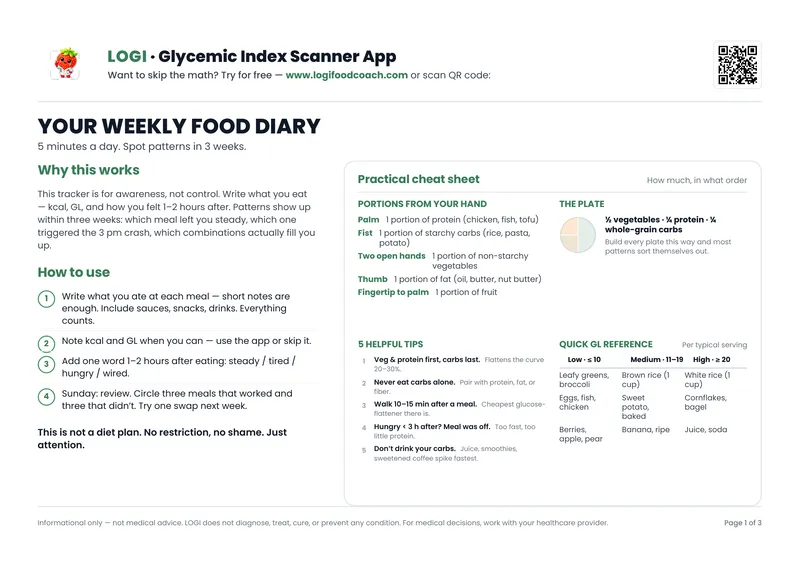
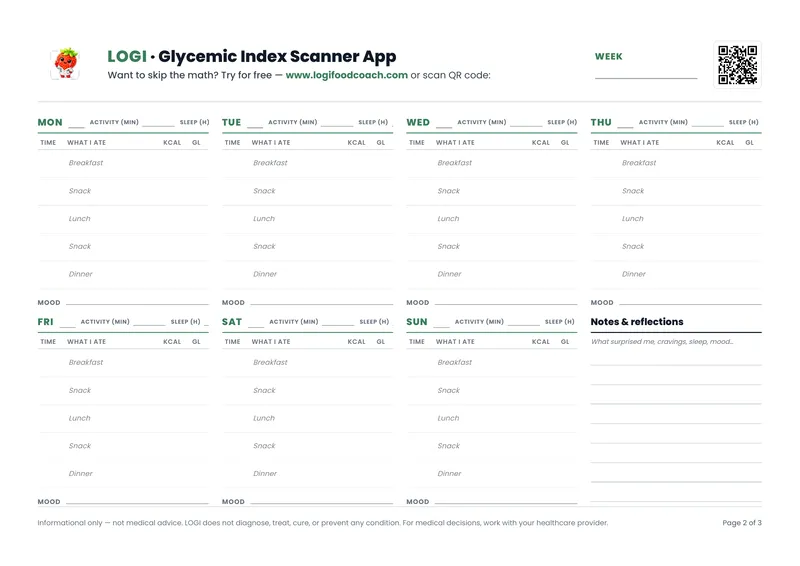
Free PDF — 3 pages
Your Weekly Food Journal
Track meals, glycemic load & mood. Spot patterns in 3 weeks.
No spam. Unsubscribe anytime.