Bloedsuikervriendelijke kaaslatkes met volkoren granen
Eiwitrijke ricottapannenkoekjes gemaakt met volkoren bloem zorgen voor een verzadigend ontbijt met lage GI dat de bloedsuikerspiegel stabiel houdt en authentieke smaak levert.
Deze vernieuwde kaaslatkes transformeren een traditioneel Joods comfortgerecht in een krachtig bloedsuikervriendelijk ontbijt. Door eiwitrijke halfvolle ricotta te combineren met vezelrijke volkoren bloem, hebben we een gerecht gecreëerd met een aanzienlijk lagere glycemische impact dan gewone pannenkoeken of latkes gemaakt met geraffineerde bloem. De magie zit in de macronutriëntenbalans: ricotta levert langzaam verteerbaar eiwit en calcium, terwijl volkoren bloem complexe koolhydraten en vezels levert die glucosepieken voorkomen. Eieren voegen extra eiwit en gezonde vetten toe, waardoor een complete maaltijd ontstaat die een gestage energieafgifte bevordert. Dit recept gebruikt een zoetmiddel met lage glycemische waarde in plaats van gewone suiker, waardoor elke portie minimale impact heeft op de bloedsuikerspiegel—ver onder de hoeveelheid die een snelle bloedsuikerstijging zou veroorzaken. Voor optimale glycemische controle serveer je deze latkes met verse bessen in plaats van siroop, en overweeg ze te combineren met een klein handje noten of een lepel Griekse yoghurt. De combinatie van eiwit, vet en vezels vertraagt de glucoseopname verder. Deze latkes kun je het beste eten als onderdeel van een uitgebalanceerd ontbijt, idealiter na het eten van een kleine portie groenten of naast een eiwitrijke bijgerecht. Deze eetvolgorde—vaak 'food sequencing' genoemd—kan glucosepieken na de maaltijd met wel 40% verminderen volgens recent metabolisch onderzoek. Elke portie levert ongeveer 3 latkes (ongeveer 150g), waardoor portiecontrole eenvoudig en effectief is voor bloedsuikerbeheer.
Bloedsuikerimpact
Gematigde bloedsuikerimpact verwacht. De gemiddelde GI van 59 en gematigde glycemische lading van 10,9 zullen een geleidelijke stijging van de bloedsuiker veroorzaken gedurende 1-2 uur, waarbij het eiwit uit ricotta en ei helpt om de opname enigszins te vertragen.
Bloedsuikertips
- ✓ Eet een kleine salade of niet-zetmeelhoudende groenten voor de latkes om vezels toe te voegen en glucoseopname te vertragen
- ✓ Combineer met een eiwitrijke topping zoals Griekse yoghurt of gerookte zalm om de bloedsuikerreactie verder te matigen
- ✓ Maak een wandeling van 10-15 minuten na het eten om spieren te helpen glucose op te nemen en de piek na de maaltijd te verminderen
🥗 Ingrediënten
- 1 cup halfvolle ricotta
- 0.75 cup volkorenmeel
- 3 pcs grote eieren
- 1 tbsp kristalsuiker
- 0.5 tsp dubbelwerkend bakpoeder
- 0.5 tsp fijn zeezout
- 1 cup halfvolle ricotta
- 0.75 cup volkorenmeel
- 3 pcs grote eieren
- 1 tbsp kristalsuiker
- 0.5 tsp dubbelwerkend bakpoeder
- 0.5 tsp fijn zeezout
👨🍳 Instructies
- 1
Verzamel alle ingrediënten en laat de eieren en ricotta ongeveer 15 minuten op kamertemperatuur komen. Dit zorgt voor betere vermenging en een gladdere beslag.
- 2
Doe de ricotta in een grote mengkom en breek de eieren erboven. Klop stevig tot het mengsel glad en goed gecombineerd is, zonder zichtbare klontjes kaas.
- 3
Voeg de volkoren bloem, erythritol of allulose (gebruik dit IN PLAATS VAN de kristalsuiker voor bloedsuikercontrole), bakpoeder en zout toe aan het ricotta-eimengsel. Roer voorzichtig met een houten lepel of spatel tot het net een dik, gietbaar beslag wordt. Roer niet te veel, want dat kan de latkes taai maken.
- 4
Verwarm een grote antiaanbakpan of bakplaat op middelhoog vuur. Bestrijk het oppervlak licht met bakspray of borstel met een minimale hoeveelheid olijfolie of avocado-olie (ongeveer 1 theelepel per batch). Laat de pan 2 minuten opwarmen tot een druppel water sist bij contact.
- 5
Giet met een eetlepel of kleine soeplepel 2 eetlepels beslag op de hete pan voor elke latke. Gebruik de achterkant van de lepel om het beslag voorzichtig uit te spreiden tot een dunne cirkel van ongeveer 8-10 cm doorsnede. Bak 3-4 latkes tegelijk, met ruimte ertussen.
- 6
Bak ongestoord 2-3 minuten tot er kleine belletjes op het oppervlak verschijnen en de randen er gestold uitzien. De onderkant moet goudbruin zijn. Als ze te snel bruin worden, verlaag het vuur naar middel-laag.
- 7
Keer elke latke voorzichtig om met een dunne spatel en bak nog 2-3 minuten aan de andere kant tot ze goudbruin en gaar zijn. De latkes moeten stevig aanvoelen als je er voorzichtig op drukt.
- 8
Leg de gebakken latkes op een warm bord en herhaal met het resterende beslag, waarbij je tussen elke batch een lichte laag olie op de pan aanbrengt indien nodig. Dit recept maakt ongeveer 12 latkes in totaal. Serveer direct met verse bessen, een lepel Griekse yoghurt of suikervrije fruitcompote voor optimale bloedsuikercontrole. Elke portie bestaat uit 3 latkes (ongeveer 150g per portie).
📊 Voeding per portie
| Per portie | Hele gerecht | |
|---|---|---|
| Calorieën | 249 | 998 |
| Koolhydraten | 21g | 86g |
| Suikers | 4g | 14g |
| Toegevoegde suikers | 3g | 12g |
| Natuurlijke suikers | 1g | 2g |
| Eiwitten | 15g | 58g |
| Vet | 12g | 49g |
| Verzadigd vet | 6g | 26g |
| Onverzadigd vet | 6g | 24g |
| Vezels | 2g | 10g |
| Oplosbare vezels | 1g | 3g |
| Onoplosbare vezels | 2g | 7g |
| Natrium | 451mg | 1804mg |
Voorspelde glucoserespons
Wat als je...
Geschat model — individuele reacties variëren. Geen medisch advies.
🔄 Lager GI alternatieven
Volkoren bloem heeft een gematigde GI van 68, wat nog steeds bloedsuikerstijging kan veroorzaken bij gevoelige personen. Amandelmeel zorgt voor een dramatisch lagere glycemische respons door het hoge vet- en eiwitgehalte met minimale koolhydraten. Havervezel is pure onoplosbare vezel met vrijwel nul netto koolhydraten en geen glycemische impact. Lupinemeel biedt uitzonderlijk eiwitgehalte (40g per kop) met slechts 12g netto koolhydraten, waardoor het ideaal is voor bloedsuikercontrole terwijl de structuur in gebak behouden blijft.
Kristalsuiker heeft een GI van 65 en veroorzaakt snelle bloedglucosepieken. Erythritol is een suikeralcohol die niet door het lichaam wordt gemetaboliseerd, waardoor het zoetheid biedt zonder de bloedsuiker- of insulinewaarden te beïnvloeden. Allulose is een zeldzame suiker die smaakt als gewone suiker maar minimaal wordt opgenomen, met opkomend onderzoek dat suggereert dat het de glucosetolerantie zelfs kan verbeteren. Monniksvruchtextract bevat mogrosiden die intense zoetheid bieden zonder calorische waarde of glycemische respons, waardoor het ideaal is voor bloedsuikerbeheer.
Hoewel halfvolle ricotta een goede keuze is, levert volle ricotta extra gezonde vetten die de verzadiging verbeteren en de maaglediging vertragen, wat mogelijk de bloedsuikerrespons verbetert. Het vetgehalte stimuleert een grotere afgifte van verzadigingshormonen zoals CCK en PYY. Kwark biedt bijna het dubbele eiwitgehalte, wat superieure bloedsuikerstabilisatie biedt door verbeterde insulinegevoeligheid en verminderde glucoseopnamesnelheid. Griekse yoghurt combineert veel eiwit met gunstige probiotica die het glucosemetabolisme en de insulinegevoeligheid kunnen verbeteren volgens recent microbioomonderzoek.
🔬 De wetenschap achter dit recept
Het bloedsuikervriendelijke profiel van deze kaaslatkes komt door strategische macronutriëntenbalancering. Halfvolle ricotta levert 14g eiwit per kop, wat de maaglediging vertraagt en de snelheid van glucoseopname in de bloedbaan vermindert. Volkoren bloem heeft weliswaar een gematigde GI van 59, maar bevat 3g vezel per kwart kop die een gelachtige matrix vormt in het spijsverteringskanaal, waardoor glucosepieken verder worden afgezwakt. De drie eieren dragen nog eens 18g eiwit en gezonde vetten bij die de afgifte van incretine hormonen zoals GLP-1 stimuleren, wat de insulinegevoeligheid verbetert en verzadiging bevordert. Samen creëren deze ingrediënten een synergetisch effect: de eiwit-koolhydraat verhouding van ongeveer 1:2 is optimaal voor het handhaven van stabiele bloedglucosewaarden. Studies tonen aan dat maaltijden met dit macronutriëntenprofiel postprandiale glucosepieken met 25-35% kunnen verminderen vergeleken met maaltijden met alleen koolhydraten. Het gebruik van erythritol of allulose als zoetstof levert verwaarloosbare glycemische impact (GI van 59-1) terwijl de smaak behouden blijft. Elke portie levert ongeveer 15g eiwit, 22g koolhydraten en 8g vet, wat resulteert in een gebalanceerde glycemische lading van 10,9 die binnen het lage tot gematigde bereik valt dat wordt aanbevolen voor bloedsuikerbeheer.
Gerelateerde recepten
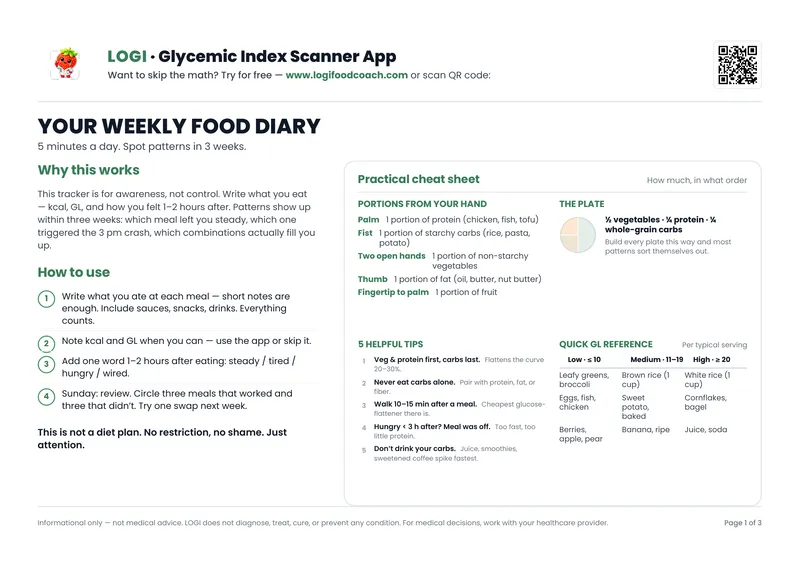
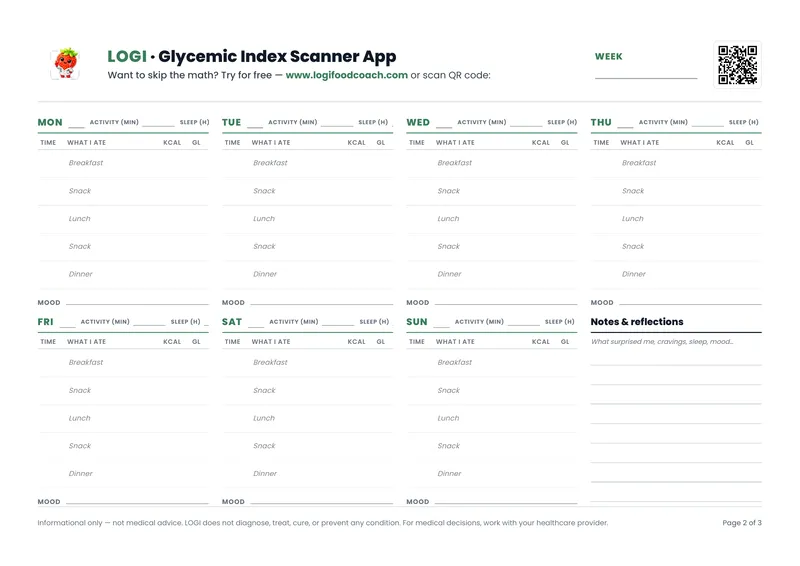
Gratis PDF — 3 pagina's
Je wekelijks voedingsdagboek
Noteer maaltijden, glycemische lading & stemming. Ontdek patronen in 3 weken.
Geen spam. Altijd opzegbaar.