Latkes de queso amigables con el azúcar en sangre con granos integrales
Panqueques de ricota ricos en proteína hechos con harina integral crean un desayuno satisfactorio de bajo índice glucémico que mantiene el azúcar en sangre estable mientras ofrece un sabor auténtico.
Estos latkes de queso reinventados transforman un alimento reconfortante tradicional judío en un desayuno poderoso y amigable con el azúcar en sangre. Al combinar ricota parcialmente descremada rica en proteína con harina integral densa en fibra, hemos creado un platillo con un impacto glucémico significativamente menor que los panqueques convencionales o latkes hechos con harina refinada. La magia está en el equilibrio de macronutrientes: la ricota proporciona proteína de digestión lenta y calcio, mientras que la harina integral aporta carbohidratos complejos y fibra que previenen picos de glucosa. Los huevos añaden proteína adicional y grasas saludables, creando una comida completa que promueve una liberación constante de energía. Esta receta usa un endulzante de bajo índice glucémico en lugar de azúcar regular, asegurando que cada porción contenga un impacto mínimo en el azúcar en sangre, muy por debajo de la cantidad que provocaría una elevación rápida del azúcar en sangre. Para un control glucémico óptimo, sirve estos latkes con frutos rojos frescos en lugar de jarabe, y considera acompañarlos con un puñado pequeño de nueces o una cucharada de yogur griego. La combinación de proteína, grasa y fibra ralentizará aún más la absorción de glucosa. Estos latkes se disfrutan mejor como parte de un desayuno equilibrado, idealmente después de consumir una pequeña porción de verduras o junto con un acompañamiento rico en proteína. Esta secuencia de alimentación, a menudo llamada 'secuenciación de alimentos', puede reducir los picos de glucosa después de las comidas hasta en un 40% según investigaciones metabólicas recientes. Cada porción proporciona aproximadamente 3 latkes (unos 150g), haciendo que el control de porciones sea simple y efectivo para el manejo del azúcar en sangre.
Impacto en el azúcar
Se espera un impacto moderado en el azúcar en sangre. El índice glucémico medio de 59 y la carga glucémica moderada de 10.9 causarán un aumento gradual en el azúcar en sangre durante 1-2 horas, con la proteína de la ricota y el huevo ayudando a ralentizar la absorción en cierta medida.
Consejos azúcar
- ✓ Come una ensalada pequeña o verduras sin almidón antes de los latkes para añadir fibra y ralentizar la absorción de glucosa
- ✓ Acompaña con un topping rico en proteína como yogur griego o salmón ahumado para moderar aún más la respuesta del azúcar en sangre
- ✓ Da un paseo de 10-15 minutos después de comer para ayudar a los músculos a absorber glucosa y reducir el pico después de la comida
🥗 Ingredientes
- 0.75 cup harina integral
- 3 pcs huevos grandes
- 1 tbsp azúcar granulada
- 0.5 tsp polvo de hornear de doble acción
- 0.5 tsp sal de mar fina
- 0.75 cup harina integral
- 3 pcs huevos grandes
- 1 tbsp azúcar granulada
- 0.5 tsp polvo de hornear de doble acción
- 0.5 tsp sal de mar fina
👨🍳 Instrucciones
- 1
Reúne todos los ingredientes y deja que los huevos y la ricota alcancen temperatura ambiente durante unos 15 minutos. Esto asegura una mejor incorporación y una textura de masa más suave.
- 2
En un tazón grande, añade el queso ricota y rompe los huevos. Bate vigorosamente hasta que la mezcla quede suave y bien combinada, sin grumos visibles de queso.
- 3
Añade la harina integral, el eritritol o alulosa (usa esto EN LUGAR DEL azúcar granulada para el control del azúcar en sangre), el polvo de hornear y la sal a la mezcla de ricota y huevo. Revuelve suavemente con una cuchara de madera o espátula hasta que apenas se combine en una masa espesa y vertible. Evita mezclar demasiado, lo que puede hacer que los latkes queden duros.
- 4
Calienta una sartén grande antiadherente o plancha a fuego medio. Cubre ligeramente la superficie con aceite en aerosol o pincela con una cantidad mínima de aceite de oliva o aceite de aguacate (aproximadamente 1 cucharadita por tanda). Deja que la sartén se caliente durante 2 minutos hasta que una gota de agua chisporrotee al contacto.
- 5
Usando una cuchara sopera o cucharón pequeño, vierte 2 cucharadas de masa en la sartén caliente para cada latke. Usa el dorso de la cuchara para extender suavemente la masa en un círculo delgado de aproximadamente 8-10 cm de diámetro. Cocina 3-4 latkes a la vez, dejando espacio entre cada uno.
- 6
Cocina sin mover durante 2-3 minutos hasta que se formen pequeñas burbujas en la superficie y los bordes comiencen a verse firmes. La parte inferior debe estar dorada. Si se dora demasiado rápido, reduce el fuego a medio-bajo.
- 7
Voltea cuidadosamente cada latke usando una espátula delgada y cocina durante 2-3 minutos adicionales del segundo lado hasta que esté dorado y completamente cocido. Los latkes deben sentirse firmes cuando se presionan suavemente.
- 8
Transfiere los latkes cocidos a un plato tibio y repite con la masa restante, añadiendo una capa ligera de aceite a la sartén entre tandas según sea necesario. Esta receta hace aproximadamente 12 latkes en total. Sirve inmediatamente cubiertos con frutos rojos frescos, una cucharada de yogur griego o compota de frutas sin azúcar para un control óptimo del azúcar en sangre. Cada porción consiste en 3 latkes (aproximadamente 150g por porción).
📊 Nutrición por porción
| Por porción | Plato entero | |
|---|---|---|
| Calorías | 249 | 998 |
| Carbohidratos | 21g | 86g |
| Azúcares | 4g | 14g |
| Azúcares añadidos | 3g | 12g |
| Azúcares naturales | 1g | 2g |
| Proteína | 15g | 58g |
| Grasa | 12g | 49g |
| Grasa saturada | 6g | 26g |
| Grasas insaturadas | 6g | 24g |
| Fibra | 2g | 10g |
| Fibra soluble | 1g | 3g |
| Fibra insoluble | 2g | 7g |
| Sodio | 451mg | 1804mg |
Respuesta glucémica prevista
¿Y si tú...
Modelo estimado — las respuestas individuales varían. No es consejo médico.
🔄 Alternativas de bajo IG
La harina integral tiene un IG moderado de 68, que aún puede causar elevación del azúcar en sangre en individuos sensibles. La harina de almendra proporciona una respuesta glucémica dramáticamente menor debido a su alto contenido de grasa y proteína con carbohidratos mínimos. La fibra de avena es fibra insoluble pura con prácticamente cero carbohidratos netos y sin impacto glucémico. La harina de altramuz ofrece un contenido excepcional de proteína (40g por taza) con solo 12g de carbohidratos netos, haciéndola ideal para el control del azúcar en sangre mientras mantiene la estructura en productos horneados.
El azúcar granulada tiene un IG de 65 y causa picos rápidos de glucosa en sangre. El eritritol es un alcohol de azúcar que no es metabolizado por el cuerpo, proporcionando dulzor sin afectar los niveles de azúcar en sangre o insulina. La alulosa es un azúcar raro que sabe como el azúcar regular pero se absorbe mínimamente, con investigaciones emergentes que sugieren que puede mejorar la tolerancia a la glucosa. El extracto de fruta del monje contiene mogrósidos que proporcionan dulzor intenso sin valor calórico ni respuesta glucémica, haciéndolo ideal para el manejo del azúcar en sangre.
Aunque la ricota parcialmente descremada es una buena opción, la ricota entera proporciona grasas saludables adicionales que mejoran la saciedad y ralentizan el vaciado gástrico, potencialmente mejorando la respuesta del azúcar en sangre. El contenido de grasa desencadena una mayor liberación de hormonas de saciedad como CCK y PYY. El requesón ofrece casi el doble del contenido de proteína, lo que proporciona una estabilización superior del azúcar en sangre a través de una mayor sensibilidad a la insulina y una tasa reducida de absorción de glucosa. El yogur griego combina alta proteína con probióticos beneficiosos que pueden mejorar el metabolismo de la glucosa y la sensibilidad a la insulina según investigaciones recientes sobre el microbioma.
🔬 La ciencia detrás de esta receta
El perfil amigable con el azúcar en sangre de estos latkes de queso proviene del equilibrio estratégico de macronutrientes. La ricota parcialmente descremada proporciona 14g de proteína por taza, lo que ralentiza el vaciado gástrico y reduce la tasa de absorción de glucosa en el torrente sanguíneo. La harina integral, aunque tiene un índice glucémico moderado de 59, contiene 3g de fibra por cuarto de taza que forma una matriz similar a un gel en el tracto digestivo, atenuando aún más los picos de glucosa. Los tres huevos contribuyen con 18g adicionales de proteína y grasas saludables que desencadenan la liberación de hormonas incretinas como el GLP-1, que mejoran la sensibilidad a la insulina y promueven la saciedad. Cuando se combinan, estos ingredientes crean un efecto sinérgico: la proporción de proteína a carbohidratos de aproximadamente 1:2 es óptima para mantener niveles estables de glucosa en sangre. Los estudios muestran que las comidas con este perfil de macronutrientes pueden reducir las excursiones de glucosa posprandial en un 25-35% en comparación con comidas que solo contienen carbohidratos. El uso de eritritol o alulosa como endulzantes proporciona un impacto glucémico insignificante (IG de 59-1) mientras mantiene el sabor agradable. Cada porción aporta aproximadamente 15g de proteína, 22g de carbohidratos y 8g de grasa, creando una carga glucémica de 10.9 que cae dentro del rango bajo a moderado recomendado para el manejo del azúcar en sangre.
Recetas relacionadas
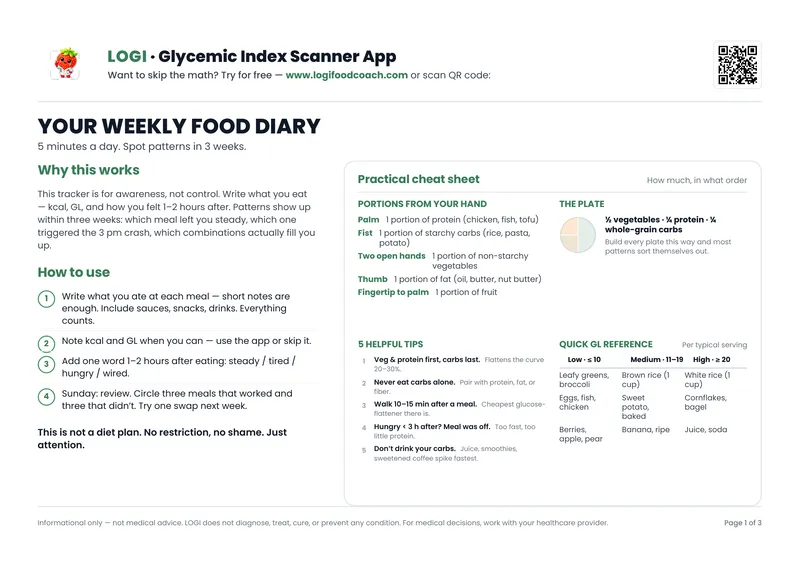
PDF gratis — 3 páginas
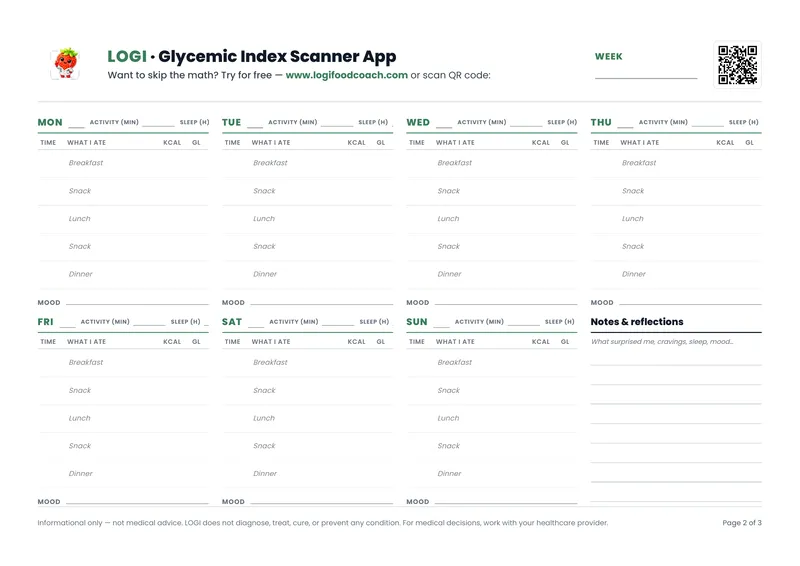
Tu diario semanal de comidas
Registra comidas, carga glucémica y estado de ánimo. Detecta patrones en 3 semanas.
Sin spam. Cancela cuando quieras.