Linguine complètes méditerranéennes aux pois chiches et verdures poivrées
Un plat de pâtes riche en fibres et respectueux de la glycémie, qui combine des céréales complètes au goût de noisette, des pois chiches riches en protéines et de la roquette dans une sauce citron-ail relevée.
Ce plat de pâtes d'inspiration méditerranéenne est un modèle de gestion de la glycémie sans sacrifier la saveur. En utilisant des linguine complètes plutôt que des pâtes raffinées, vous obtenez une réponse glycémique nettement plus faible grâce au son et au germe intacts qui ralentissent l'absorption du glucose. L'ajout de pois chiches apporte à la fois des fibres solubles et des protéines végétales, créant une double défense contre les pics de glycémie.
La beauté de cette recette réside dans l'association stratégique de ses ingrédients. Les pois chiches ont un index glycémique remarquablement bas d'environ 28, ce qui en fait un excellent choix pour stabiliser la glycémie. Combinés aux fibres des pâtes complètes et à la roquette poivrée, vous créez un repas qui se digère lentement et régulièrement. Les bonnes graisses de l'huile d'olive et l'acidité du jus de citron frais modèrent encore l'impact glycémique en ralentissant la vidange gastrique.
Pour un contrôle optimal de la glycémie, pensez à manger d'abord les légumes et les pois chiches, puis les pâtes. Cette simple technique de séquençage peut réduire les pics de glucose après le repas jusqu'à 73% selon des études récentes. Le parmesan ajoute non seulement de la saveur, mais aussi des protéines et des graisses qui aident à atténuer la réponse glycémique, faisant de ce plat un repas à IG bas parfaitement équilibré qui vous rassasie pendant des heures.
Impact sur la glycémie
Augmentation modérée et soutenue de la glycémie due aux pâtes complètes, mais considérablement atténuée par les fibres des pois chiches, des légumes et des céréales complètes. La combinaison de protéines, de bonnes graisses et de fibres devrait fournir une énergie stable pendant 3-4 heures sans pics brusques.
Conseils glycémie
- ✓ Mangez d'abord la roquette et les poivrons avant les pâtes pour créer une barrière de fibres qui ralentit l'absorption des glucides
- ✓ Ajoutez des protéines supplémentaires comme du poulet grillé ou du poisson pour réduire encore la réponse glycémique globale du repas
- ✓ Faites une marche de 10-15 minutes après avoir mangé pour aider les muscles à absorber le glucose et réduire l'élévation de la glycémie après le repas
🥗 Ingrédients
- 6 oz linguine complètes
- 0.5 tbsp huile d'olive extra vierge
- 1 cup poivrons mélangés et oignons, hachés
- 3 pcs gousses d'ail, hachées
- 0.25 tsp piment rouge en flocons
- 6 oz linguine complètes
- 0.5 tbsp huile d'olive extra vierge
- 1 cup poivrons mélangés et oignons, hachés
- 3 pcs gousses d'ail, hachées
- 0.25 tsp piment rouge en flocons
👨🍳 Instructions
- 1
Portez une grande casserole d'eau à ébullition. Ajoutez les linguine complètes et faites cuire 5 minutes jusqu'à ce qu'elles soient partiellement tendres. Avant d'égoutter, réservez 2 tasses de l'eau de cuisson féculente dans un verre doseur résistant à la chaleur. Égouttez les pâtes et réservez.
- 2
Pendant que les pâtes cuisent, chauffez l'huile d'olive dans une grande poêle profonde ou une sauteuse à feu moyen. Ajoutez les poivrons et oignons hachés, en remuant de temps en temps pendant environ 3 minutes jusqu'à ce qu'ils commencent à ramollir et deviennent parfumés.
- 3
Ajoutez l'ail haché aux légumes et faites cuire 30 secondes en remuant constamment pour éviter qu'il ne brûle, jusqu'à ce que l'ail devienne aromatique et légèrement doré.
- 4
Ajoutez les pois chiches égouttés, le piment rouge en flocons, le zeste de citron et le jus de citron frais dans la poêle. Mélangez le tout pour combiner les saveurs et faites cuire 2 minutes pour réchauffer les pois chiches.
- 5
Transférez les linguine partiellement cuites dans la poêle avec 1 tasse de l'eau de cuisson réservée. Augmentez le feu à moyen-vif et faites cuire 5-6 minutes en remuant fréquemment, jusqu'à ce que les pâtes atteignent une texture al dente et que le liquide réduise pour créer une sauce légère qui enrobe les ingrédients. Ajoutez plus d'eau de cuisson si nécessaire pour maintenir une consistance soyeuse.
- 6
Retirez complètement la poêle du feu. Ajoutez immédiatement le parmesan râpé et la roquette hachée, en mélangeant vigoureusement avec des pinces jusqu'à ce que le fromage fonde dans la sauce et que la roquette flétrisse avec la chaleur résiduelle, environ 1-2 minutes. Assaisonnez avec du sel de mer et du poivre noir fraîchement moulu selon votre goût.
- 7
Goûtez et ajustez l'assaisonnement si nécessaire. Répartissez dans quatre assiettes creuses et servez immédiatement tant que c'est chaud. Pour un contrôle optimal de la glycémie, mangez d'abord les pois chiches et les légumes, puis savourez les pâtes. Cette séquence alimentaire peut aider à minimiser les pics de glucose jusqu'à 73% selon des recherches récentes.
📊 Nutrition par portion
| Par portion | Plat entier | |
|---|---|---|
| Calories | 460 | 1842 |
| Glucides | 66g | 264g |
| Sucres | 9g | 35g |
| Sucres naturels | 9g | 35g |
| Protéines | 26g | 102g |
| Lipides | 12g | 49g |
| Graisses saturées | 5g | 20g |
| Graisses insaturées | 7g | 29g |
| Fibres | 13g | 52g |
| Fibres solubles | 3g | 11g |
| Fibres insolubles | 6g | 26g |
| Sodium | 434mg | 1735mg |
Réponse glycémique prédite
Et si vous...
Modèle estimé — les réponses individuelles varient. Pas un avis médical.
🔄 Alternatives à faible IG
Ces pâtes à base de légumineuses offrent un impact glycémique similaire ou inférieur tout en fournissant beaucoup plus de protéines (20-25g par portion contre 7-8g), ce qui stabilise encore la glycémie et augmente la satiété.
La levure nutritionnelle offre une saveur fromagère avec des vitamines B ajoutées et sans graisses saturées, tandis que le pecorino affiné a une saveur plus intense permettant de réduire la portion sans sacrifier le goût.
Ces échanges de légumes maintiennent le profil de saveur méditerranéen tout en offrant des profils nutritionnels variés. Les courgettes ont moins de glucides, les asperges fournissent plus de fibres prébiotiques, et le brocoli apporte des composés supplémentaires régulateurs de la glycémie comme le sulforaphane.
🔬 La science derrière cette recette
Cette recette obtient un contrôle exceptionnel de la glycémie grâce à plusieurs mécanismes synergiques. Les linguine complètes ont un index glycémique d'environ 30-40 comparé aux 60-70 des pâtes raffinées, grâce à la couche de son intacte qui ralentit la digestion de l'amidon. Les pois chiches apportent à la fois de l'amidon résistant et des fibres solubles qui forment un gel dans le tube digestif, retardant encore l'absorption du glucose. Les graisses monoinsaturées de l'huile d'olive ralentissent la vidange gastrique, tandis que l'acidité du jus de citron réduit la réponse glycémique en inhibant les enzymes digestives. La combinaison crée un repas avec une charge glycémique de seulement 23,3 par portion, bien dans la fourchette basse. Manger les légumes et les protéines avant les glucides exploite l'effet de séquençage alimentaire, où les fibres et les protéines créent une barrière physique dans l'estomac qui ralentit la décomposition des glucides. Les études montrent que cette technique simple peut réduire les pics de glycémie après le repas de 73% et améliorer la sensibilité à l'insuline au fil du temps.
Recettes similaires
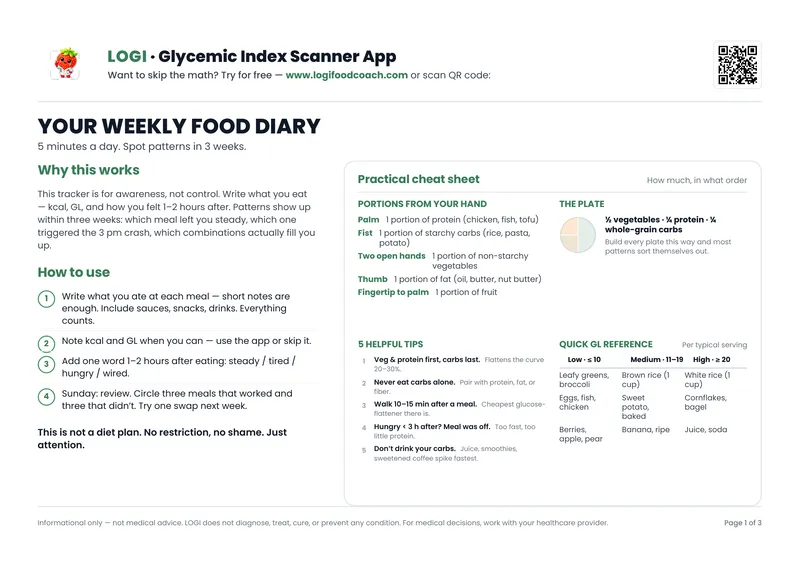
PDF gratuit — 3 pages
Ton journal alimentaire
Note tes repas, charge glycémique et humeur. Repère les tendances en 3 semaines.
Pas de spam. Désinscription à tout moment.